
Solar Self-Consumption
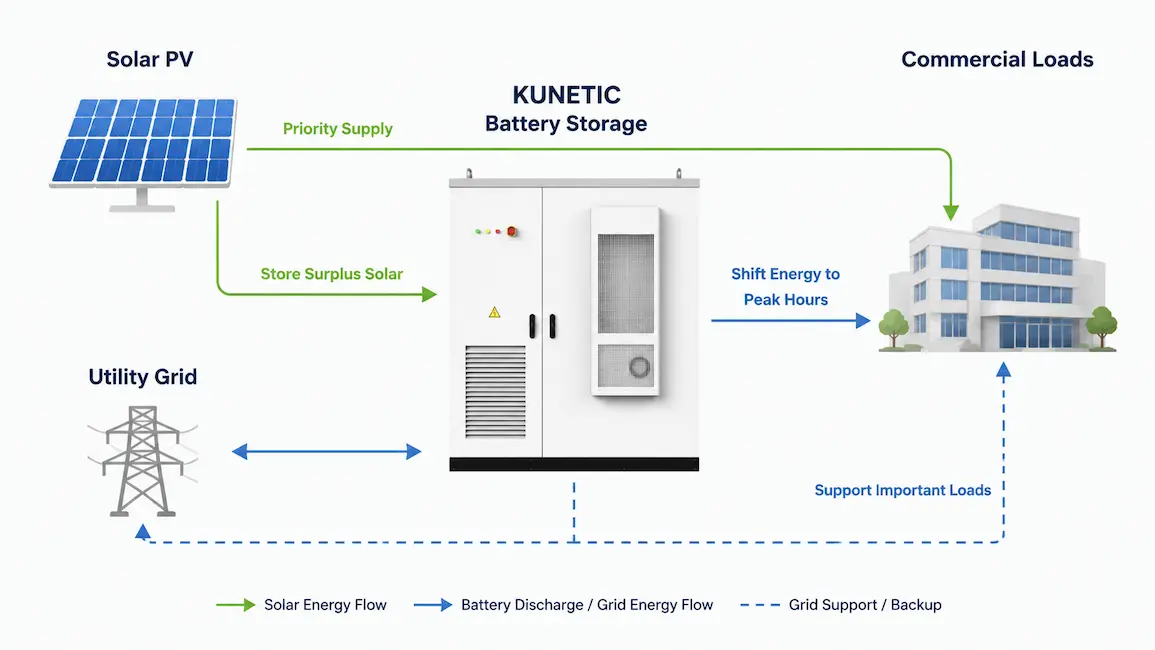
Solar PV can supply the site load first, with surplus generation directed to battery storage. Stored energy can be used when solar output decreases.
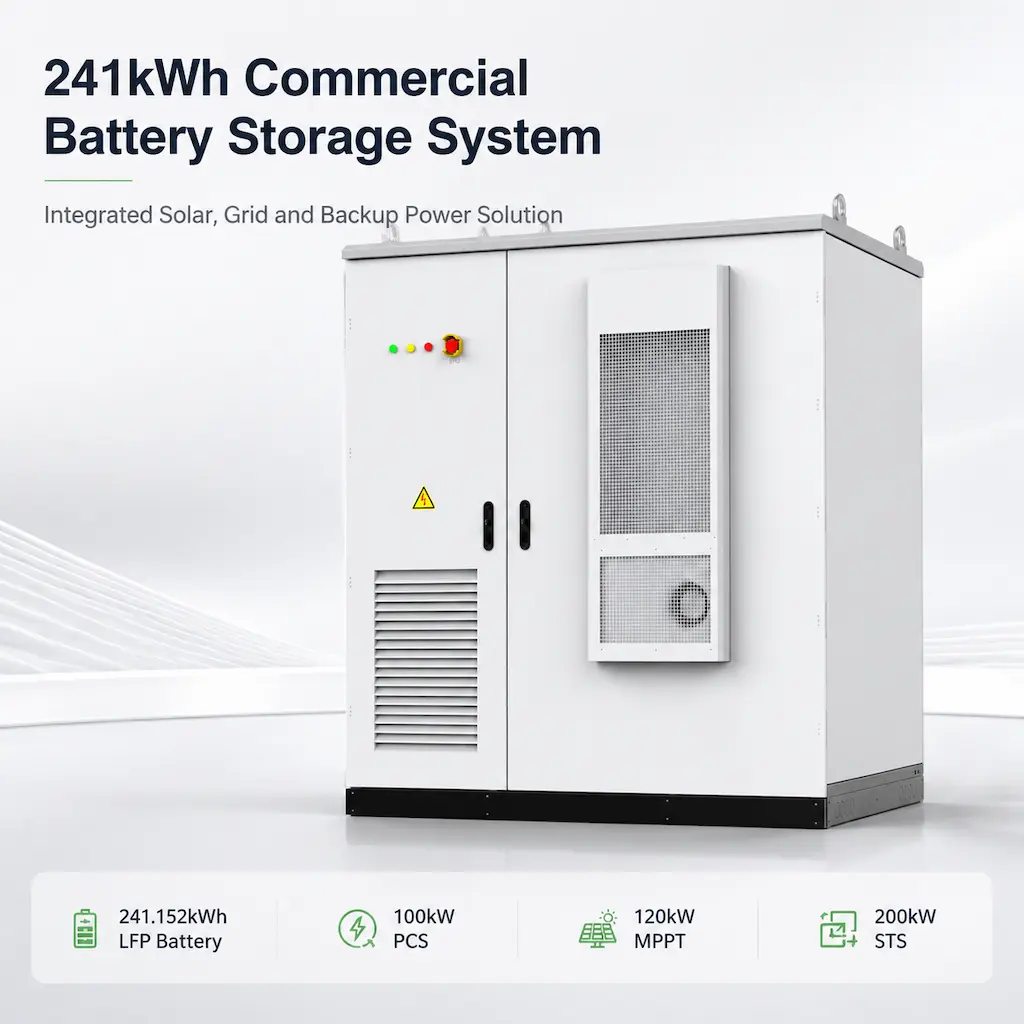
Commercial Battery Storage System
The K-eBank-241FHYB2 combines 241.152kWh of LFP battery storage with a 100kW PCS, 120kW MPPT and 200kW STS in one outdoor commercial BESS. It is designed for businesses that need to store solar energy, manage peak demand or support important loads when grid conditions change. Solar PV, battery storage, the utility grid, a diesel generator and site loads can be coordinated through one project-specific energy system. The standard configuration is transformerless, with an ATS available when automatic source transfer is required.
 241kWh LFP Battery Storage
  100kW Rated PCS Power
  120kW PV / MPPT Power
  200kW STS Capacity
  380/400V Three-Phase Output
  IP54 Outdoor Enclosure
 Overview
Commercial battery storage should fit the way a site already uses and produces energy. The K-eBank-241FHYB2 stores electricity from solar PV or the grid and releases it according to the site load, electricity tariff and selected operating strategy.It can be used as part of a grid-connected commercial solar project, a backup power system or a hybrid microgrid combining solar, battery storage and an existing generator.
Use More On-Site Solar
Store surplus solar energy generated during the day and use it later when PV output falls or site demand increases.
Shift Energy to Peak Hours
Charge during solar production or lower-tariff periods, then discharge when demand or electricity prices rise.
Support Important Loads
Use stored energy to support selected commercial or industrial loads when the grid becomes unstable or unavailable. Actual runtime depends on the load, state of charge and project design.
Reduce Generator Dependence
At generator-supported sites, battery storage can handle short-duration and variable loads while the generator is reserved for longer operating periods or low-battery conditions.
Prepare for Changing Energy Needs
The configurable system architecture can be incorporated into different solar, grid, generator and load arrangements, with larger project architectures planned when more energy or power is required.
Technical Specifications
Engineering data from the product sheet.
| Battery Chemistry | Lithium Iron Phosphate (LFP) |
| Rated Energy | 241.152kWh |
| Rated Capacity | 314Ah |
| Battery Configuration | 240S1P, 12 battery packs |
| Rated Battery Voltage | 768V |
| Battery Voltage Range | 600-876V |
| Maximum Charging Current | 140A |
| Maximum Discharging Current | 200A |
| Rated PV / MPPT Power | 120kW |
| PV Input Voltage Range | 150-1000V DC |
| Maximum PV Input Voltage | 1000V DC |
| MPPT Efficiency | >99% |
| Rated PCS Power | 100kW |
| Maximum PCS Power | 120kW |
| STS Power | 200kW |
| Rated AC Voltage | 380/400V |
| AC Connection | Three-phase, four-wire |
| Grid Frequency | 50/60Hz |
| Current THD | <3% at rated power |
| Power Factor | >0.99 |
| Maximum PCS Efficiency | 98.9% |
| Grid-to-Off-Grid Switching Time | <10ms* |
| Cooling Method | Air-conditioned air cooling |
| Fire Protection | Pack-level and cabinet-level protection |
| Enclosure Protection Rating | IP54 |
| Communication | Ethernet / RS485 / CAN |
| Operating Temperature | Charge: 0-55C; Discharge: -20-50C |
| Relative Humidity | 0-95% RH, non-condensing |
| Operating Altitude | Up to 3000m |
| Dimensions (W x D x H) | 1950 x 1350 x 2050mm |
| Weight | Approx. 2.8t |
| Isolation Transformer | Not included |
| ATS | Optional, configured per project |
Hybrid Energy Coordination
The K-eBank-241FHYB2 is designed for projects where energy does not come from only one source. It provides the power conversion, switching and control foundation needed to coordinate solar PV, battery storage, the utility grid, a diesel generator and site loads.The final operating sequence is configured according to available energy sources, critical loads, grid conditions and backup requirements.
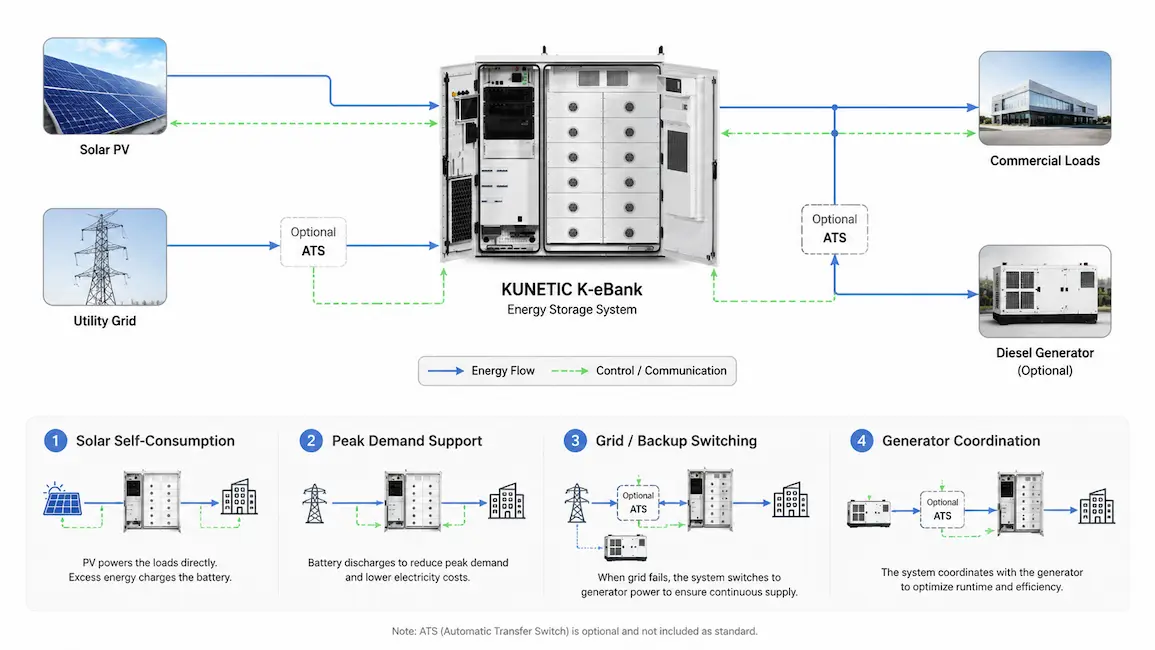
Solar PV can supply the site load first, with surplus generation directed to battery storage. Stored energy can be used when solar output decreases.
The battery can discharge when the site reaches a scheduled or measured demand peak.
The PCS manages bidirectional energy flow between the battery and AC system according to solar production, electricity tariffs, demand targets or external controls.
The integrated STS provides the switching interface between grid-connected and off-grid operation. Module transfer time is specified below 10ms, while complete backup performance must be verified against the project load and system design.
A diesel generator can be incorporated for remote sites or extended backup. Generator start, stop and charging logic are configured for the project.
An ATS is selected when automatic transfer is required between the grid, generator or another AC supply arrangement. It is not included in every standard configuration.
Integrated Outdoor BESS
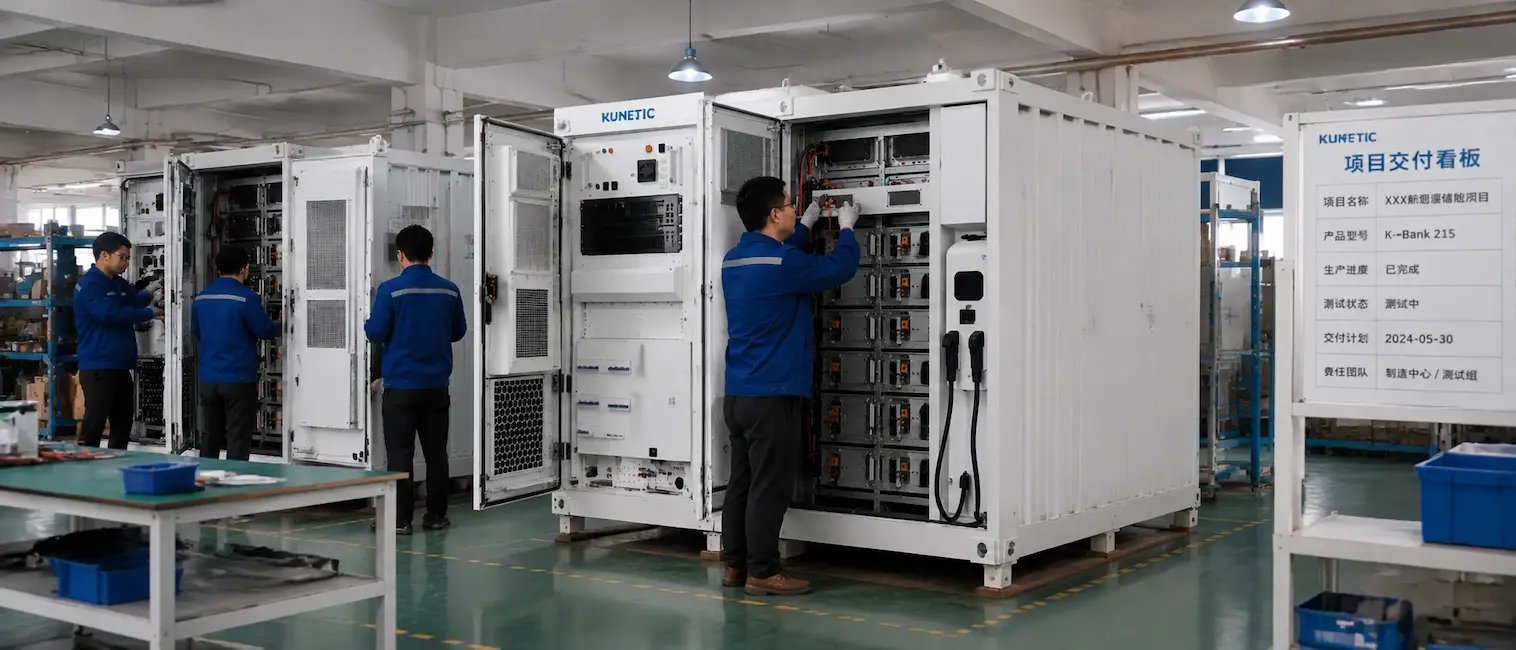
The K-eBank-241FHYB2 brings the main battery storage, power conversion, switching, monitoring, cooling, fire protection and electrical-distribution functions into one outdoor cabinet. This gives EPC contractors and project owners one defined platform to configure, install and operate, while still allowing project-specific decisions such as ATS selection and control strategy.
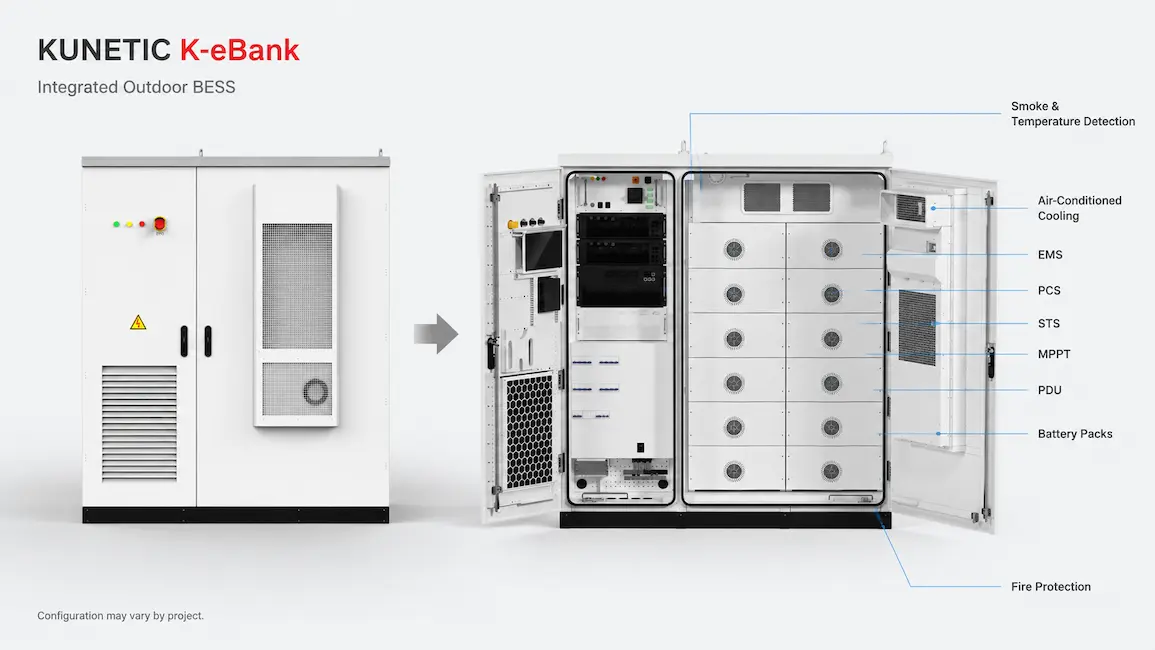
Twelve battery packs form a 240S1P system with 241.152kWh of rated energy, supported by pack-level monitoring and cabinet-level battery management.
The 120kW bidirectional MPPT stage connects PV generation to the high-voltage battery bus.
The PCS manages charging and discharging between the battery and AC system for grid-connected and off-grid applications.
The 200kW STS provides the grid, PCS and backup-load switching interface. An ATS can be added where automatic source transfer is required.
The BMS collects cell voltage, temperature and operating data, manages balancing and communicates with the higher-level control system.

The IP54 cabinet uses air-conditioned cooling and includes smoke detection, temperature sensing and fire-protection components.

Battery storage, power conversion, switching, monitoring, cooling and distribution are integrated in one outdoor cabinet, preserving space for project-specific decisions.
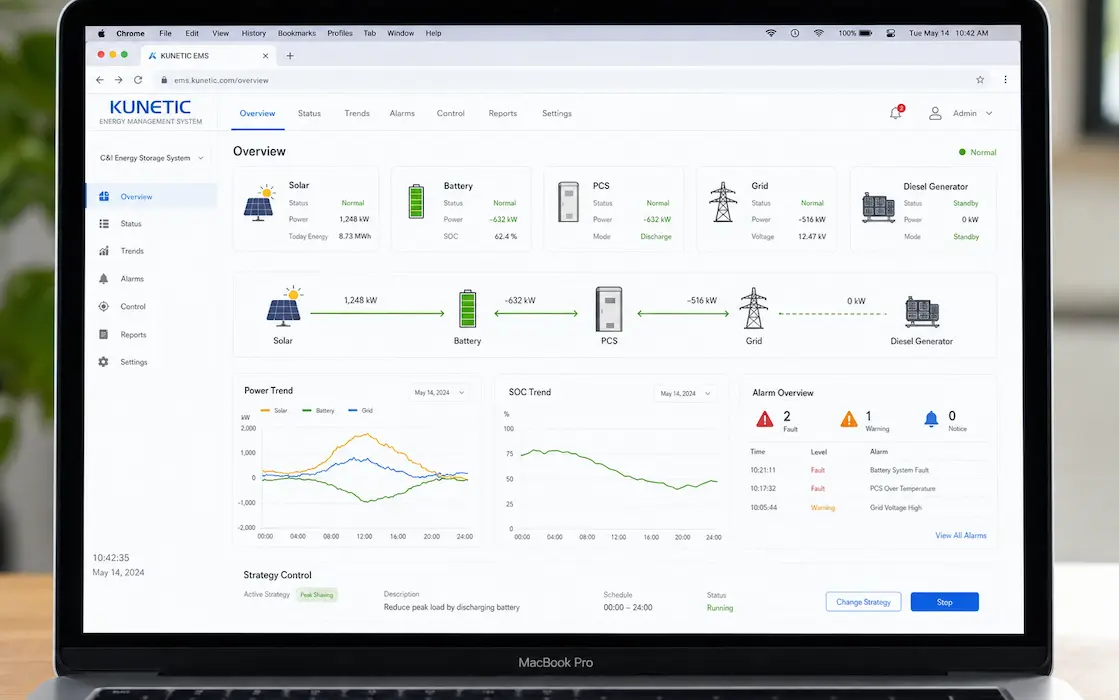
KUNETIC Energy Management
KUNETIC EMS gives operators a central view of battery storage, power conversion and system operating data. It supports daily supervision, operating-strategy settings, alarm review and performance analysis. Available functions and remote-access arrangements are confirmed according to the project communication architecture.
View battery, PCS, grid connection and connected-energy-source status.
Check SOC, voltage, current, power flow and equipment status.
Review charging, discharging, solar production and load trends.
Review active and historical alarms.
Configure permitted parameters and EMS strategies according to user authority.
Software upgrade and cloud-platform access are available according to the approved project network and user-access design.
Applications
The K-eBank-241FHYB2 can be configured for sites that need to store solar energy, control peak demand, strengthen backup power or combine several energy sources. Final design is based on the load profile, solar capacity, grid conditions, operating schedule and required backup duration.
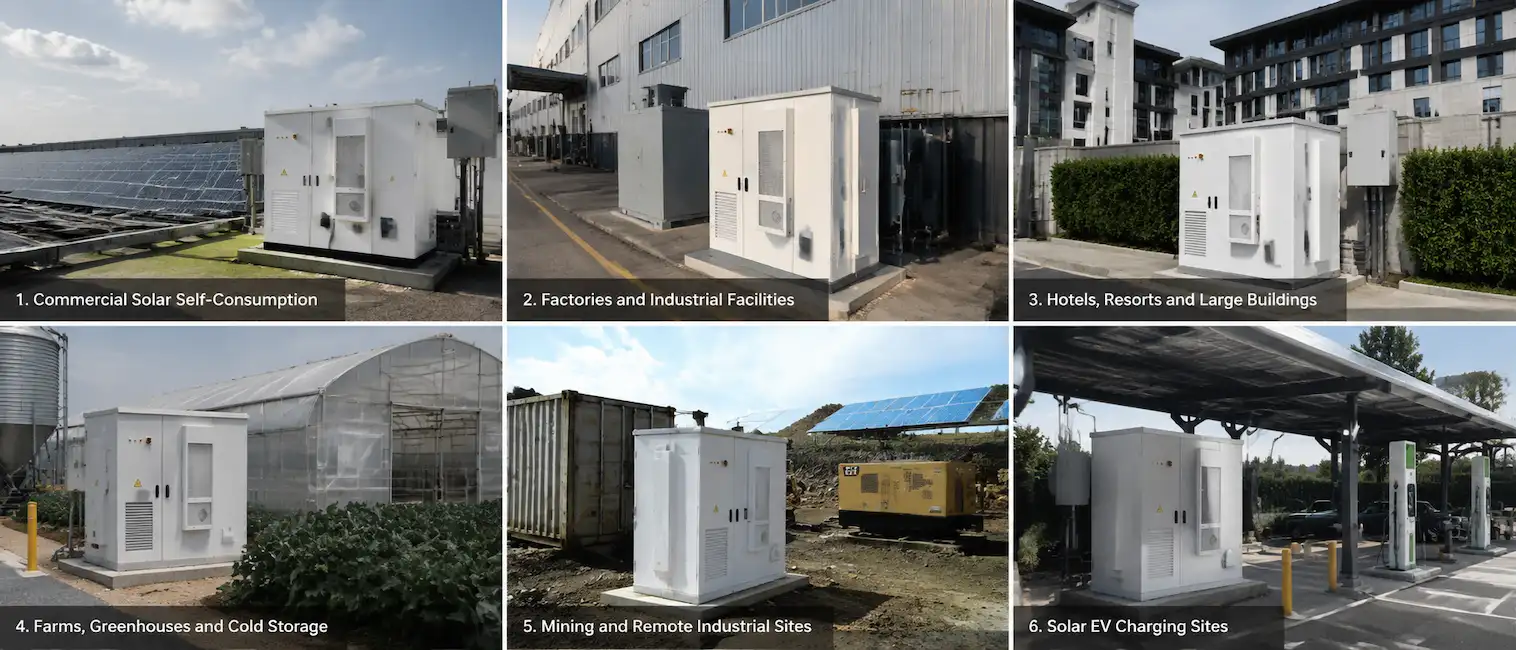
Store surplus electricity from rooftop or ground-mounted solar systems and use it after solar production falls.
Support changing production loads, reduce short demand peaks and provide stored energy for selected equipment.
Coordinate solar and battery storage for HVAC, lighting, pumps, kitchens and common-area loads.
Store daytime solar energy for irrigation, ventilation, refrigeration, pumping and evening agricultural loads.
Combine solar PV, battery storage and diesel generation for remote operating loads and reduced generator runtime.
Store solar or off-peak grid energy and release it when several vehicles charge at the same time.
From grid-connected commercial solar to generator-supported remote microgrids, the K-eBank platform can be configured around different energy sources and operating priorities rather than limiting every project to one fixed use case.
Project-Specific Configuration
A commercial battery storage system should be selected from real site data, not only from a required capacity. KUNETIC reviews the load profile, solar system, grid connection, generator arrangement and backup priorities before confirming the final electrical configuration and operating strategy. Configuration and branding support are also available for EPC contractors, distributors and approved OEM/ODM projects, subject to technical and order review.
Confirm PCS power, usable energy, critical load and required operating time.
Match the PV array voltage, current and capacity to the MPPT range and operating strategy.
Define grid connection, backup loads, STS logic and whether an optional ATS is needed.
Review generator rating, minimum loading, start/stop signals and charging strategy.
Select monitoring interface, protocol, remote-access method and operating permissions.
Engineer a larger multi-unit architecture where one 241kWh cabinet is not sufficient.
Discuss cabinet branding, labels and customer-facing documents for approved distributor and OEM/ODM orders.
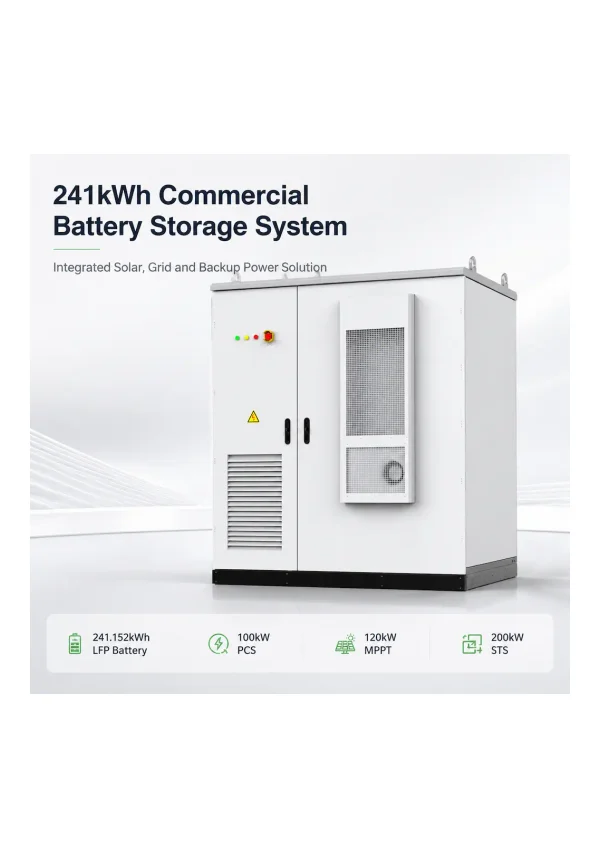 KUNETIC K-eBank-241FHYB2 241kWh Commercial Battery Storage System Datasheet
 Downloads
Download the KUNETIC K-eBank-241FHYB2 datasheet for confirmed system, battery, MPPT, PCS, STS and environmental specifications, together with the hybrid-energy topology and project-configuration references for commercial battery storage applications.
FAQ
Yes. The system can be configured to coordinate solar PV, battery storage, the utility grid, a diesel generator and site loads. Energy-flow priorities, generator logic, charging strategy and switching arrangement are defined according to the project.
No. The ATS is an optional project configuration selected when automatic transfer is required between the grid, a diesel generator or another AC source. KUNETIC confirms the requirement after reviewing the single-line diagram and backup strategy.
Yes, when the project is designed with the correct switching, control and backup-load arrangement. The supported loads and operating time must be calculated from the actual load profile and available battery energy.
It can supply up to 100kW of rated load power. Runtime depends on the actual load, usable battery energy, operating reserve and system losses, so KUNETIC calculates backup duration from project load data rather than using one generic claim.
Service life depends on charging frequency, depth of discharge, operating temperature, SOC management and maintenance. The system uses LFP cells, while final cycle-life, capacity-retention and warranty terms are confirmed in the quotation and commercial contract.
The standard K-eBank-241FHYB2 configuration described here is transformerless. An external transformer may still be required where site voltage, grounding, isolation requirements or local grid rules differ from the system connection.
Yes, a larger multi-unit architecture can be engineered when one 241kWh cabinet is not sufficient. Cabinet quantity, AC connection, protection coordination, control hierarchy and EMS strategy must be designed for the project.
KUNETIC normally needs the installation location, grid voltage and frequency, load profile, peak and average load, solar capacity, critical loads, backup duration, generator information, available single-line diagram and destination-market grid or certification requirements.
Tell us about your site load, PV capacity, backup requirements, or target project size. Our engineers will help configure the right system for your needs.
KUNETIC 241kWh Commercial Battery Storage System for Solar, Grid and Backup Power
Datasheet request
Request received. We will send the datasheet shortly.
KUNETIC 241kWh Commercial Battery Storage System for Solar, Grid and Backup Power
Product inquiry
Tell us about your site load, PV capacity, backup requirements, or target project size. Our engineers will help configure the right system for your needs.
Inquiry received. Our team will respond shortly.