Table of Contents
What can commercial battery storage do for your business?
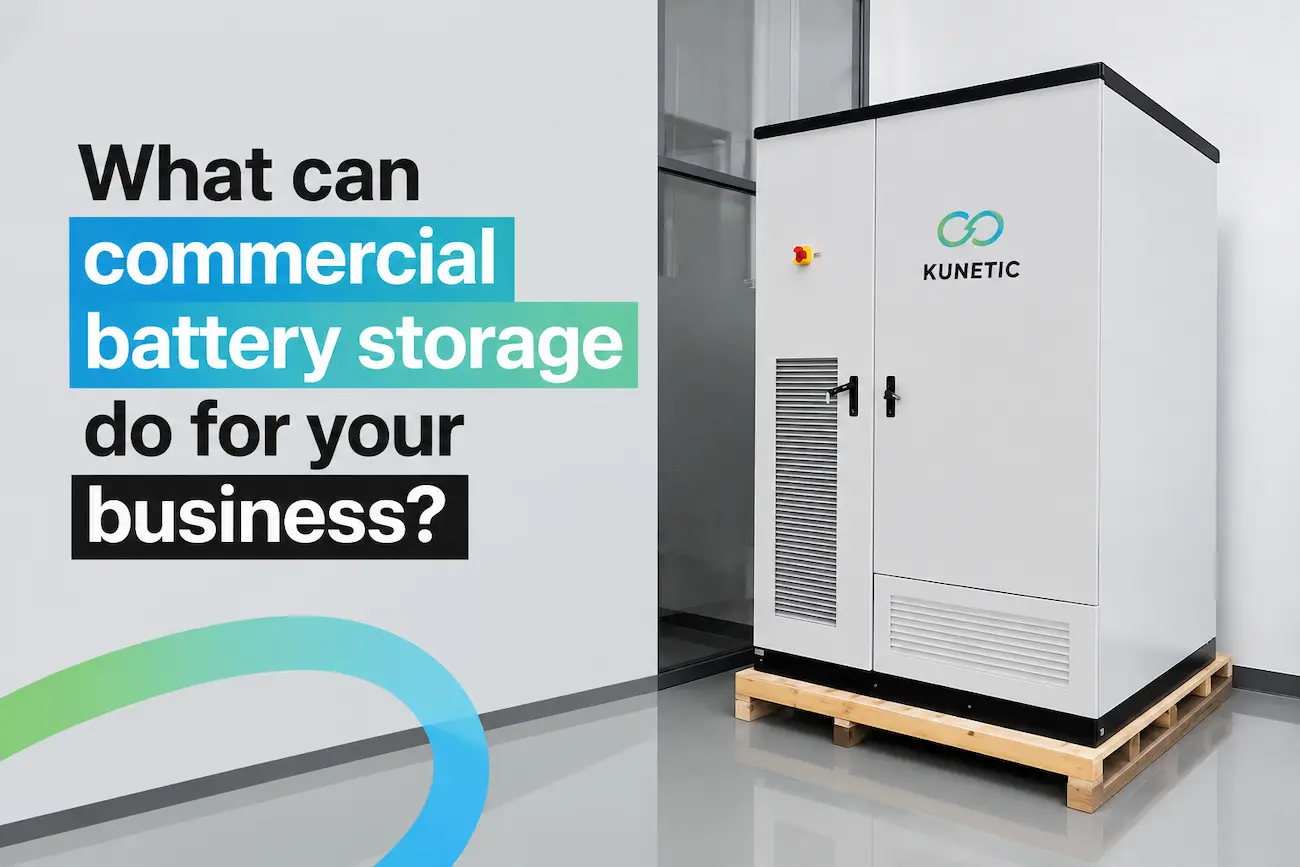
Commercial battery storage is a behind-the-meter battery energy storage system. These commercial battery storage solutions let a business change when and how it draws power from the grid.
Start by reviewing the site's load profile, peak demand, solar production, backup requirement and operating goal. Do not size a system from the building's floor area.
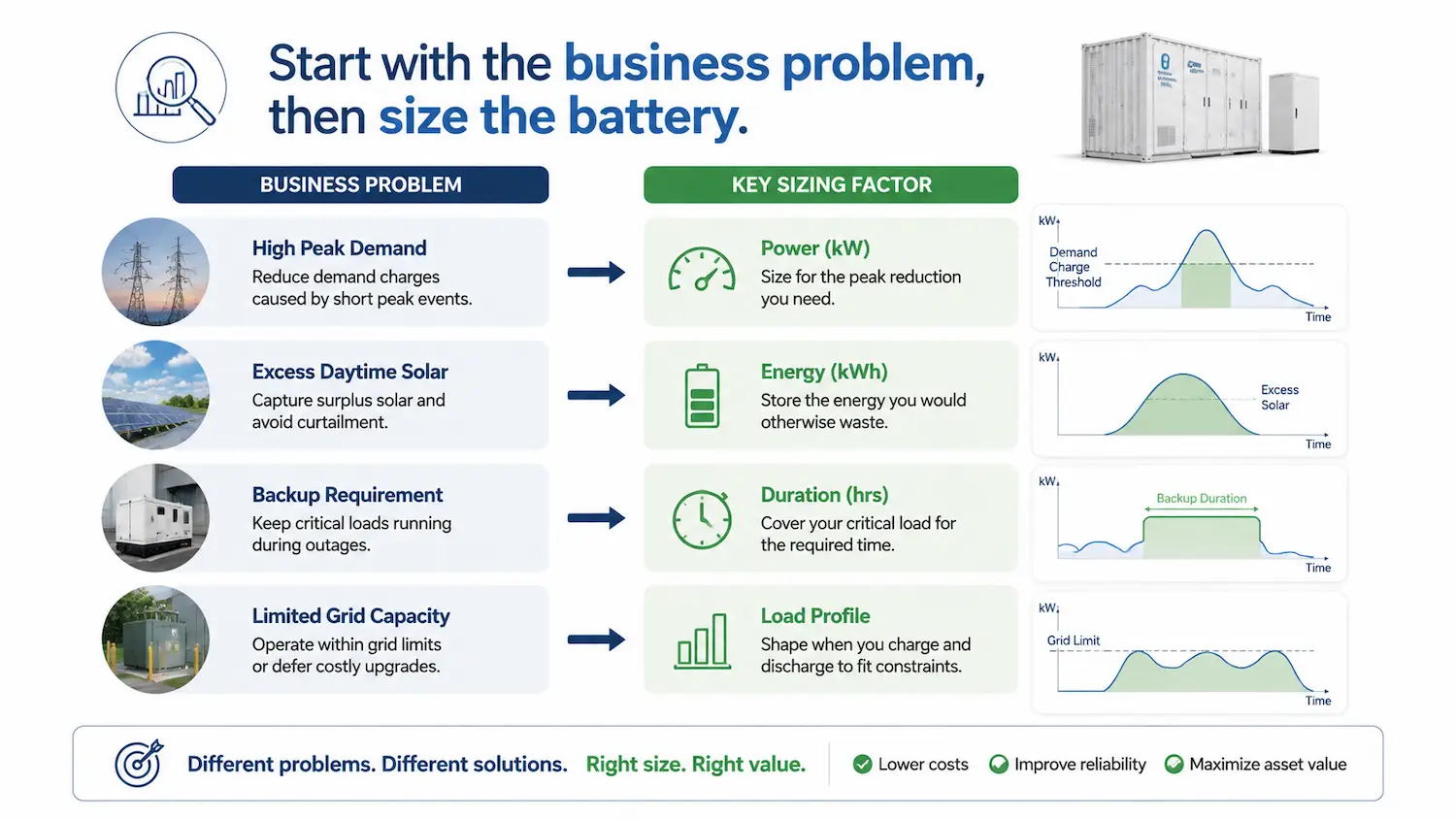
Most projects begin with one of four problems:
Business need | What the battery needs to solve |
High peak demand | Reduce short power peaks seen by the grid |
Excess daytime solar | Store surplus PV energy for later use |
Backup requirement | Support selected critical loads for a defined time |
Limited grid capacity | Buffer high-power loads such as EV charging |
Two batteries with the same energy capacity can perform very differently if their power ratings or control strategies differ. Start with the problem the site needs to solve, then choose the equipment.
How do you size commercial battery storage?
kW vs kWh
Commercial battery storage is usually described by two numbers. kW is power; kWh is energy.
A 100kW / 200kWh system has about two hours of nominal energy at 100kW output. A 50kW / 200kWh system stores the same nominal energy, but the simple kWh ÷ kW calculation gives about four hours at 50kW.
Neither configuration is automatically better. A factory that needs to cut a short 120kW demand spike may need more power. A site that wants to keep a 40kW critical load running for several hours may need more energy duration.
Why your load profile matters
A useful commercial BESS recommendation starts with interval load data, not labels such as "medium factory" or "large warehouse." NREL research on commercial buildings found that load-profile shape was an important predictor of optimal battery size, while demand charges strongly affected project economics.
The engineer should also check peak demand, electricity tariff, PV production, grid voltage, critical loads and the required operating window. Building area or daily kWh consumption alone is not enough to size the battery accurately.
For broader procurement and economics questions, see KUNETIC's Commercial Energy Storage Systems Buyer's Guide and Commercial Battery Storage Cost Guide. This article stays focused on sizing and system selection.
Which commercial battery storage system fits your project?
The system format should follow the required power, energy, integration needs and site constraints. There is no universal kWh threshold where every project should switch from cabinets to a container.
Outdoor cabinet
Outdoor cabinets are a common fit for distributed C&I projects where storage needs to sit close to the building, PV system or local loads.
KUNETIC's 50kW / 120kWh K-eBank is one example. Its outdoor enclosure combines LFP storage, solar input, grid interaction and BMS functions. Multiple units can be paralleled on the AC side when more capacity is needed.
For sites that need more energy in one cabinet, KUNETIC also offers 241kWh systems and a 125kW / 261kWh commercial BESS. The 241kWh platform supports configurable PCS power. The 261kWh liquid-cooled system integrates PCS, MPPT, STS, BMS and EMS for solar, peak management and selected critical-load applications.
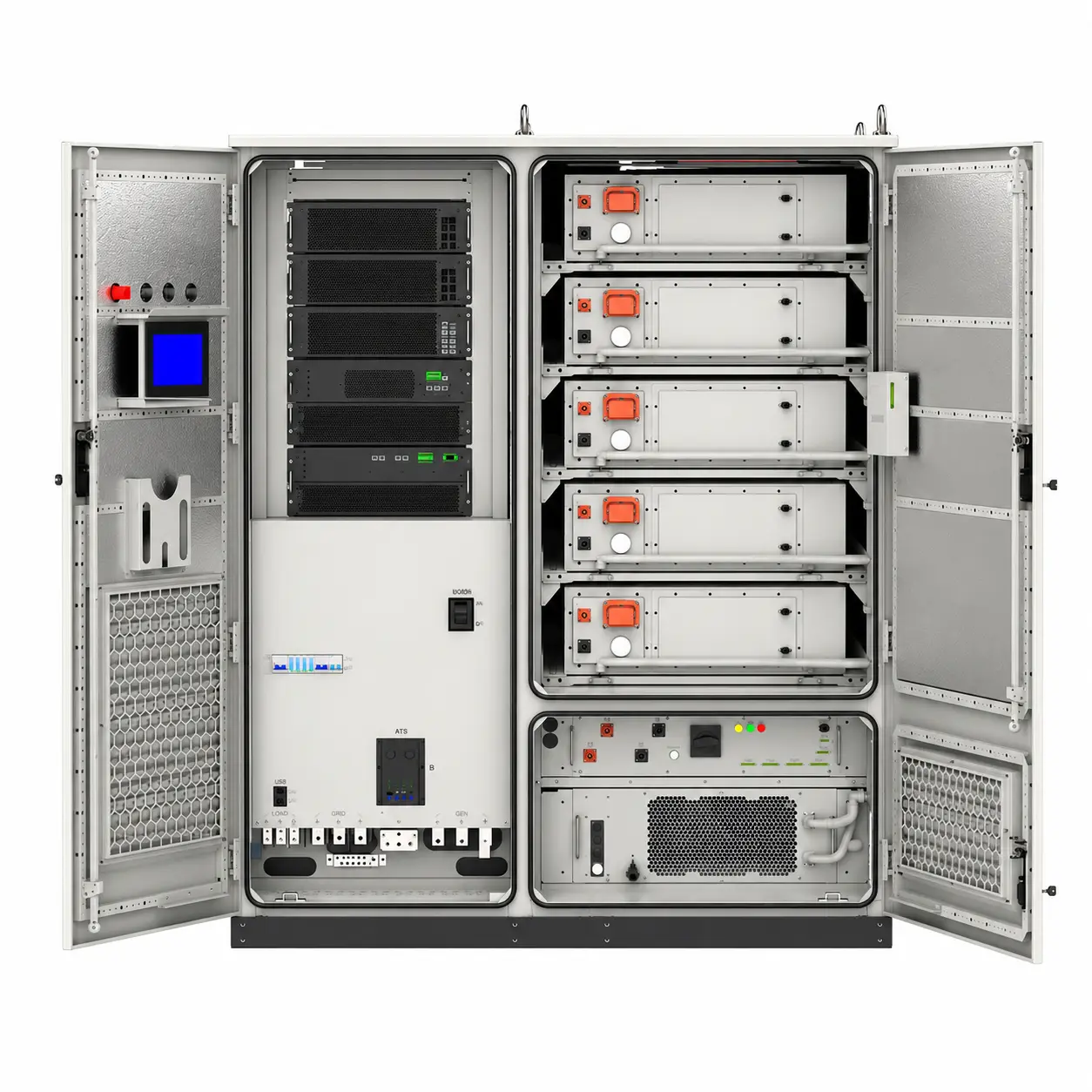
View product details: 125kW / 261kWh Commercial BESS
Multiple cabinets
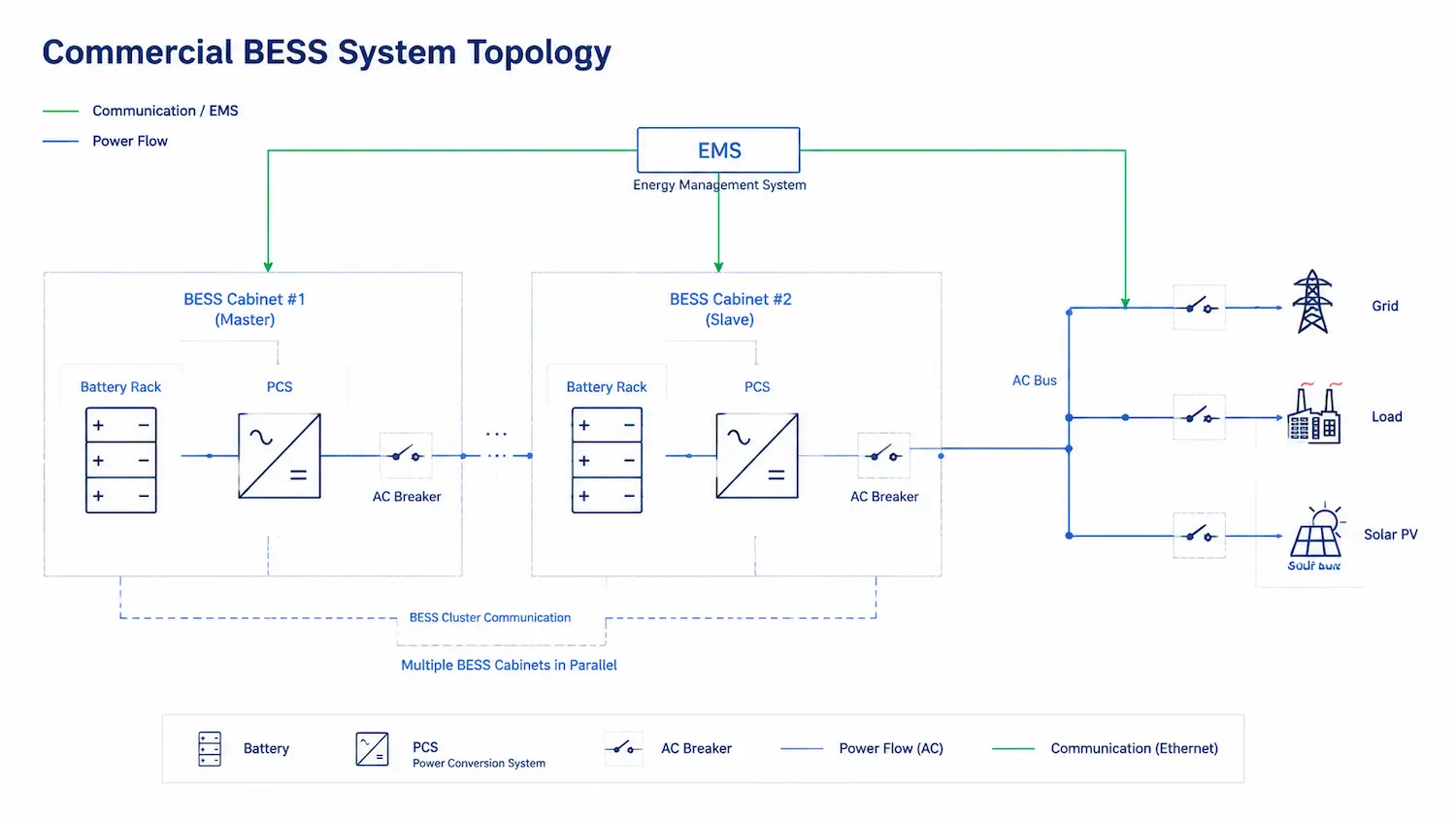
Multiple cabinets are useful when a project needs modular expansion, distributed installation or staged deployment. KUNETIC factory engineering references use multiple battery and PCS blocks with EMS coordination and AC-side combining. In the supplied 220kW design, the power path connects Battery Rack → PCS → AC bus → Grid / PV / DG / Load. The 400kW design also uses master/slave EMS control and AC combining for parallel operation.
Commercial solar battery storage needs to account for PV capacity, inverter architecture and the timing of surplus generation. Backup adds another requirement: the project must define the critical load, backup duration and switching arrangement. A grid-connected battery does not automatically keep the whole building powered during an outage.
Container BESS
A containerized system can be a better fit for larger industrial or MWh-class projects, especially when the project calls for centralized integration. KUNETIC's 750kW / 1.446MWh Container BESS is one current example for industrial, solar-diesel and remote energy projects.
The same selection rule still applies: start with the load and use case. An industrial site does not automatically need a container.
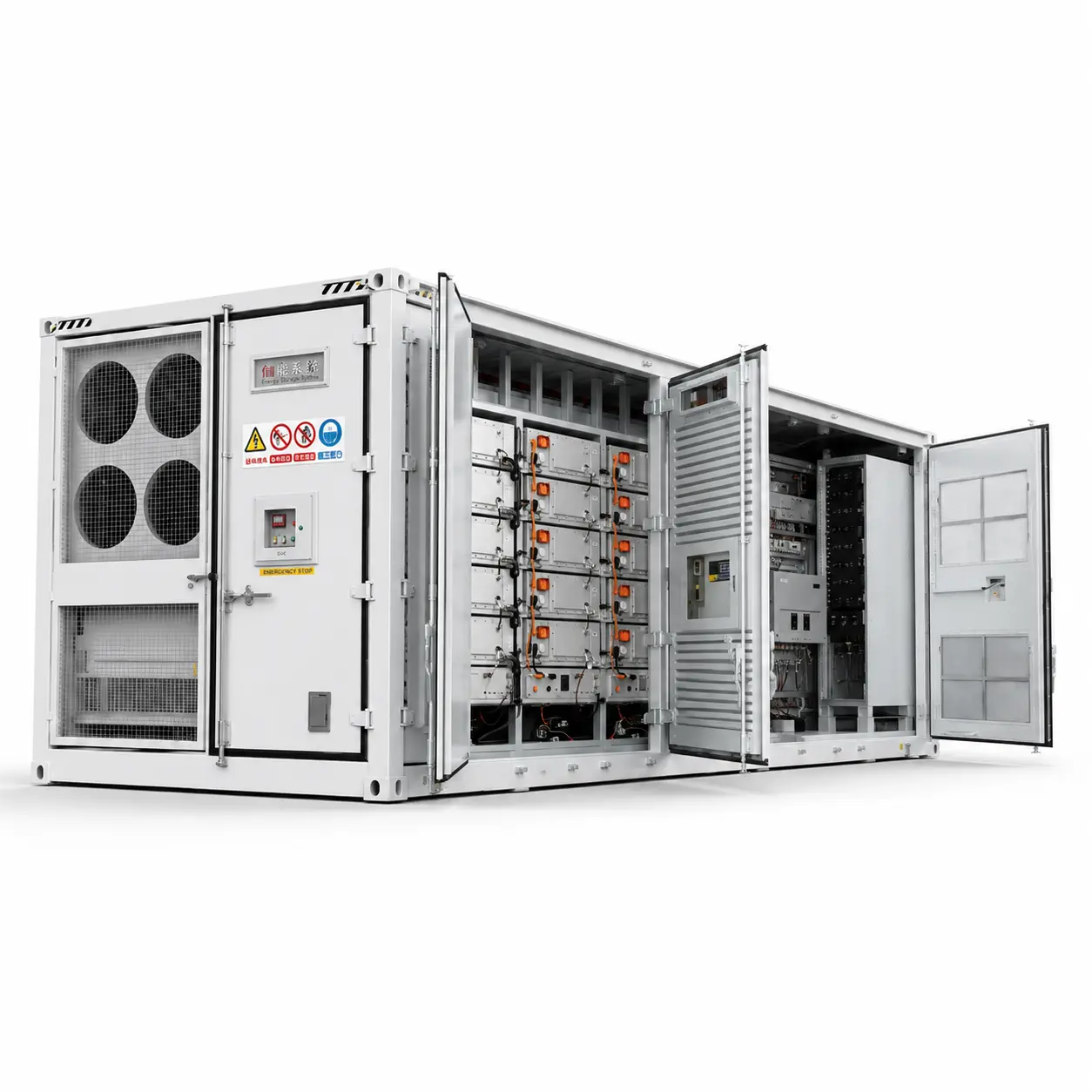
View product details: 750kW / 1.446MWh Container BESS
What should you prepare before requesting a BESS proposal?
A useful proposal starts with site data. Before asking a supplier to recommend a commercial battery storage system, prepare:
- 15- or 30-minute load profile
- Peak demand in kW
- Grid voltage and frequency
- Existing or planned PV capacity
- Critical-load power, if backup is required
- Required backup duration
- Project location and ambient conditions
- Available installation space
- Expected future expansion
These inputs let the engineering team determine PCS power, usable battery energy, operating strategy and whether the project is better suited to one cabinet, several cabinets or a containerized system. NREL's commercial load-profile work also uses 15-minute interval data to understand time-sensitive building demand rather than relying only on annual consumption.
Review the electrical topology during the same sizing process if the project includes solar, generator coordination or more complex hybrid operation. KUNETIC's 261kWh Solar-Storage Integrated System shows one integrated architecture in more detail.
Planning a commercial battery storage project? Share your load profile, peak demand, solar capacity, grid voltage, backup requirement and project location with KUNETIC for an initial configuration review.
Commercial battery storage FAQ
What size commercial battery do I need?
There is no standard size based only on business type. Start with peak power, interval load profile, required duration, tariff, solar production and backup objective.
Can commercial battery storage work with existing solar?
Yes, in many projects. The final design depends on the existing PV inverter architecture, solar capacity, export profile, battery power and control strategy.
Can commercial battery storage provide backup power?
Yes. A backup design must specify which loads remain powered, how long they must run, and what switching or islanding equipment is required.