Table of Contents
Solar panels don't always have to stay in one place
People usually picture solar panels on a factory roof, above a warehouse, or across a solar farm. Developers usually build projects that way because they expect the site to remain in use for years.
A solar panel only generates electricity. Project teams make separate decisions about how to mount, transport, and deploy it.
That matters for mines, construction projects, and temporary industrial sites. The load may be hundreds of kilometres from a strong grid connection. A project may last two years rather than twenty, and the working area may move again six months later.
The question then changes: what if the solar panels need to move with the work?
This need leads to a system that teams can pack, deploy, and move again as the project changes.
From solar panels to a mobile solar container
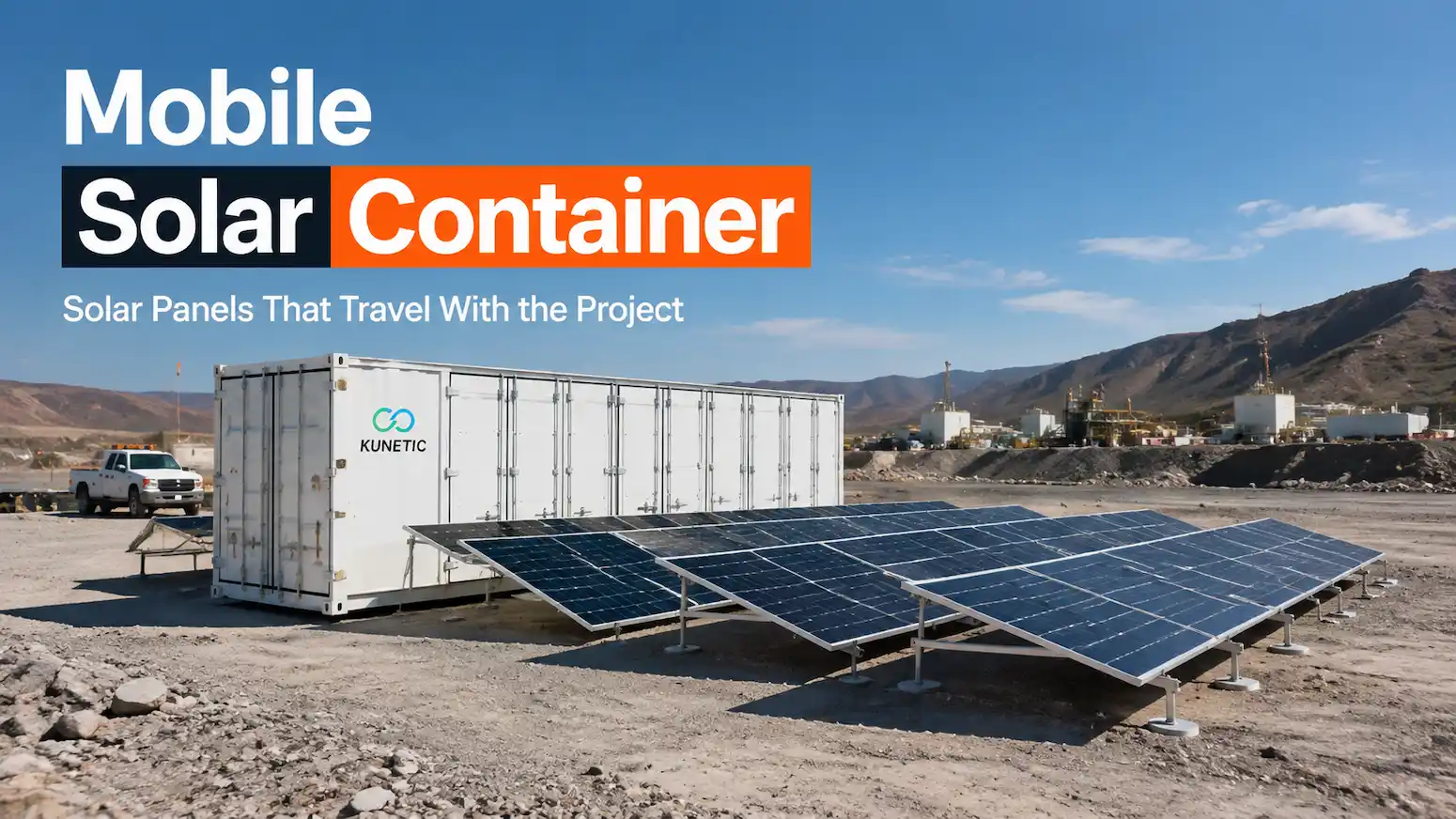
A mobile solar container is a transportable solar power system built around a deployable PV array. The panels are stored compactly for transport and expanded at the project site. The platform can also integrate battery storage, a PCS or inverter, and energy management controls when required.
A solar-powered shipping container can be a simpler setup. It may use several panels fixed to the container roof to serve a site office, communications equipment, or another local load.
A mobile solar container is built around transport and deployment instead. The container is the platform for a larger PV array. During travel, the modules and support structure are folded, stacked, slid, or otherwise stored compactly. At the destination, the array opens beyond the container footprint and creates a much larger working solar area.
The container also protects and organizes equipment during transport. Some systems use folding structures, some use rail-based arrangements, and others use different engineered mechanisms. Deployment designs vary. The principle stays the same: the array remains compact in transit and becomes much larger when it produces power.
How deployable solar panels travel and work on site
Before transport, the PV modules and support structure must fit within the platform's dimensional and mechanical limits. The system can then travel by truck or another suitable transport method.
A typical site sequence looks like this:
Stow → Transport → Position → Deploy → Secure and Connect → Generate
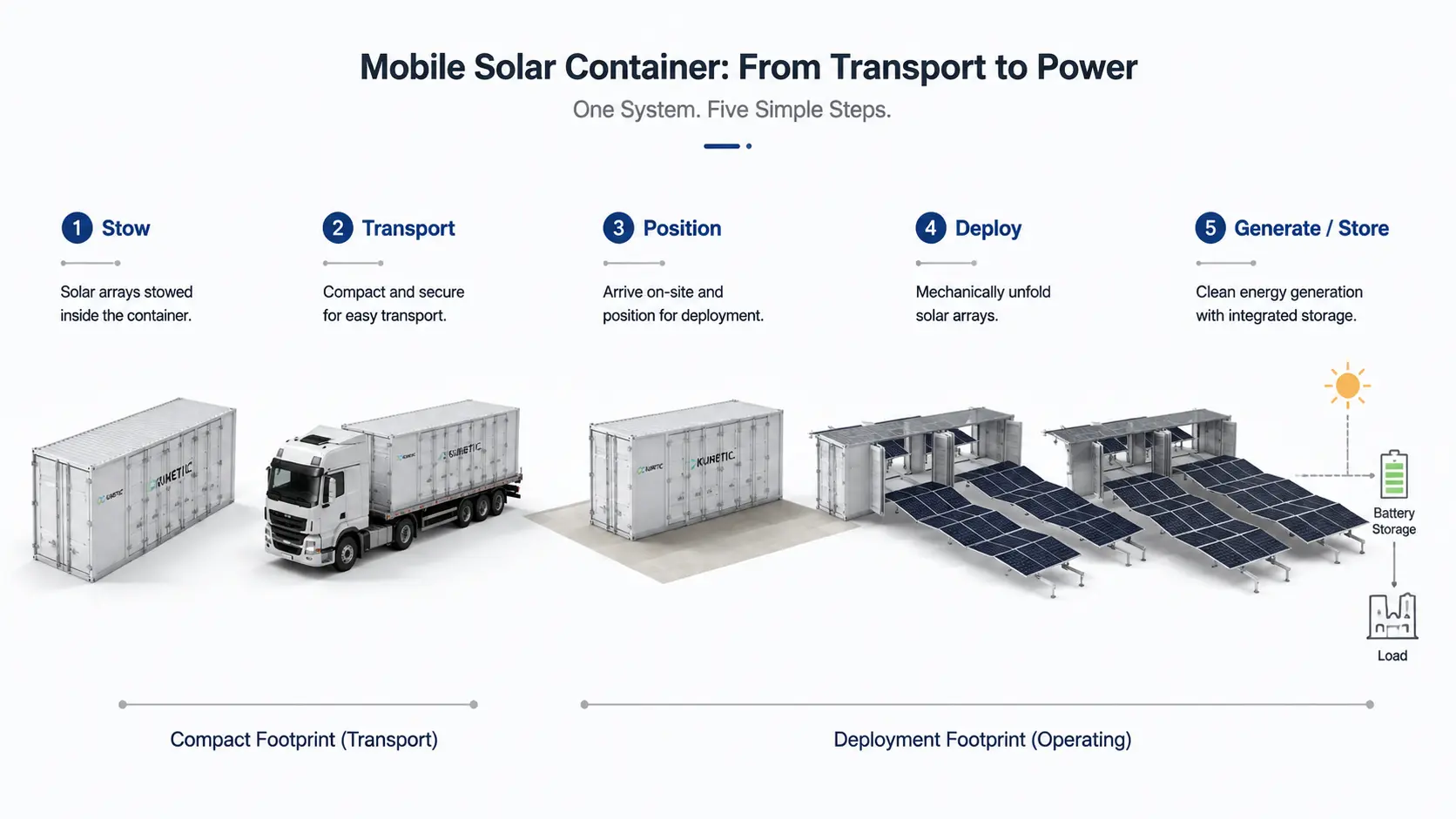
Positioning comes first. Can the truck reach the site? Is unloading or lifting equipment required? Is the ground reasonably level? Where will the array extend?
Then the solar structure is opened. Panels may unfold from a support frame, extend along rails, or use another deployment method. Once opened, the PV field can occupy considerably more space than the transport container.
That is easy to miss when looking only at transport dimensions. A mobile solar container saves space while travelling, but it still needs enough ground area to generate power.
Orientation, shading, terrain, wind conditions, and maintenance access still matter. Electrical connections, structural securing, cable routing, and commissioning also need to be planned.
"Mobile" does not mean there is no site work. Teams can engineer and integrate more of the system before arrival. They do not need to assemble every component separately on site.
What about solar panels fixed to the container roof?
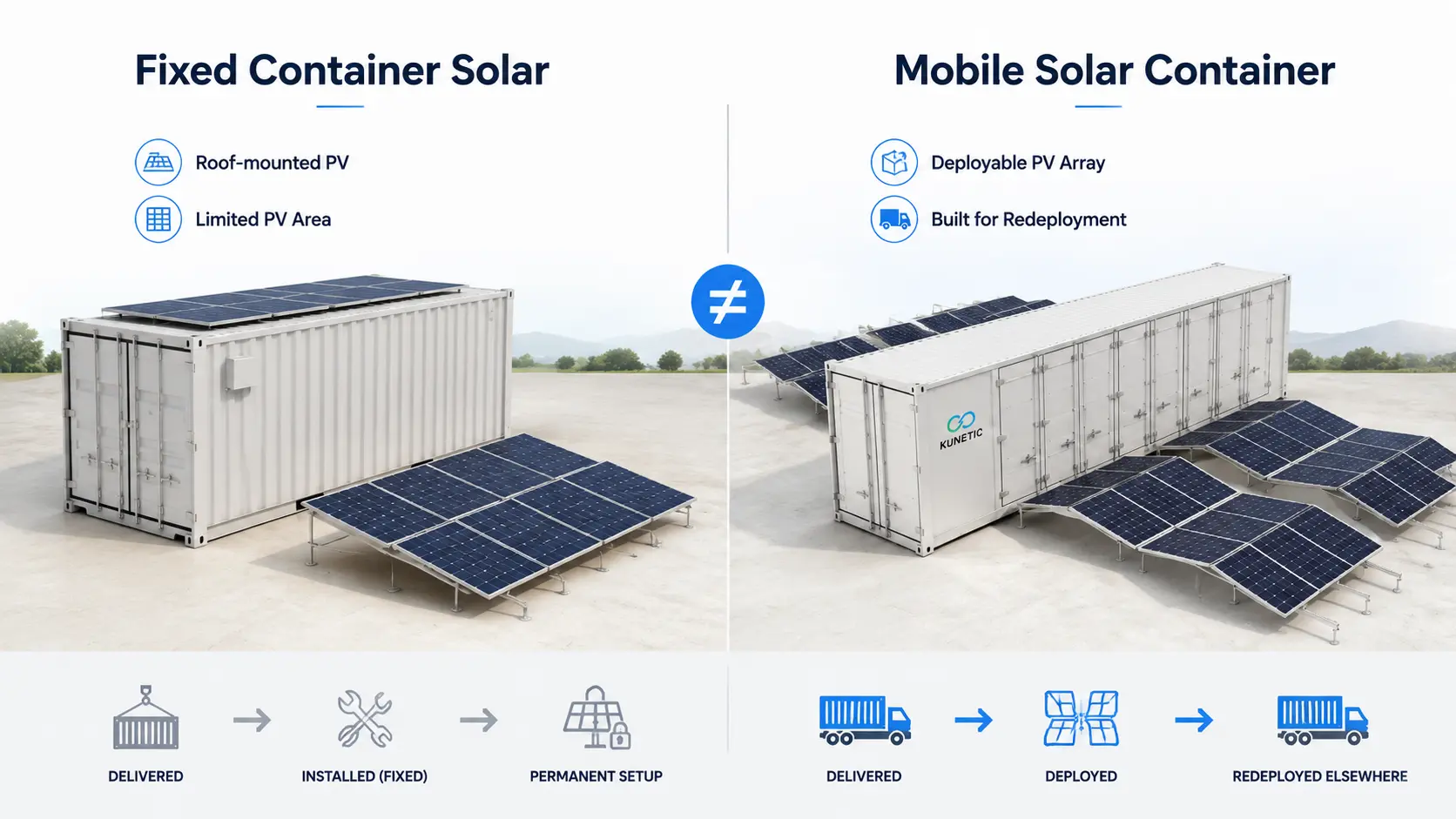
Both approaches can work, but they solve different problems.
| Fixed Container Solar | Mobile Solar Container |
PV area | Mainly roof or nearby fixed mounting area | Array expands beyond transport footprint |
Main purpose | Power the container or a nearby load | Bring a larger PV system to a project |
Deployment | Mostly fixed after installation | Designed around packing and redeployment |
Relocation | Possible, but PV may require separate work | Mobility is part of the system concept |
The difference is not simply whether a shipping container has solar panels. It is whether the solar array itself has been designed to travel.
What happens when the sun goes down?
A mobile solar container does not always need battery storage. Storage becomes useful when the site needs power after solar production falls. It can also help when PV output exceeds the immediate load or when the system operates with a weak grid or generator.
A construction site may have strong PV production around midday. Lighting, pumps, or accommodation loads may continue into the evening. A remote industrial site can face the same issue during several cloudy hours while equipment still needs electricity.
During strong solar hours, PV can supply the load while surplus energy charges the battery. Later, stored energy can support the load as PV production falls. This is the basic role of solar energy and storage when generation and demand happen at different times.
The PCS or inverter handles power conversion between the DC side and AC loads. The BMS monitors the battery. The EMS coordinates PV, storage, and other power sources.
Some projects have no grid connection. Others have a weak or unreliable grid. Mining and construction sites may already operate diesel generators. A mobile solar power system can therefore be configured as:
PV + Load
PV + Battery + Load
PV + Battery + Grid
or
PV + Battery + Diesel Generator
In a hybrid project, solar can carry part of the daytime load and charge the battery. Storage can cover part of the demand later. The grid or generator remains available when PV and stored energy are not enough.
The controls decide which source supplies the load, when the battery charges, and when another source needs to step in.
KUNETIC explains how PV generation, battery storage, and power conversion work together. See its 261kWh solar-storage integrated system breakdown.
Where does mobile solar actually make sense?
Mobility has value when the project can make real use of it.
Construction and temporary projects
A construction site may need electricity for site offices, tools, pumps, lighting, and temporary facilities before permanent electrical infrastructure is finished. If the equipment can be packed and moved to the next project, the solar system does not have to stay behind.
Mining and remote industrial sites
Mining is a natural fit because both the load and working location can change. Many remote sites already depend partly or heavily on generators. Mobile PV and storage can work alongside that existing power source. As operations move, the solar asset can move too. The project does not need another fixed plant at each new working point.
Islands, ports, and remote facilities
At isolated sites, logistics can matter as much as electrical design. Moving workers, structures, and separate equipment may be difficult. A containerized platform can simplify transport. The site still needs suitable access and enough space for the deployed PV array.
Emergency and temporary infrastructure
Temporary accommodation, field facilities, and emergency operations may benefit from equipment that can be transported and redeployed with less dependence on permanent electrical works.
Mobile solar is not automatically better for every project. A factory that will operate in the same building for decades may be better served by conventional rooftop PV. The same applies to a permanent site with suitable land for a fixed ground-mounted array.
Useful project questions include:
- How long will the project stay in one place?
- How often will the power system actually move?
- How much ground area is available after deployment?
- Can the container reach and be positioned at the site?
- Will most loads run during solar hours or after sunset?
- Is the project replacing diesel, reducing diesel use, or operating with the grid?
Those answers show whether mobility is useful in practice.
From deployable solar panels to a complete mobile power system
Once a project needs more than deployable panels alone, system integration becomes the main task.
Configuration starts with six project questions:
- How much PV can the site use?
- How much energy needs to be stored?
- What is the peak load?
- How much AC power must the PCS deliver?
- Is the project off-grid, grid-connected, or hybrid?
- Will a diesel generator remain part of the system?
KUNETIC's 150kW / 261kWh Mobile Solar Power Station is one commercial-scale example.
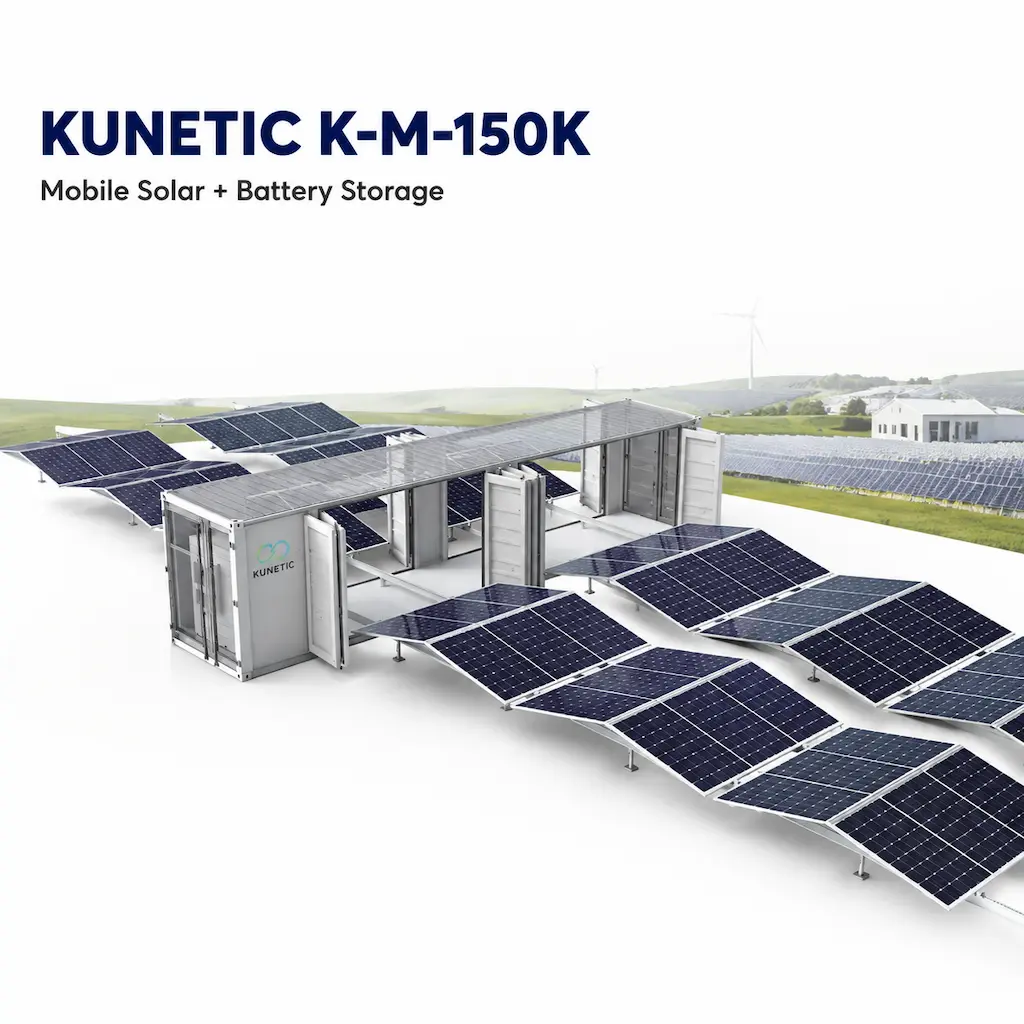
The PV array, battery storage, PCS or inverter, EMS, and hybrid interfaces can match the site's power demand and operating strategy. This avoids forcing every buyer into one fixed specification.
A construction project that mainly uses daytime power may need less battery capacity than a remote site with night loads. A mine that already runs generators may use PV and storage as part of a diesel-hybrid system. Another site may have a usable grid connection but still need storage to support solar use and selected loads.
Deployment conditions matter just as much as the electrical numbers. Before finalizing configuration, the buyer needs to confirm the available ground area and site access. They also need to assess temperature, dust, relocation frequency, and destination-market electrical or certification requirements.
A useful starting brief includes required PV output, load power, storage hours, deployment area, site conditions, and whether the system will work with the grid, a generator, or neither. Those inputs let teams configure the containerized solar power system around the project. They avoid forcing the project into a standard package.
Mobile solar container FAQ
Can you put solar panels on a shipping container?
Yes. Solar panels can be installed directly on a container roof or on a fixed structure around it. That works when the goal is mainly to power the container or a nearby load. A mobile solar container goes further. Its design includes transport and deployment of a larger PV array.
What is the difference between a shipping container with solar panels and a mobile solar container?
The main difference is the solar array. A normal shipping container solar system may use a fixed rooftop array. A mobile solar container carries a deployable array that can expand at the site and be packed again for relocation.
Does a mobile solar container need battery storage?
Not necessarily. A PV-only system may suit loads that operate mainly during solar hours. Storage becomes more useful when energy is needed after solar production falls, when the site needs buffering or backup, or when PV must coordinate with a grid or generator.
Can a mobile solar container work with a diesel generator?
Yes. It can be configured as part of a PV + storage + diesel hybrid system. The generator can remain available when PV and battery energy are insufficient. The controls coordinate the available power sources according to the project operating strategy.