English
 Deutsch
 Español
 Français
 Italiano
 Polski
 Română
 العربية
PROJECT DESIGN · SOMALIA
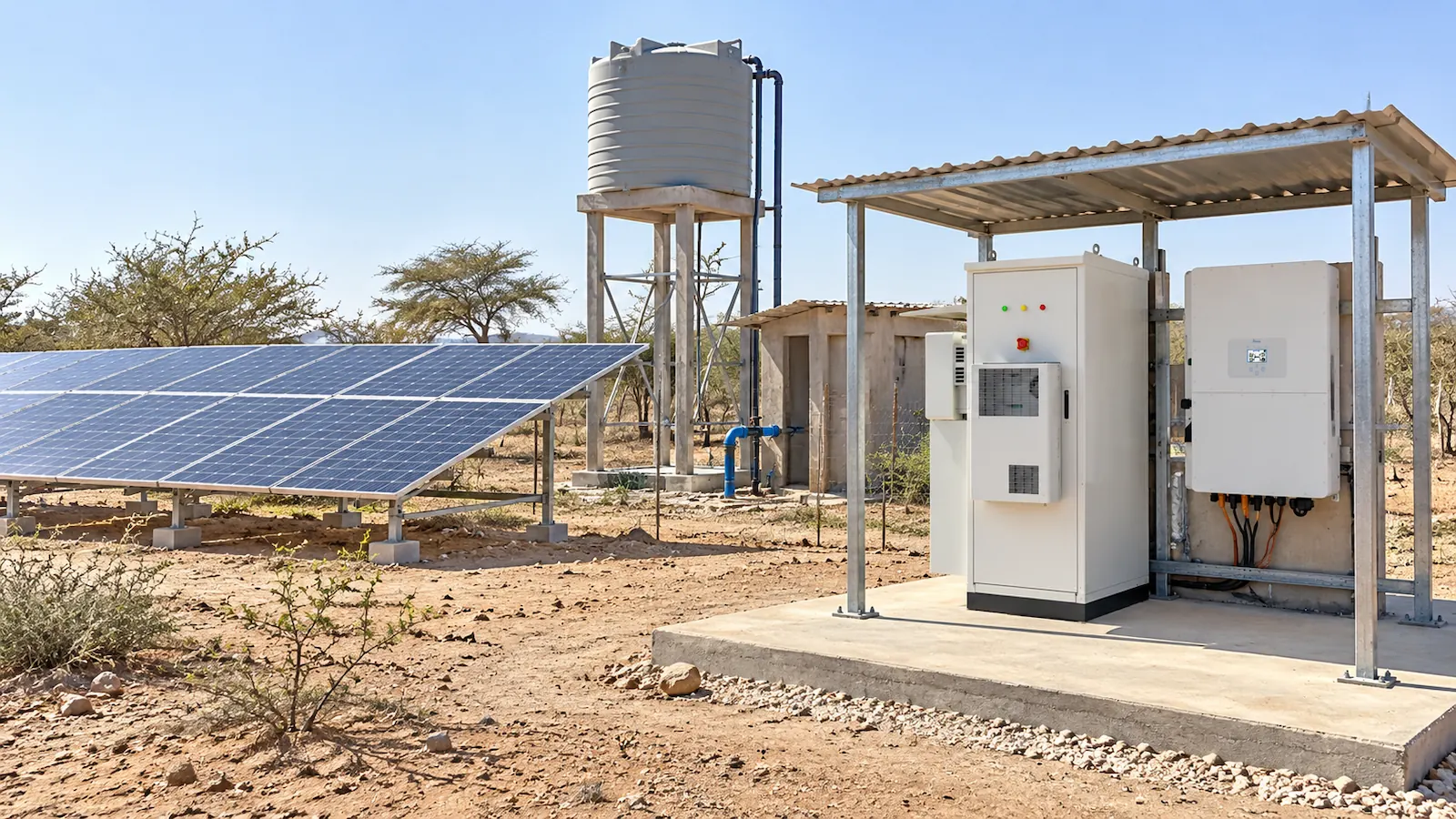
Solar Well Pump Power with Battery Storage in Somalia
A customer in Somalia needed a power plan for 45 wells. The request brought together pumps of different sizes, so one equipment package would not suit every site. The task was to plan solar well pump power around each well's load and water demand.
The customer's brief lists five pump-load groups, from 11 to 26 kW. It provides a starting point for comparing solar panels, battery storage and power conversion. Here we explain the choices behind that design and what a similar project needs to confirm. Customer details remain private. This is a project design; site checks are still needed before equipment selection and installation.
One customer's brief, 45 well sites
For this customer, planning starts with what each well must deliver. A pump that fills a tank during daylight has different power needs from one that runs into the evening. Using the same battery package at both could add cost or leave a supply gap.
The 45 wells fall into the groups below. These are the customer's preliminary requirements, not measured electrical loads or a record of installed equipment.
| Preliminary pump class | Wells in the brief | What to check before equipment selection |
|---|---|---|
| 11 kW | 4 | Electrical input, starting method and daily run time |
| 15 kW | 5 | Daytime and overnight pumping requirements |
| 19 kW | 12 | Required flow, pumping head and motor operation |
| 23 kW | 23 | Site differences within the largest load group |
| 26 kW | 1 | Motor starting, operating demand and available supply |
Grouping the wells makes the first comparison easier. Each site still needs its own checks before the equipment list is fixed. Water levels, cable routes, available space and existing power sources can differ even where pump ratings match.
Would storing water reduce the battery requirement?
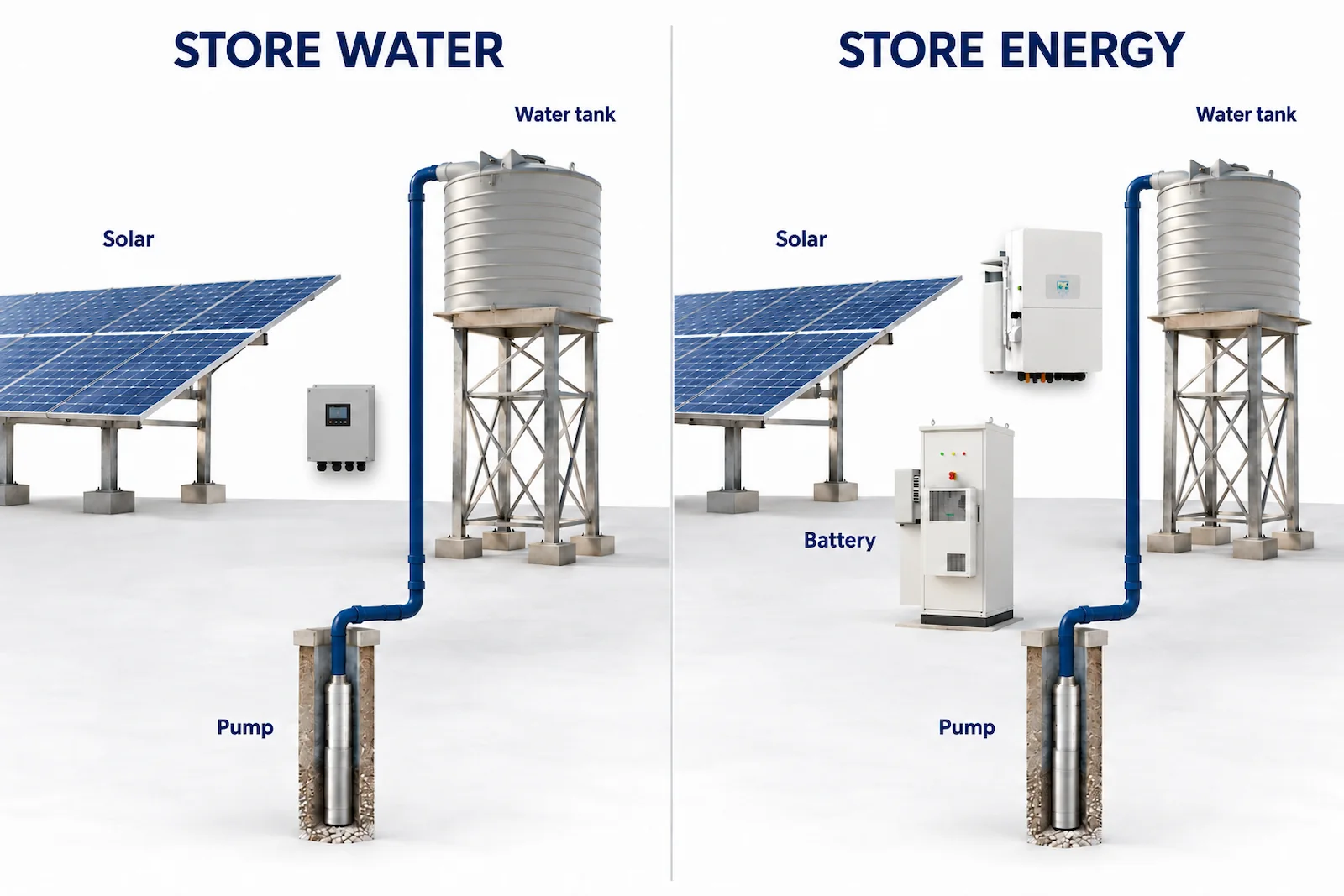
Before choosing a battery size, the design needs to answer a practical question: must the pump run after sunset, or can stored water meet the demand? A tank holds pumped water. A battery stores electricity to run the pump later.
For the Somalia brief, this is a choice to assess at each well. If daylight pumping into a suitable tank meets demand, the solar water pumping system may need less battery storage. If pumping must continue after sunset, it may need more. The Oxfam solar borehole pumping brief explains how to assess water needs and compare power sources.
A site can use both. Tank space, water pressure, pumping hours and cost guide the choice. Grid power or a generator may also help where solar and batteries cannot meet demand. These options need checking; they are not confirmed features of all 45 wells.
Turning the brief into a connected power system
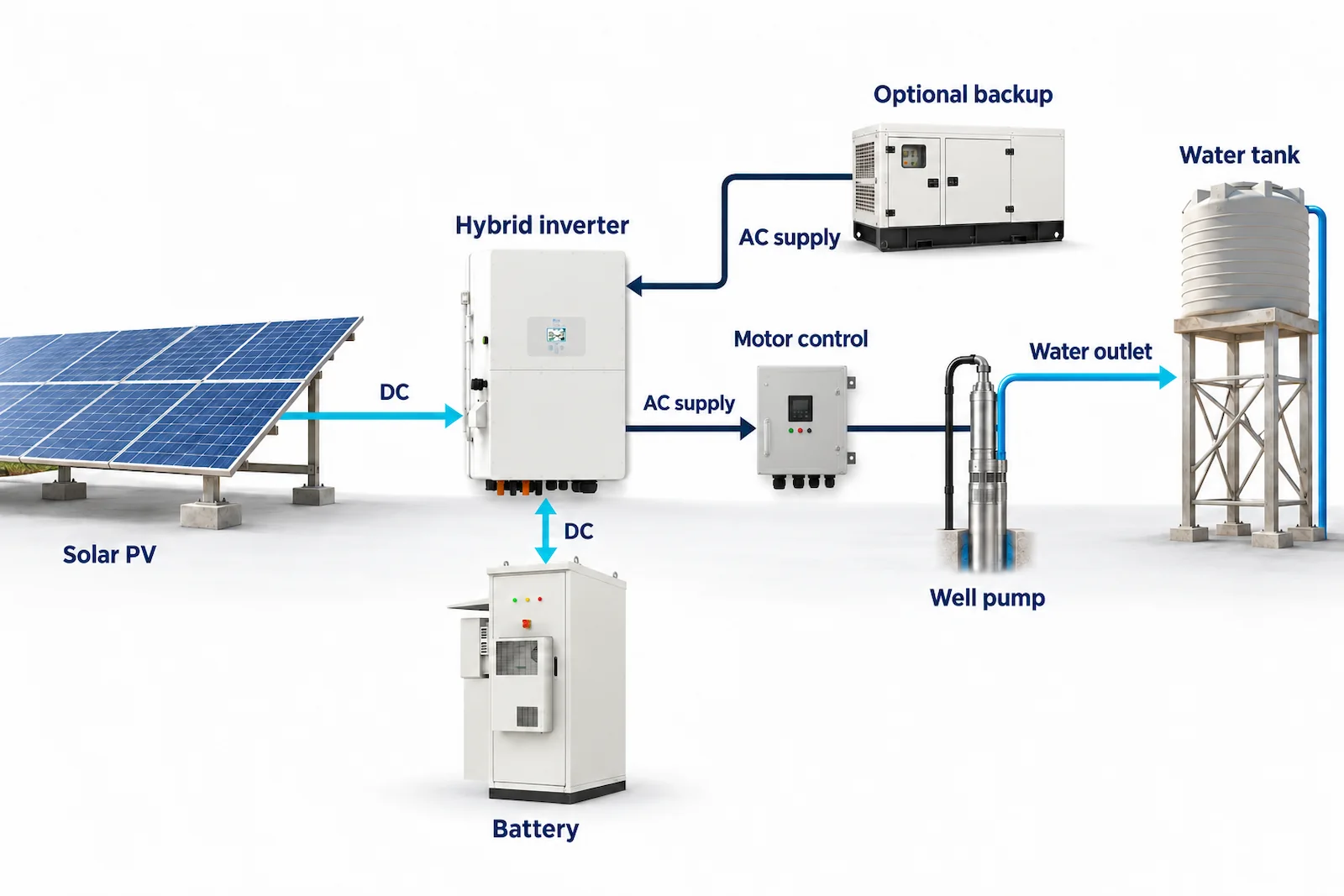
The proposed power system brings together solar panels, an inverter, a lithium iron phosphate (LFP) battery and pump controls. For the customer, choosing these as a compatible set matters as much as choosing their capacity. Switches and protection devices connect the power sources to the loads.
Solar panels produce DC electricity. An inverter converts this to AC power for the pump system. The design may use one hybrid inverter or separate solar and battery inverters. A starter or drive controls the pump motor. The battery also needs a suitable inverter; do not connect it directly to an AC pump.
If the site uses grid or generator backup, its wiring and switches must suit the inverter. Check that the battery and inverter can exchange control data. Their voltage and current limits must also match. Confirm these points in the electrical design before ordering.
Why pump size alone cannot set the battery size
The smallest pump class in the customer's brief is 11 kW. That number alone does not tell us how much stored energy a site needs. A steady 11 kW load uses 88 kWh over eight hours, for example. This is a sizing illustration, not a measured load or confirmed pumping schedule for this project.
Allow for energy lost in the inverter, the battery's discharge limits and a reserve. The battery's stated capacity is not all usable at the pump. Our kW and kWh guide explains power and stored energy.
Check motor starting too. A pump can draw more current at startup than while running. Assess the inverter, battery and starter or variable-frequency drive together. The inverter's rated power alone does not prove it can start that pump.
Cloudy days raise another question for this multi-site design. Should a well use more panels or storage, adjust its pumping hours, or have a backup source? Compare those choices against water demand and site conditions before adding equipment.
Planning the working day at each well
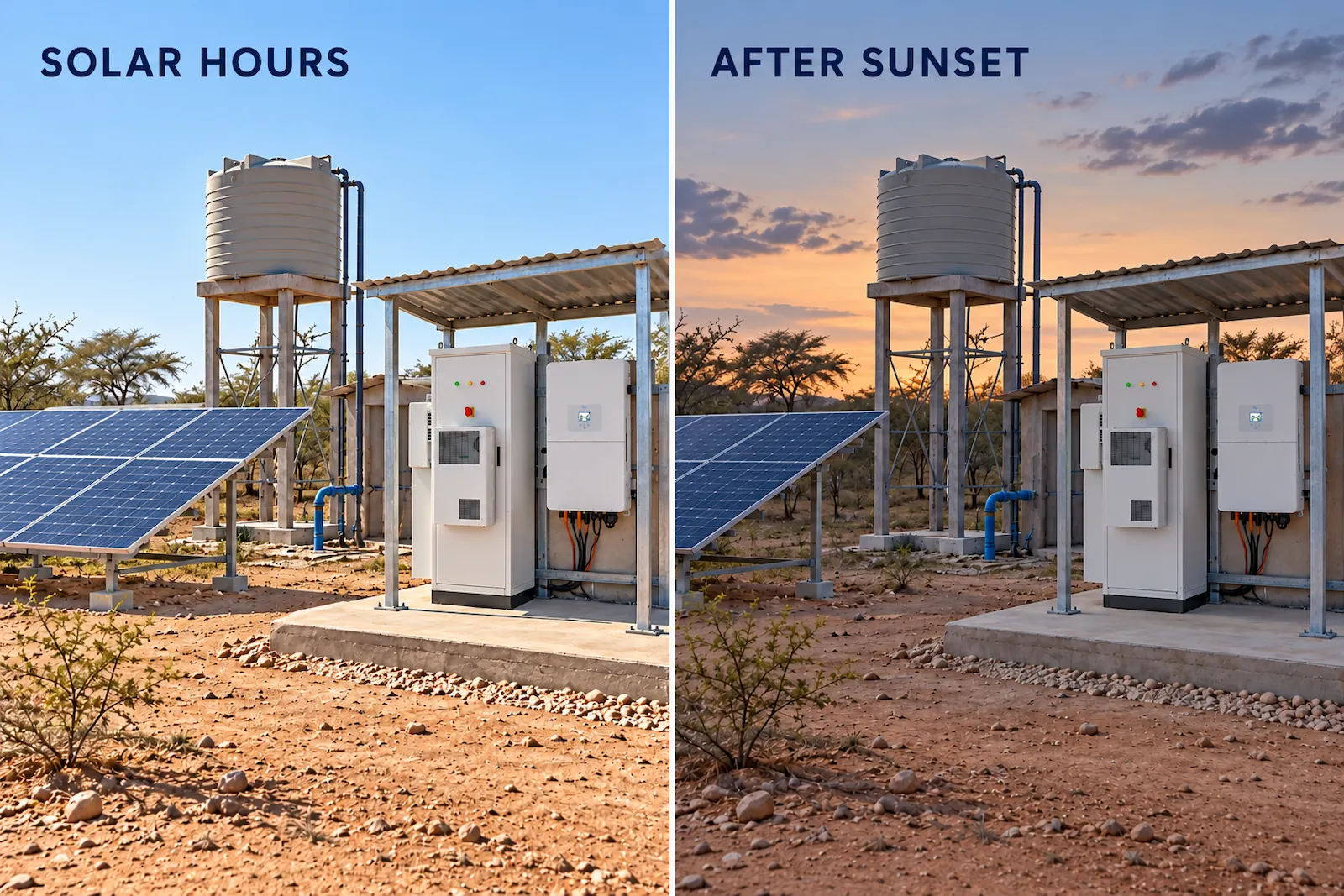
An operating schedule helps turn the customer's equipment brief into a usable design. During solar hours, panels can power the pump and charge the battery within the system's limits. Where water demand allows, more daylight pumping reduces the energy that must pass through storage.
If a well needs pumping after sunset, the battery can supply the agreed load until it reaches its reserve or another control limit. The plan must define what happens next: reduce the load, pause pumping where allowed, or switch to an approved backup source. The brief does not establish one operating schedule for every well.
Monitoring lets staff check battery charge, alarms and past operation. Remote access needs a suitable controller, data link and network coverage. List the required functions in the quote.
Looking beyond the equipment list
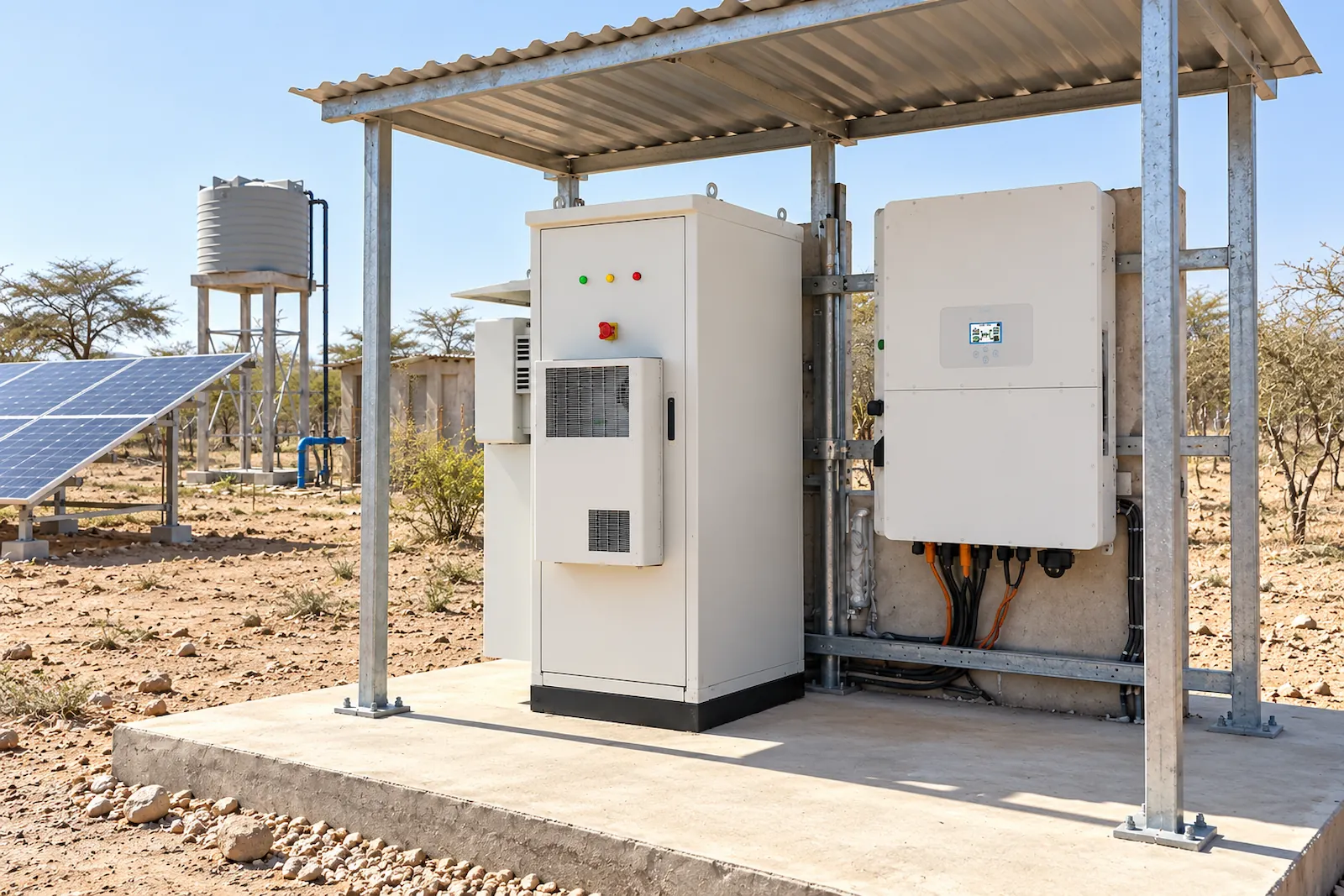
For a customer planning 45 sites, equipment selection also means thinking about service access. Each well needs space around the battery, inverter and motor controls. Check sun exposure, heat, dust, drainage and cable distances. An outdoor cabinet still needs a suitable base and the clearances in its manual.
For sites that need a separate DC battery cabinet, review the eBlock product specifications. This is one part of the power system. Check that the cabinet, inverter and pump can work together before choosing it.
Across the customer's 45 wells, clear isolation points, alarms and equipment records would help staff maintain each system. A service plan should identify the equipment at each well and the spare parts it needs.
Equipment budget: US$40,000–120,000 per well site
What would a similar well-site power system cost? Based on the solar and battery packages under review, the preliminary equipment budget is US$40,000–120,000 per well-site power system. This is an indicative equipment supply range, FOB Shenzhen, rather than a confirmed purchase price for this customer.
This range covers different equipment combinations. It is not the price of a pump alone, a fixed package or the total budget for all 45 wells. KUNETIC supplies equipment; the range is not a turnkey installed-project price. The final quotation defines the selected products, quantities and accessories.
| Budget scope | How it is treated |
|---|---|
| PV modules, battery storage and power conversion | Selected and itemized for the agreed supply package |
| Controls, protection, cables and mounting materials | Included only to the quantities and specifications stated in the quotation |
| Pump, motor drive, tank and water pipework | Not assumed included; their supply scope must be agreed separately |
| Drilling, foundations, civil works, installation and commissioning | Outside this reference equipment budget |
| Freight, insurance, import duties and taxes | Outside this reference equipment budget |
For a project like this, two wells can have different prices even when their pumps have the same kW rating. Pumping hours, night demand, battery reserve, motor startup and solar array size all matter. Space, shade, cable distances, heat or dust protection and remote monitoring also affect the equipment list.
Different specifications or additional requirements may fall outside the range. Request a site-specific equipment quotation with the pump details, operating schedule and available installation space.
Planning a similar project for your wells?
This Somalia brief shows why a pump count is only the starting point. If you face a similar task, share the country, site conditions, pump nameplates, required water flow and pumping head. Add expected run times and any existing grid or generator supply. Tank details and a site sketch also help.
For several wells, identify which information applies to every site and which differs. KUNETIC can then discuss equipment options around those requirements. See our farms and agriculture solutions for broader pumping and farm loads, or solar, storage and diesel solutions where generator integration is needed.
Questions about solar well pump power
Can an existing three-phase well pump run from solar?
It may be possible with suitable power conversion and motor controls. Check the motor voltage, measured electrical demand, starting method and operating duty before selecting equipment. A PV array alone does not establish compatibility.
Does every solar well pump need battery backup?
No. Daytime pumping into suitable water storage may meet the requirement. A solar water pump with battery backup is more relevant where electrical power is needed beyond useful solar hours. Some sites also need a grid or generator connection.
How long does battery backup for well pump loads last?
Runtime depends on usable energy, the actual load, reserve settings and system losses. Use the site's pumping schedule to calculate it. The battery's stated capacity does not give every pump the same backup time.
How should motor starting be handled?
Review starting current and duration with the inverter and battery limits. A suitable motor drive or starter may be needed. Confirm the complete arrangement rather than relying only on the pump's kW rating.
Is the reference price for all 45 wells?
No. US$40,000–120,000 is a preliminary equipment range for one well-site power system across different configurations. A multi-site proposal needs an agreed schedule of equipment and quantities. Installation, water infrastructure and delivery costs are separate.
What should I send to get an equipment proposal?
Start with pump nameplates, run times, water demand, site location and available power sources. For submersible pumps, include the motor and well-cable data. Photos and a sketch of the available space also help. List any missing details in your enquiry so we can discuss what to check next.