
 English
 Deutsch
 Español
 Français
 Italiano
 Polski
 Română
 العربية
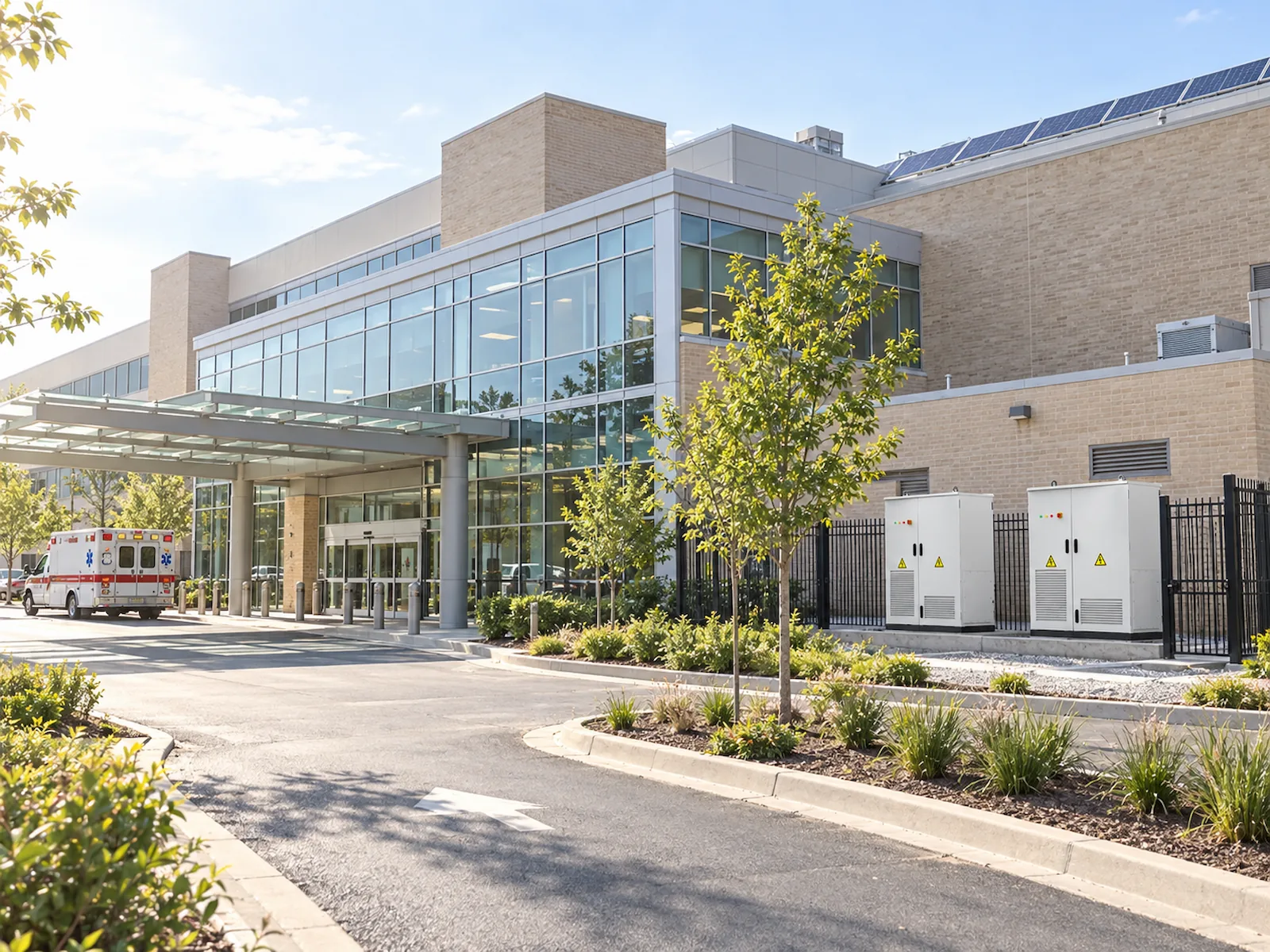
01 / Healthcare
Hospitals & healthcare
Assess daily energy use and selected backup loads alongside the hospital’s existing electrical systems.
Explore this application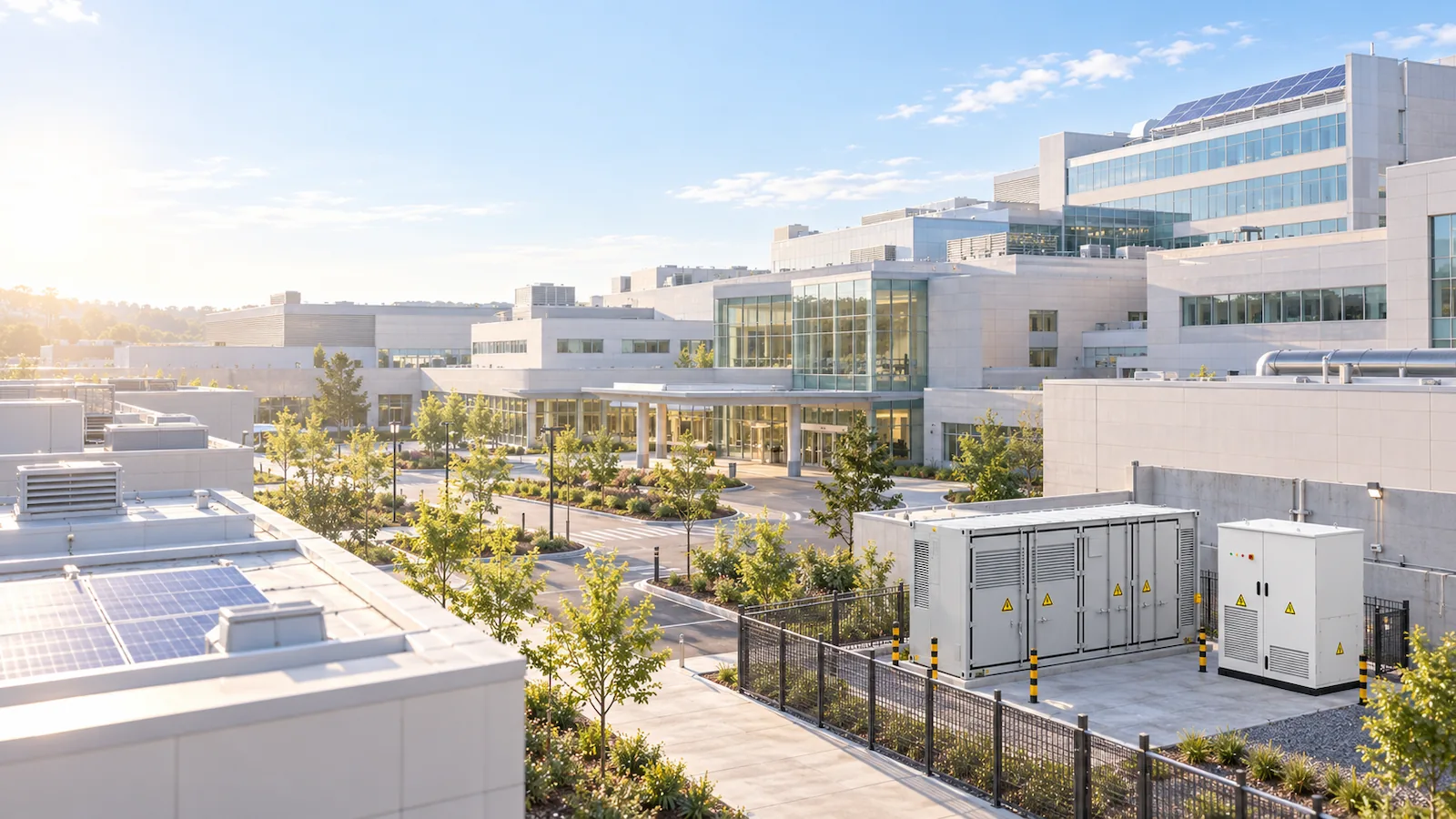
PUBLIC & COMMUNITY FACILITIES
Plan energy around the services people depend on. Connect battery storage, onsite solar and existing power systems to the way your facility operates.
Discuss Your Facility 01 / Healthcare
Assess daily energy use and selected backup loads alongside the hospital’s existing electrical systems.
Explore this application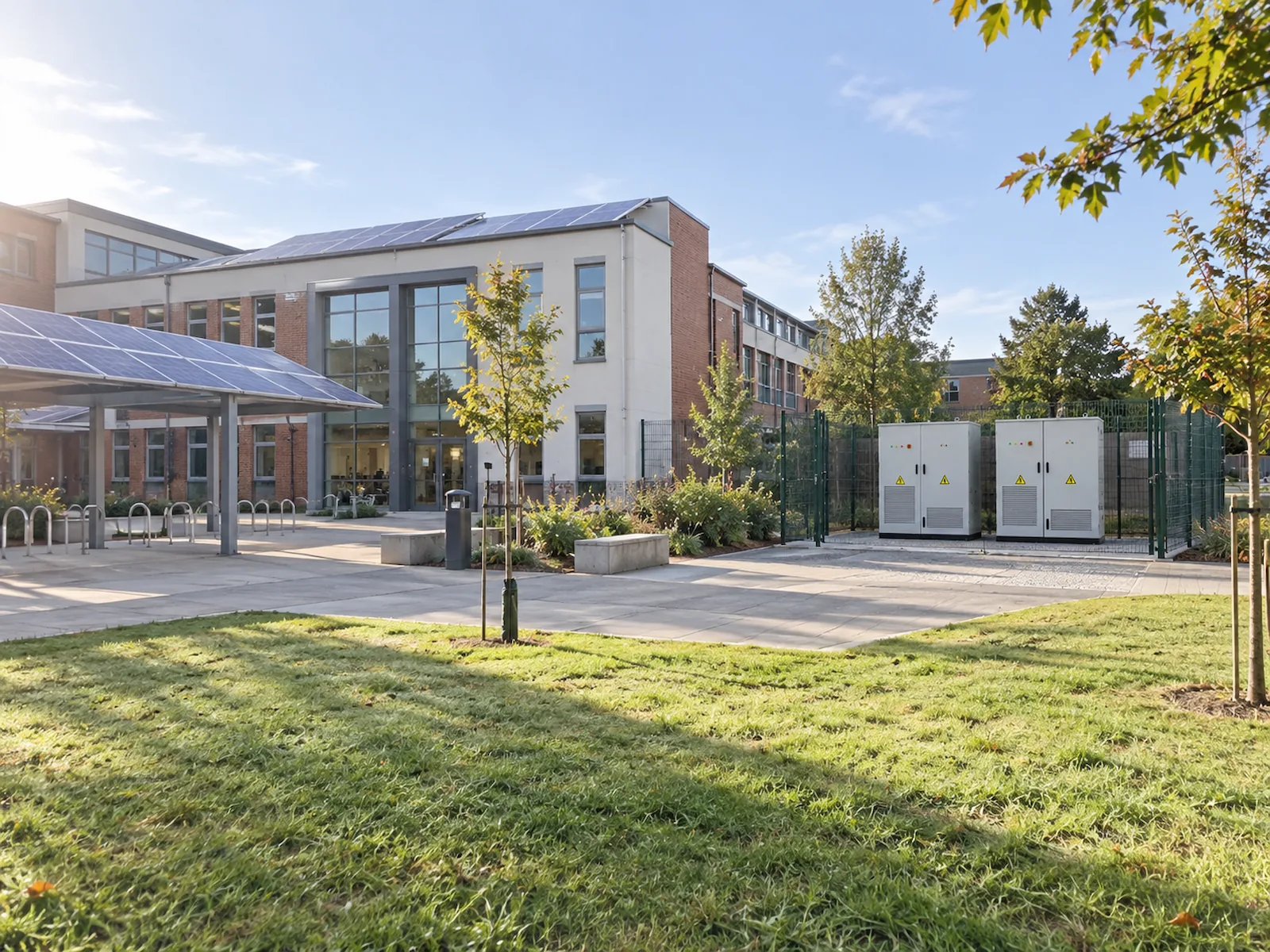
02 / Education
Match solar generation and stored energy to lessons, laboratories, residences and quieter holiday periods.
Explore this application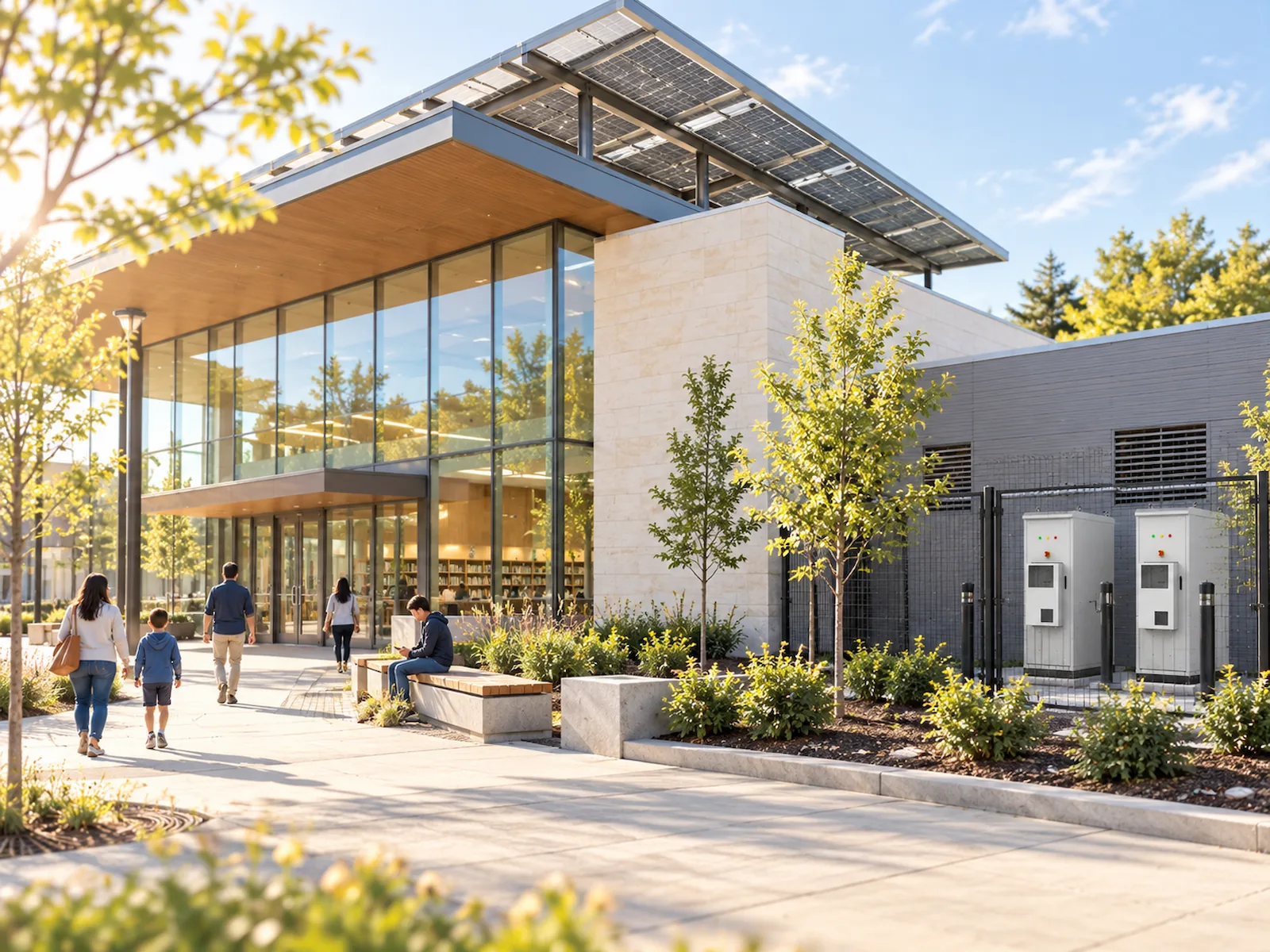
03 / Public services
Define the operating hours and selected services for libraries, community centres and municipal buildings.
Explore this applicationBUILT AROUND YOUR FACILITY
Battery storage for public facilities can manage demand and use more onsite solar. Its value depends on when your building needs power, the tariff and the energy available to charge.
Start with those daily needs. Define selected-load backup separately, with the UPS, generators and electrical controls already on site. A school, a hospital and a community centre need different operating plans.
START WITH THE OPERATING GOAL
Choose the job before the battery size.
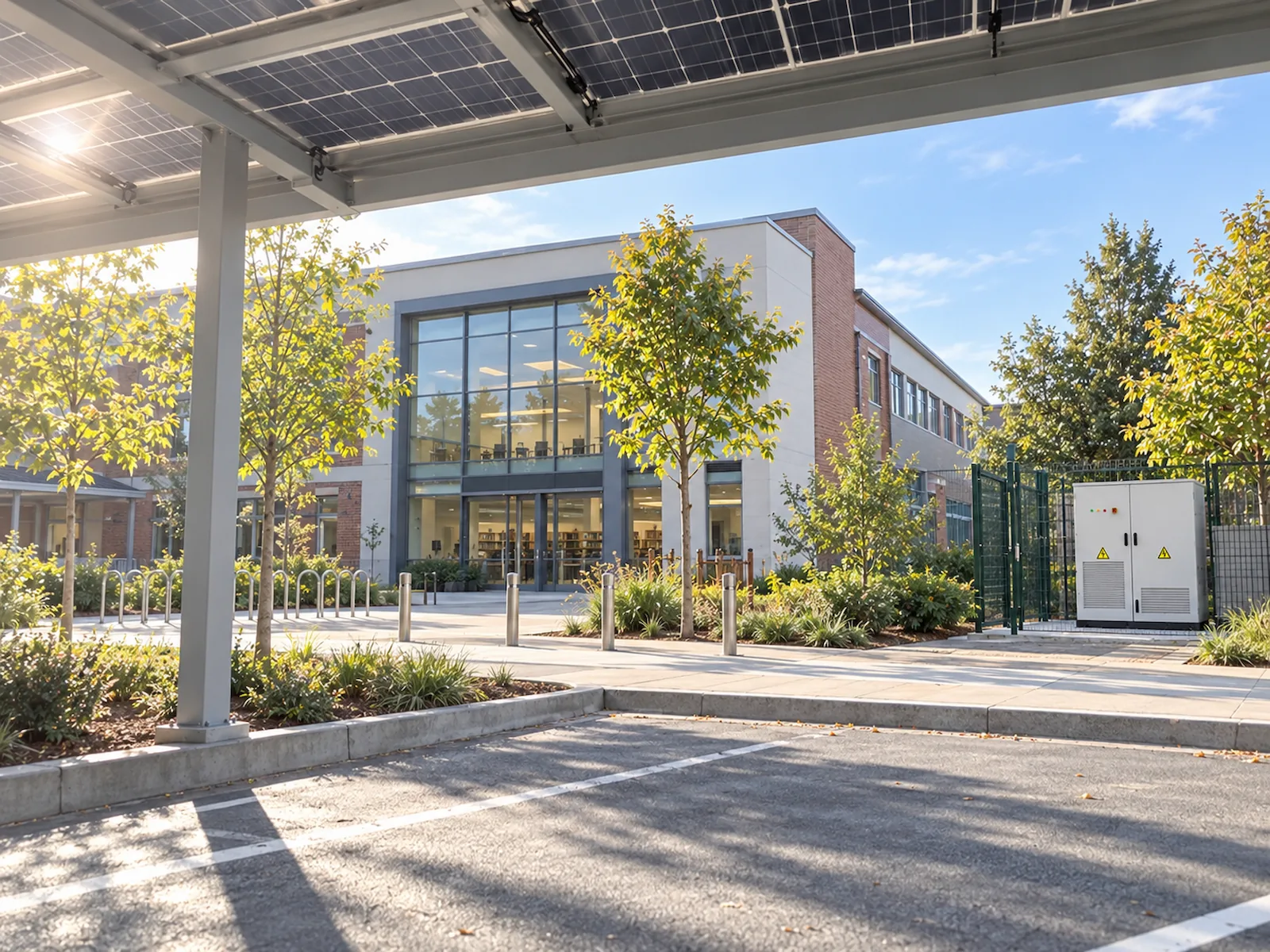
Compare solar output with demand across the day. Where generation exceeds immediate use, a battery can store available energy for a later period. School holidays, daytime hospital demand and evening community activities each produce a different opportunity.
Review existing inverters, metering and export conditions. An AC-coupled system may offer a route alongside existing solar, subject to the electrical design. Check the energy available to charge storage before choosing a larger battery.
Start with generation records, demand data and the proposed connection point.
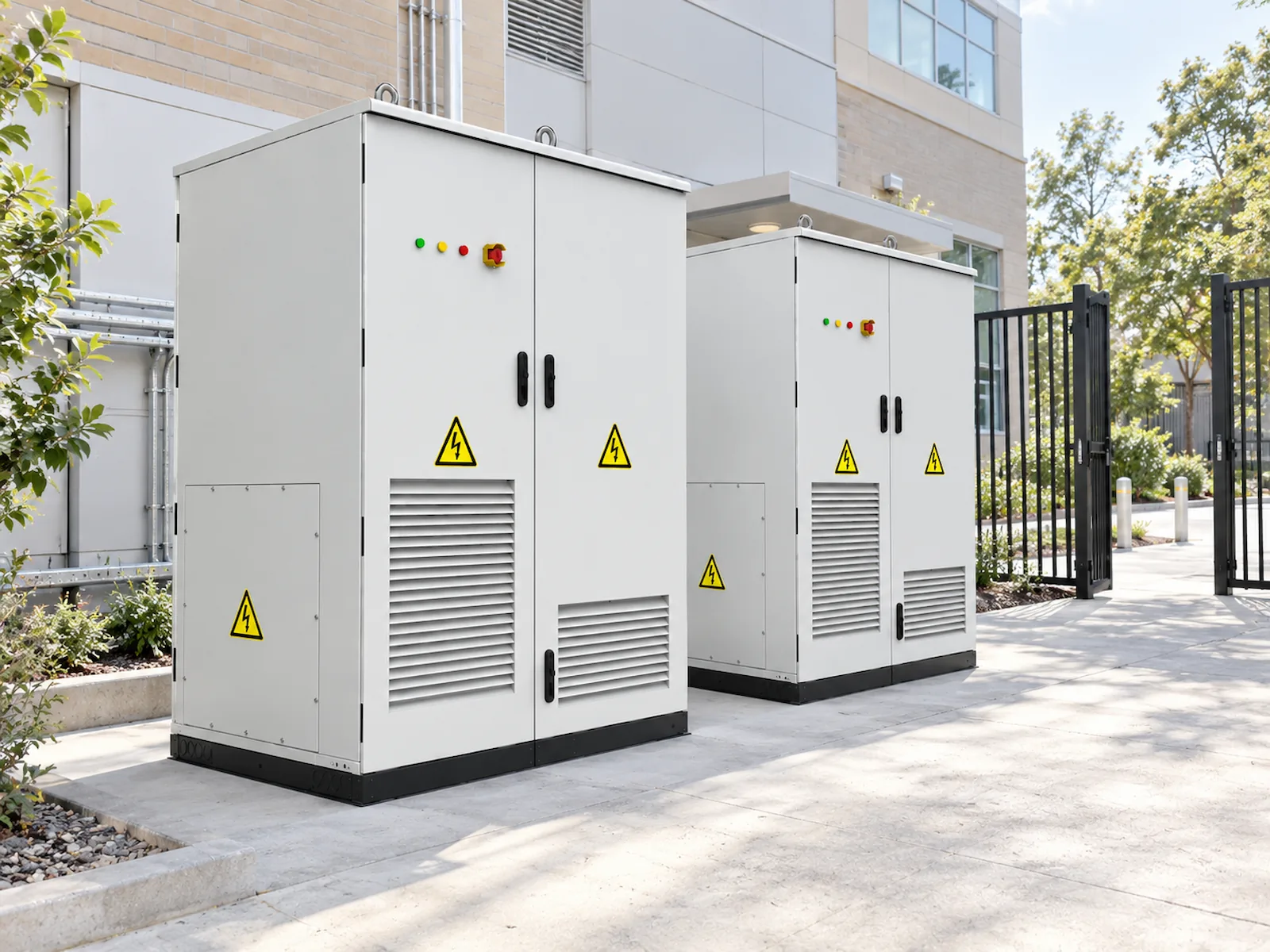
Battery peak shaving supplies part of the site load during a defined high-demand period. The useful discharge power and duration come from interval meter data. Check whether the local tariff actually charges for that peak and when the battery can recharge.
Coordinate dispatch with the building schedule and other electrical equipment. Keep any agreed backup reserve available. Compare the proposed operating duty with system losses and the complete project cost before estimating financial value.
Review peak duration and tariff structure together; annual consumption alone is insufficient.
Selected-load backup begins with a circuit list. Record running power, motor starts, acceptable interruption and required duration. The battery, conversion equipment, isolation, protection and switching must support that duty as a complete system.
Coordinate the reserve with daily energy management and any generator contribution. Sensitive equipment may still need a dedicated UPS. Confirm the transfer sequence and restoration behaviour in the project design rather than assuming that an ordinary grid-connected battery provides backup.
Keep critical-load requirements distinct from general building energy savings.
Hospitals & healthcare
HOSPITALS / HEALTHCARE ESTATES
Hospitals run through the night, but their loads still change. Cooling, kitchens, laundry and outpatient activity can create different demand patterns. Battery storage can be assessed for peak demand or shifting available solar energy into later hours. Begin with metered demand and the circuits served by the proposed connection.
Hospital backup power needs a separate load review. Identify clinical, building-service and essential communication circuits with the facilities team. Establish their interruption limits and required support duration, then coordinate the battery system with existing UPS equipment, generators and emergency distribution. Include planned maintenance and the return to normal supply in that review.
Medical electrical requirements and critical-load arrangements need project-specific engineering and local approval.
Schools & campuses
SCHOOLS / COLLEGES / UNIVERSITIES
Solar panels for schools can supply classrooms and other daytime activity. Storage becomes a separate decision: how much generation remains after those loads, and when could the campus use it? Compare term-time demand with weekends and holidays before selecting battery capacity. A roof with space for more panels does not establish the storage requirement.
A university campus may include laboratories, sports facilities, student residences and several electrical connections. Map which buildings share a supply and which loads continue after teaching hours. Assess a university microgrid where coordinated operation is useful and technically feasible. Schedule installation around exams, access restrictions and the areas that must remain operational.
Public and private education projects can use this approach; the equipment scope follows the actual campus supply.
Public & community buildings
CIVIC BUILDINGS / COMMUNITY FACILITIES
A library, leisure centre and council office have different schedules. Lighting, ventilation, pumps, public charging and evening activities can change the daily energy duty. Assess public facility battery storage against those measured loads, the tariff and any onsite solar. Record who owns the meter and who will operate and maintain the equipment.
If a building has an agreed emergency role, identify the services it must support. A resilience hub may prioritise communications, lighting, refrigeration or a limited service area. Set those loads and their duration before sizing the battery. A community facility does not automatically operate a shared community battery; supplying or allocating energy to other properties requires a separate connection and operating assessment.
Define emergency-service responsibilities with the facility operator before specifying a backup duty.
SYSTEM INTEGRATION
A facility energy system brings several jobs together. Select a component to explore its role.
The connection rating, site meter and energy management controls define the operating boundary. Agree import limits, export conditions, dispatch priorities and reserve settings. Buildings on separate meters need their own connection assessment.
Solar supplies available daytime energy through suitable conversion equipment. Confirm the existing inverter and connection arrangement. Solar operation during an outage depends on the designed islanded system and its controls.
The battery stores DC energy; the PCS exchanges power with the AC network. Size power in kW and usable energy in kWh separately. Confirm which conversion and control equipment is included in the selected model.
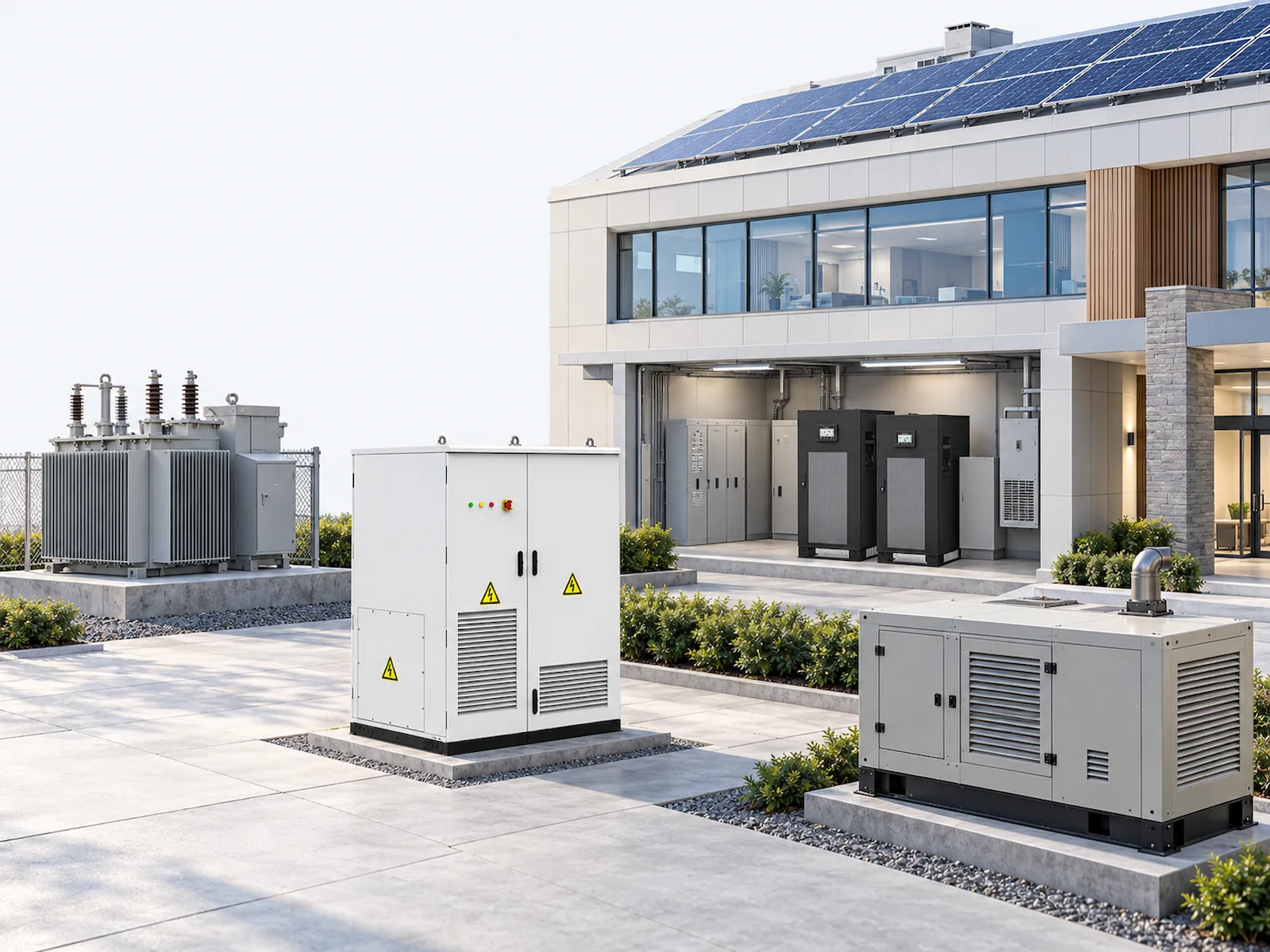
A UPS serves equipment with a defined interruption limit; a generator can provide a separate supply where specified. Coordinate both with the BESS, switching and protection. Their roles depend on the circuits and operating sequence.
EQUIPMENT OPTIONS
Power, stored energy and continuity requirements are separate decisions.
INTEGRATED EQUIPMENT
An integrated equipment route for a defined building load and installation area.
Review the published 125 kW / 261 kWh model against the intended AC duty. Confirm usable energy, electrical ratings and controls for the selected configuration. Site switchgear, cable routes and any backup switching remain part of the project scope.
Explore the integrated cabinet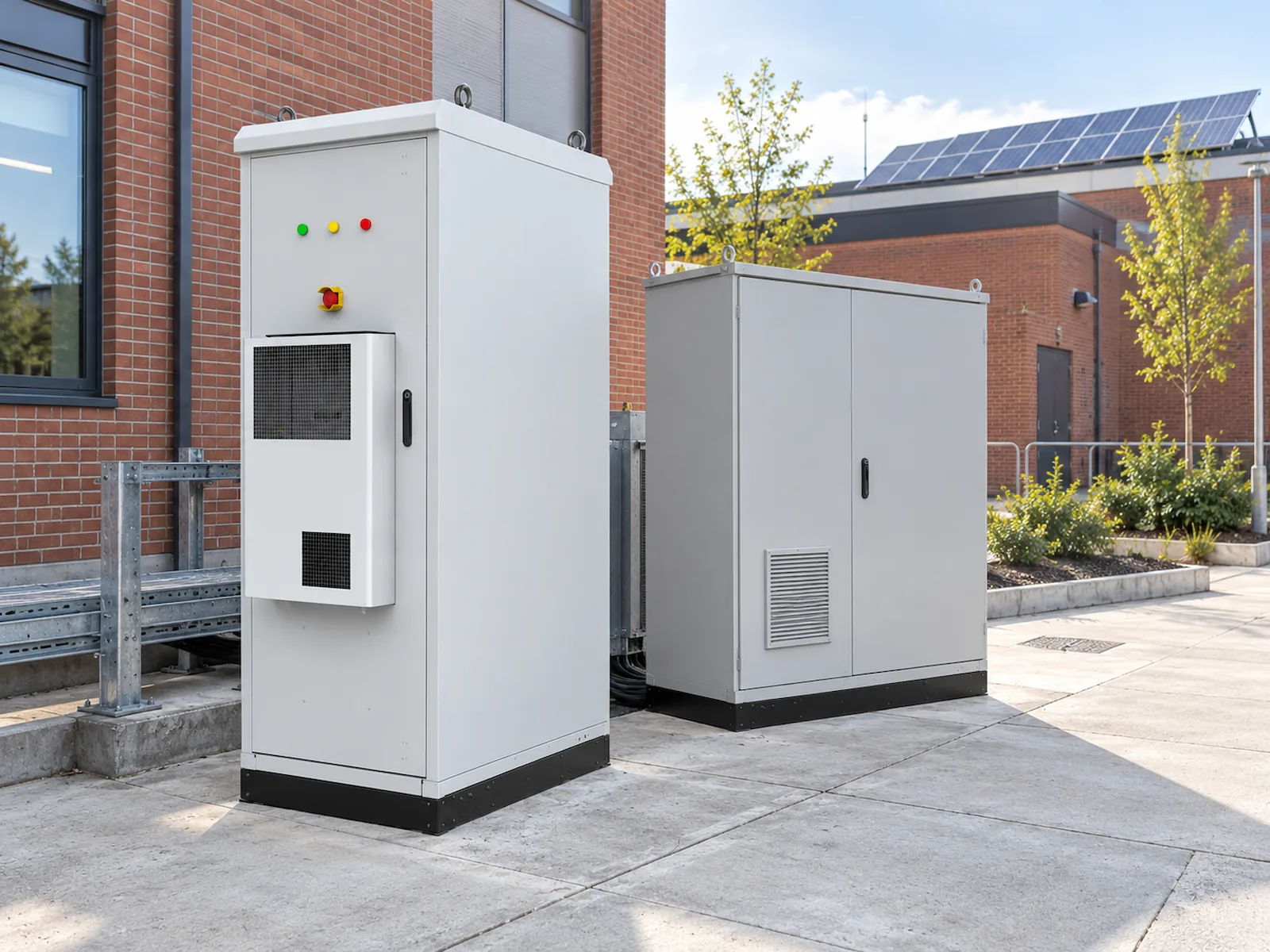
DC BATTERY EQUIPMENT
A battery-first route where conversion equipment is selected around the project.
eBlock offers up to 120 kWh maximum installed capacity per cabinet and requires an external PCS. Match the voltage range, conversion power and controls. Installed capacity is different from usable AC energy; multiple cabinets need an engineered connection arrangement.
Explore eBlock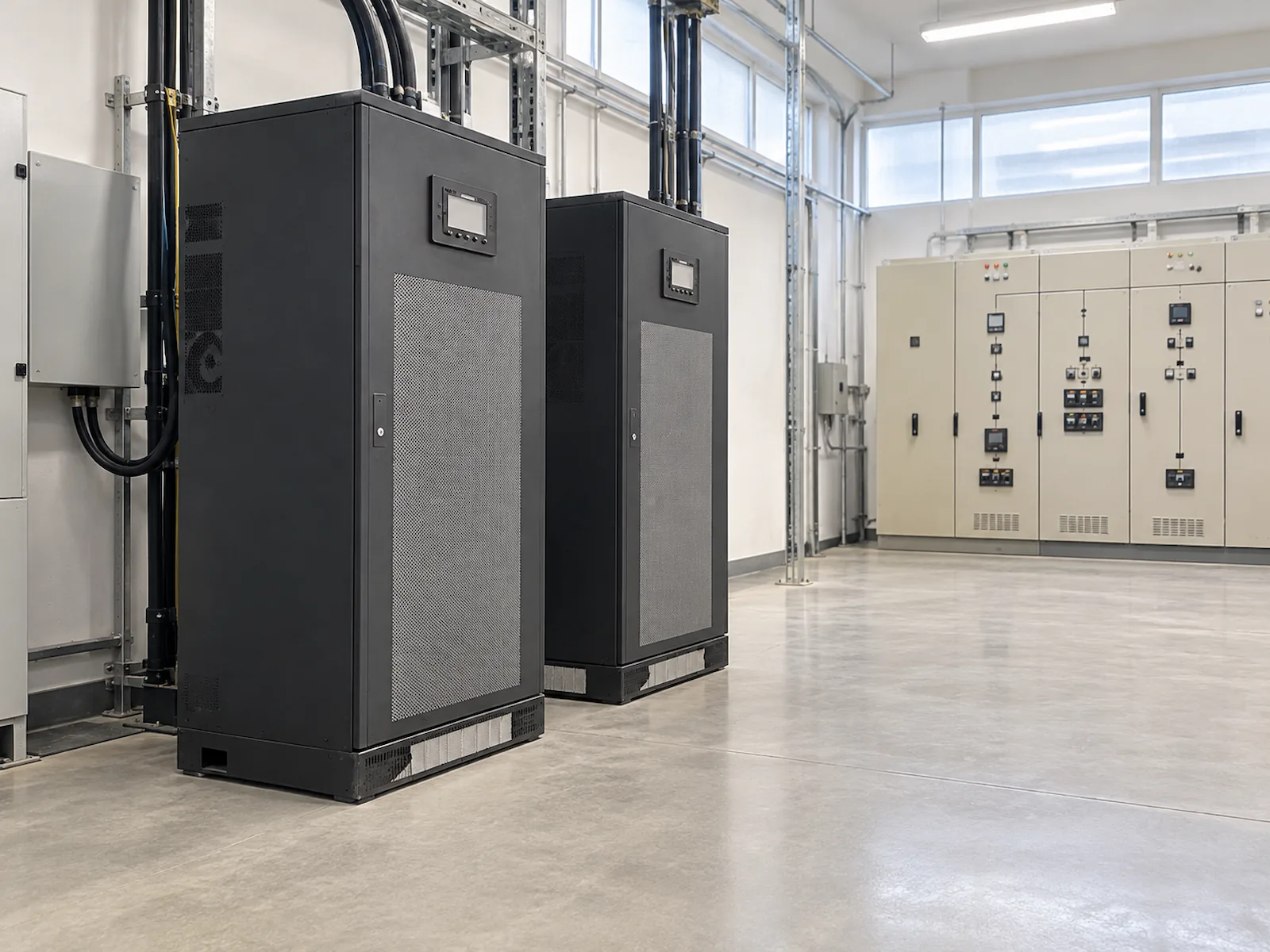
DEDICATED UPS EQUIPMENT
Assess UPS equipment where a circuit has specific continuity or power-quality requirements.
Share load ratings, power factor, required runtime and the maintenance arrangement. Select the UPS, batteries and bypass equipment around those needs. Review how it connects to existing generators and distribution. A general BESS specification does not establish UPS performance or medical suitability.
Discuss your UPS requirementsFROM YOUR SITE TO A USEFUL PROPOSAL
Identify the buildings, operating hours, project team and supply connection.
Compare interval demand, electricity charges and available solar generation.
Separate daily dispatch from selected backup loads and interruption limits.
Review power, usable energy, conversion and existing system interfaces.
Confirm placement, cable routes, access and local engineering responsibilities.
Document equipment scope, assumptions and the information still required.
PROJECT INPUTS
Send what you have. We can identify the missing details before equipment selection.
| Project input | What to provide |
|---|---|
| Facility & location | Country, facility type, operating hours and the buildings included in the project. |
| Electrical supply | Voltage, frequency, connection capacity, meter boundaries and an available single-line drawing. |
| Energy & tariff | Recent bills and interval demand, including term-time, seasonal or service-hour changes. |
| Existing solar | PV capacity, inverter details, generation records and current export restrictions. |
| Backup priorities | Selected circuits, running and starting demand, interruption limits and required duration. |
| UPS & generators | Equipment ratings, connection drawings, control interfaces and maintenance arrangements. |
| Site & delivery scope | Equipment-area photos, access, cable routes, installation windows and procurement responsibilities. |
On a small screen, swipe across the table.
TELL US ABOUT YOUR FACILITY
Share the application, existing equipment and the job you want storage to do. We will review the equipment route and the project information needed for a proposal.
An equipment list or a single-line drawing is a useful starting point. Include it with your project brief if available.
Tell us the location, facility type and energy priorities.
BEFORE YOU SPECIFY
An AC-coupled connection can be assessed alongside the existing solar inverter. Review the electrical drawing, metering, inverter controls and export conditions. The design must also address whether the goal is solar self-consumption, demand management or selected-load backup.
Not by default. Each has a different duty in the electrical design. Define the supported circuits, interruption limits and duration, then assess how storage, UPS equipment and generators work together. Medical and emergency-power requirements need a separate engineering review.
Power in kW determines the load the system can support; usable energy in kWh affects how long it can do so. Include starting demand, conversion losses, reserve settings and ageing. Select against measured loads and the agreed operating duty.
No. A school that already uses most solar generation during the day may have limited surplus to store. Review weekends, holidays, evening loads and the tariff. Assess storage where those records show a useful energy or demand-management duty.
Yes. A battery can charge from the grid for a defined dispatch schedule, subject to the connection and operating limits. Assess tariff differences, demand charges, charging capacity and losses. Backup capability still requires suitable conversion, switching and protection.
This page covers storage for an individual facility or a defined estate. A shared community battery may serve several properties or involve energy allocation between participants. That adds connection, metering and commercial requirements that need a separate project assessment.
RELATED GUIDES
Understand how measured demand and peak duration shape a storage duty.
Read the guideReview solar components and the decisions behind a site connection.
Read the guideCompare backup needs, load priorities and equipment responsibilities.
Read the guide