Reliable Energy Storage — Download Free Catalog Download Now
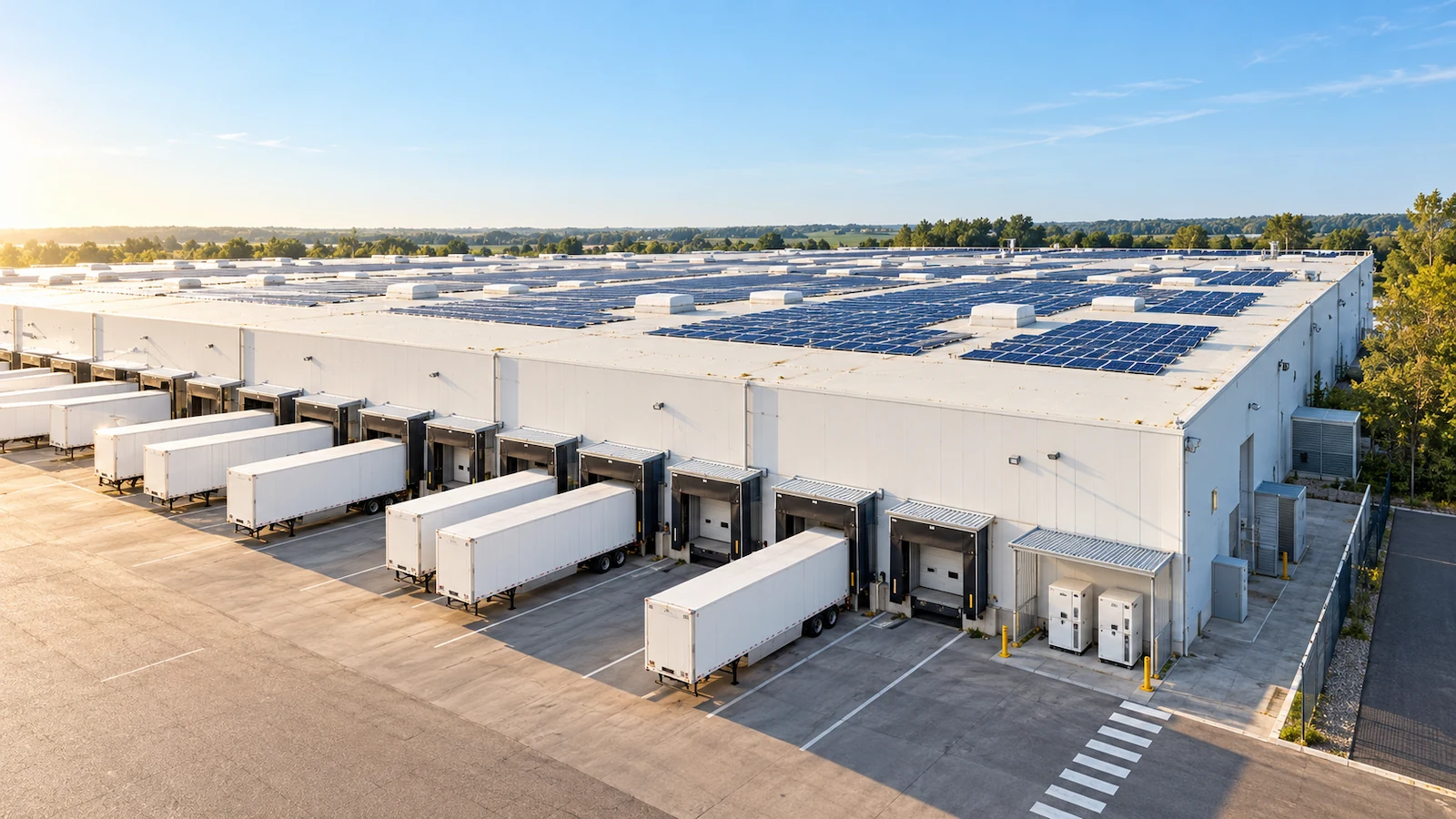
Bright morning view of a logistics warehouse with rooftop solar, loading docks and battery equipment beside the service yard

WAREHOUSE & LOGISTICS ENERGY

Battery Energy Storage Systems for Warehouses & Logistics

Connect rooftop solar, storage and charging around the way your site operates.

THE BUILDING IS ONLY THE START

Make the energy plan
fit the operation.

A battery energy storage system stores electricity for use at another time. For a warehouse, its useful role depends on dispatch schedules, charging demand, the electrical supply and any loads that need backup.

KUNETIC helps owners, operators and project partners define storage equipment and system configuration. Combine rooftop generation, conversion and controls around the site’s measured load, with clear responsibilities for local electrical design and installation.

ONE CONNECTED SITE

See how the energy fits together.

Explore the equipment roles, then define the operating duty.

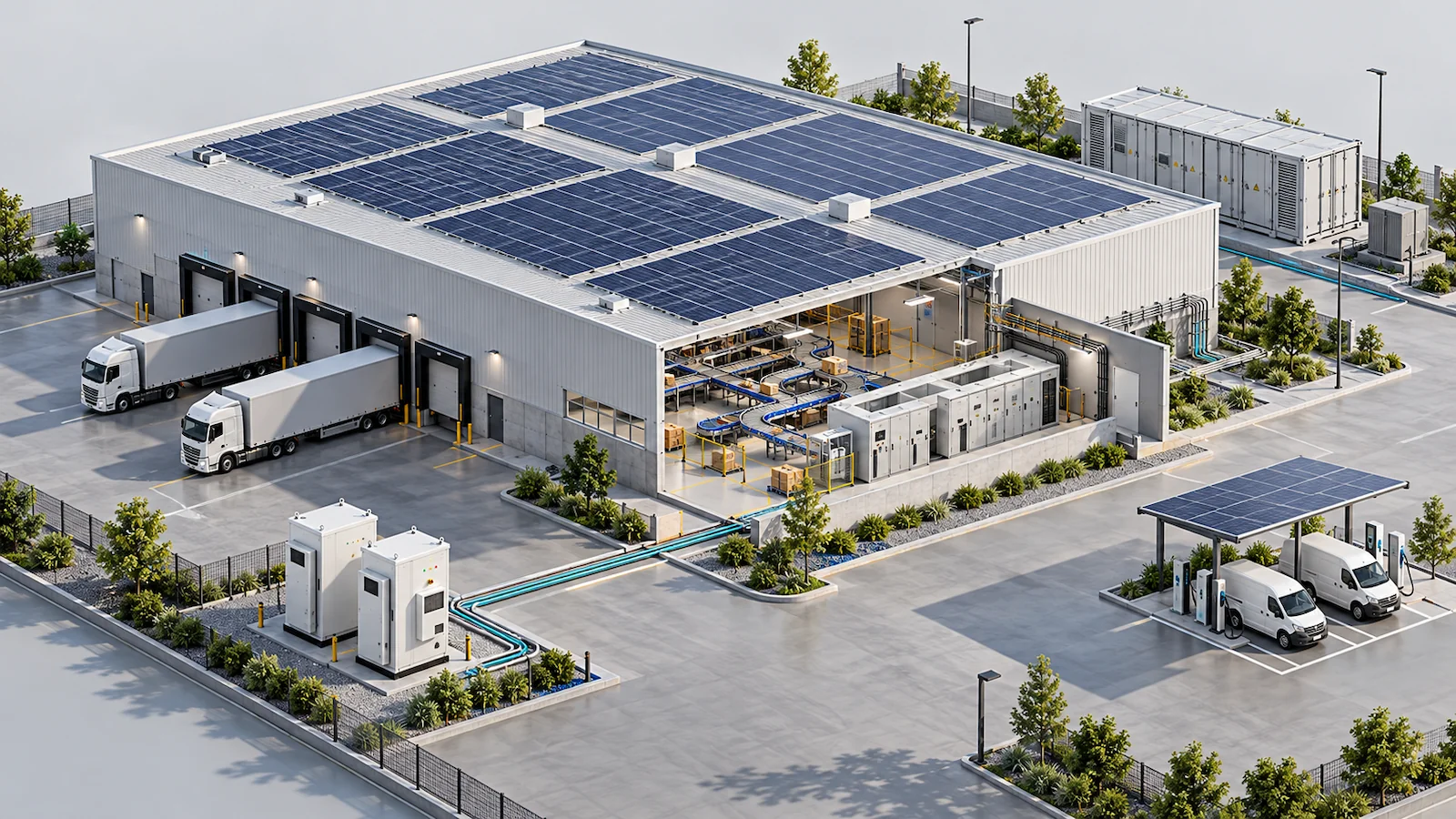
01 / Rooftop solar

Start with the roof and the load.

Warehouse solar can serve daytime demand and charge storage when surplus generation is available. Review roof condition, lease rights, existing inverter equipment and the export arrangement. A large solar array does not establish how much energy the warehouse can use; compare generation with actual operating hours.
02 / Metering & controls

Give dispatch a clear connection boundary.

Site metering and the energy management system inform when the battery charges or discharges. Define the import limit, tariff periods and backup reserve. Separate landlord and tenant supplies matter: stored energy serves the circuits within its agreed electrical connection, rather than every building in the park.

03 / Battery & PCS

Store energy. Match the conversion power.

The battery stores DC energy; the power conversion system connects it to the site AC supply. Select power in kW for the required load and usable energy in kWh for its duration. Integrated cabinets and DC cabinets have different equipment boundaries. eBlock requires an external PCS.

04 / Charging loads

Work backwards from the next departure.

The charging plan needs enough energy delivered before vehicles return to work. Coordinate compatible charger controls, storage dispatch and other warehouse loads within the available supply. Battery discharge is limited by its power rating, available energy and reserved capacity; it does not remove the need for a charging schedule.

05 / Selected backup loads

Define what stays on during an outage.

Backup needs an agreed load list, suitable power conversion, isolation, switching and protection. Establish acceptable transfer time and runtime for each circuit. A UPS may still be needed for sensitive controls. Confirm generator coordination and restoration behaviour where they form part of the proposed system.

Concept arrangement. Final connections, equipment ratings and backup circuits follow the project electrical design.

DIFFERENT OPERATIONS. DIFFERENT LOADS.

Start with your warehouse.

A distribution hub, an automated site and a cold store need different questions.

Distribution warehouse with loading docks, rooftop solar and battery equipment in a separate service area

LOADING WINDOWS / VARIABLE DEMAND

Follow the dispatch schedule.

A large roof and a busy loading yard do not necessarily mean high electricity use throughout the day. Lighting, dock equipment and forklift chargers may draw power at different times. Compare those operating windows with the meter data before selecting commercial battery storage. The useful duty may be a short demand peak, a later shift or available rooftop solar energy moved into the evening.

  • Separate weekday dispatch peaks from quiet periods and seasonal stock movements.
  • Check which meter serves the loading areas, lighting and charging rooms.
  • Keep the equipment pad clear of truck turning, loading and maintenance routes.
Prepare Your Site Brief
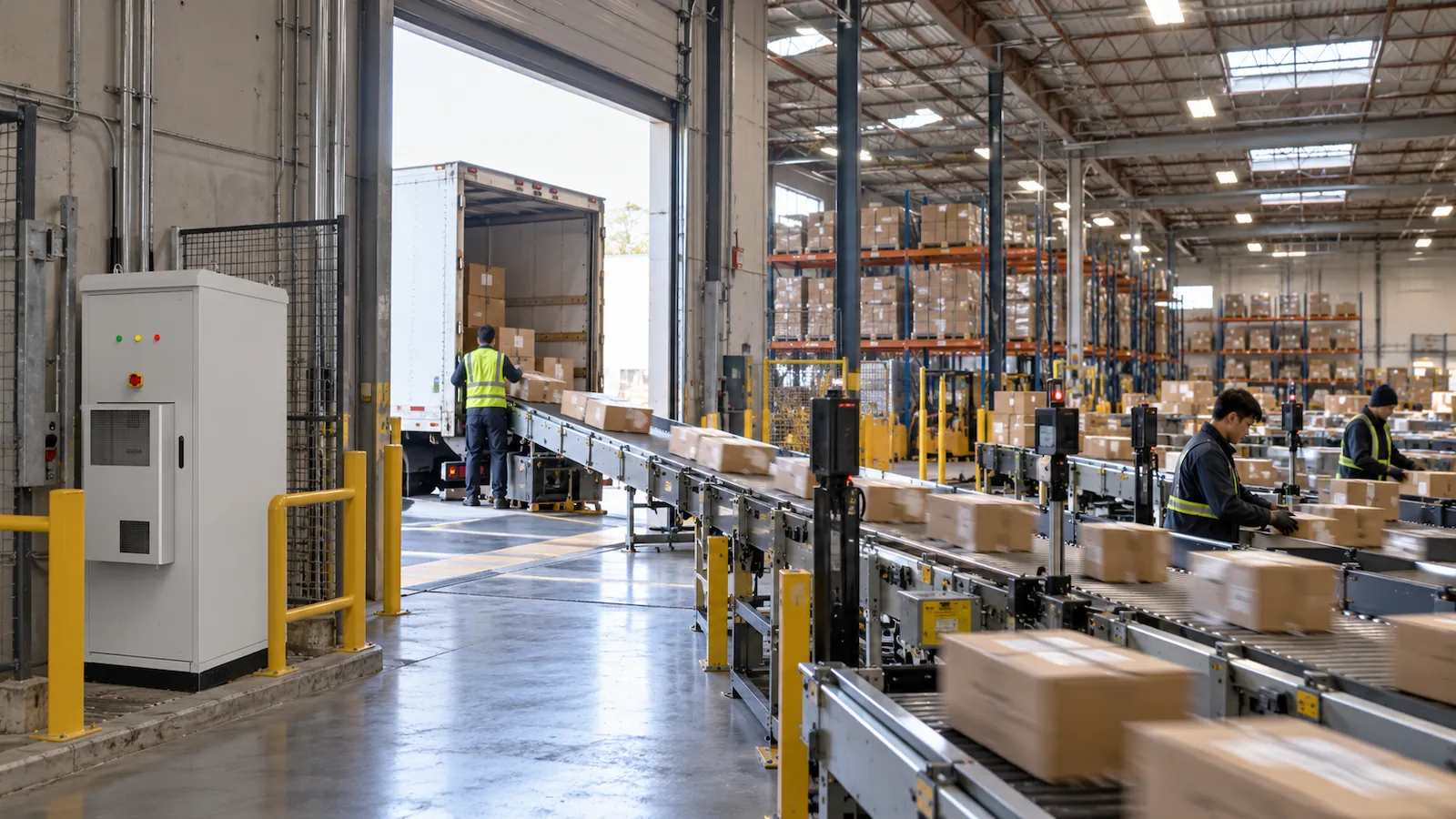
Automated warehouse sorting area with conveyors, control equipment and clearly defined working aisles

SORTING EQUIPMENT / CONTROL SYSTEMS

Plan around the work that cannot wait.

Conveyors, sorters and automated handling equipment create a different load profile from a storage-only building. Review equipment running together during each order wave, including start-up demand and the controls needed to restart safely. Battery energy storage can form part of the site power plan. Sensitive control, network and IT circuits may need their own UPS supply to meet the required interruption limit.

  • Map sorting waves, shift changes and simultaneous equipment starts.
  • Identify controls and communications separately from larger motor loads.
  • Agree the supported circuits and restart sequence with the equipment team.
Prepare Your Site Brief
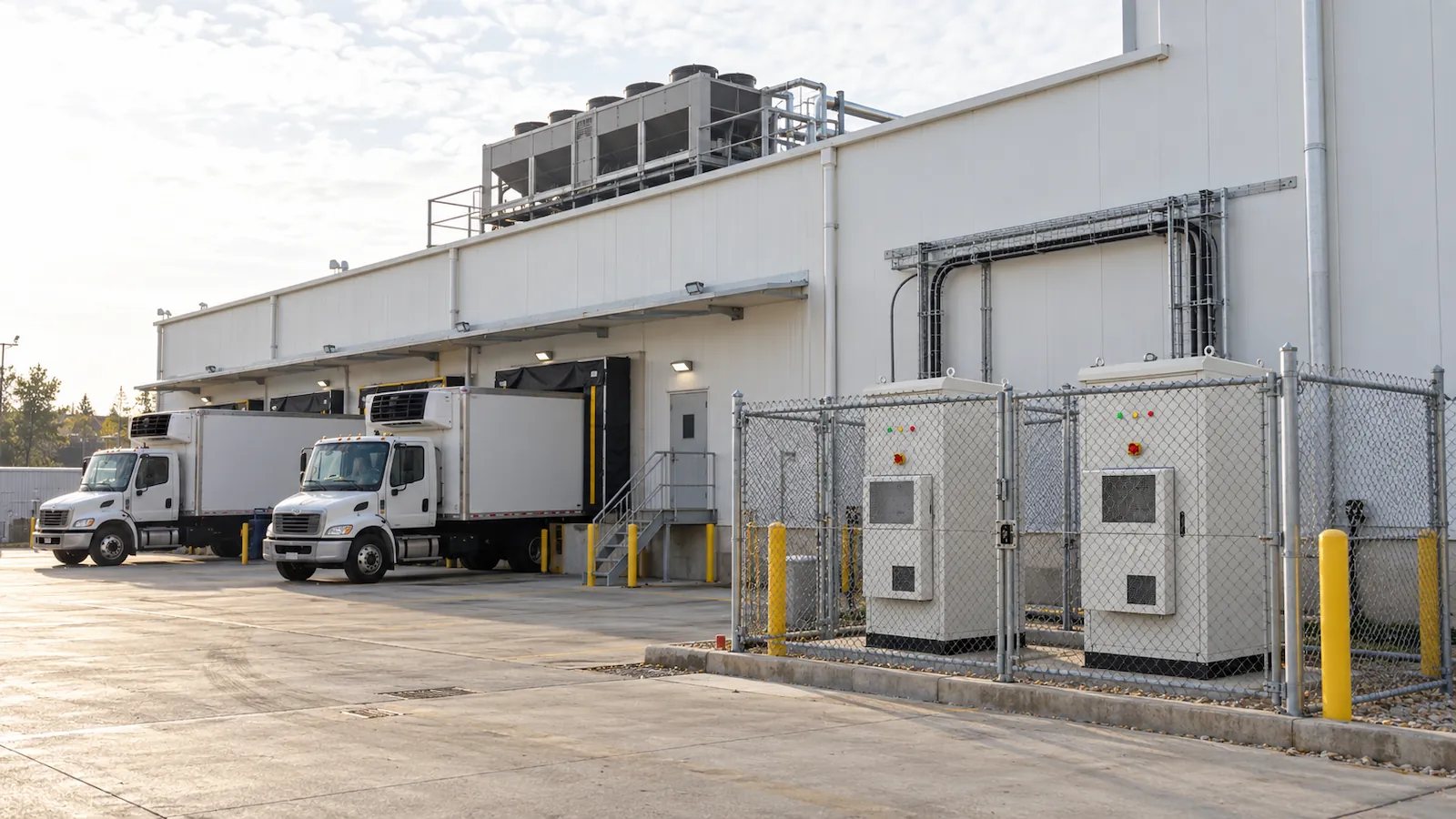
Refrigerated distribution building with insulated loading bays and an outdoor electrical service area

REFRIGERATION / CONTINUOUS OPERATIONS

Keep the temperature duty in view.

Refrigerated warehouses need a load assessment that accounts for compressors, fans, defrost cycles and changing outdoor conditions. A refrigeration peak is different from a lighting peak. For backup planning, establish the temperature limits, equipment that must run and acceptable interruption first. Then assess battery power, usable energy and the role of any existing generator. Do not size the system from average electricity use alone.

  • Review refrigeration demand across operating cycles and warmer months.
  • Include compressor starting requirements and staged restart behaviour.
  • Set the required support duration and the energy reserve for that duty.
Prepare Your Site Brief
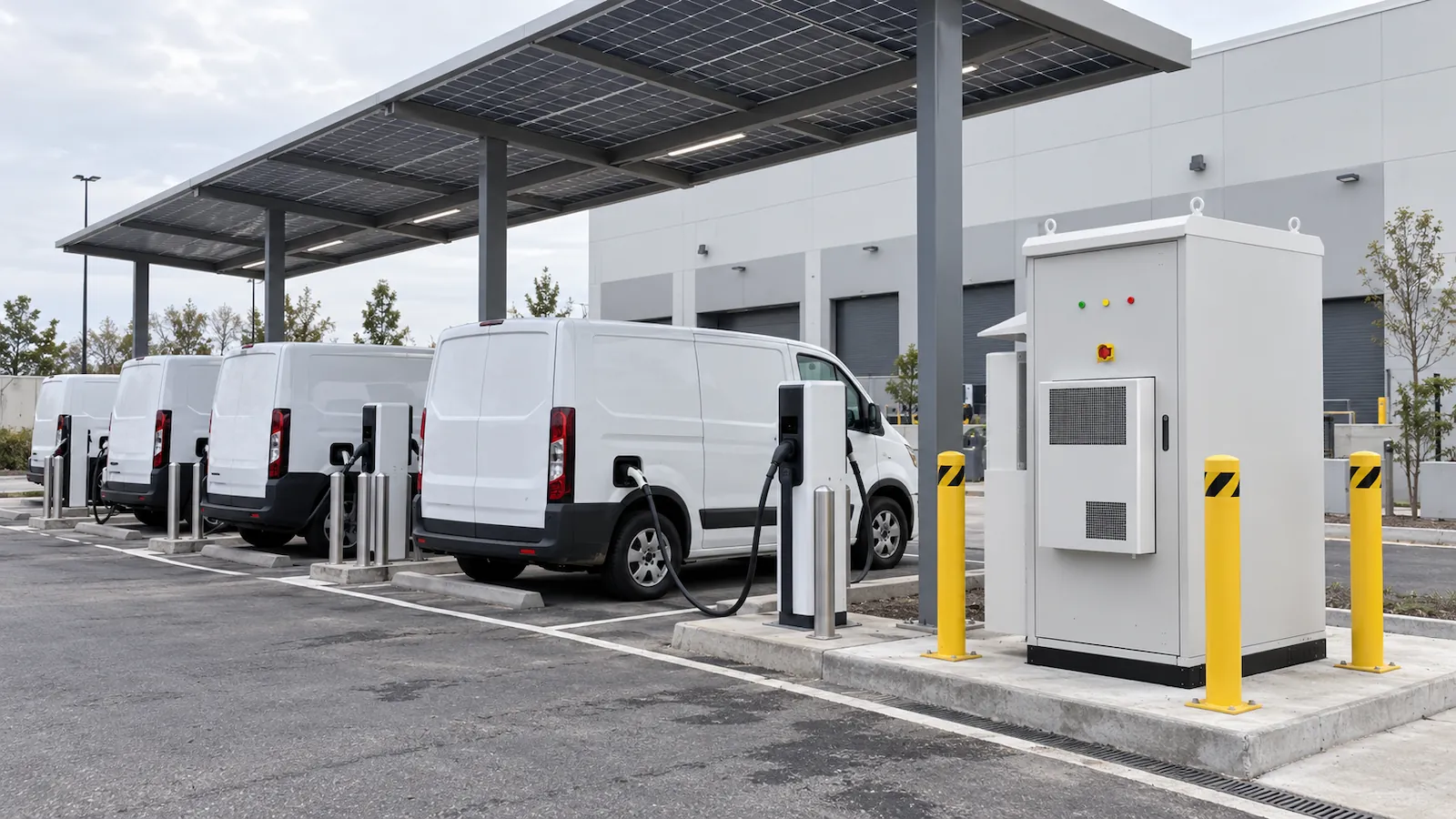
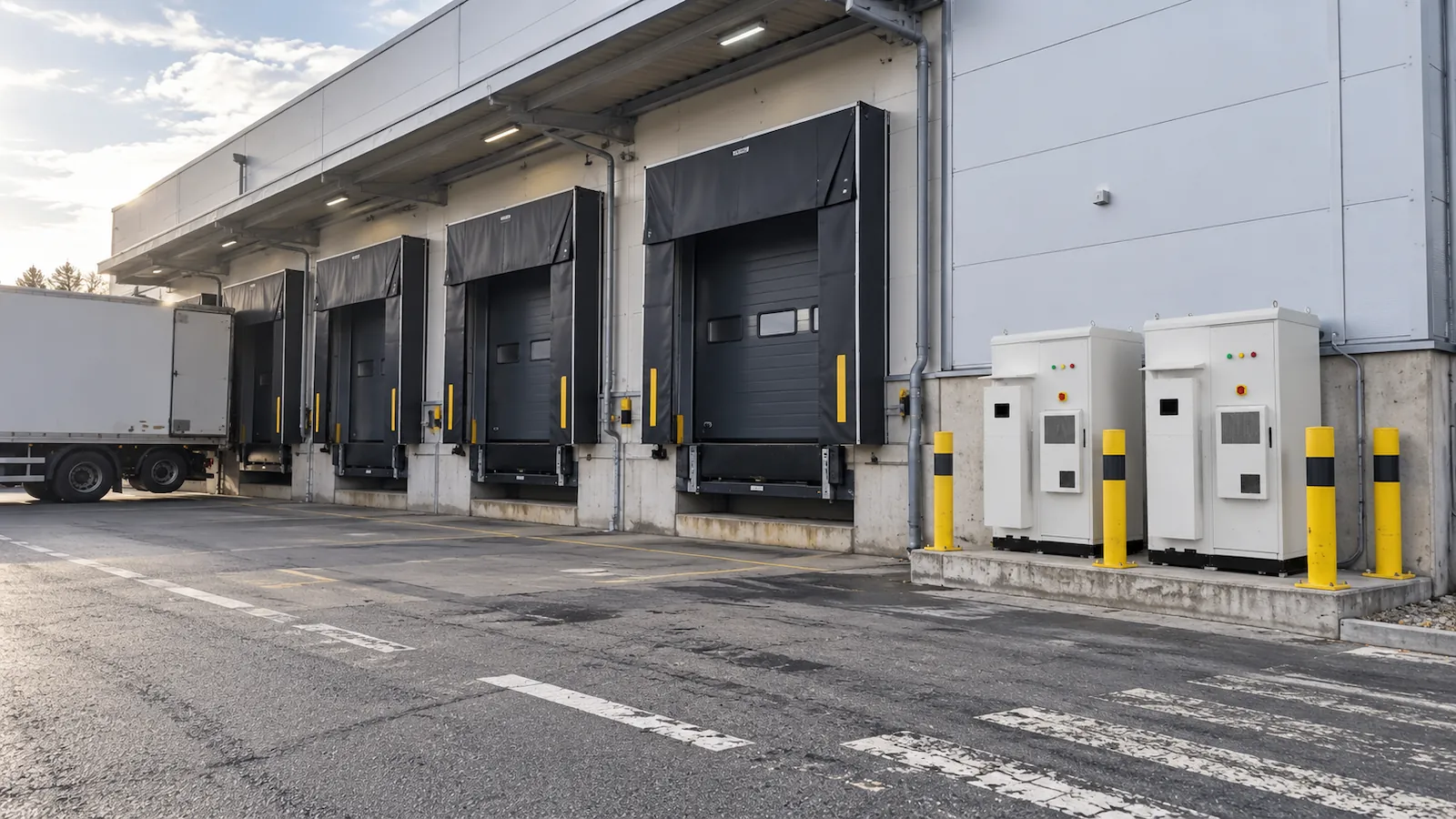
Warehouse charging area with parked logistics vehicles and stationary battery storage beside the service building

FORKLIFTS / DELIVERY FLEETS

Make charging fit the available supply.

Forklifts returning between shifts or delivery vehicles charging together can add a concentrated load. Start with the charger ratings, energy required and departure times. Staggered charging may address part of the peak; stationary battery storage can then be assessed for the remaining duty. Forklift traction batteries stay with the vehicles. The site BESS supplies the electrical network serving compatible chargers.

  • List charger demand, simultaneous sessions and required departure charge.
  • Compare the charging window with spare connection capacity and solar output.
  • Review control interfaces before assuming chargers and storage can coordinate.
Prepare Your Site Brief

GENERATE. STORE. DISPATCH.

Follow the working day.

Evaluate demand management and backup reserve as separate requirements.

MORNING

Start the operation

Check equipment starts, dispatch activity and vehicle return times against the available supply.

DAYTIME

Use available solar

Serve site demand first. Assess surplus rooftop generation and the battery charging window.

LATER SHIFTS

Plan the discharge

Match battery power and usable energy to measured peaks, charging sessions or evening operations.

RESERVED ENERGY

Protect the agreed duty

Keep any required backup reserve within the dispatch settings and confirm how it will be restored.

Illustrative operating sequence, rather than a measured customer load profile. Actual dispatch depends on site data, tariff and controls.

Read the Battery Peak Shaving Guide

EXISTING ROOF. NEW REQUIREMENTS.

Bring the roof,
meter and lease together.

Warehouse solar is useful when generation, electrical demand and site rights align. Check roof condition and ownership, tenant meters and the remaining lease before committing to an equipment layout.

For existing PV, assess storage alongside the current inverter and export arrangement. Leave space for service access, truck movements and future development. A spare corner is only useful when the electrical route works too.

Discuss an Existing Site
Warehouse loading yard and rooftop photovoltaic installation with clearly separated equipment and traffic areas

EQUIPMENT OPTIONS

Choose the equipment
around the job.

Compare AC power, installed energy and the scope of conversion equipment separately.

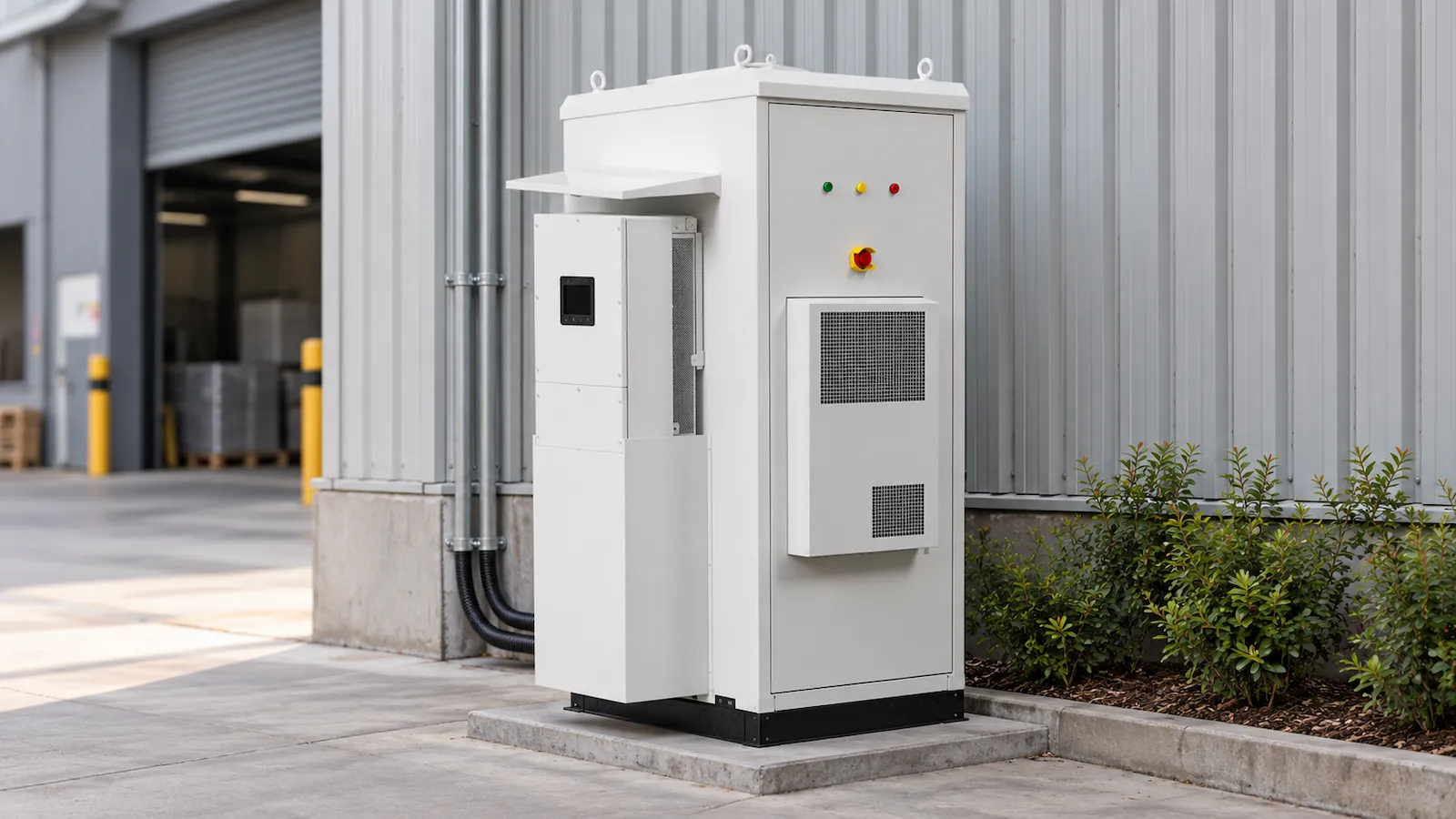
K-eBank integrated battery cabinet on a prepared pad beside a warehouse service building

K-eBank · 50 kW / 120 kWh

Integrated storage cabinet

A cabinet option bringing battery storage and power conversion together for a defined warehouse load.

Equipment details

The published K-eBank 50 kW / 120 kWh model provides an integrated equipment route. Compare its AC power with the peak to be supported and its usable energy with the intended discharge window. Confirm the selected model’s electrical ratings, solar connection and control interfaces. Site switchgear, cable routes, protection and any backup switching remain part of the project design.

Explore K-eBank
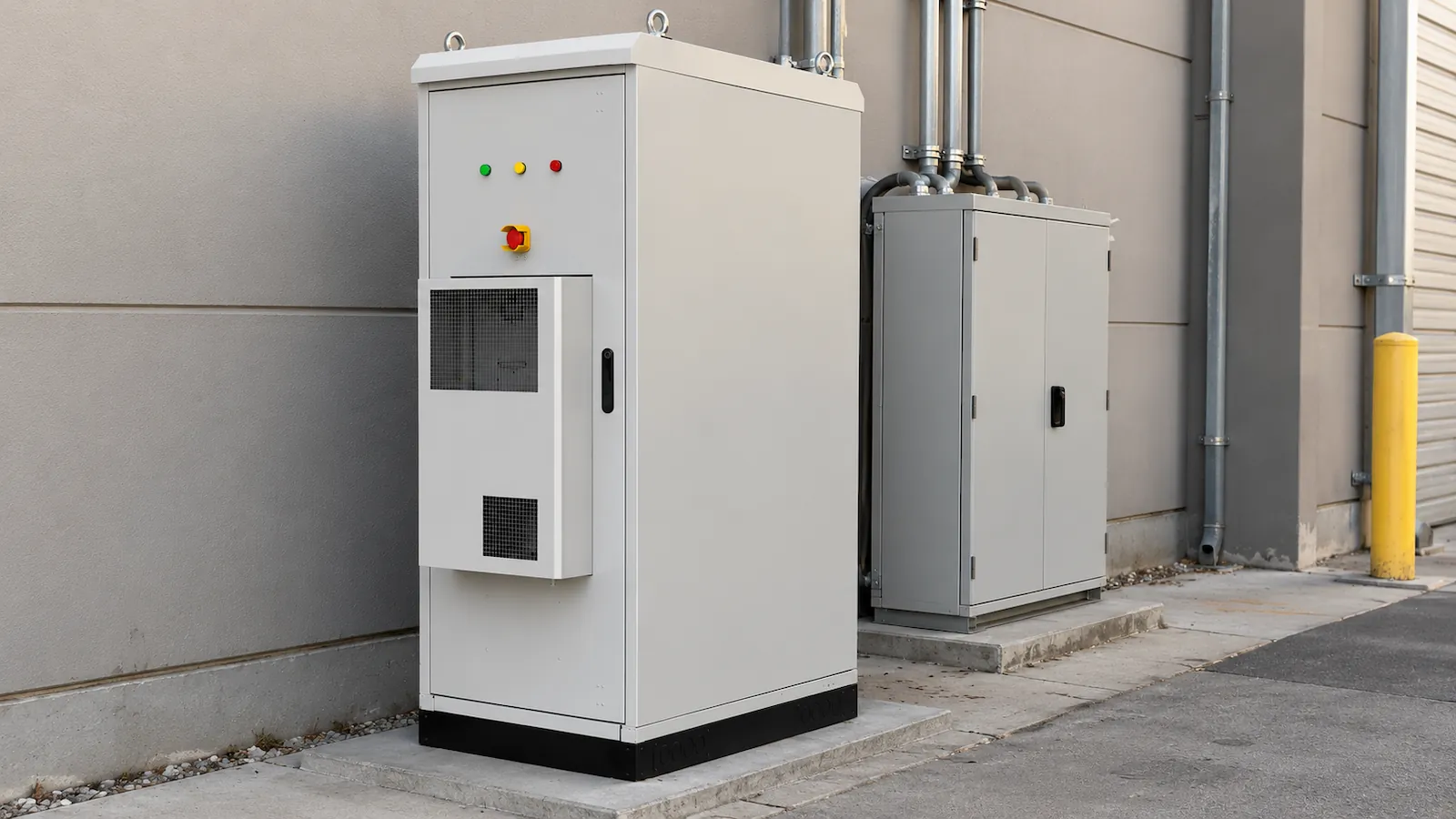
eBlock DC battery cabinet with separate power-conversion equipment in a warehouse equipment area

eBlock · Up to 120 kWh installed

DC battery cabinet + PCS

A battery-first route where the external conversion equipment is selected around the site requirements.

Equipment details

eBlock is an outdoor DC battery cabinet with up to 120 kWh maximum installed capacity per cabinet. It requires an external PCS and associated electrical equipment. Match the battery voltage range, PCS limits and controls before deciding the system output. Installed energy is different from usable AC energy. Multiple cabinets need an engineered connection and control arrangement rather than a simple capacity addition.

Explore eBlock
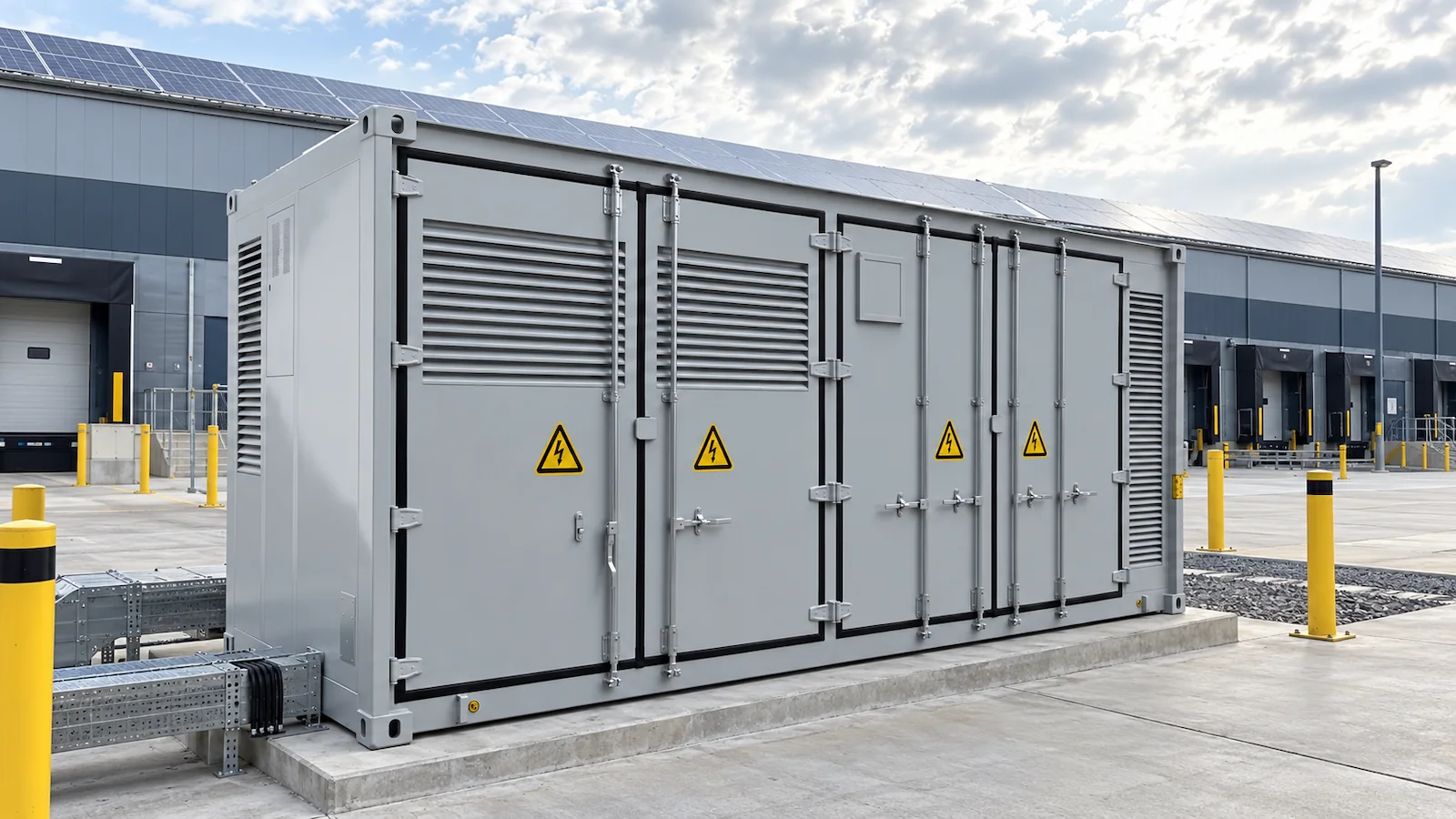
Containerised battery storage in a dedicated logistics park service yard with access for maintenance

Larger site / phased development

Containerised storage system

A project route for a larger storage duty, a shared service area or a planned development phase.

Equipment details

Assess containerised BESS when the required power, energy and equipment layout exceed the chosen cabinet arrangement. Specify battery capacity and PCS power separately, together with transformer, distribution, controls and cooling scope. Check delivery access, foundation, cable routes and future expansion early. A larger enclosure does not establish backup duration; usable energy and the selected load still determine the duty.

Explore Container BESS

FROM SITE DATA TO A PROPOSAL

A clear path to a useful specification.

Define what the equipment needs to do before choosing a configuration.

  1. 01

    Understand the operation

    Review operating hours, bills and interval demand. Separate daily dispatch from backup needs.

  2. 02

    Map the interfaces

    Confirm PV, meters, charging and selected circuits, together with supply ratings and site access.

  3. 03

    Define the equipment

    Specify battery power and energy, PCS and controls. Agree the package and project responsibilities.

  4. 04

    Prepare the next stage

    Coordinate drawings, local connection requirements and commissioning inputs with the project team.

MAKE THE FIRST REVIEW COUNT

What to share with the project team.

Send what is available. Identify missing information so assumptions stay clear.

Information for warehouse battery storage equipment selection.
Project inputWhat to provide
Site & supplyCountry, supply voltage and frequency, connection capacity and a single-line drawing where available. Identify landlord, tenant and shared-area meters.
Demand & tariffRecent bills and interval meter data, with dispatch schedules and seasonal changes. Include demand charges and import or export restrictions.
Solar installationExisting or planned PV capacity, inverter models, generation records and roof condition. Confirm access, ownership and remaining lease arrangements.
Charging operationsCharger ratings, simultaneous sessions, vehicle energy needs and departure times. Note planned fleet growth and available charger control interfaces.
Backup prioritiesSelected circuits, running and starting power, acceptable interruption and required duration. Include refrigeration, UPS and generator details where relevant.
Space & responsibilitiesEquipment-area photos, foundation space, delivery access and cable routes. Define equipment supply, local installation, connection approval and commissioning responsibilities.

On smaller screens, swipe across the table.

WAREHOUSE BATTERY STORAGE, EXPLAINED

Questions before you specify.

Practical answers for owners, operators and project partners.

Can warehouse battery storage work without solar panels?

Yes. A battery energy storage system can charge from the grid and discharge around an agreed operating schedule. Compare charging capacity, tariff periods, demand peaks and system losses before selecting equipment. Rooftop solar is an optional energy source; the warehouse’s measured load and intended storage duty remain the starting point.

Can a battery be added to existing warehouse solar?

An AC-coupled storage connection can be assessed alongside the existing PV inverter. Review the single-line diagram, supply ratings, metering, inverter controls and export conditions. Check whether the intended duty is solar self-consumption, demand management, backup or a combination. Existing grid-connected solar alone does not establish operation during a power cut.

Can storage help with forklift or fleet charging peaks?

It can supply part of the site load during charging, provided the PCS has sufficient power and the battery has enough available energy. First check whether staggering sessions can reduce simultaneous demand. Then assess the remaining peak and the time available to recharge storage. Confirm compatibility with charger controls and protect the energy reserved for any backup duty.

Which warehouse loads can stay on during an outage?

That depends on the designed backup circuit and the complete system’s transfer behaviour. Prioritise the required controls, communications, security, handling equipment or refrigeration loads individually. Define running power, starting demand, acceptable interruption and duration. Include suitable conversion, isolation, switching and protection; a battery cabinet connected for daily energy management does not automatically back up the warehouse.

What changes when the warehouse includes cold storage?

Refrigeration adds compressor starts, cycling, defrost demand and temperature constraints to the assessment. Review these loads over representative operating periods and seasons. For backup, agree the minimum equipment duty and required temperature performance with the refrigeration team. Size battery power and usable energy against that duty, including the planned restart sequence and any generator contribution.

How much battery capacity does a logistics centre need?

Determine power in kW and energy in kWh separately. Interval data shows how high a peak is and how long it lasts; the chosen backup loads add a separate duration requirement. Allow for usable capacity, conversion losses, reserve settings and ageing. Roof area, building floor area or the number of loading docks alone cannot establish the required battery size.

What should we send to start a warehouse proposal?

Send the site country, electrical supply details, recent bills, interval demand if available, and operating hours. Add PV information, charging schedules and a single-line diagram. For backup, include a prioritised load list and required runtime. Equipment-area photos help review access and cable routes. If some information is missing, identify it so the first equipment review can state its assumptions clearly.

Logistics site with vehicle charging and an adjacent stationary battery equipment area

TALK TO KUNETIC

Tell us about
your warehouse.

Share the site, the electrical supply and the operating goal. We can review a battery equipment route and the integration inputs with your project team.

  • Daily demand and rooftop generation
  • Forklift or fleet charging windows
  • Selected backup circuits and duration

Request a Warehouse Proposal

For warehouse owners, operators, EPCs and system integrators.

Minimum 10 characters.

Drag & Drop a Project File Here

PDF, JPG, PNG, WEBP, DOCX, XLSX or ZIP · Max 8 MB

READ INTO THE DETAILS

Build a more informed brief.

Explore All Resources