Your hotel’s busiest hours may begin as solar production falls. Solar battery storage holds daytime surplus for later use and can support selected backup loads with the right electrical design. Build a plan around guest comfort, service schedules and your property’s energy use.
Guest-room air conditioning, dinner service and public lighting can overlap after sunset. Store available solar surplus, then schedule discharge around those hours rather than choosing capacity from the number of rooms alone.
Make the roof work for the property.
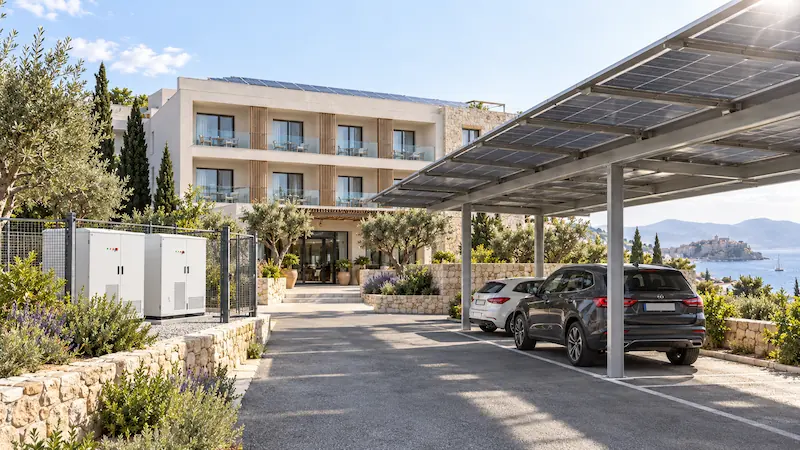
Connect solar panels for hotels with a storage plan that reflects daily operations. Review rooftop or carport generation alongside kitchen, laundry, pool and HVAC demand to see when solar can serve loads directly and when energy could be stored.
Choose what needs to stay on.
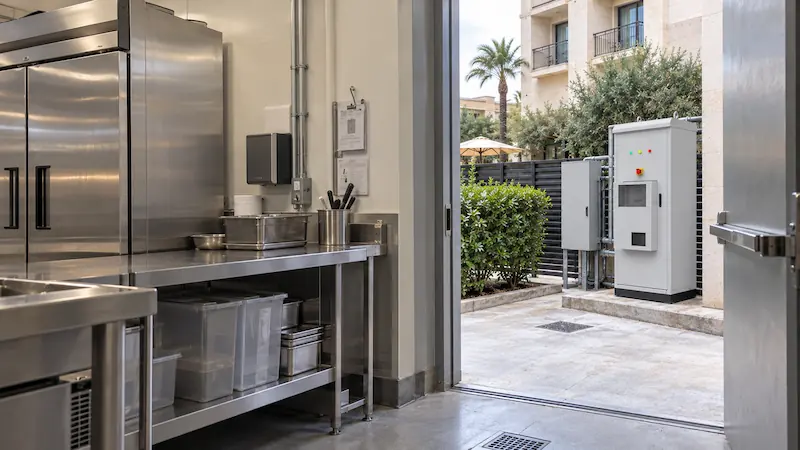
Separate priority circuits from the rest of the building. Front-desk systems, communications, selected refrigeration and emergency-related loads have different needs from every guest-room air conditioner. Define the backup scope before selecting batteries, power conversion and switching equipment.
A HOTEL RUNS AROUND THE CLOCK
Match storage to the hours that matter.
The roof, the kitchen and the guest rooms follow different schedules. Put them into one energy picture before choosing equipment.
Evening demand
Start with when guests return, cooling demand rises and the kitchen gets busy. Battery power sets how much load it can support at once; stored energy sets how long it can do so.
What to check
Review interval meter data against dinner, laundry and HVAC schedules.
More onsite solar use
A sunny roof does not guarantee spare energy. Compare generation with daytime loads and export limits to find surplus worth storing. Seasonal occupancy can change that balance.
What to check
Bring the solar inverter rating, generation history and export arrangement.
Essential-load backup
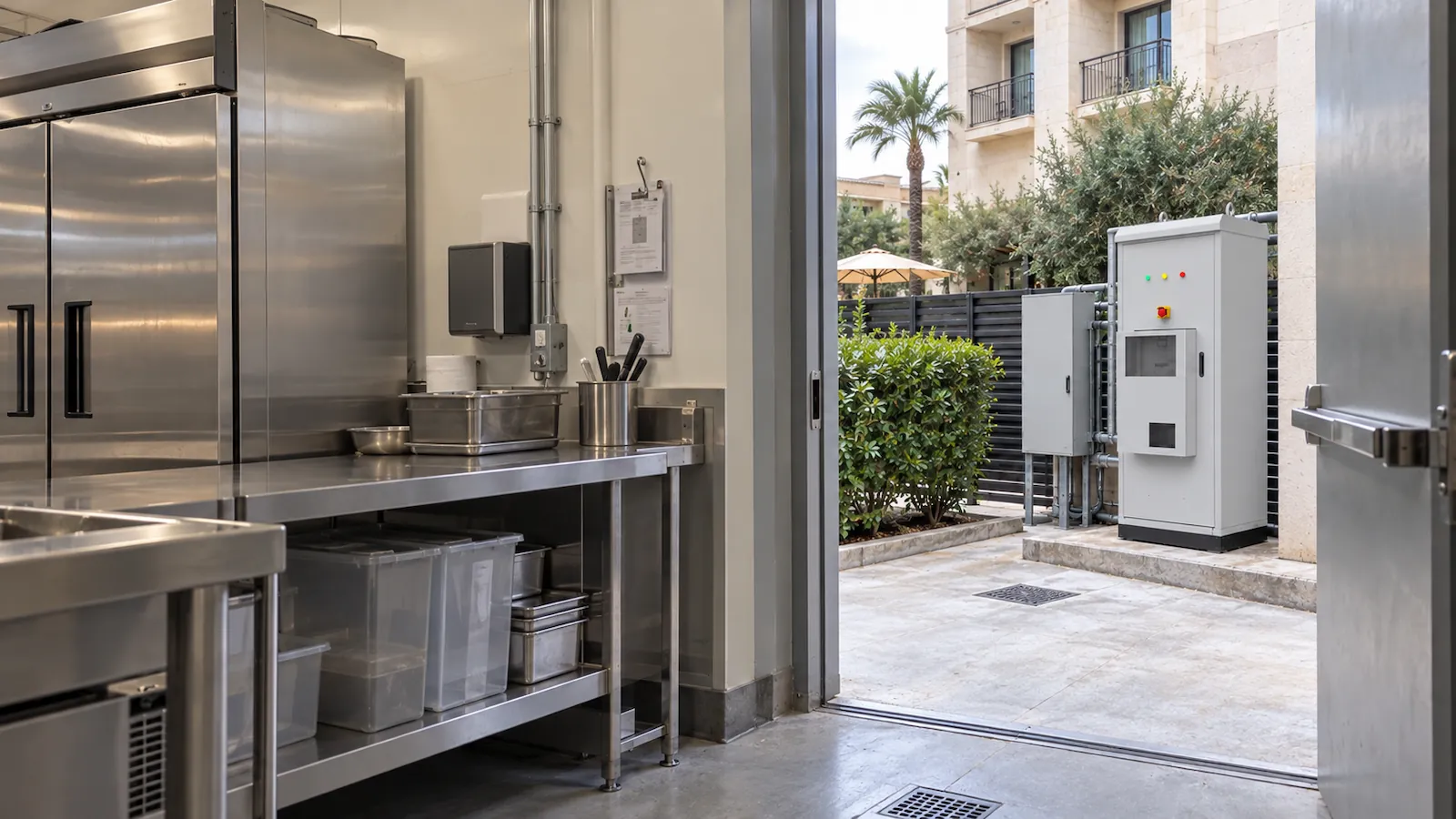
List the circuits that matter during an outage and their required operating hours. Refrigeration and pump start-up can affect power selection. Backup needs compatible conversion, grid isolation and controls.
What to check
Separate critical loads, start-up currents and any existing UPS or generator.
Remote resort power
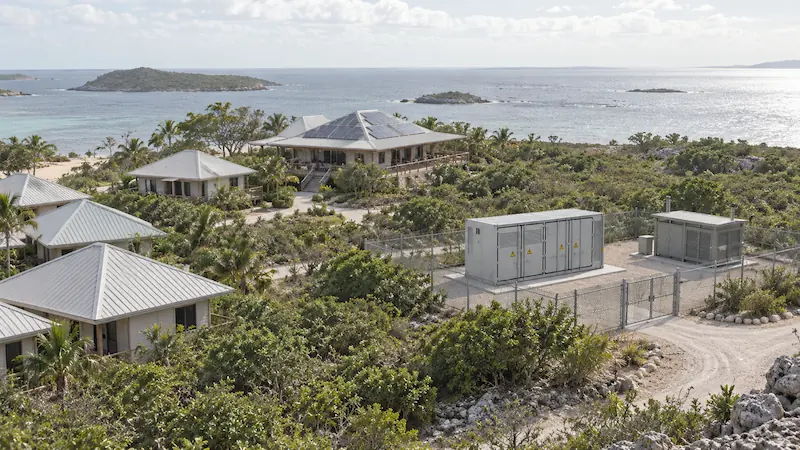
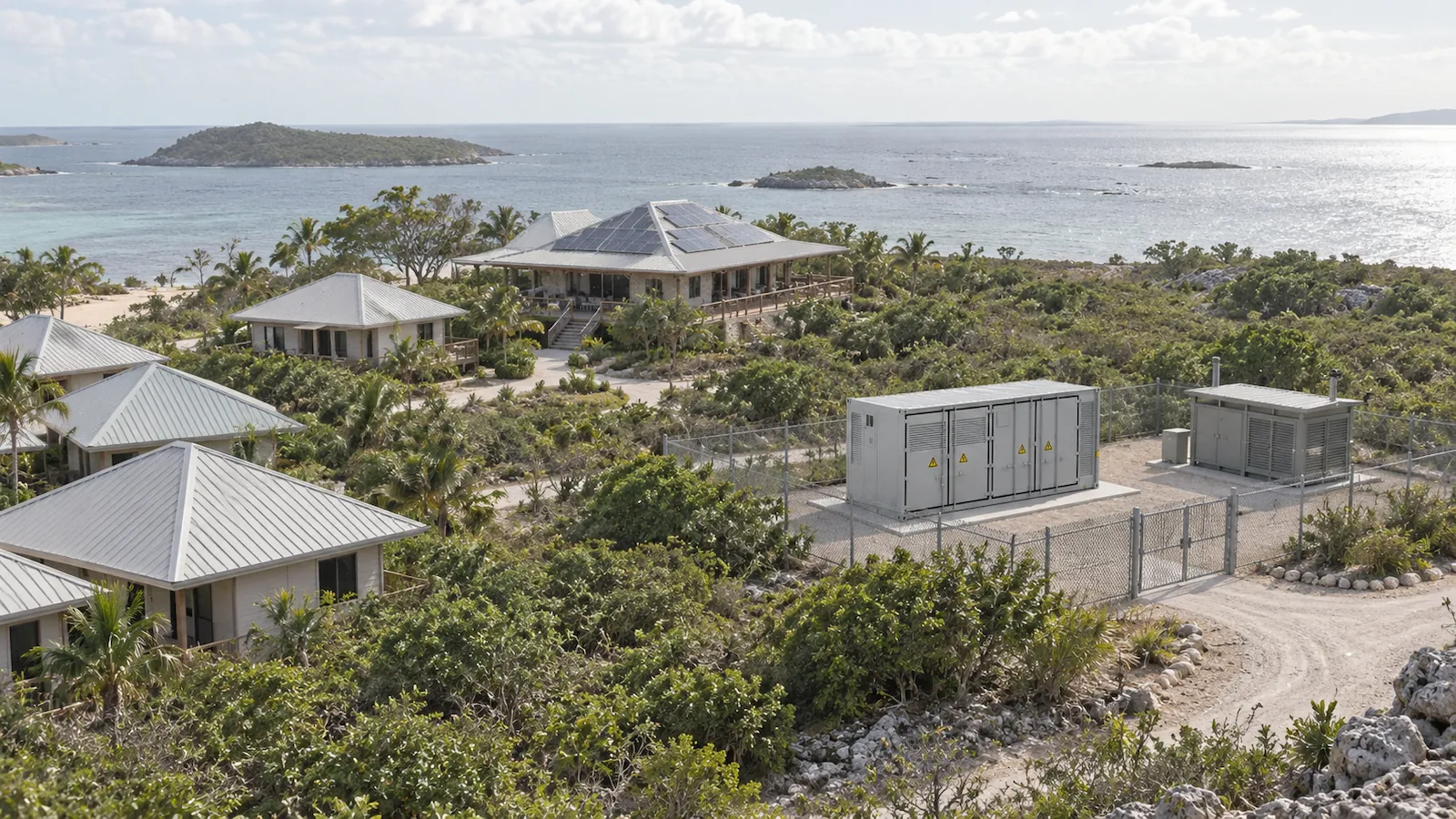
For an island or weak-grid property, coordinate solar, battery storage and a diesel generator around overnight demand and changing weather. Include fuel logistics and equipment access in the plan.
What to check
Share generator details, outage patterns and the longest expected low-solar period.
A FIRST LOAD BUDGET
Start with the loads and hours.
Estimate the energy your chosen circuits use. This gives the enquiry a starting point; final battery selection includes usable capacity, losses and reserve settings.
Your operating window
Use the average load over this window, not the sum of equipment nameplate ratings.
ENERGY USED BY THESE LOADS
30 kW × 4 hours
Plan around evening demand.
Compare this energy window with the available daytime solar surplus and your electricity tariff.
Load energy is not a cabinet capacity recommendation. Required output power and switching are checked separately.
EXISTING PROPERTYAdd storage to an operating hotel.
Keep your existing solar and hotel operations in view. An AC-coupled route can be assessed alongside the present electrical system, with suitable metering and controls to coordinate charging and discharge.
Where it fits
For properties with existing PV, recorded evening demand or a defined backup requirement.
What to confirm
Check inverter compatibility, switchboard capacity, equipment location and service access before final sizing.
SOLAR & PARKINGPlan solar, storage and charging together.
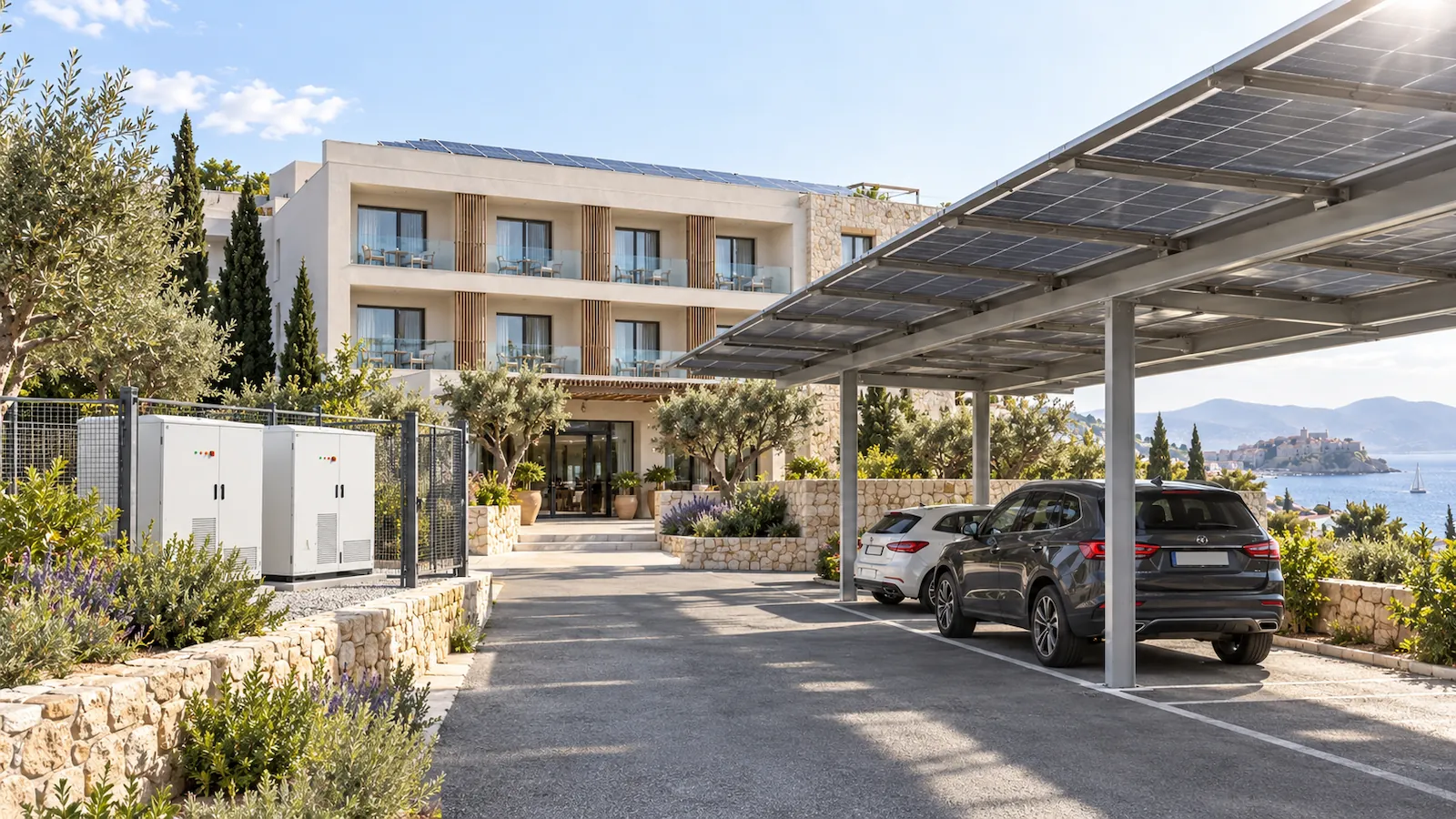
Rooftops and parking canopies can contribute solar power while guest charging adds another variable load. Plan their connection with the battery so charging demand does not consume energy reserved for evening operations.
Where it fits
For new solar projects, roof extensions and properties adding EV charging.
What to confirm
Review available area, shading, charger demand, utility limits and the property’s electrical drawings.
REMOTE & WEAK GRIDCoordinate power beyond the grid.
A resort microgrid brings solar generation, battery storage, power conversion and generator control into one operating plan. Energy reserves and generator dispatch should reflect the loads the property must serve through the night.
Where it fits
For off-grid resorts or properties where interruptions disrupt daily service.
What to confirm
Confirm generator integration, load steps, operating modes and islanding equipment with the project engineer.
existing property · property and equipment planningsolar & parking · property and equipment planningremote & weak grid · property and equipment planning
ONE PROPERTY. CONNECTED EQUIPMENT.
From solar generation to guest services.
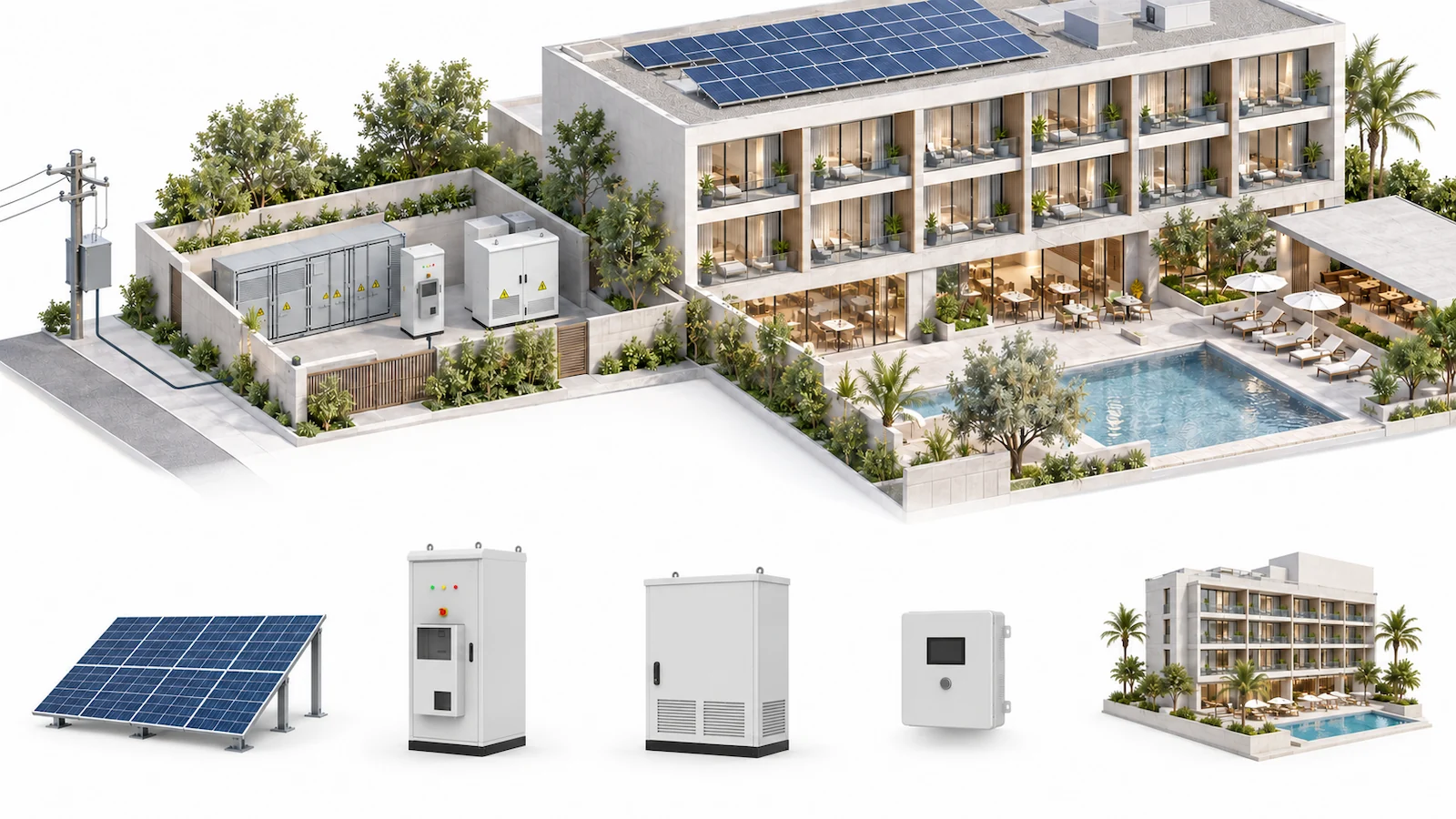
Solar generates electricity. Batteries store it. Power conversion and controls coordinate the supply to your hotel’s distribution system.
01 Solar generation02 Battery storage03 Power conversion04 System controls05 Hotel loads
Connection routes depend on the selected equipment and the project’s electrical design.
EQUIPMENT OPTIONS
Choose a route. Then choose the equipment.
Compact cabinets and larger systems serve different property needs. Open each option to review its role.
01
Integrated cabinet storage
Application & equipment scope
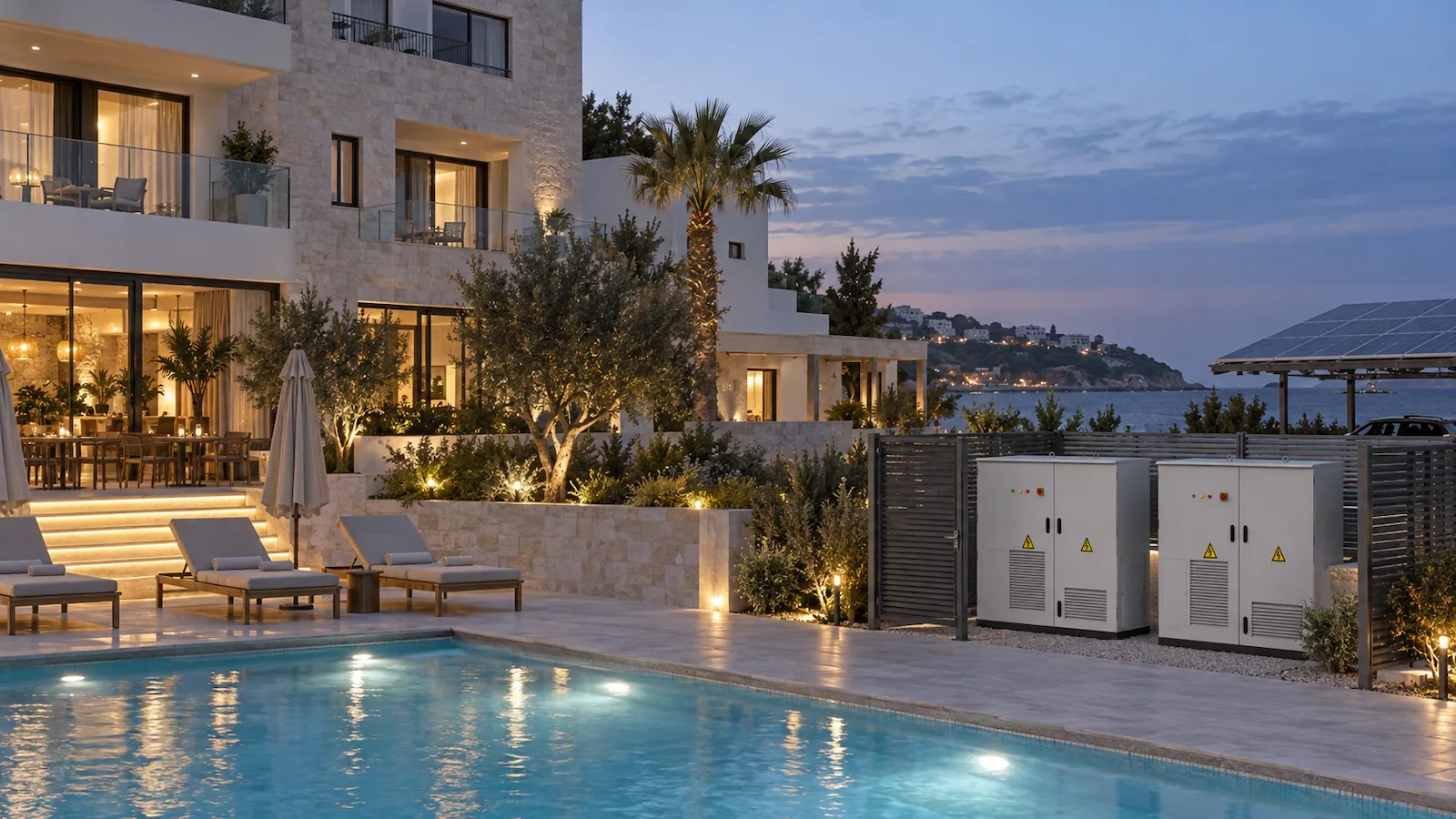
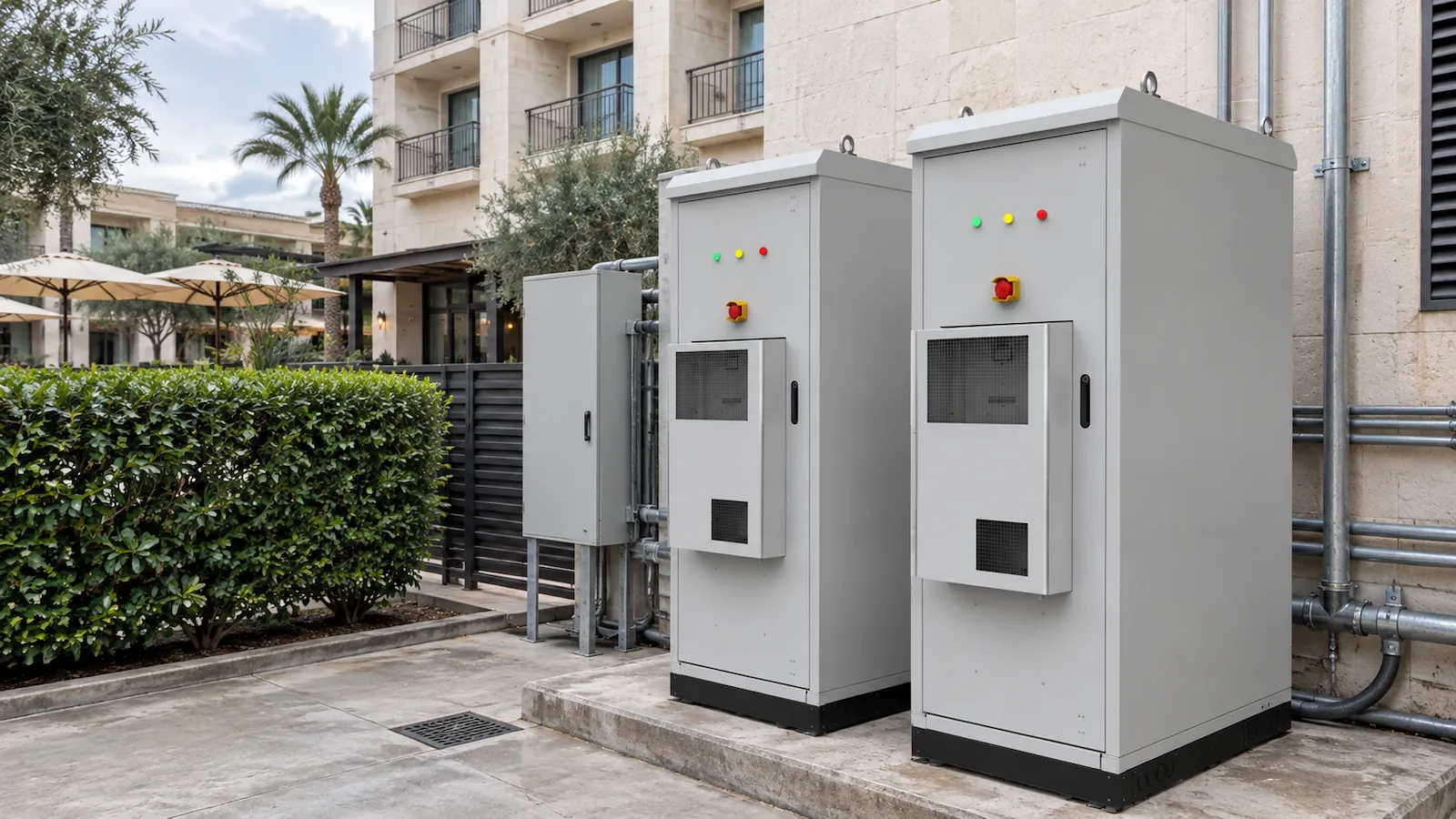
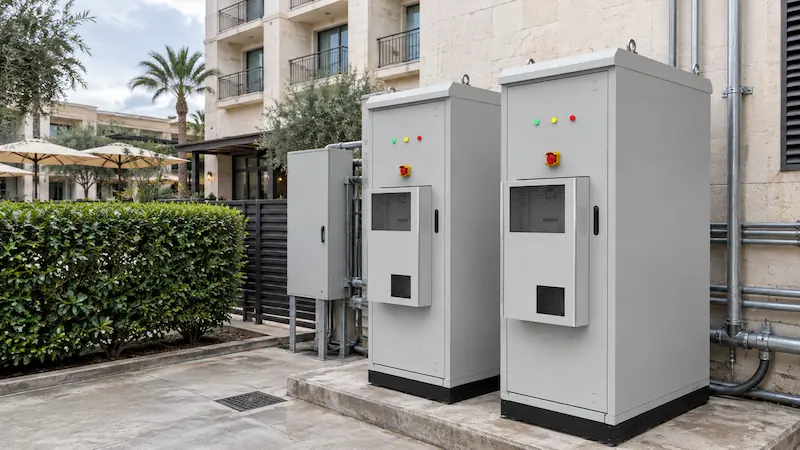
The 125 kW / 261 kWh commercial BESS combines storage and power conversion in a cabinet format. Explore it for a defined hotel load profile, then check usable energy, operating mode and site requirements for your project.
eBlock offers up to 120 kWh maximum installed battery capacity per cabinet. It needs an external PCS and associated electrical equipment. This route suits projects where battery storage and power conversion are selected separately.
Consider a container BESS for a larger property, shared resort infrastructure or phased expansion. Select the energy capacity, conversion equipment and layout from the load study rather than treating container size as a complete system specification.
Start with what you know. Define the supply scope and coordinate the work around the hotel’s operating schedule.
01Tell us how the hotel operates.
Share the location, electricity bills and your main objective. Add available solar, generator and priority-load information so the first discussion is specific to your property.
02Compare the system routes.
Review retrofit storage, solar expansion or a generator-supported microgrid. Compare the equipment roles, proposed operating schedule and connection needs before choosing a configuration.
03Define the project scope.
Set the supply scope and interfaces with your local engineer or installer. Confirm electrical ratings, backup circuits, space, monitoring and the inputs needed for an equipment proposal.
04Plan installation and handover.
Coordinate access and shutdown windows around guest service. Agree commissioning checks, operating settings and maintenance responsibilities so the hotel team knows how the system should run.
TELL US ABOUT YOUR PROPERTY
A hotel energy plan starts with your brief.
Share the country, existing supply and the job you want storage to do. Include the bills or load estimates you already have.
Solar can serve daytime hotel loads directly. A battery stores available surplus or charges according to an agreed operating schedule, then supplies energy later through compatible power conversion. The controls coordinate this with the hotel’s loads, grid connection and any generator.
How much battery storage does our hotel need?
Room count alone is not enough. Start with measured loads, the hours you want to cover and the circuits included. Compare required kW with required kWh, then allow for usable battery energy, conversion losses, reserve settings and seasonal occupancy.
Can battery storage provide backup for the whole hotel?
Whole-property backup requires a system sized for all included loads and their start-up demand. It also needs suitable grid isolation, conversion and controls. A selected-load plan may be more practical. Agree the required circuits and transfer performance before choosing equipment.
Can we add a battery to existing hotel solar panels?
Often this can be assessed without replacing the whole solar system. The route depends on existing inverter equipment, electrical ratings, metering and utility requirements. Send the inverter details and a single-line drawing to check the integration options.
Can storage work with our diesel generator?
Yes, compatible systems can coordinate battery storage, solar and generator operation. Generator loading, start-up sequences and reserve energy need to be defined. This is especially relevant to remote resorts, where overnight loads and low-solar periods shape the operating plan.
Will solar battery storage lower our hotel electricity costs?
It can improve onsite solar use or manage costly demand periods, but the value depends on your tariff, load timing, solar surplus and equipment cost. A useful assessment starts with bills and meter data rather than a fixed saving percentage.

 English
 Deutsch
 Español
 Français
 Italiano
 Polski
 Română
 العربية