English
 Deutsch
 Español
 Français
 Italiano
 Polski
 Română
 العربية
Start with the loads.
Island off-grid power systems combine generation, stored energy, power conversion and controls. Their capacity follows the site’s demand, starting loads and required reserve.
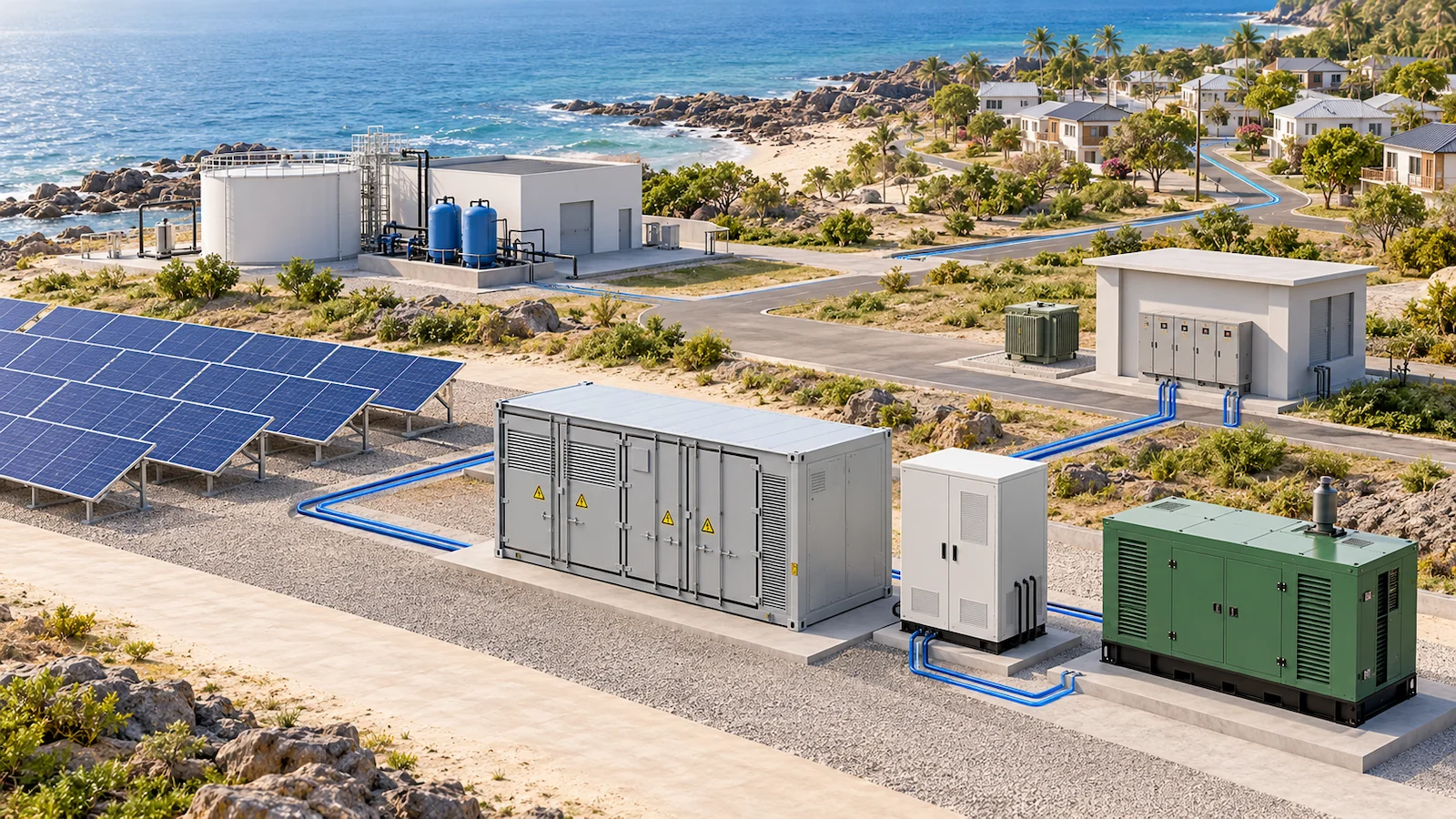
ISLAND & OFF-GRID POWER
Power the island.
Plan beyond the sunny hours.
Connect solar, battery storage and generator backup around the services your island depends on.
BUILT AROUND THE WAY AN ISLAND WORKS
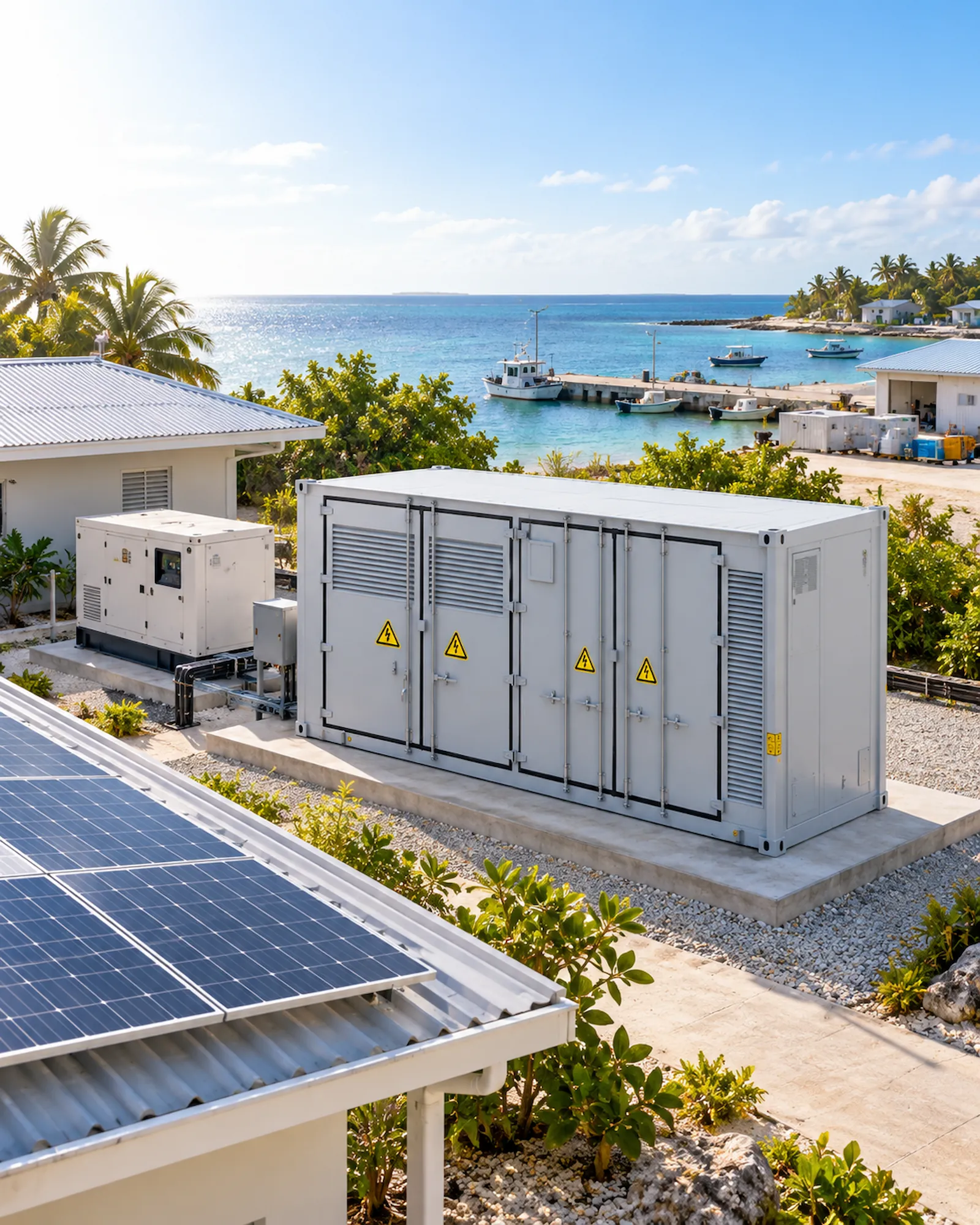
Water, refrigeration and local services shape the operating duty.
Identify the circuits that must stay available: water pumps, communications, refrigeration or lighting. Separate their running demand and starting loads from flexible uses before sizing the system.
Solar serves the site when available. A battery shifts energy into later hours, while a compatible generator can support heavy demand or prolonged low-solar periods. Controls coordinate the operating sequence.
An existing diesel generator may be part of the new system. Review its rating, controller, operating limits and communication interfaces before confirming how it will work with the PCS and EMS.
Temperature, humidity, salt exposure and flood risk influence enclosure choice and equipment placement. Confirm the required corrosion protection separately from the enclosure’s IP rating.
Leave service access around the equipment. Agree local inspections, spare parts and remote support arrangements, including what operators can do if the internet connection is unavailable.
Island off-grid power systems combine generation, stored energy, power conversion and controls. Their capacity follows the site’s demand, starting loads and required reserve.
Decide which services need continuous support, which loads can move into solar hours and when generator operation is acceptable. Then select the equipment.
Transport access, coastal exposure and local maintenance can influence the equipment package as much as the electrical requirement.
Prepare Your Project InputsSYSTEM CONFIGURATION
Each component has a different job. Explore how solar, storage, conversion and backup fit around the local network.
Review Your Configuration01 / Solar PV
Roof or ground-mounted solar produces electricity during daylight. The available area, seasonal solar resource and site demand guide the array size. Existing PV needs an inverter and control compatibility review.
02 / Battery storage
Battery energy, measured in kWh, sets part of the available reserve. Usable energy also depends on the operating window, losses, temperature and the reserve held for essential services.
03 / Power conversion
An island-capable PCS or inverter manages power conversion and must be matched to the site’s voltage, frequency, phases and starting loads. A battery cabinet alone does not create an off-grid power supply.
04 / Generator backup
A generator can cover sustained demand and restore battery reserve. Its controller, minimum operating load, synchronisation and fuel arrangements need to be considered alongside battery dispatch.
05 / Controls & distribution
The energy management system coordinates equipment within the agreed control scope. Switchgear and protection distribute power to the island loads; the final design defines priority circuits and generator interfaces.
06 / Island services
Communities, water facilities, cold stores and working harbours have different daily and seasonal demands. A measured load profile is more useful than choosing storage capacity from the site’s size alone.
EQUIPMENT OPTIONS
Compare supply power, stored energy and the integration scope separately.
01 / COMPACT SYSTEM
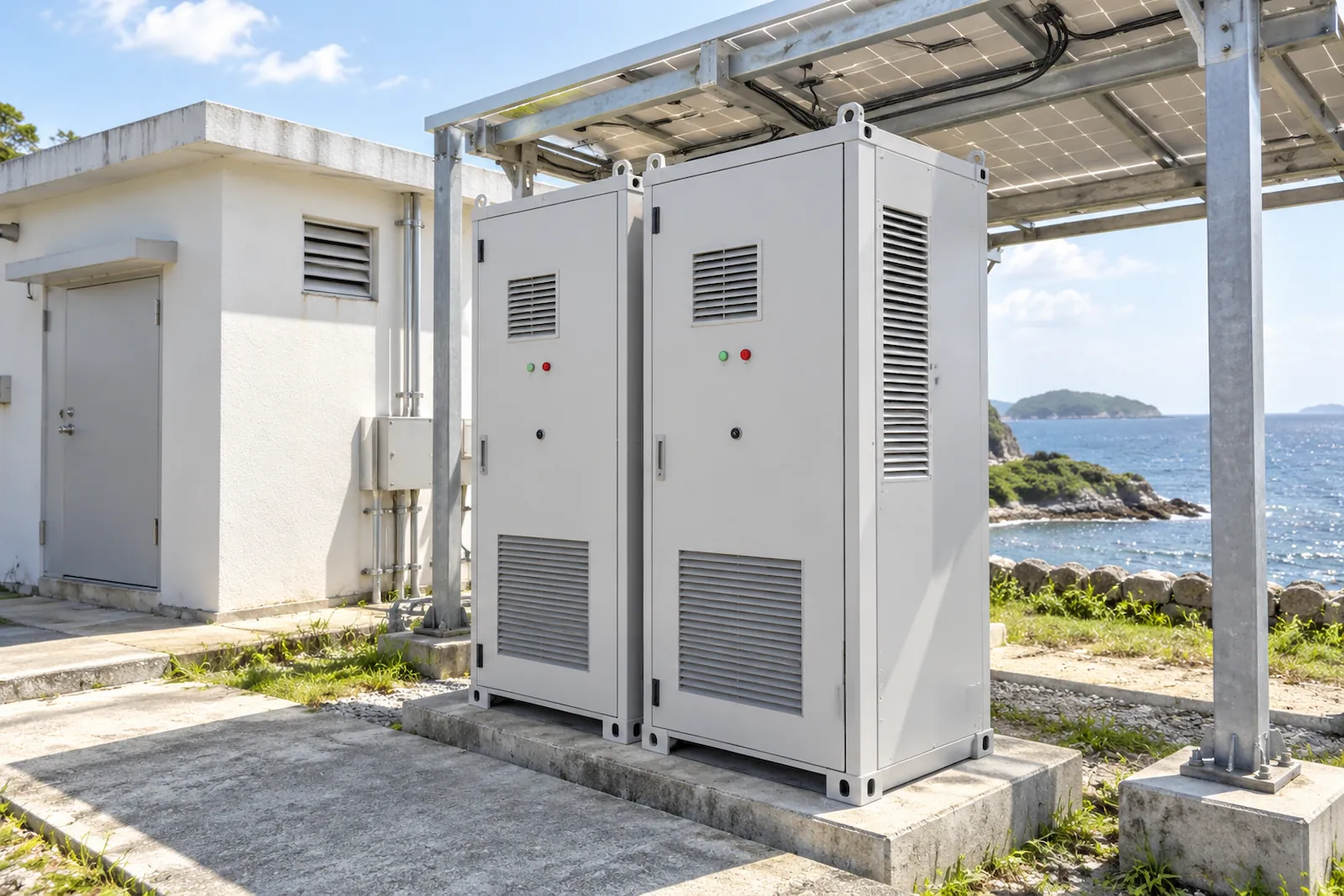
For a defined facility or a group of essential circuits.
Begin with running power, motor starts and hours of use. Select the battery and off-grid inverter together, then assess solar input, generator support and the required protection. Equipment and installation scope are agreed for the project.
Discuss a Compact System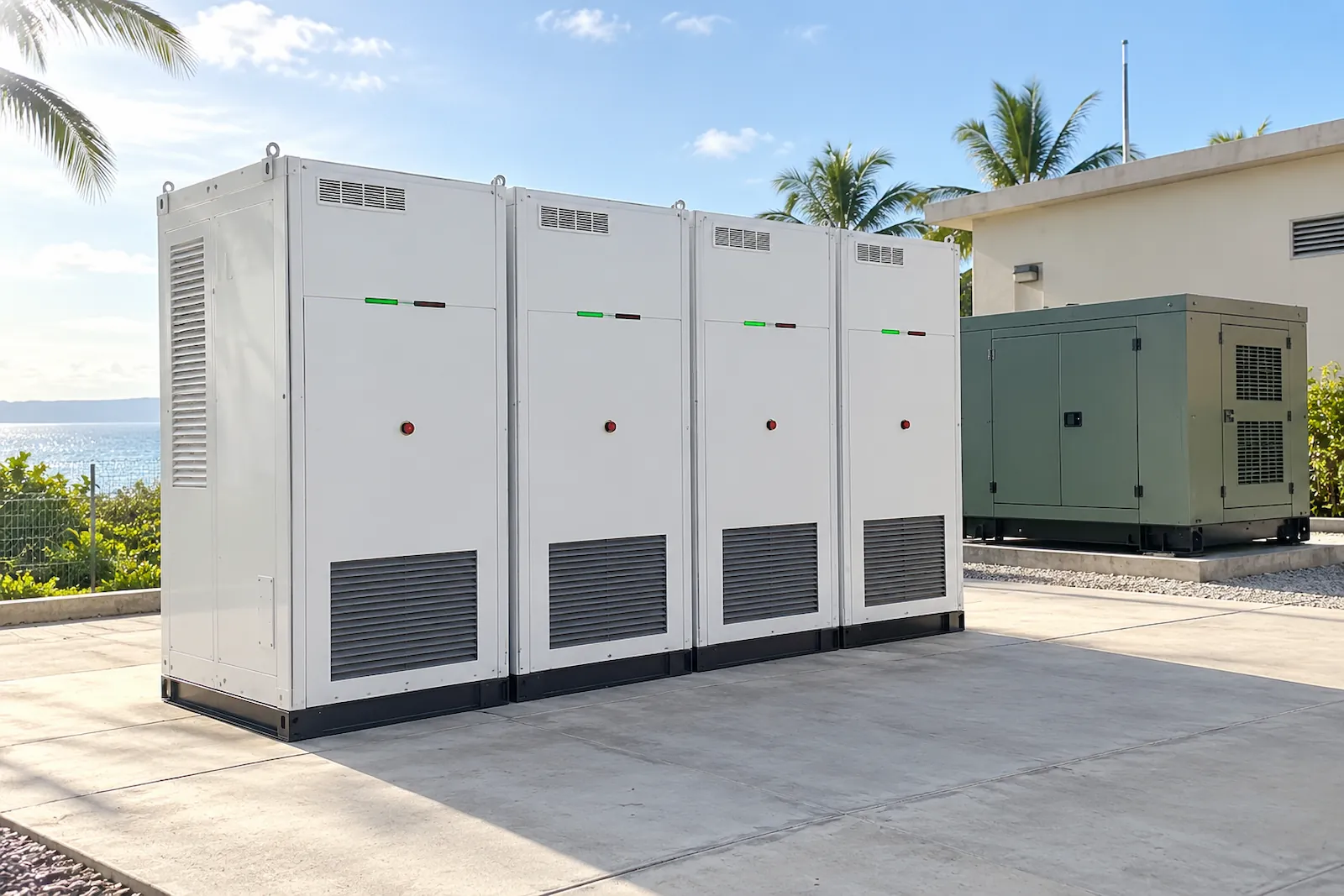
02 / GENERATOR-COUPLED
For sites combining solar, batteries and an existing or new diesel unit.
Review the generator controller and communications alongside the battery PCS, metering and EMS. Define load-sharing, charging, reserve and restart behaviour before confirming equipment. No single transfer-time or fuel-saving figure applies to every configuration.
Explore Solar + Storage + Diesel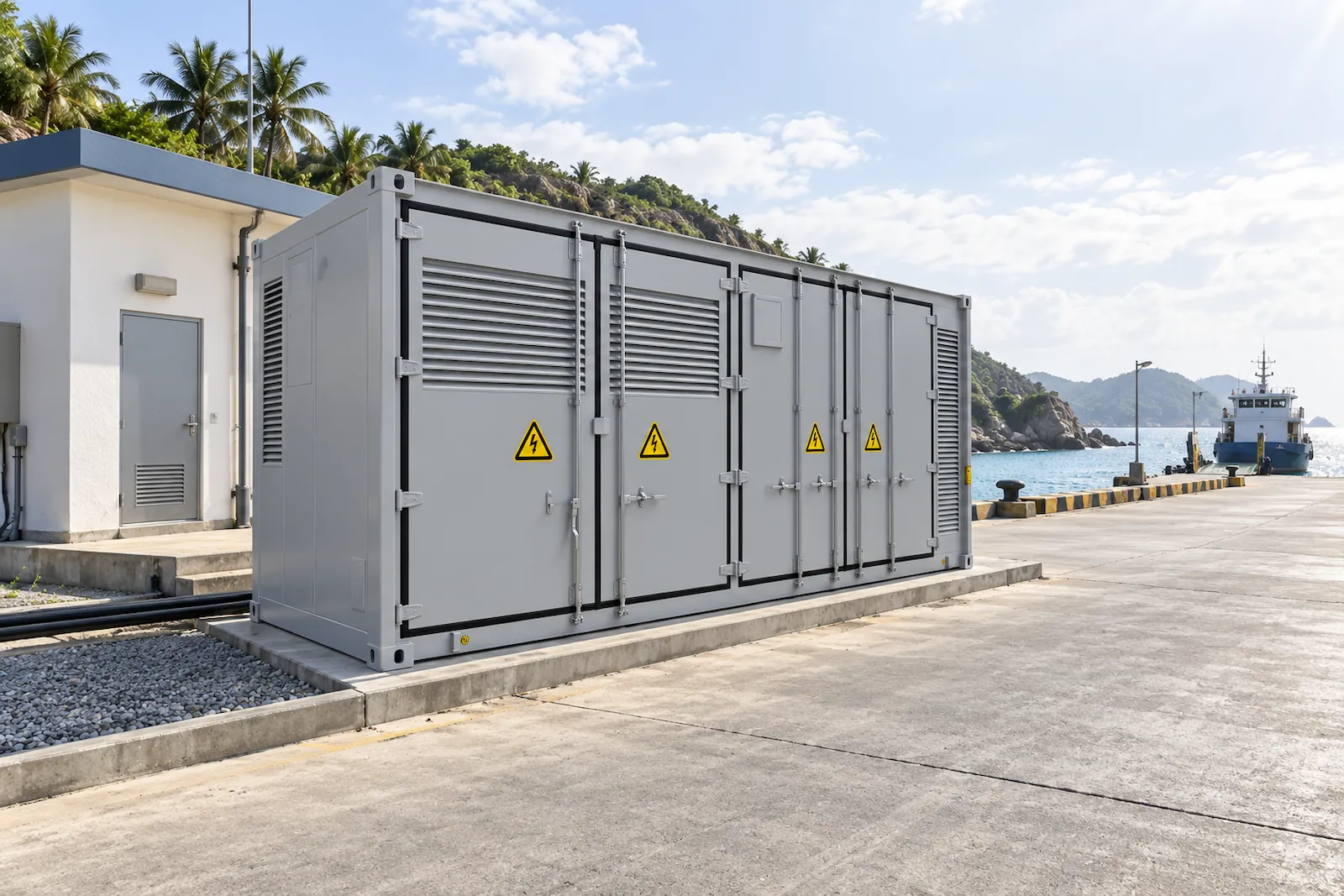
03 / CONTAINERISED
For larger demand and a coordinated container equipment package.
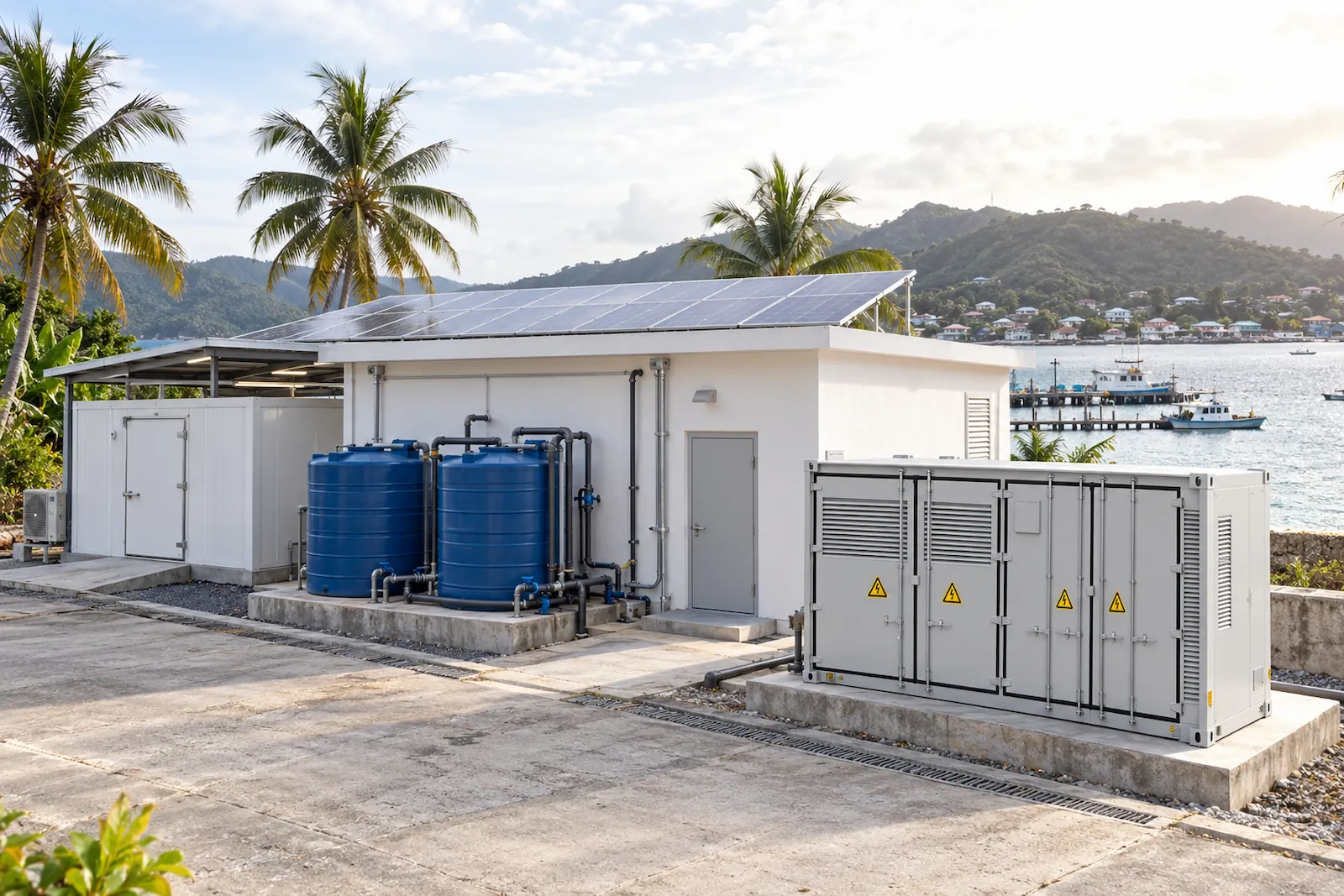
Select battery energy, PCS power, thermal management, protection and controls as a package. Check dimensions, mass, shipping conditions, the unloading route and maintenance clearance with the local project team.
Explore Container BESSEquipment and island scenes illustrate configuration options. Final equipment selection and siting are project-specific.
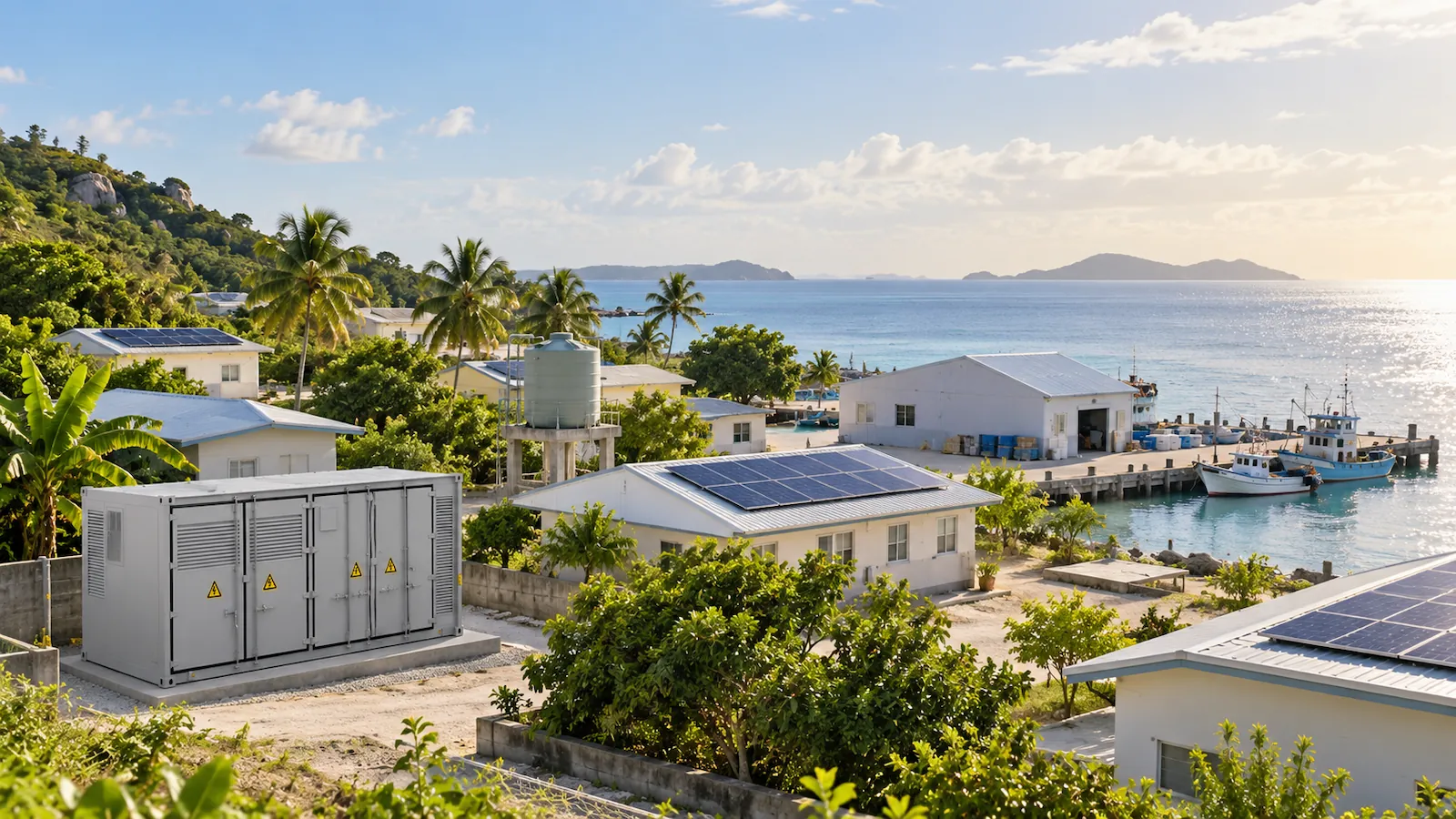
WHAT DOES YOUR ISLAND NEED TO POWER?
Prioritise water, communications, lighting and other agreed circuits. Review seasonal demand and the local operating team’s needs.
Check pump and compressor starts, ice production, refrigeration and vessel schedules. Separate short power peaks from the energy required over a shift.
Match the supply to buildings, workshops or accommodation. For guest-facing operations, also review the Hotels & Resorts Solution.
WORK WITH WHAT IS ALREADY THERE
For a diesel-powered island, adding storage starts with the existing plant. Understand the generator’s loading, fuel deliveries and operating hours before setting the battery dispatch strategy.
Solar and storage may reduce generator running where the load and controls allow it. The result depends on seasonal demand, solar availability and the minimum load the generator needs to operate reliably.
Explore Solar + Storage + Diesel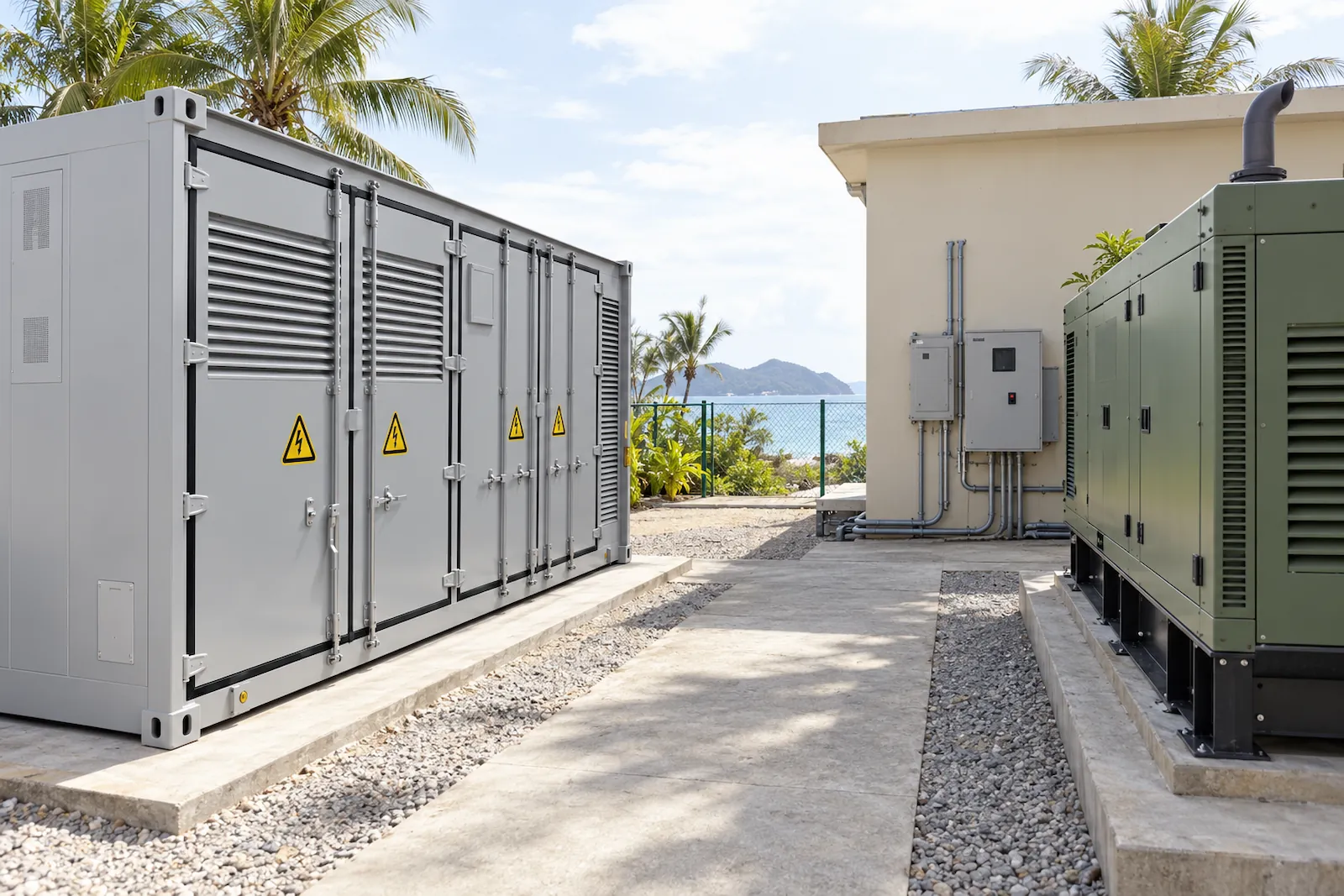
InterfacesController, metering and communications.
OperationLoad-sharing, reserve and restart settings.
AccessFuel supply and equipment servicing.
LOAD PROFILE & PROJECT INPUTS
Send what you have. We can identify the gaps before selecting equipment.
| Project input | What to provide |
|---|---|
| Demand & essential circuits | Daily energy, peak power, motor starting loads, critical circuits and operating schedules. |
| Reserve & low-solar periods | Required hours of support, permitted generator use and the priority of each load. |
| Electrical supply | Voltage, frequency, phases, protection details and a single-line diagram if available. |
| Existing PV & generator | Array and inverter details; generator rating, controller, communications and operating history. |
| Environment & siting | Temperature, humidity, coastal exposure, flood level, foundations and service access. |
| Delivery & operation | Port access, container handling limits, inland route, local operators and internet availability. |
On a small screen, swipe across the table to read each column.
Have a generator list or an electrical drawing? Include it with your enquiry. If interval data is unavailable, start with an equipment list and hours of use.
Share Your Project BriefNEXT STEPS
Site location, priority services, demand and acceptable generator use.
PV, generator, local network, environmental conditions and delivery access.
Battery, conversion, controls and protection, with clear package boundaries.
Agree responsibilities for transport, local design, installation and commissioning.
OFF-GRID POWER, EXPLAINED
Practical answers for island owners, operators and project partners.
Solar generation, battery storage, island-capable power conversion and controls work together to supply the local electrical network. A generator can support heavy demand or longer low-solar periods. The equipment and operating strategy depend on the island’s loads and required reserve.
Possibly. Its power rating, controller, synchronisation, communications and operating limits need to be reviewed. An existing unit should not be assumed compatible solely because its voltage matches the proposed battery system.
The design can use battery reserve, generator support and agreed priorities for flexible loads. Required autonomy and acceptable generator use should be established from seasonal demand and solar conditions. A fixed battery capacity does not promise unlimited operation.
Power in kW describes the rate of supply; energy in kWh describes the amount stored. Running demand, short starting loads, duration, conversion losses and reserve settings all matter. Share interval data or an equipment-and-hours list for the first review.
No. Battery storage needs compatible island-capable power conversion, controls and protection. A DC battery cabinet needs external conversion equipment. Black start, grid-forming operation and any required transfer performance must be confirmed for the selected configuration.
An IP rating addresses specified dust and water ingress conditions. Coastal corrosion protection, humidity, ventilation and equipment siting need their own review. Specify the actual environment and required protective treatment with the project team.
The proposed equipment and configuration are defined from the information available. Agree the battery, conversion, control and accessory scope, and identify the responsibilities for transport, local electrical design, installation and commissioning. Missing inputs should be recorded before final selection.
READ INTO THE DETAILS
TALK TO KUNETIC
Share your site, loads and existing equipment. We can review an off-grid battery equipment route and the integration inputs with your project team.
Planning a larger local network? Explore the principles in our Microgrid Systems Guide.
For island owners, operators, EPCs and system integrators.