
 English
 Deutsch
 Español
 Français
 Italiano
 Polski
 Română
 العربية

Table of Contents
I’d start with one question: what must keep running when the grid goes down?
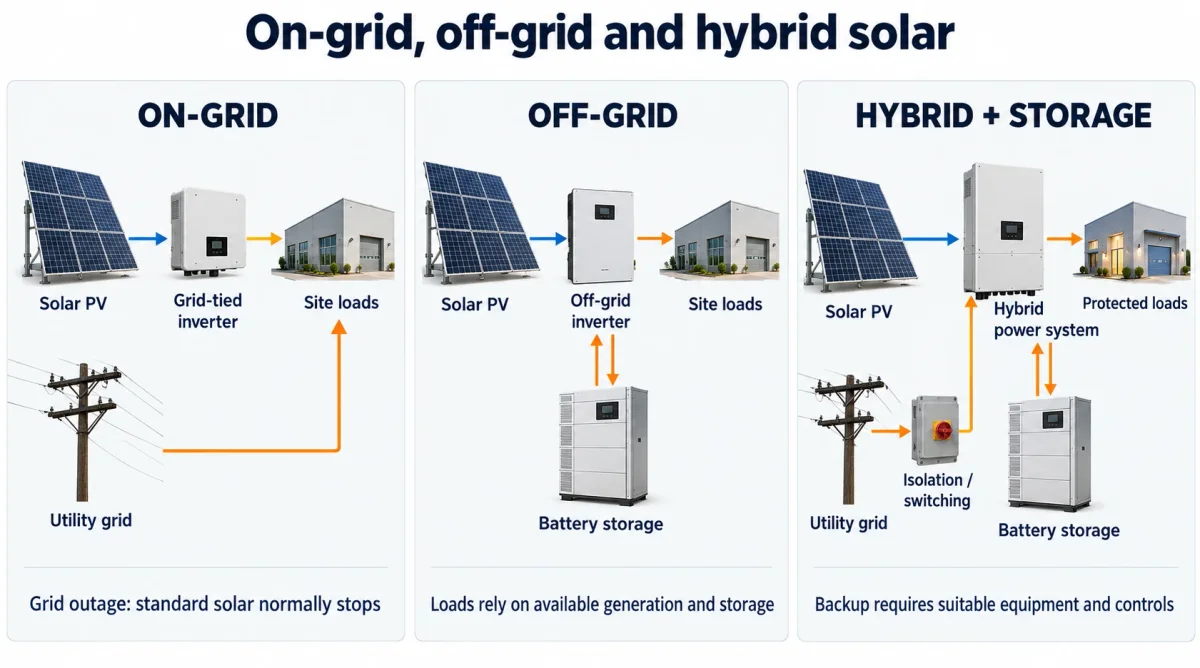
An on-grid solar system connects to the utility. An off-grid system runs without it. A hybrid solar system keeps the grid and adds battery storage. It can provide backup power only with the right equipment and installation.
To compare an off-grid and on-grid solar system, check two things: how you use electricity and what must stay on when power fails.
On-Grid, Off-Grid and Hybrid Solar: The Key Differences
What to compare | On-grid solar | Off-grid solar | Hybrid solar with storage |
Utility connection | Connected to the grid | Operates without a utility connection | Connected to the grid, with storage |
Battery role | Optional for normal grid-connected operation | Usually supplies loads outside solar hours; other generation may also be needed | Stores energy for later use and, where designed, backup |
During a grid outage | A standard grid-following system normally stops | No utility supply to lose; operation depends on available generation and stored energy | Supplies selected loads only if designed for outage operation |
Main budget items | PV, inverter, installation and grid connection | PV, storage, suitable power conversion and any backup generation | PV, storage, conversion, controls and any required backup switching |
Starting point | A site with reliable grid access | A site without a practical grid connection | A grid-connected site that needs storage or selected-load backup |
Equipment included under each label varies by supplier.
When Does an On-Grid Solar System Make Sense?
Using Solar While Keeping the Grid
I’d start with on-grid solar if the grid is reliable and you want to buy less electricity.
Solar supplies part of the load while it is generating. The grid covers the shortfall when solar output is lower than demand. If exports are allowed, surplus energy may flow to the grid. Check the local tariff and export terms before assigning that electricity a financial value.
For a business, I’d check how much solar is generated during working hours. A daytime workshop and a warehouse with an evening shift can use the same amount of electricity but need different configurations.
Our commercial solar systems guide covers the wider sizing and project-cost questions.
Why Standard Grid-Tied Solar Stops During an Outage
Having panels on the roof does not necessarily keep the site powered during a blackout.
Many solar systems disconnect when they detect loss of the grid. This helps prevent unsafe, unintended operation of an isolated electrical network. The U.S. Department of Energy explains this islanding issue.
If backup matters, ask which equipment will establish the local power supply, isolate it from the utility and serve the protected loads. Adding battery capacity alone does not answer those questions.
What Does It Take to Run Off-Grid?
Energy for Nights and Low-Solar Days
An off-grid system has no utility supply to fill a gap. It must meet your loads at night and when there is little sun.
Start with daily energy use. Then check nights, cloudy days and changes in solar output through the year. Energy storage, a backup generator or planned load cuts may be needed.
Take a simple battery-only example: a steady 50 kW load for four hours needs 200 kWh delivered to the loads. The battery must store more than this. Allow for its operating limits, conversion losses and the reserve you need to keep.
You also need to size the PV array and check whether the system can recover its charge before the next night.
Enough Power for Your Loads
Energy capacity and power output need separate checks. A battery may store enough energy for a shift while the inverter cannot supply a large motor’s starting demand.
List the loads that run together, their continuous power and any starting surges. Then check the inverter or PCS rating, phase arrangement and voltage.
Our KUNETIC K-M-150K mobile off-grid solar system combines a foldable PV array, 150 kW rated AC output and 261 kWh standard battery capacity. It is intended for remote industrial and temporary-power projects.
The 150 kW output rating measures power, while 261 kWh is standard battery capacity. Confirm usable energy and runtime for the proposed operating conditions.
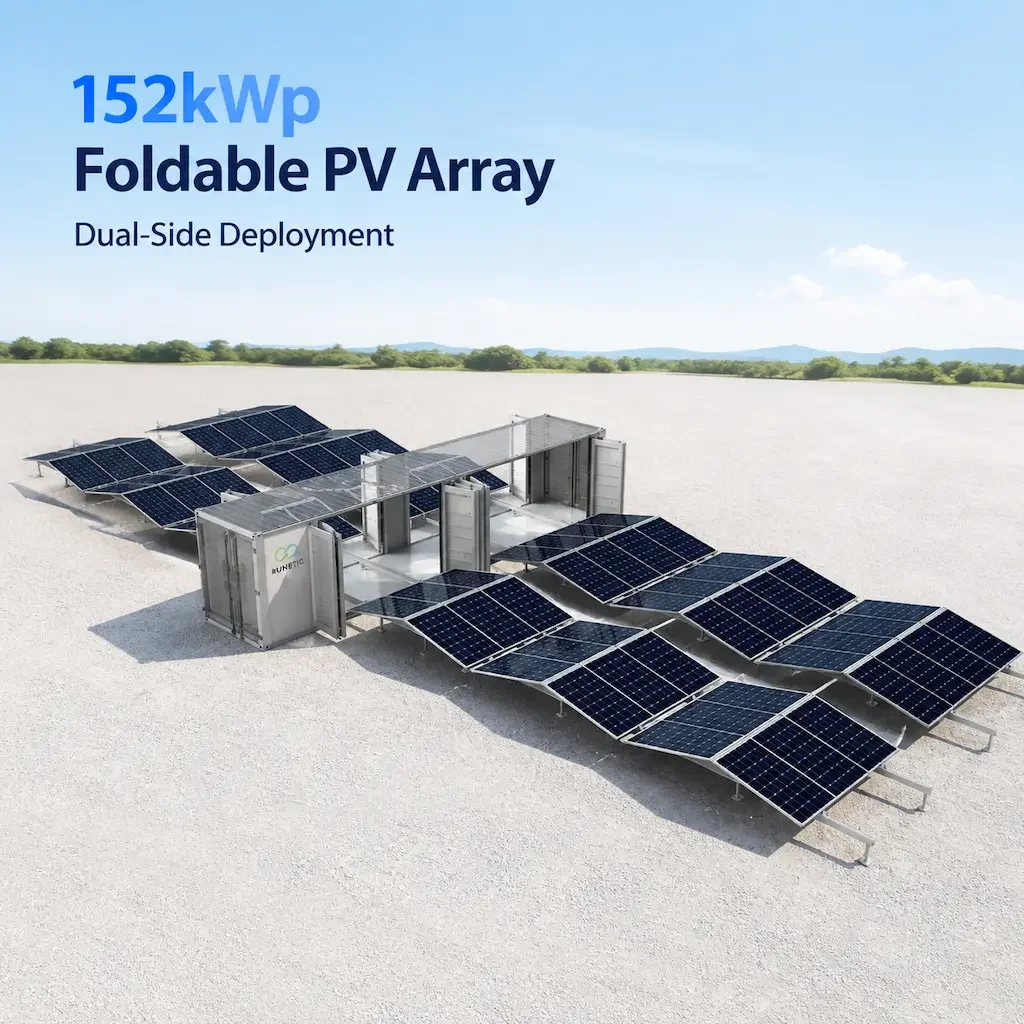
KUNETIC K-M-150K mobile off-grid solar system with its foldable PV array deployed.
When Is a Hybrid Solar System the Better Fit?
Keeping Grid Access While Adding Storage
A hybrid solar-plus-storage system lets you keep the grid while changing when you use the energy generated on site.
For example, a business might store surplus daytime solar for an evening shift. It might also use battery output to reduce grid imports during expensive or high-demand periods. Whether that is worthwhile depends on the load profile, tariff, storage losses and equipment cost.
If the battery also provides backup, its controls need to protect a reserve. Energy used for routine operation is no longer available for a later outage.
I’d decide the backup requirement before comparing savings estimates. Otherwise, two quotes may appear to offer the same storage capacity while assuming very different uses for it.
Check the Backup Equipment, Not Just the Battery
The word “hybrid” does not tell you which loads will remain powered after a grid failure.
Check the power-conversion equipment, isolation and switching, protected-load wiring and control sequence. The Department of Energy’s inverter guide explains why operating without grid support requires suitable inverter capabilities.
Our 125 kW / 261 kWh commercial BESS includes a PCS, solar MPPT, static transfer switch and energy management system. The final protected loads, wiring, switching logic and operating mode are confirmed during project engineering and commissioning.
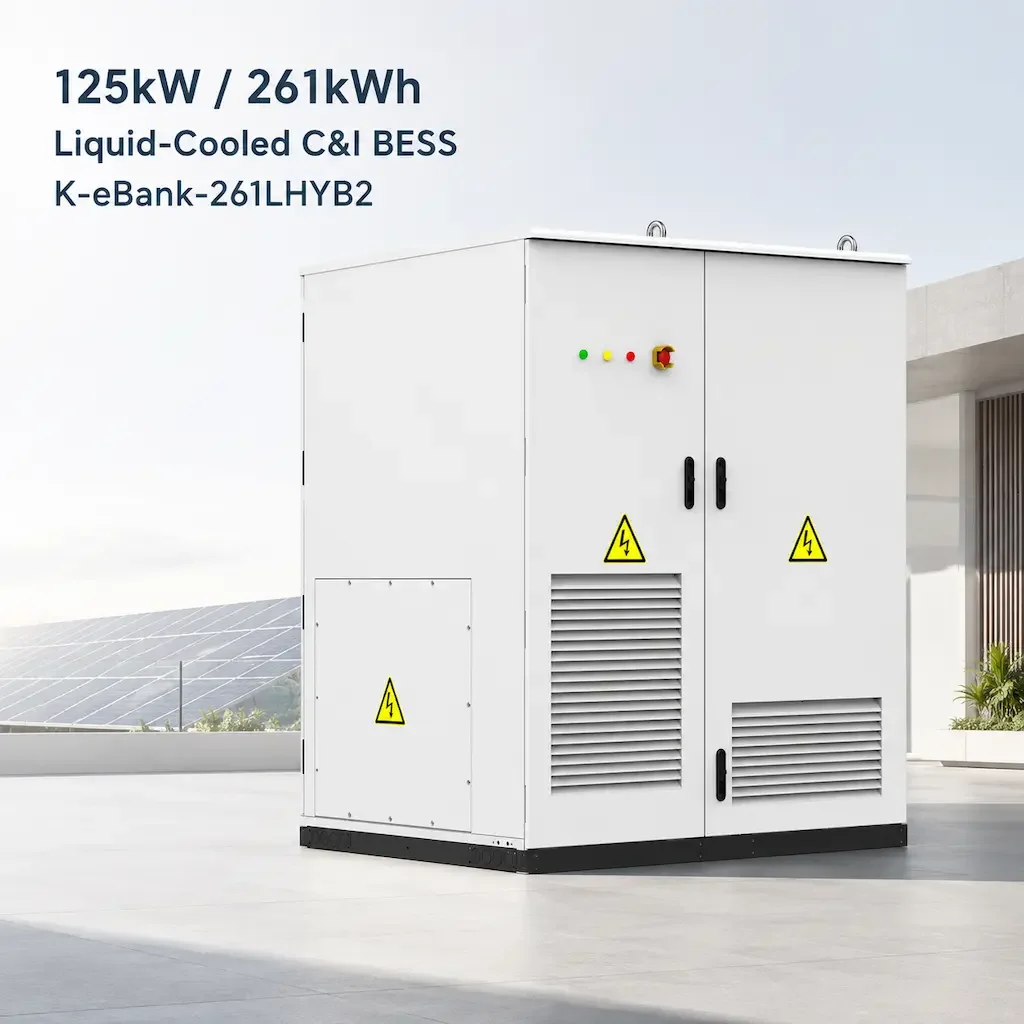
KUNETIC K-eBank-261LHYB2: a 125 kW / 261 kWh liquid-cooled commercial battery energy storage system.
Ask the supplier to describe the outage sequence and how it will be tested. If several sources must work together, our microgrid systems guide explains the broader integration questions.
What Would I Check Before Choosing a System?
If a site has reliable grid access and mostly daytime loads, I’d look at on-grid solar first. If outages stop essential work, I’d check which loads need backup and for how long. If a grid connection is not practical, I’d assess an off-grid system’s energy and power needs.
Before asking for a quote, gather:
- Whether a grid connection exists, how often outages occur and how long they usually last.
- Energy use over time, the highest simultaneous demand and equipment starting loads.
- Which equipment must stay on, for how long and whether it can tolerate a brief interruption.
- Existing PV, inverters, generators, meters and switchgear you intend to retain.
- Site voltage, phase, frequency and applicable connection or approval requirements.
Both KUNETIC examples above list 380/400 V AC ratings. Check that the equipment suits your site supply and local requirements.
Compare quotations with the same operating requirements. Include installation, switching, controls, commissioning and support alongside the major equipment. A battery-only equipment price and a completed backup-system price cover different things.
You can send KUNETIC your site requirements to discuss a configuration. A load profile, basic site layout and clear backup priorities give us a useful starting point.
Frequently Asked Questions
Can On-Grid Solar Work During a Power Outage?
A standard grid-following system normally disconnects during an outage. Some systems can supply protected loads with suitable equipment and controls, so check the exact backup configuration.
Can a Hybrid Solar System Operate Without the Grid?
Some can, if designed and commissioned for islanded operation. Check the supported loads, output limits, available energy and whether the system can restart without the grid.
Can I Add Batteries to an Existing Grid-Tied System?
Often, but the design depends on the existing inverter, battery interfaces and site wiring. Confirm the integration method and whether the project is intended for energy shifting, outage backup or both.
