
 English
 Deutsch
 Español
 Français
 Italiano
 Polski
 Română
 العربية
Fuel delivery & servicing
Start with delivered fuel cost, generator hours and service intervals. Remote transport can change the economics of a hybrid system.
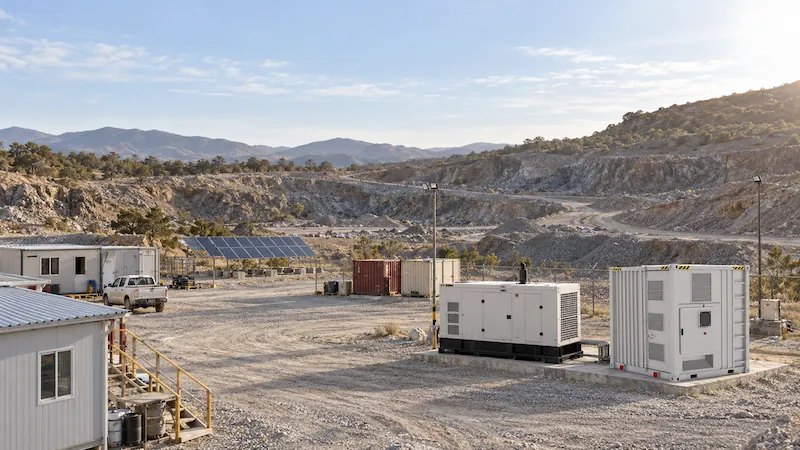
MINING & REMOTE SITE POWER
Bring solar, battery storage and generator power together.
Start with your site’s loads, existing equipment and working hours.
DESIGNED AROUND THE WORK ON SITE
KUNETIC configures microgrid solutions around your existing generators, solar resources and operating conditions. A system may combine battery storage, compatible power conversion and controls with fixed or deployable solar.
Start with delivered fuel cost, generator hours and service intervals. Remote transport can change the economics of a hybrid system.
Look at overnight and between-shift demand. Selected loads may be candidates for battery supply while a compatible generator is stopped.
Pumps, compressors and workshop tools need a power assessment as well as an energy budget. Record starts, peaks and simultaneous use.
Dust, heat, altitude and service access affect equipment selection. Confirm ratings and maintenance space for the actual location.
THREE STARTING POINTS
Keep useful equipment. Add what the load needs. These routes can be combined as the site develops.
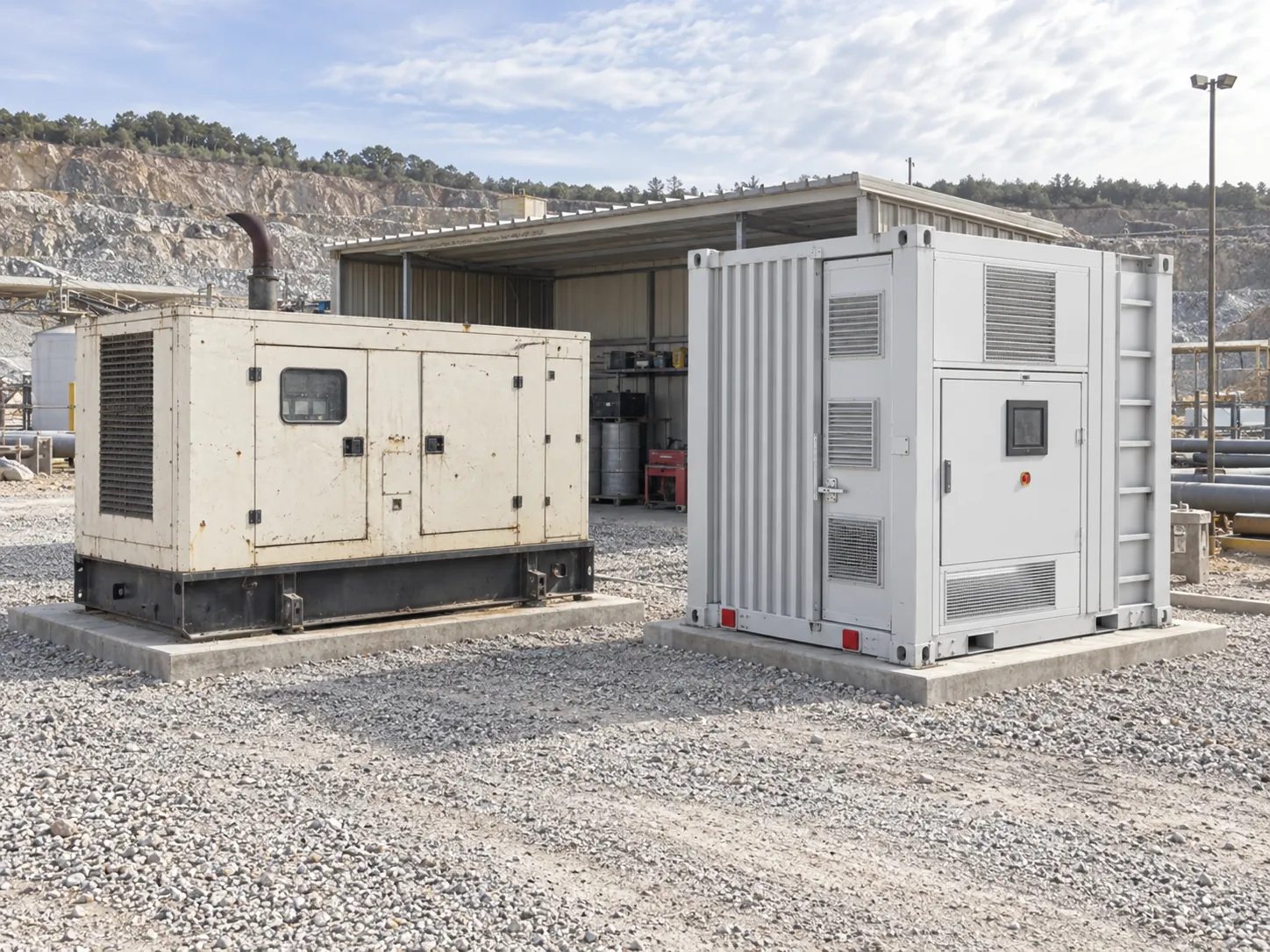
EXISTING DIESEL SITES
Start with your generator and measured load profile. A compatible battery system can cover selected loads while the generator is stopped, then recharge when it runs.
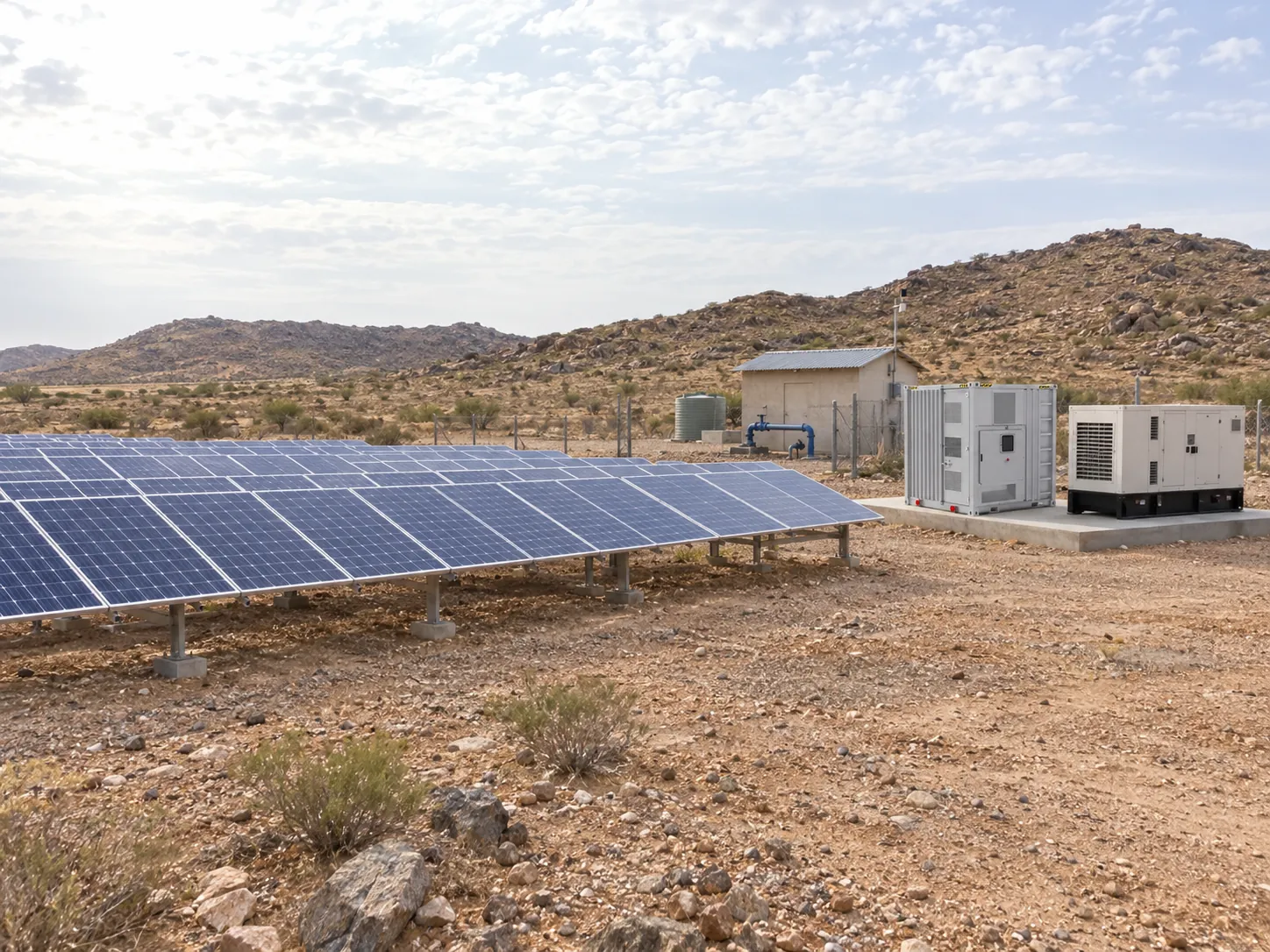
LONGER-TERM OPERATIONS
For a longer-term site, compare fixed solar generation with battery storage and generator support. Use the daily load schedule and seasonal solar resource to plan the combination.
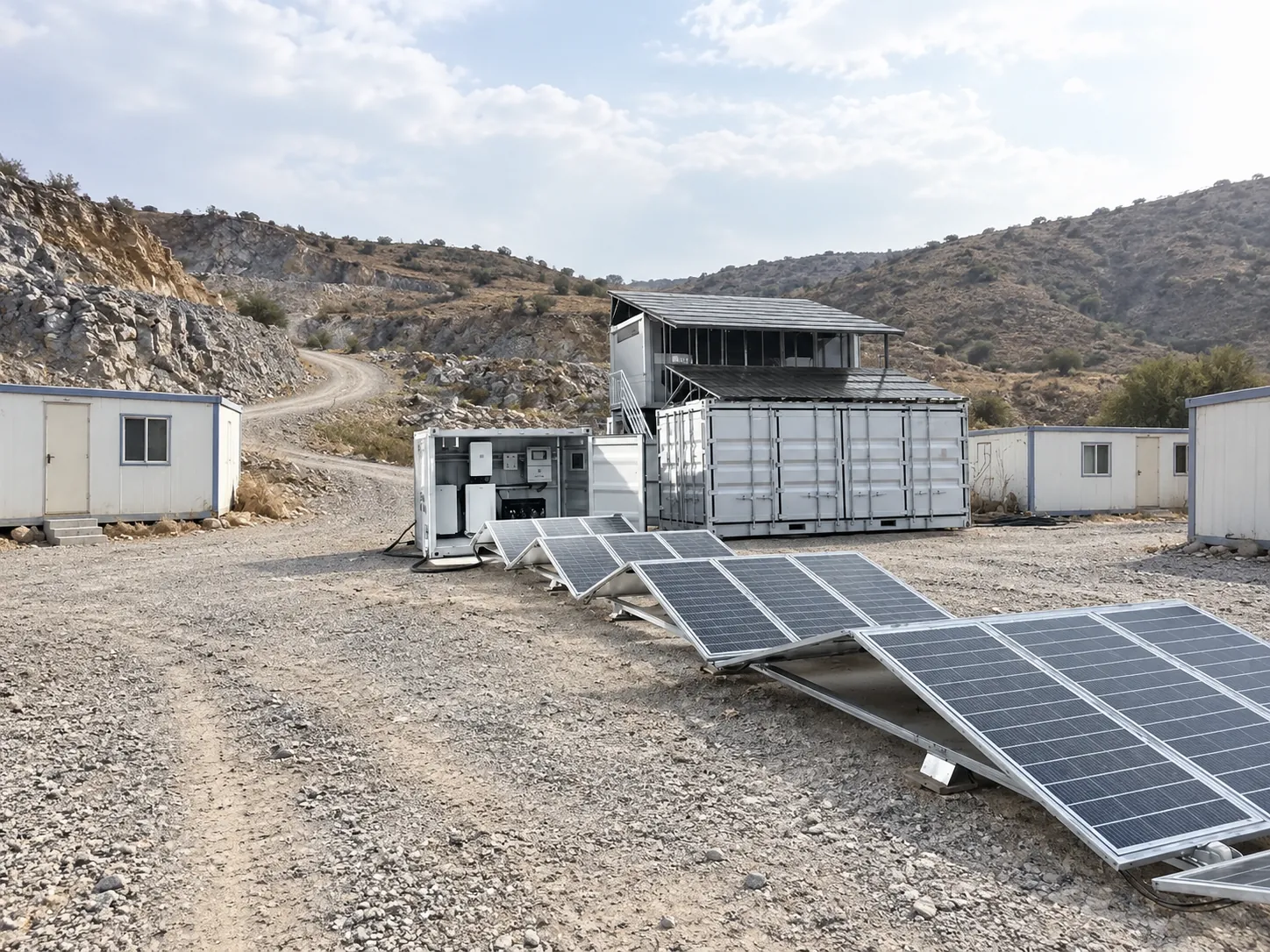
TEMPORARY & RELOCATING SITES
Deployable solar equipment can suit a temporary camp or moving work area. Choose storage and backup around the loads; the container format alone does not define its supply capability.
Product-based application illustrations. Equipment combinations and capacities are selected for the project.
ONE SYSTEM. CLEAR EQUIPMENT ROLES.
Generation supplies power. Batteries store energy. Inverters and the PCS convert it. Controls coordinate the equipment around the load.
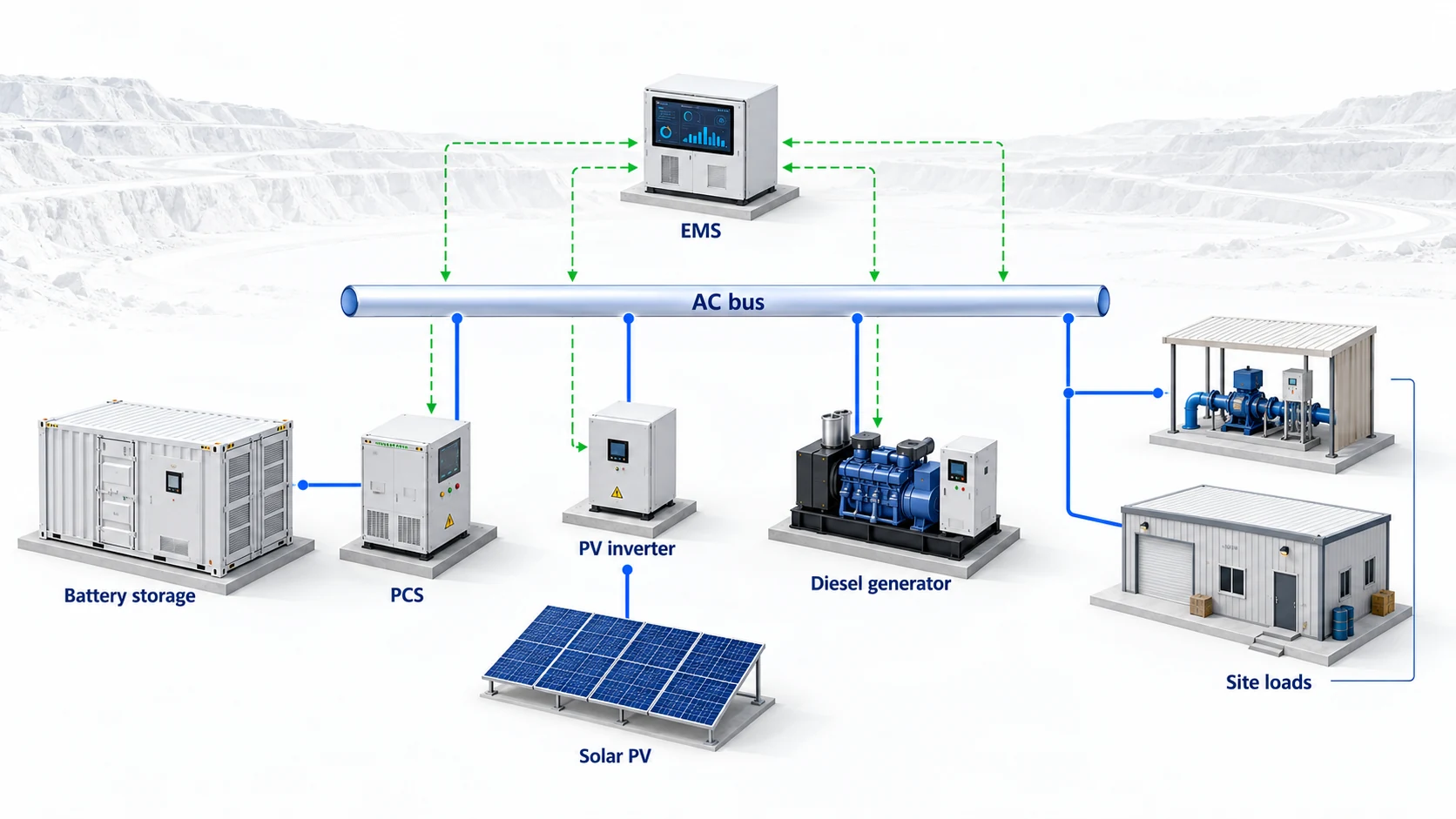
Conceptual AC-coupled example. Coupling, switching, protection and controller compatibility require project review.
PV can supply the connected loads and charge the battery when there is surplus energy. Available charging power depends on the system configuration.
With suitable off-grid conversion and controls, the battery can supply selected loads while the generator is stopped. Reserve and restart settings define the operating window.
The generator can supply loads and recharge storage. Its rating, loading limits and controller interface shape the charging and dispatch plan.
MATCH POWER TO THE JOB
Mining support facilities and production equipment have different demands. Define the circuits to supply before choosing an off-grid power system.
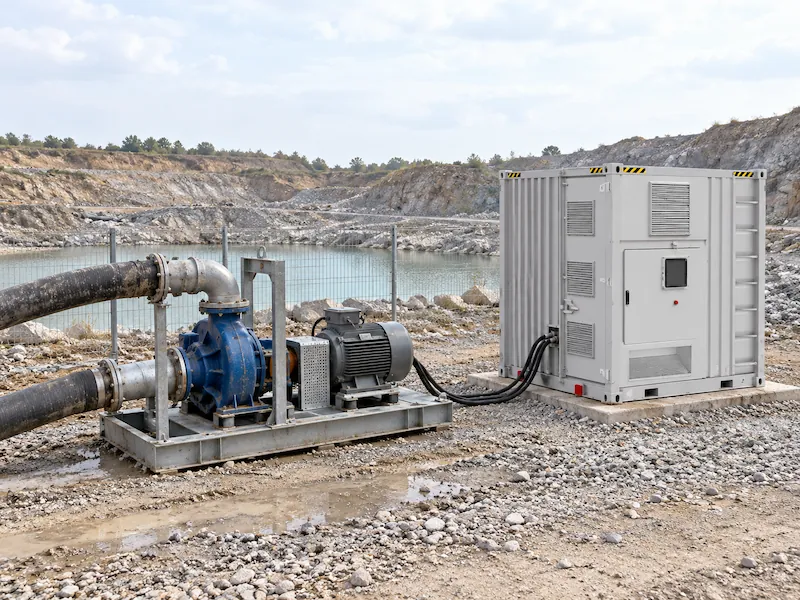
Separate motor starting demand from the energy needed over a shift. Include pump duty, starting method, variable-speed drives and the number of pumps that may run together.
Useful input: motor nameplates and the pumping schedule.
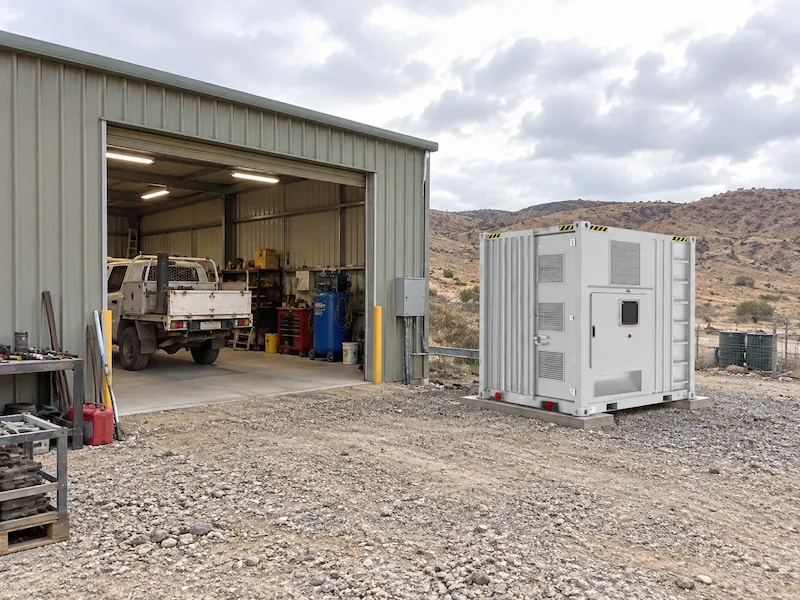
Compressors, tools and welding equipment create an uneven load profile. Compare their peaks with quieter periods, then decide which circuits need power outside working hours.
Useful input: equipment ratings and simultaneous-use patterns.
Lighting, communications, cooling and accommodation can draw power after production stops. Define the essential circuits and required hours before selecting a battery and inverter.
Useful input: daytime and overnight load records.
POWER, ENERGY & INTERFACES
kW tells you the power required. kWh tells you the energy needed over time. Check both, along with motor starts, reserve and charging conditions.
| Design input | What to send | What it helps determine |
|---|---|---|
| Running power & peaks | A load list, measured kW profile and simultaneous-use pattern. | PCS and generator power; circuits to include. |
| Motor starting | Motor ratings, starter or drive type, and starting sequence. | Starting capability, voltage response and load management. |
| Energy & operating hours | Day/night schedules, required autonomy and seasonal changes. | Battery energy, reserve and charging plan. |
| Existing power equipment | Generator and controller models, solar inverter details, grid availability. | Compatible interfaces, coupling, switching and protection. |
| Environment & access | Temperature, dust, altitude, available space and access photos. | Equipment ratings, cooling, foundation and maintenance layout. |
| Supply & delivery scope | Who supplies switchgear, cables, installation and commissioning. | An agreed equipment list and clear project responsibilities. |
On smaller screens, swipe the table to see all three columns.
For an illustrative measured load, 20 kW × 5 hours = 100 kWh at the equipment. Add conversion losses and reserve, then check the allowed battery operating range. This is an energy calculation, not a battery or motor-start recommendation.
Compare delivered diesel cost, generator fuel curves and servicing with storage losses, solar production and equipment cost. State the assumptions behind any estimate. See our BESS vs. diesel generator cost comparison for the assessment framework.
FROM SITE INFORMATION TO EQUIPMENT SCOPE
Start with what you know. Identify the gaps, compare the equipment routes and confirm responsibilities before ordering.
Send the load list, country, working hours and existing generator details. Photos and an electrical single-line diagram help; note any estimates or missing measurements.
Review storage and PCS power, fixed or deployable solar, reserve requirements and controller interfaces. Separate essential support loads from larger production equipment.
Ask for model-specific specifications, a proposed system diagram and a supply-scope list. Agree installation and commissioning responsibilities before ordering.
WHAT TO CONFIRM IN WRITING
Request the selected equipment specifications, a proposed system diagram and a supply-scope list. Check which items are included and who handles site work.
Discuss My Project RequirementsBattery energy, PCS power, model-specific ratings.
Sources, loads, controls and connection boundaries.
Switchgear, cables, installation and commissioning.
YOUR QUESTIONS, ANSWERED
Start here, then share the details that make your site different.
Ask About Your SiteA microgrid coordinates local electricity sources, storage and loads. For a remote site, these may include solar PV, batteries and a diesel generator. Power conversion, controls and protection are part of the system. The configuration depends on the equipment that needs power, its operating hours and the existing supply.
Often this is the starting point for a retrofit assessment. Send the generator rating, controller model and load records. Compatibility, charging limits and start/stop control must be checked. Keeping the generator does not mean every battery system can connect to it without additional equipment.
No. A generator and battery system can be assessed without PV. Solar may be added when the resource, space and operating schedule justify it. Compare the alternatives using your load profile and delivered fuel cost rather than assuming every site needs the same mix.
First define the circuits and hours to cover. Add their measured energy demand, then allow for conversion losses, reserve and the permitted battery operating range. Check running and starting power separately. A battery’s kWh rating does not tell you which motors its PCS can start.
This needs a load-specific engineering assessment. Motor starts, drives, transient demand and simultaneous use determine the power requirement. A system suitable for camp loads may not suit a crusher or a whole production line. Provide motor and equipment data before choosing a configuration.
There is no single percentage that applies to every site. Compare generator fuel-consumption curves, actual loading, runtime, solar production and battery losses. Include delivered fuel and service costs. The expected saving should come from a stated operating model, then be checked against site results.
The scope depends on the selected configuration. Confirm batteries, PCS or inverters, controls, protection, switchgear and any solar or generator equipment separately. Also agree cables, foundations, installation, commissioning and ongoing support. A battery enclosure alone is not a complete site power system.
Send the site country, equipment list, running and peak power, daily schedule, required backup hours and existing generator or grid details. Add space and access photos if available. Estimates can start the discussion; identify them so the final configuration can be checked with measured data.
LET’S START WITH YOUR SITE
Tell us the country, loads, working hours and existing supply.
A load list or generator nameplate is a useful first step.