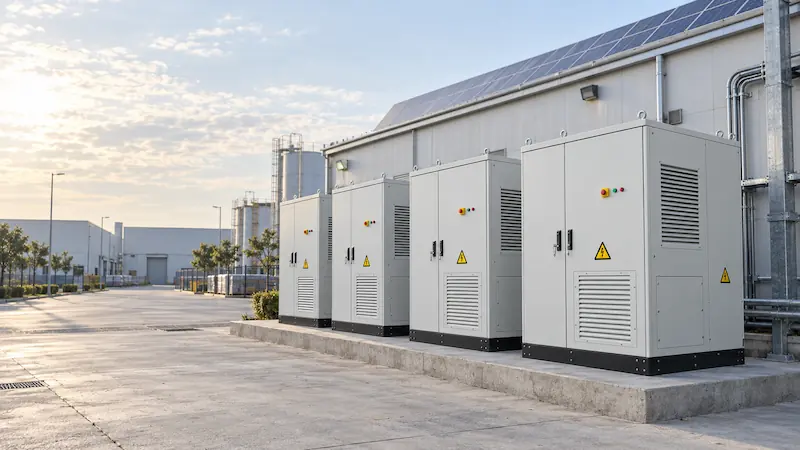
A battery energy storage system stores electricity for use when your facility needs it. Start with the production schedule, electricity tariff and existing supply. Compare a factory retrofit, solar plus storage, or a coordinated park system around the loads you want to support. Battery energy, power conversion and controls need to work together.
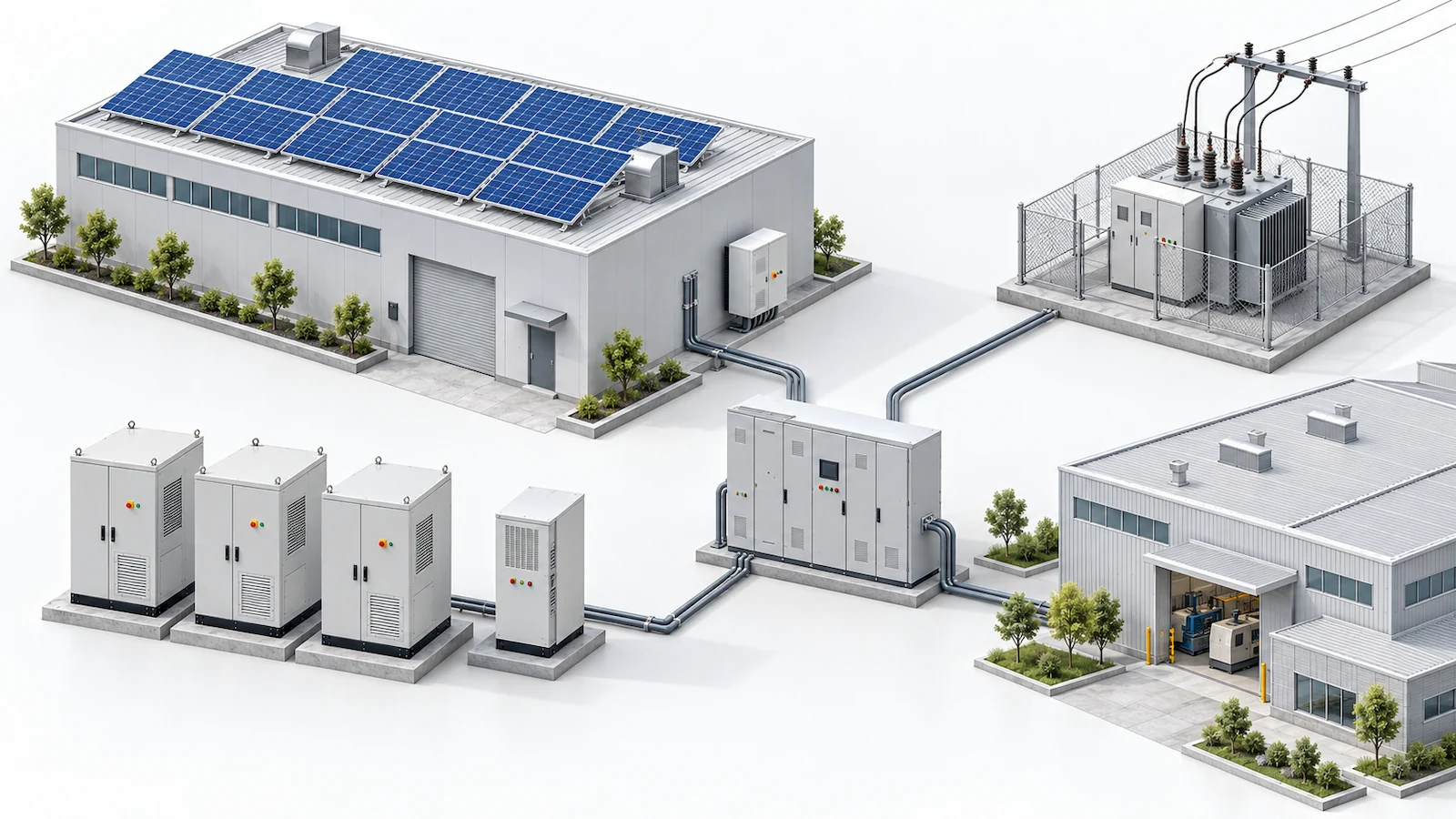
From rooftop generation to production demand, start with one site picture.
WHAT YOUR SITE NEEDS
Give the battery a clear job to do.
Daily energy use, short demand peaks and outage support call for different operating plans. Select the priority you want to review.
SITE PRIORITY 01 / 04
Manage production peaks
Production lines, compressors and cooling systems can overlap during a busy shift. Battery discharge can support part of that demand, reducing the power drawn from the grid during selected periods. Compare peak shaving with time-of-use scheduling: one targets measured demand, while the other shifts electricity use between tariff periods.
Start with this
Check the billing interval, demand charges, peak duration and recharge window.
A factory may produce solar electricity before a late shift needs it, or generate a surplus during a quieter part of the day. Commercial solar battery storage can move some of that energy to later hours. The useful storage capacity depends on the surplus available and the loads that follow.
Start with this
Compare PV production, factory demand, export limits and the shift schedule.
A new production line or charging area can change the site load profile. Assess whether battery support and load scheduling suit short periods above the available supply. Storage must recharge within the same connection limit; it cannot replace a grid upgrade where sustained energy demand exceeds the supply.
Start with this
Record the connection limit, new loads, simultaneous use and transformer details.
Controls, communications or selected utility equipment may need a different supply plan from the full production line. Define these circuits and the required operating hours first. Backup needs compatible power conversion, isolation, switching and controls; a grid-connected battery cabinet alone does not establish an outage supply.
Start with this
Agree the critical circuits, transfer requirements, motor starts and reserve energy.
Start from your existing supply. Choose what to add.
Compare the connection and operating plan as well as the cabinet. These starting points can develop as the factory grows.
Product-based application concept · existing facilitiesProduct-based application concept · solar + storageProduct-based application concept · parks & multiple loads
01EXISTING FACILITIESAdd storage to the factory you already run.
Keep the existing supply as the starting point. Review the meter data and tariff, then assess a battery energy storage system connected through the appropriate power conversion and protection equipment. The operating schedule should reflect when production peaks occur, how long they last and when the battery can recharge.
Where it fits
Facilities with measurable demand peaks, a time-of-use tariff, or a planned increase in short-duration loads. A compact cabinet route can be assessed before moving to a larger equipment layout.
What to check
Existing voltage and frequency, distribution board, metering, available space and protection. Review expected bill savings using the actual tariff, battery losses and operating limits.
02SOLAR + STORAGEConnect solar generation to your working hours.
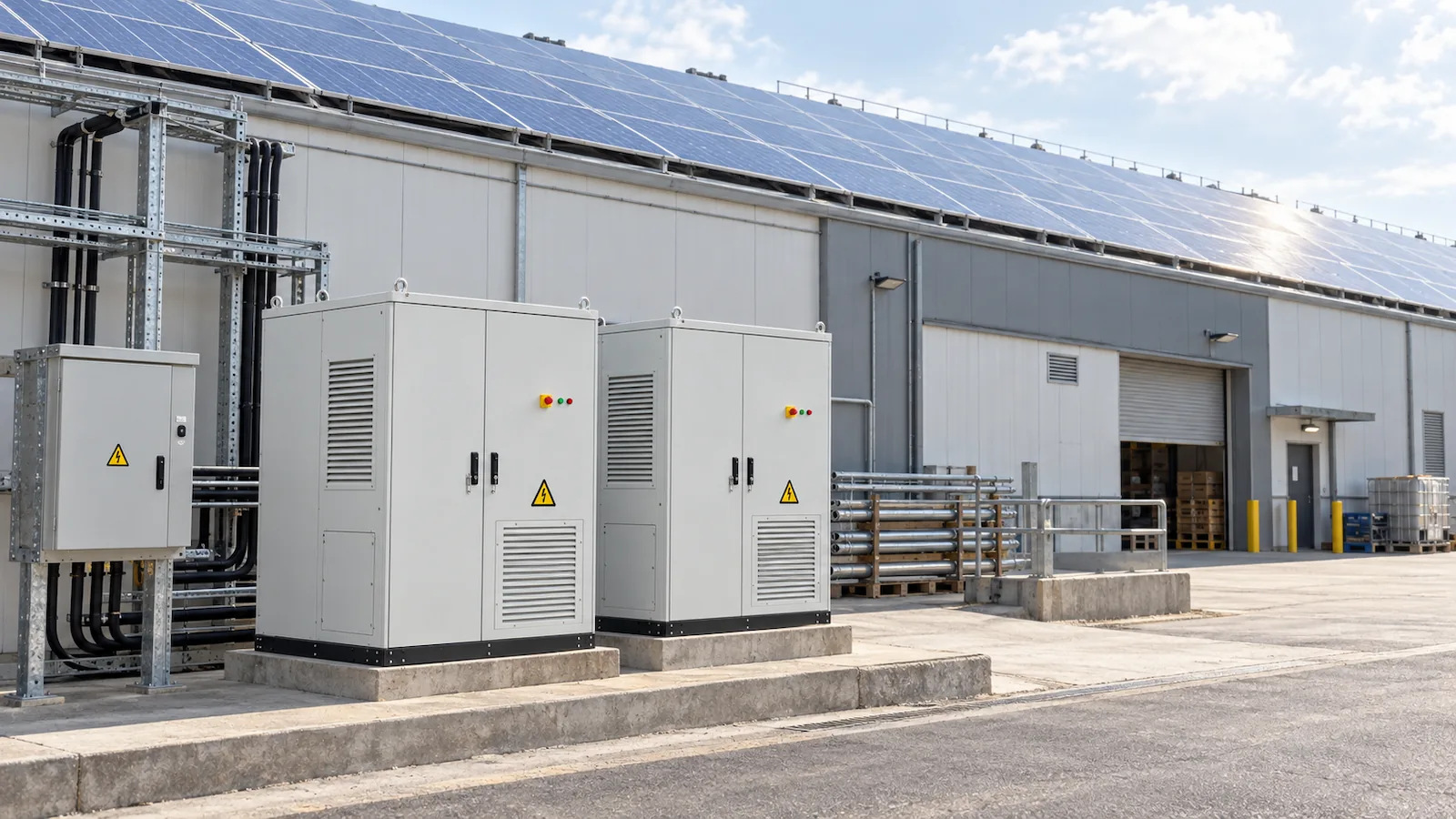
Plan rooftop or carport PV together with storage and the factory load. Compare charging from daytime solar with discharging during a later shift. For an existing PV installation, check the inverter and connection arrangement before choosing the battery system; adding batteries does not make every solar installation compatible.
Where it fits
Factories with usable roof or carport space, existing PV, or a mismatch between solar generation and working hours. The assessment can include a selected charging area where it belongs in the site plan.
What to check
PV inverter details, AC or DC connection, export control, available solar surplus and energy after sunset. Confirm any MPPT equipment separately rather than assuming it is included.
03PARKS & MULTIPLE LOADSPlan one system around several buildings.
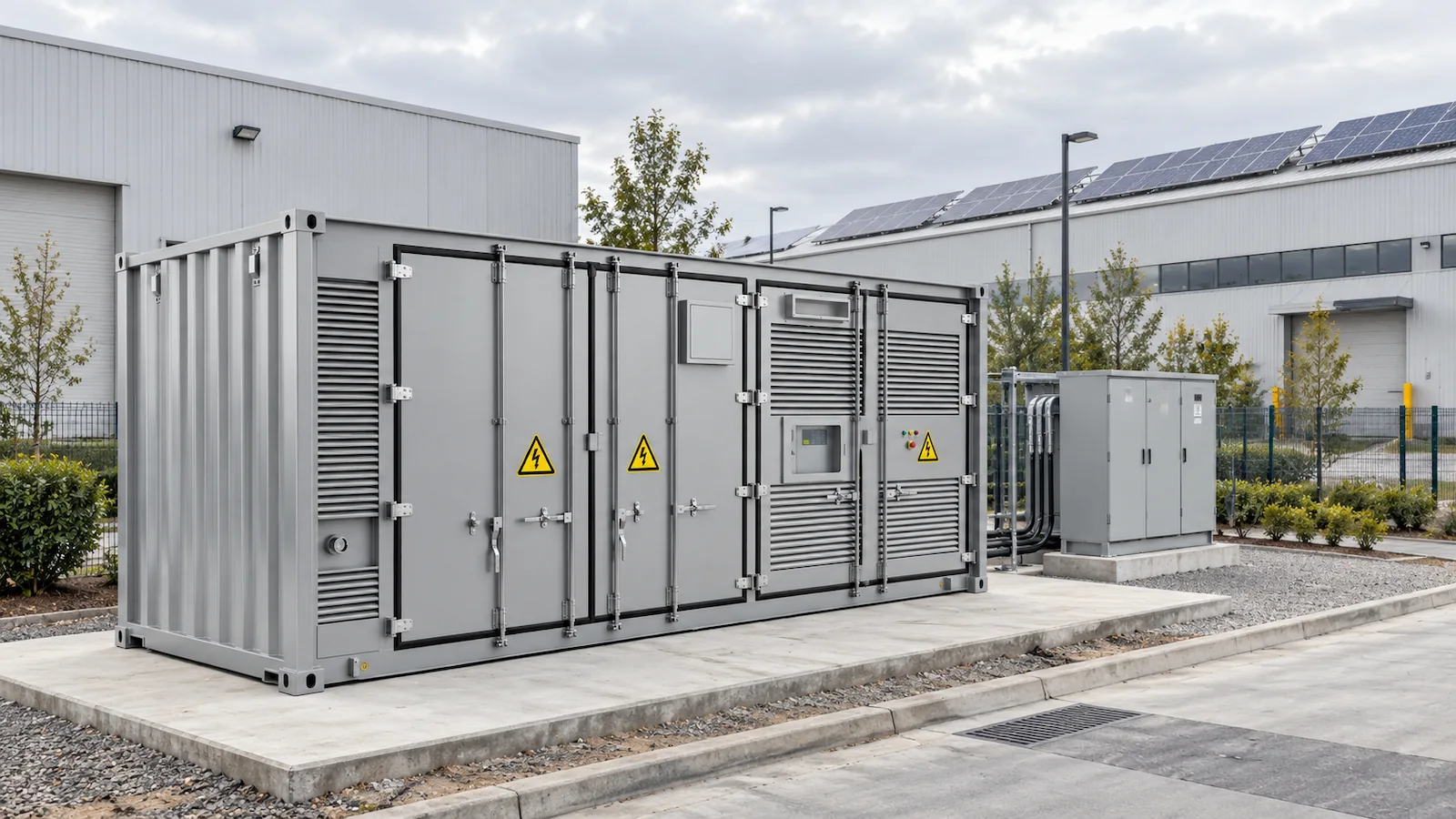
An industrial park may combine production buildings, offices, utilities, PV and charging. Map the feeders and meters before selecting industrial battery storage. A container or coordinated cabinet arrangement can be assessed around the shared supply, operating priorities and space available, with a clear boundary for each building.
Where it fits
Sites with several load groups, phased expansion or larger storage requirements. If outage support is needed, start with the essential feeders instead of assuming the entire park will run from batteries.
What to check
Meter ownership, source coordination, controls, switching and agreed reserve. Confirm generator integration and grid-forming capability where required; these are configuration choices, not standard features of every BESS.
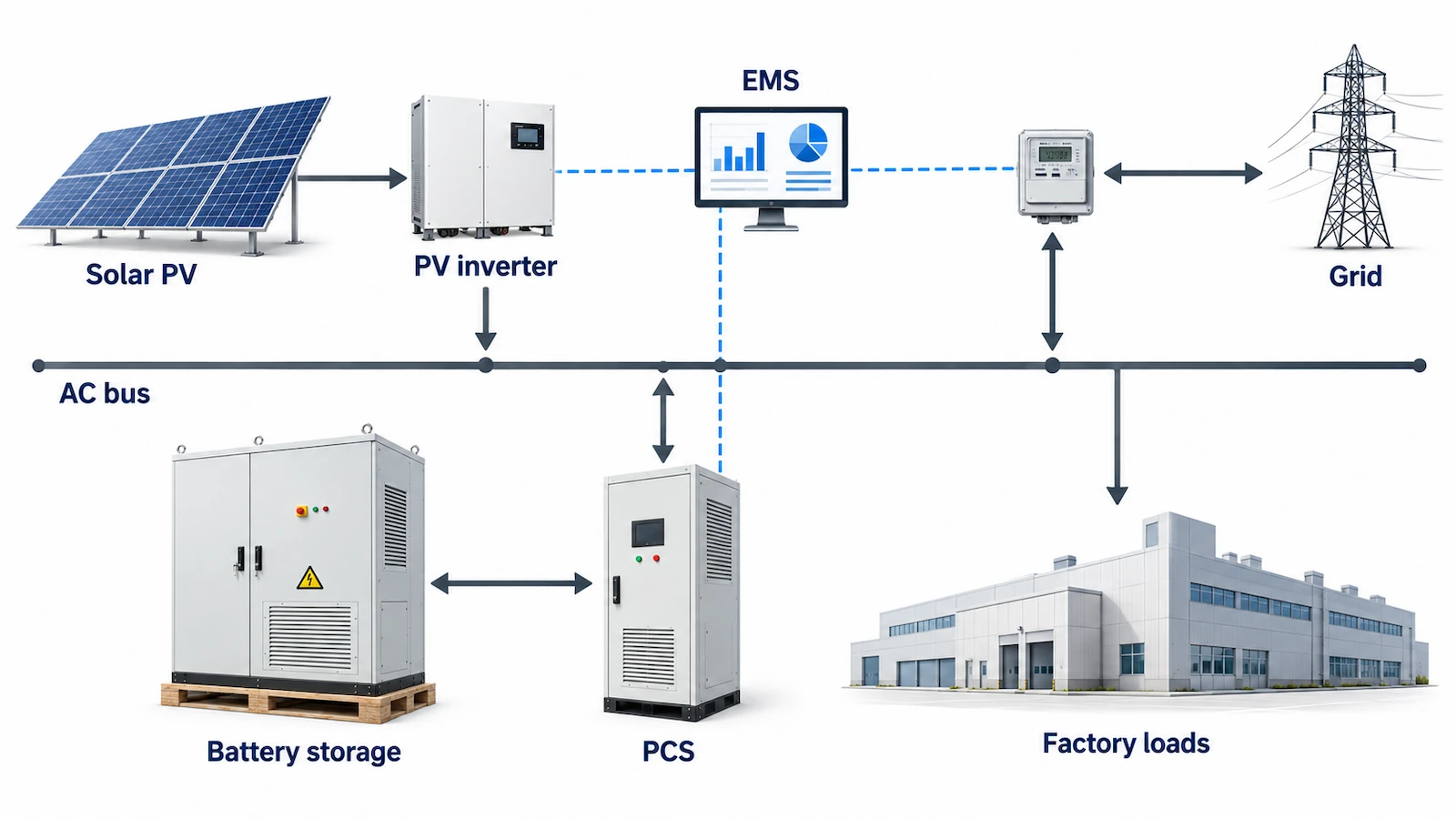
Equipment positions are illustrative. The final layout depends on access, service clearance and the electrical design.Conceptual grid-connected AC-coupled example. Backup requires additional compatible conversion, isolation, switching and controls.Swipe to explore the diagram, or tap it for a larger view.
Solid gray: electrical powerDashed blue: control & communication
01
GenerationPV and grid connection
02
Storage & conversionBattery and PCS / inverter
03
Site operationMetering, controls and loads
THE EQUIPMENT BEHIND THE PLAN
A complete system is more than stored energy.
Compare the functions in each offer. An integrated AC cabinet and a DC battery cabinet with external PCS have different equipment boundaries.
CHECK THE EQUIPMENT SCOPE
Four roles to confirm.
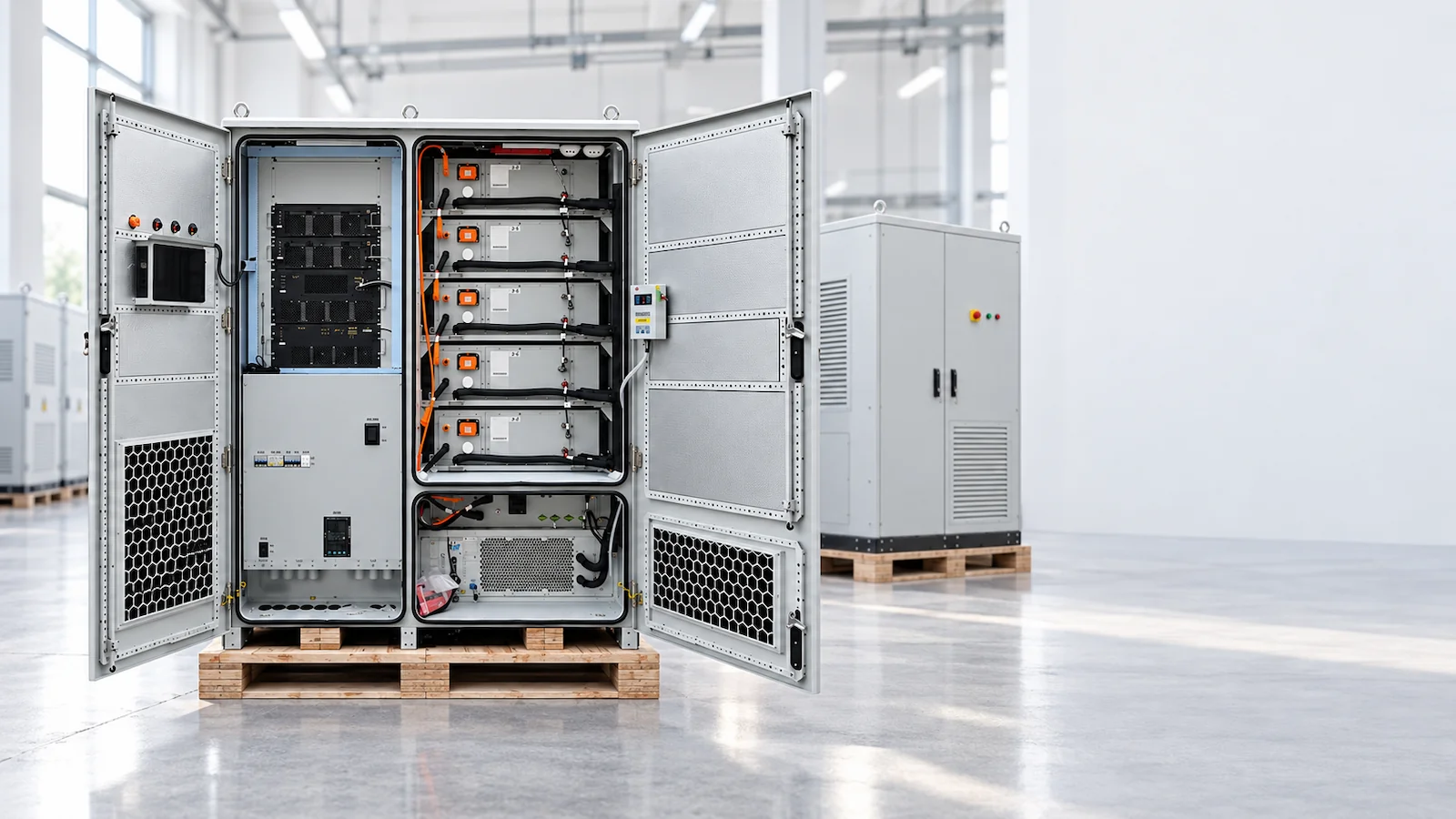
Battery & BMS
Stored energy and battery operating limits.
PCS / inverter
AC power and compatible operating modes.
Thermal management
Cooling selected for the model and site conditions.
Controls & protection
Dispatch, monitoring and the electrical connection.
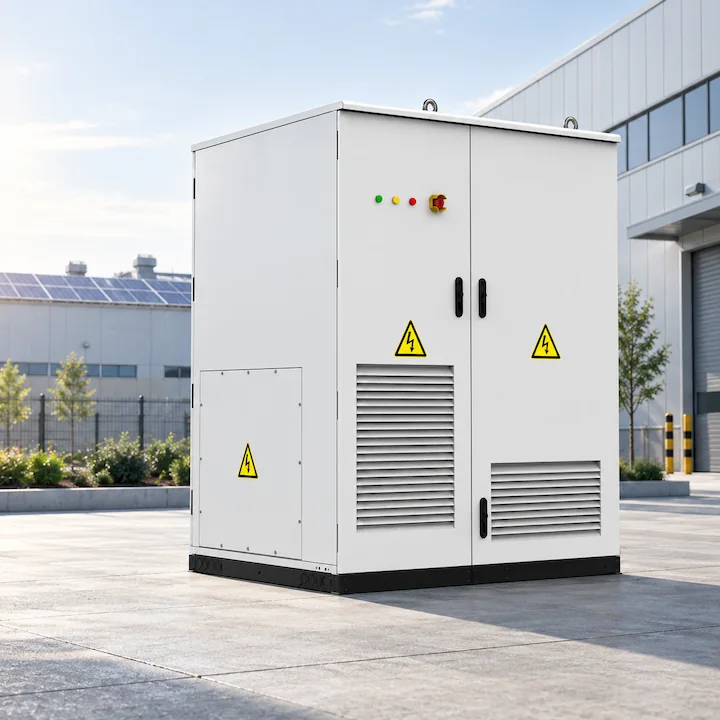
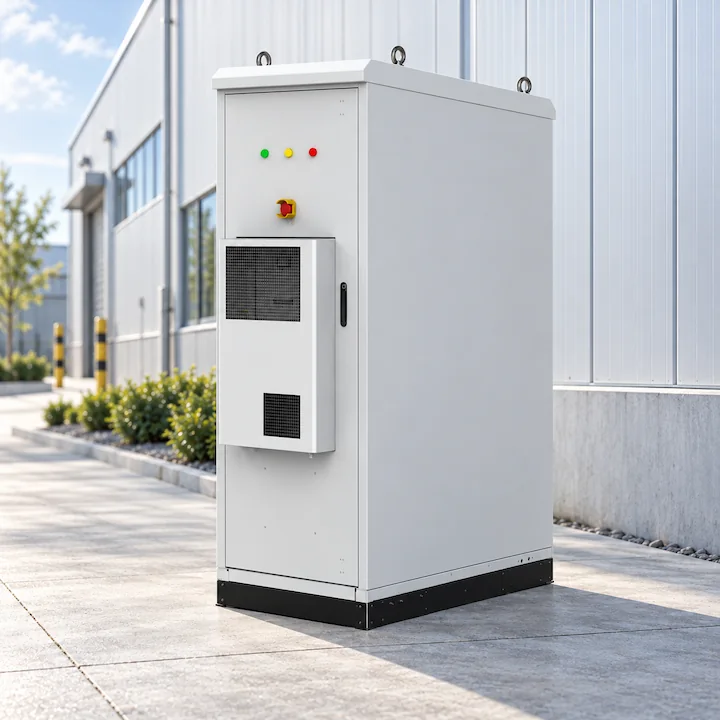
For a cabinet-based route, compare battery energy and AC power separately. The 125 kW / 261 kWh liquid-cooled system is one published option; its suitability depends on the electrical connection and operating duty. Check the model-specific specification and confirm added equipment for solar or backup functions.
Application & equipment scope: Battery cabinets with external PCS
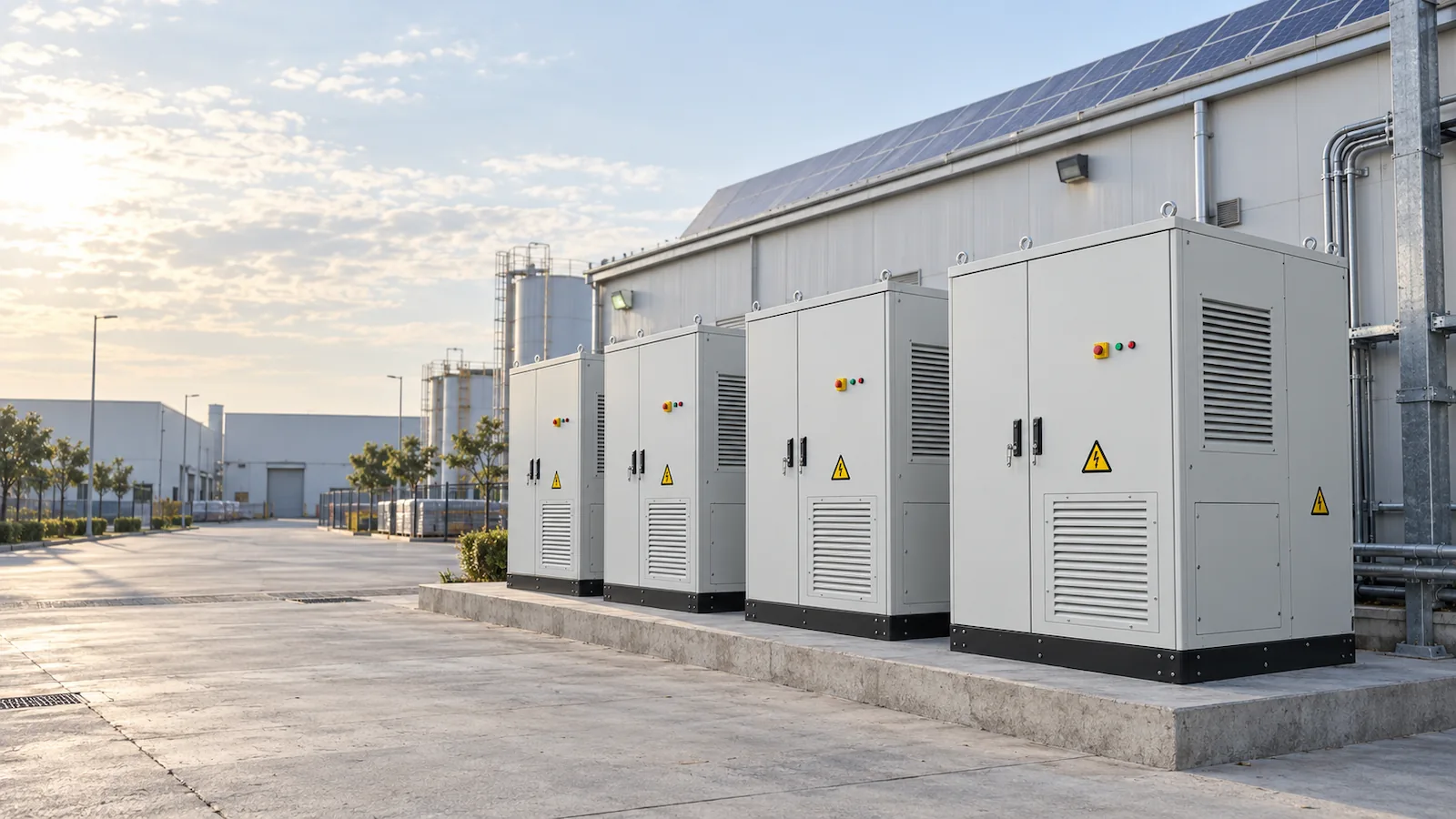
A battery-only cabinet separates the stored energy from the power-conversion choice. The eBlock cabinet offers up to 120 kWh maximum installed capacity per cabinet. It needs an external PCS and the appropriate site equipment. Use this distinction when comparing an offer with an all-in-one AC system.
Application & equipment scope: Containerized system configurations
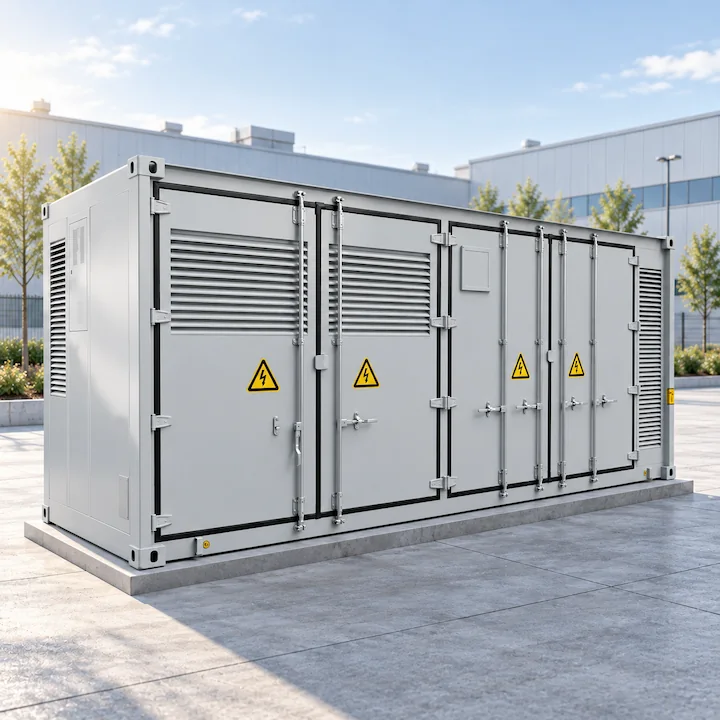
For a larger site, review containerized batteries, power conversion and controls as an equipment combination. Define the system rating, connection and supply scope before comparing offers. Container dimensions or battery capacity alone do not establish the power available to the factory or the loads supported during an outage.
You can start with estimates. Identify what is measured and what still needs checking, then confirm the equipment and supply responsibilities.
01
Share the factory operating picture
Send the country, electricity bills, shift schedule and available load measurements. Add existing PV or generator details, the connection rating and site photos. Identify which figures are measured and which are estimates so the first assessment has a clear basis.
02
Compare the system and its operating plan
Review the equipment route, power, energy and charging schedule together. Ask how the proposed operation relates to your tariff and load profile. Where backup is required, review the essential-load boundary, reserve and switching separately from daily cost management.
03
Confirm specifications and responsibilities
Request the selected model specifications, proposed system diagram and equipment list. Agree who supplies switchgear, cabling, foundations, installation and commissioning. Check the documents required for the project location before ordering; supplier brochures alone do not establish approval for your site.
QUESTIONS BEFORE YOU SPECIFY
Planning industrial battery storage?
Start with these practical questions, then tell us what is different about your facility.
What is a battery energy storage system for a factory?
It is a combination of batteries, power conversion, controls and protection that stores electricity for later use at the facility. Factory applications can include peak shaving, time-of-use scheduling and solar self-consumption. A backup application requires an electrical design that can operate the selected loads when the grid is unavailable.
Can industrial battery storage reduce demand charges?
It can reduce the measured grid demand during selected peaks if the battery has enough power and energy, and the control schedule matches the billing method. The result depends on the tariff, peak duration, recharge opportunities and operating limits. Review these against meter data before estimating savings. There is no fixed saving percentage for every factory.
Can I add a BESS to an existing factory or rooftop solar system?
An existing facility can be assessed for a retrofit. Send the single-line diagram, voltage, transformer rating, PV inverter information and available space. An AC-connected storage route may be considered alongside existing PV, while other arrangements need different equipment. Compatibility, export control and protection must be checked for the specific installation.
How do I choose between cabinet and container battery storage?
Start with the required AC power, stored energy, operating hours and installation constraints. Cabinets can suit distributed equipment layouts; containers can be considered for a larger coordinated system. Compare the actual equipment inside each offer, including PCS, cooling, controls and protection. A container format is not itself a measure of system capability.
Will the system keep the whole factory running during a power cut?
Only a system designed for that load and operating mode can do so. Identify essential circuits, running and starting power, required hours and transfer requirements first. Confirm compatible PCS or inverter functions, grid isolation, switching and controls. Daily grid-connected storage operation does not automatically provide uninterrupted factory backup.
What information is needed for a factory BESS proposal?
Start with your country, tariff or electricity bills, measured load profile, working hours and grid connection details. Include existing PV, generators, an electrical diagram and space photos where available. Explain whether the priority is peak demand, solar use, expansion or essential-load backup. These inputs help compare equipment and define the installation scope.
START WITH YOUR SITE
What does the factory need the storage system to do?
Share the country, shift schedule, electricity bills and existing supply. We can start by reviewing the equipment route and information gaps.

 English
 Deutsch
 Español
 Français
 Italiano
 Polski
 Română
 العربية