English
 Deutsch
 Español
 Français
 Italiano
 Polski
 Română
 العربية


Table of Contents
kW vs kWh: What's the Difference?
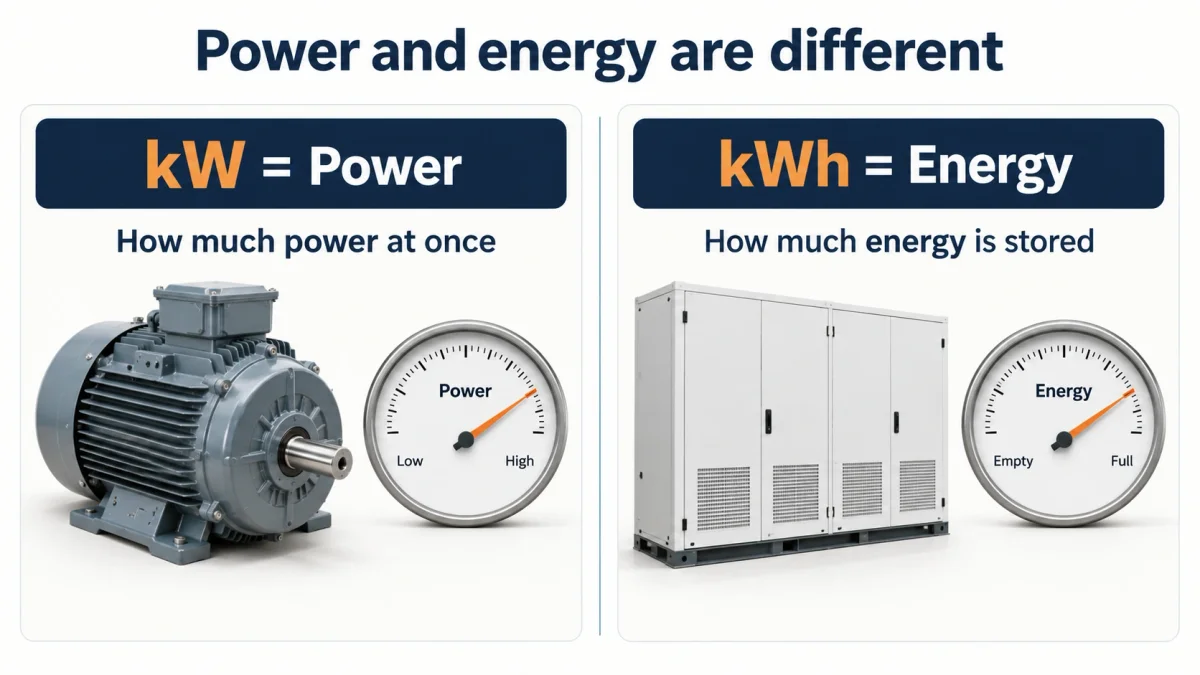
kW measures power: how fast equipment uses or supplies energy. kWh measures the amount of energy you use or store. At a constant power level, multiply kW by hours to calculate kWh.
On a battery label, kW tells you what it can run at the same time. Its kWh rating helps you work out how long those loads can run.
Unit | What it measures | What it tells you |
kW (kilowatt) | Power | How much power a device needs or a system can deliver |
kWh (kilowatt-hour) | Energy | How much electricity is used, produced or stored |
Hours | Time | The amount of time that power level continues |
Kilowatts (kW) measure power; kilowatt-hours (kWh) measure energy. A kilowatt is a unit of power. One kilowatt equals 1,000 watts. The U.S. Energy Information Administration explains these units using power and operating time.
Think of a water tank. The outlet's flow rate is like kW; the amount of water in the tank is like kWh. A larger tank does not necessarily have a faster outlet.
How to Calculate kWh from kW
For equipment running at a steady power level:
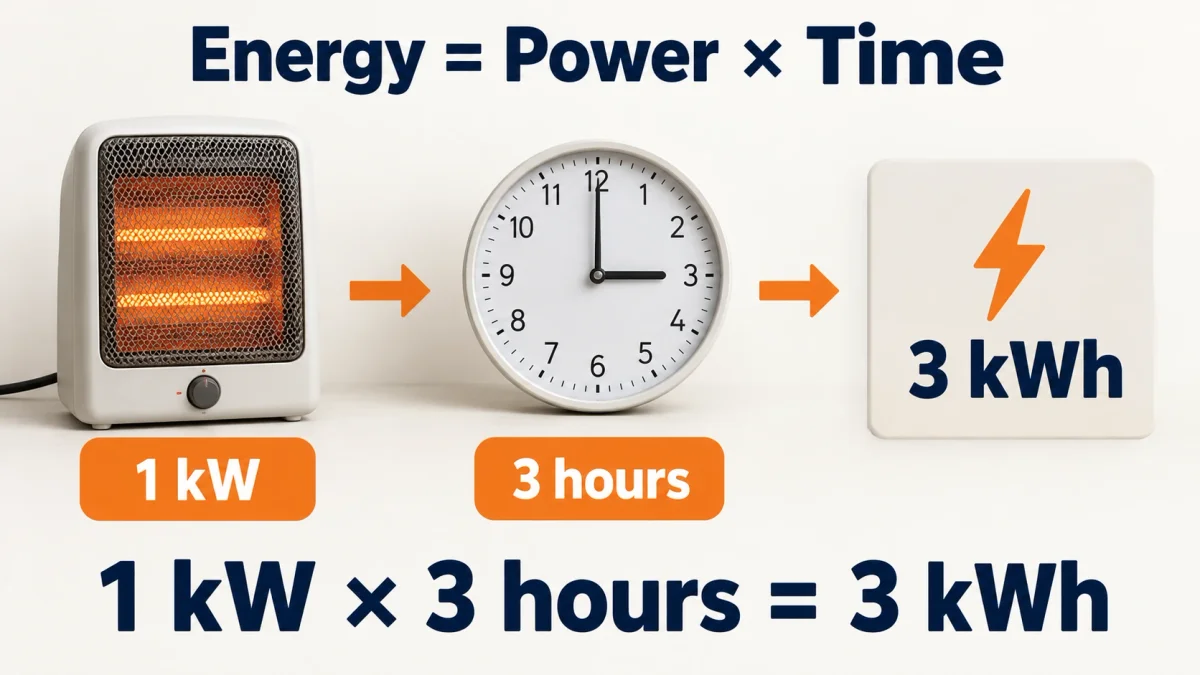
Total energy (kWh) = Power (kW) × Time (hours)
Household appliances follow the same formula. A 1kW heater running for three hours uses:
1kW × 3 hours = 3kWh
A 2kW device uses the same 3kWh in 1.5 hours. It draws twice as much power for half as long. In 30 minutes, it uses 1 kWh of electricity.
You can also work backward:
Average power (kW) = Energy (kWh) ÷ Time (hours)
If a site uses 60kWh over three hours, its average load is 20kW. Its peak load could be higher. Average power alone is not enough to size the system's output.
What if the load changes?
For changing loads, calculate energy usage for each period and add those amounts. A load drawing 10kW for one hour and 20kW for the next uses 30kWh in total.
A device's power consumption may rise and fall. Equipment that switches on and off does not draw its label rating all day. Multiplying that rating by 24 hours can overstate energy use. Use meter readings or a load profile to estimate electricity usage in kWh per day.
kW vs kWh: Solar Power and Electricity Bills
A solar array's kW rating describes power under set test conditions, not daily energy output. Even in ideal conditions, output changes with daylight. The energy a solar system can produce depends on sunlight, shading, temperature and losses.
For illustration, an array averaging 5kW for four hours produces 20kWh during that period. A 5kW nameplate rating does not mean it produces 5kW all day.
A utility bill lists electricity consumption in kWh. For example, 300kWh over 30 days averages 10kWh per day. Some commercial tariffs also charge for demand in kW, measured over a defined interval.
For energy savings, reduce total kWh usage. Energy efficient equipment can help lower that usage. To cut demand charges, reduce peak kW.
Battery peak shaving targets demand peaks. Shifting energy use to another time changes when you buy electricity. Check the site's actual tariff before estimating electricity costs or savings.
How to Read Battery Power and Capacity Ratings
Power and capacity answer different questions
The KUNETIC K-eBank cabinet lists 50kW rated AC output and 120.5kWh rated battery energy.
Published specification | Meaning |
50kW rated AC output | The rated AC power it can supply |
120.5kWh rated energy | Its total rated battery energy |
90% depth of discharge | The share of rated energy available before other losses or reserves |
The 120.5kWh rating describes energy; the cabinet's rated AC output remains 50kW. Load starting requirements, power factor and the system's operating conditions also matter.
A battery with more kWh may run a given load longer. It will not necessarily support a larger simultaneous load unless its power output also increases.
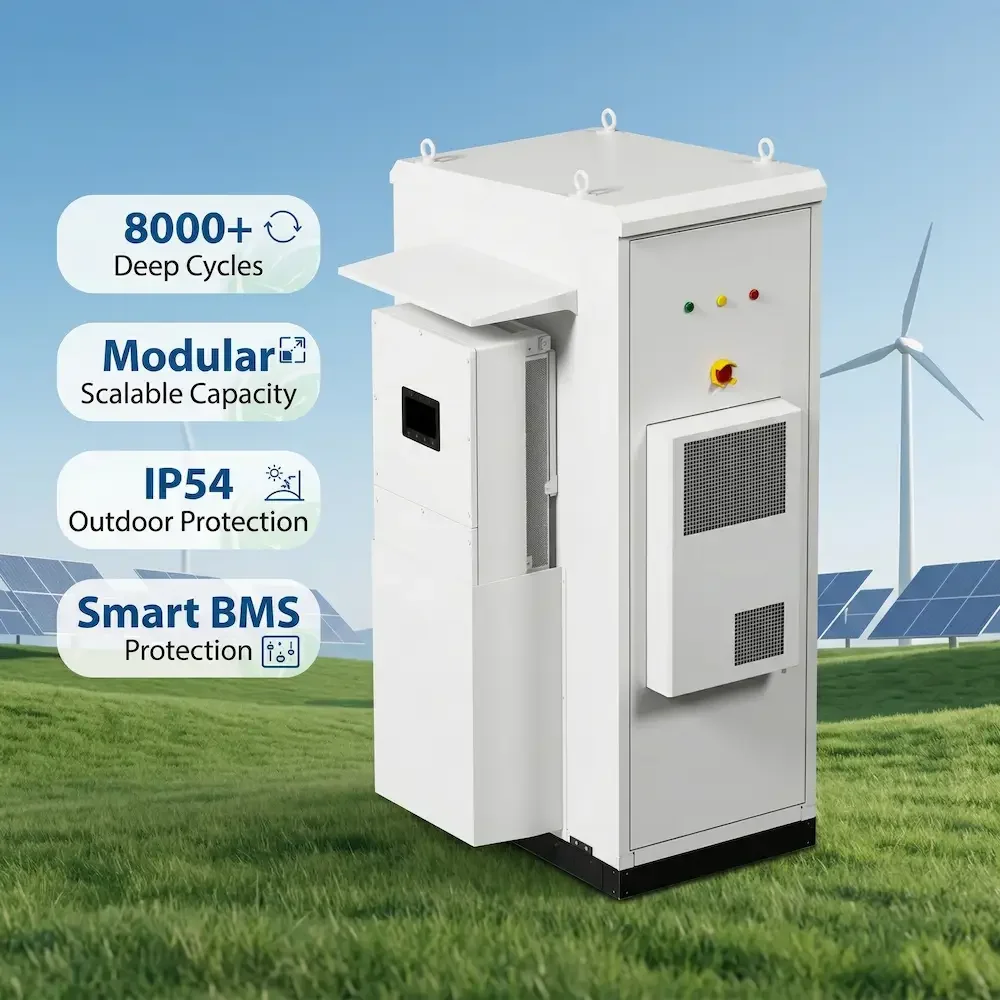
KUNETIC K-eBank commercial storage cabinet: 50kW rated AC output and 120.5kWh rated battery energy.
Estimate runtime from usable energy
Start with energy available to the load:
Estimated runtime (hours) = Available energy at the load (kWh) ÷ Average load (kW)
The K-eBank's rated energy is 120.5kWh. At its published 90% depth of discharge, about 108.5kWh is available from the battery.
At a steady 25kW load, 108.5 ÷ 25 gives about 4.3 hours. Conversion losses, system power use and any extra reserve reduce that time. This example shows the math; it is not a guaranteed backup duration.
Actual delivered energy also depends on temperature, battery age, starting charge and operating settings. Use confirmed system data when evaluating a battery backup power supply for critical loads.
kWh vs kW: Which Matters More for Battery Storage?
Check power and energy together. Too little output limits the equipment you can run; too little usable energy cuts the operating time.
Use three steps:
- List the essential equipment that runs together and add up its power needs. Include motor starting requirements.
- Set the required runtime and estimate the energy those loads need during that period.
- Compare the system's output power and usable energy with those needs. Account for losses, reserve and operating limits.
For solar storage, also check when surplus generation is available and whether charging power can capture it.
To discuss a system for your site, contact KUNETIC. Share your peak load in kW, the hours of backup you need and a load profile.
FAQs
Is kWh the same as kW per hour?
No. kWh means kilowatts multiplied by hours. It measures energy. kW per hour describes a change in power over time and is not the usual unit for battery capacity.
Does a higher-kWh battery deliver more power?
Not necessarily. Check its kW output separately. More stored energy can extend runtime at the same load, but the inverter and battery still have output limits.
How does kWh relate to Ah?
Ah measures electric charge; kWh measures energy. For a basic nominal estimate:
kWh ≈ Nominal voltage × Ah ÷ 1,000
You need voltage to make that comparison. Our guide to what Ah means on a battery explains the distinction.