
 English
 Deutsch
 Español
 Français
 Italiano
 Polski
 Română
 العربية
It is a high-voltage DC battery cabinet with BMS, air conditioning and fire protection. A matched external inverter is supplied separately and connects the battery to your site's AC system. If you prefer integrated power conversion, we can help compare an all-in-one cabinet.
Commercial Solar Battery Storage
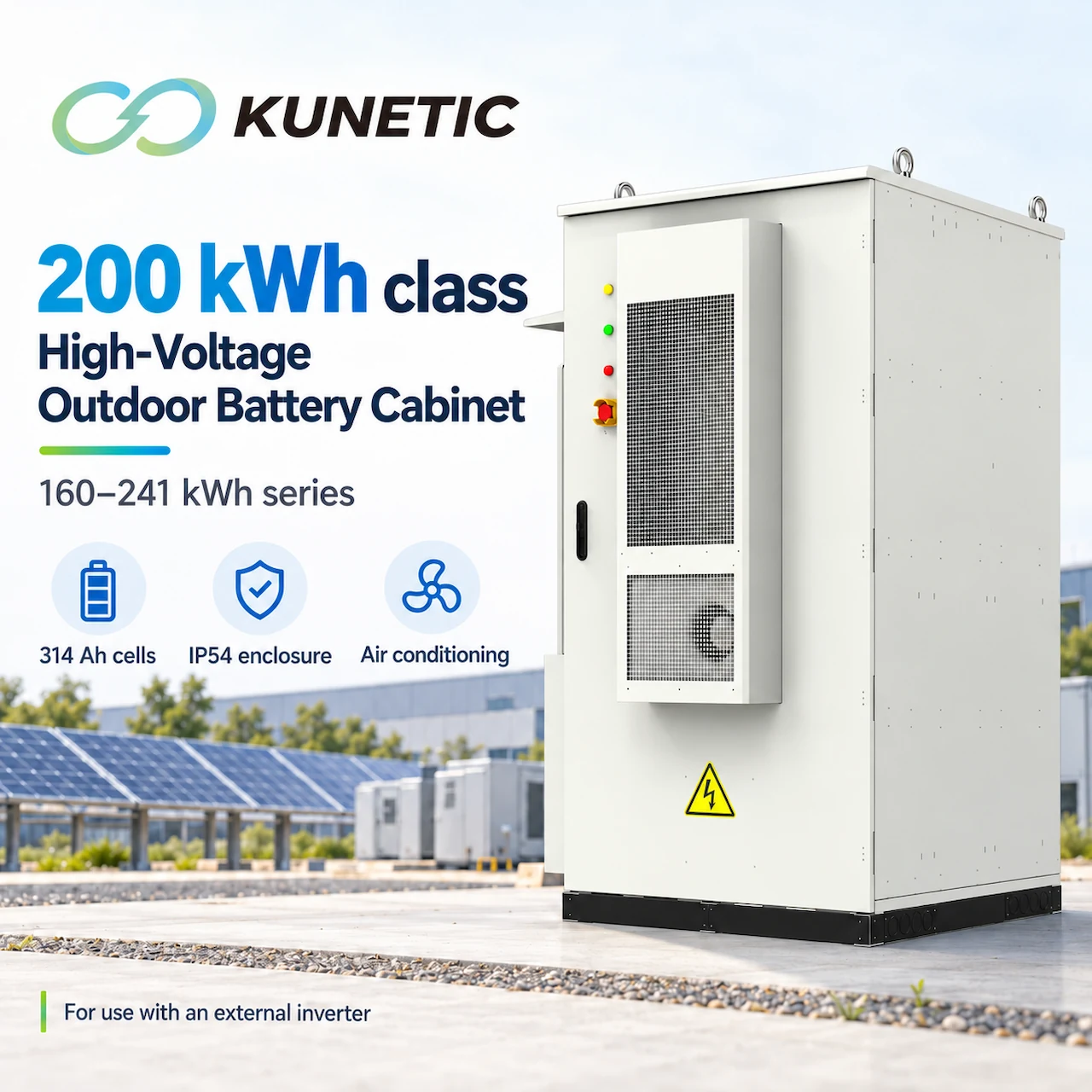
KUNETIC 160–241 kWh High-Voltage Outdoor Battery Storage Cabinet for Commercial & Industrial Solar Energy Storage 200 kWh class option · 200.96 kWh nominal battery energy
Store daytime solar for later production shifts and business hours with the KUNETIC outdoor battery cabinet series. Five capacity options cover the 160–241 kWh range, including a 200.96 kWh configuration for sites considering 200 kWh battery storage. 314 Ah cells, battery management, air conditioning and fire protection come together in an IP54 outdoor enclosure. Pair the cabinet with a matched external inverter to build storage around your factory, warehouse or commercial building. Compare the configurations below, or share your site requirements for a recommendation.
 160–241 kWh Capacity options
 314 Ah Cell capacity
 IP54 Outdoor enclosure
 Air conditioning Cabinet cooling
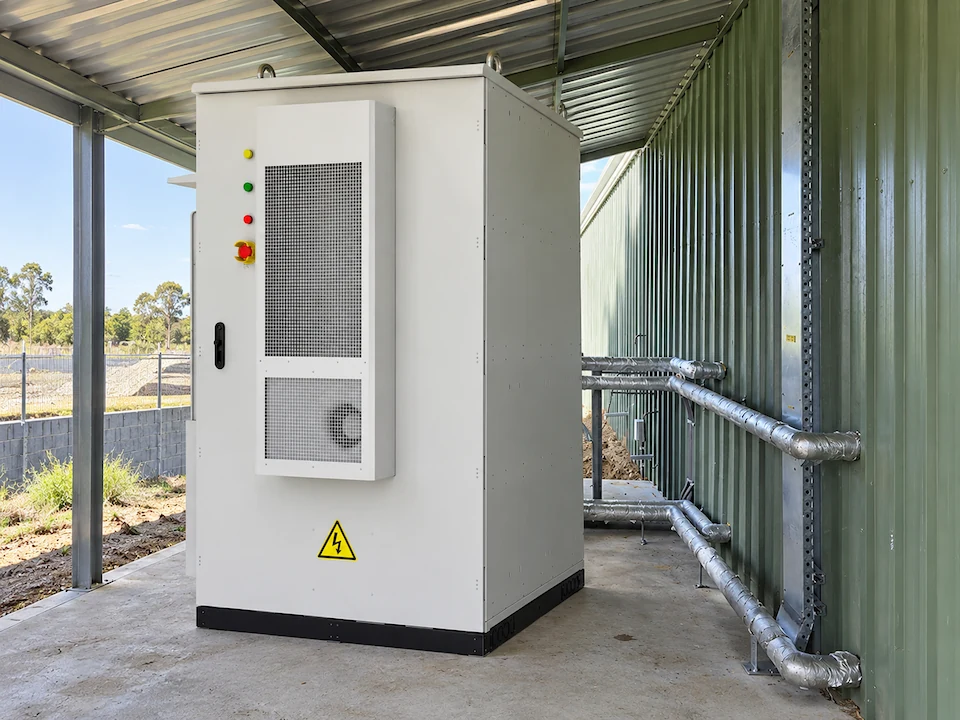
Outdoor storage for your commercial solar project
When your solar array produces more than the site needs, battery storage gives that energy a later use. Charge during the day and supply it to evening operations, later production shifts or other business loads through the system's external inverter and controls.
An IP54 enclosure and cabinet air conditioning bring the battery hardware into an outdoor format. This gives commercial sites an alternative to an open battery rack in an equipment room, with the battery and its temperature-control equipment housed together.
Compare the five capacity options
Battery monitoring and protection in one cabinet
The BMS monitors battery voltage, current and temperature, balances cells, and records operating history and alarms. Overcharge, overdischarge, overcurrent, short-circuit and temperature protection help manage the battery during charging and discharging. A fire protection system is also included in the cabinet.
CAN, RS485 and RS232 interfaces support communication with external equipment. Together, these functions give the battery system a way to report its condition and respond to operating limits.
Choose the capacity that fits your site
The series offers 160, 180, 200, 221 and 241 kWh capacity classes within the same cabinet dimensions. The 200 kWh class provides 200.96 kWh of nominal battery energy; smaller and larger configurations give you alternatives without moving to a different cabinet format.
Capacity and DC voltage change together across the series. Compare the five voltage windows in the technical data, then match the battery with a suitable high-voltage inverter. Send us your solar capacity, daily load pattern and target storage size to compare the options.
For sites with demand charges or time-based tariffs, storage can also help move electricity use away from costly periods. Start with your load profile and electricity bill to choose a capacity that fits the way your business operates.
Compare technical data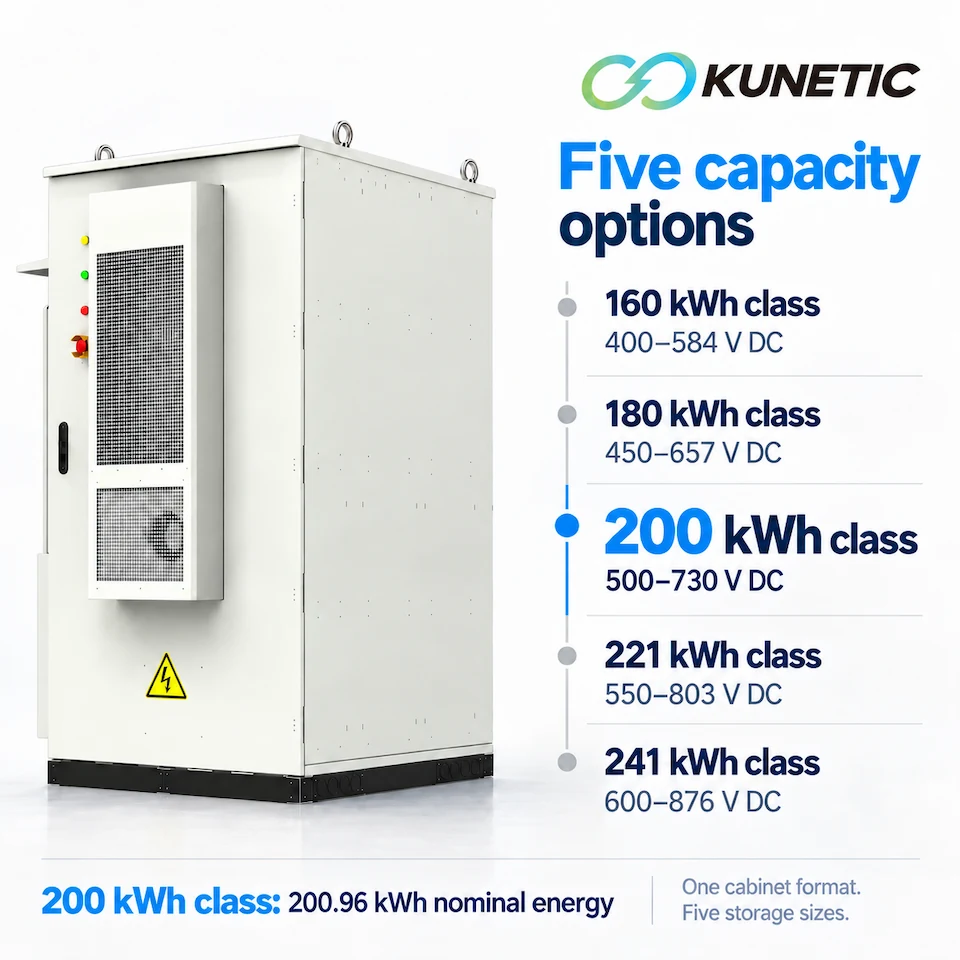
Pair the battery with the right inverter
Choose battery capacity and power-conversion equipment together for your commercial solar project. The cabinet stores DC energy; the external inverter connects that energy to the site's AC loads and electricity supply.
Building a new solar-storage installation, adding storage to an existing site, or planning essential-load backup? Tell us your application and inverter model. We can review the voltage window, current limits and communication requirements and recommend a suitable battery configuration.

Cabinet details and site layout
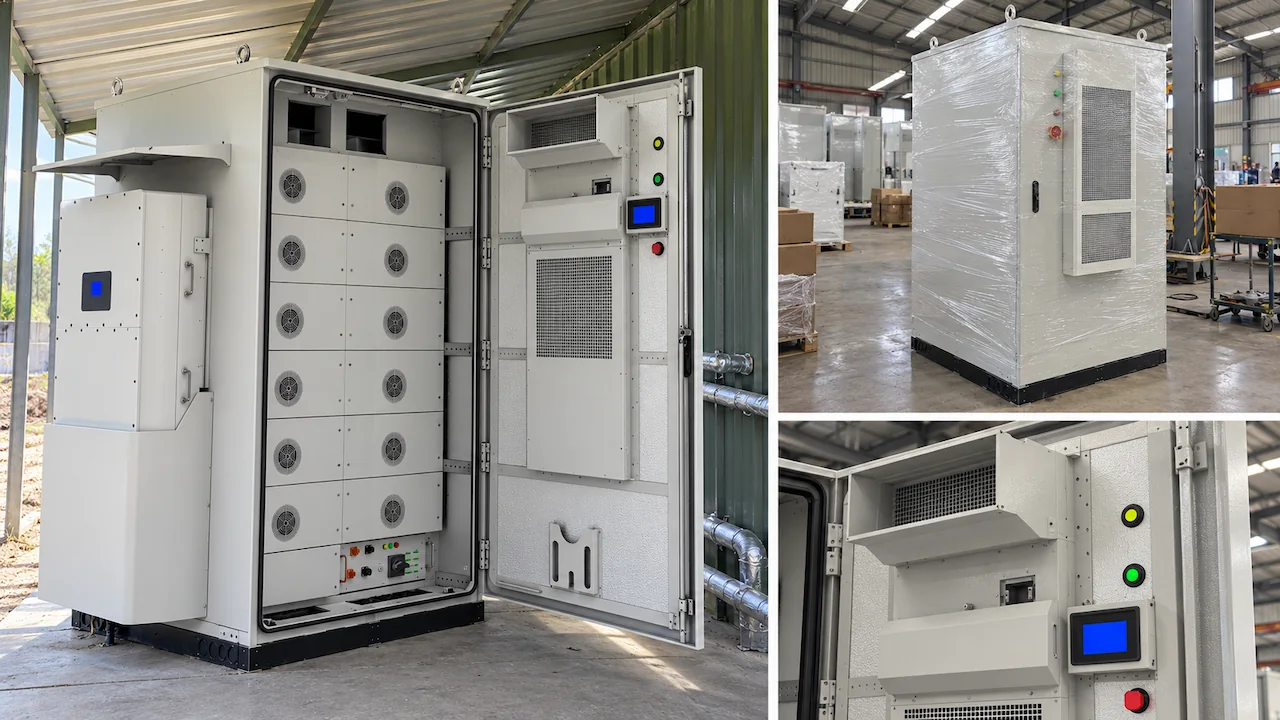
See the closed cabinet, internal battery layout and external inverter position, alongside outdoor placement and workshop preparation views.
The cabinet measures 1,200 × 1,250 × 2,050 mm, excluding the inverter cover. Allow space for the external equipment, ventilation and service access when planning the installation.
Technical Data
Outdoor battery cabinet specifications
Compare the five capacity options and their DC voltage windows.
SERIES
KUNETIC 160–241 kWh High-Voltage Outdoor Battery Storage Cabinet for Commercial & Industrial Solar Energy Storage
| Parameter | 160 kWh class | 180 kWh class | 200 kWh class | 221 kWh class | 241 kWh class |
|---|---|---|---|---|---|
| Capacity & electrical | |||||
| Nominal battery energy, rounded | 160.8 kWh | 180.9 kWh | 201.0 kWh | 221.1 kWh | 241.2 kWh |
| Cell capacity | 314 Ah | ||||
| Operating DC voltage | 400–584 V | 450–657 V | 500–730 V | 550–803 V | 600–876 V |
| Recommended charging voltage | 560 V DC | 630 V DC | 700 V DC | 770 V DC | 840 V DC |
| Maximum continuous DC charge current | 157 A | ||||
| Maximum continuous DC discharge current | 157 A | ||||
| Cabinet & environment | |||||
| W × D × H, excluding inverter cover | 1,200 × 1,250 × 2,050 mm | ||||
| Weight | 1,850 ±100 kg | 2,000 ±100 kg | 2,150 ±100 kg | 2,300 ±100 kg | 2,450 ±100 kg |
| Enclosure protection | IP54 | ||||
| Cooling | Air conditioning | ||||
| Charging temperature | 0–55°C | ||||
| Discharging temperature | −20–50°C | ||||
| Relative humidity | 0–95%, non-condensing | ||||
| Operating altitude | Up to 3,000 m | ||||
| Management & system connection | |||||
| Battery management | BMS with monitoring, protection, balancing and alarms | ||||
| Communication interfaces | CAN / RS485 / RS232 | ||||
| Fire protection system | Included | ||||
| Inverter | External; supplied separately | ||||
Energy values in the table are rounded to one decimal place. The 200 kWh class has a nominal rating of 200.96 kWh. Battery energy is a DC rating; energy available to AC loads also depends on operating limits and system losses.
PDF Technical Data
Downloads
High-Voltage Outdoor Battery Cabinet Technical Data
Compare capacity, battery voltage, cabinet dimensions and operating conditions. Request the datasheet or share your inverter model for help selecting the right cabinet.
FAQ
Frequently Asked Questions
The 200 kWh class provides 200.96 kWh of nominal battery energy and a 500–730 V DC operating range. Share the loads you want to support, the times you need storage and your inverter model to check whether this configuration fits your site.
Send us the exact inverter model. Matching includes the DC voltage window, charge/discharge current and battery communication protocol. CAN or RS485 connectors alone do not confirm compatibility. For an existing solar installation, we can also review the overall system arrangement.
The cabinet has an IP54 enclosure and air conditioning for outdoor installation. Choose a shaded, well-ventilated position and leave access for servicing and external equipment. Check the charging and discharging temperature ranges in the technical data against your site conditions.
Runtime depends on the load and the battery energy available for use. As a planning example, a steady 50 kW load for three hours needs 150 kWh at the AC loads, before allowing for reserve and conversion losses. Send the running power, starting loads and required hours so the battery and inverter can be sized together.
The battery cabinet can store energy for these applications as part of a complete system. Peak shaving needs suitable control of charge and discharge around the site's demand. Backup power also needs a capable inverter, switching and essential-load arrangement. Tell us which task matters most for your business.
Battery capacity, inverter power, control and switching equipment, installation conditions and delivery requirements all affect the project price. Share your site country, intended use and target capacity to request a quote for the equipment you need.
Find the right cabinet for your commercial storage project
Tell us your site country, solar capacity, inverter model and the loads you want to support. Add a recent electricity bill or daily load profile if available. We can help compare the five capacity options and recommend a battery configuration for your project.
Request Product Datasheet
KUNETIC 160–241 kWh High-Voltage Outdoor Battery Storage Cabinet for Commercial & Industrial Solar Energy Storage
Datasheet request
Request received. We will send the datasheet shortly.
Find the right cabinet for your commercial storage project
KUNETIC 160–241 kWh High-Voltage Outdoor Battery Storage Cabinet for Commercial & Industrial Solar Energy Storage
Product inquiry
Tell us about your site load, PV capacity, backup requirements, or target project size. Our engineers will help configure the right system for your needs.
Inquiry received. Our team will respond shortly.