
 English
 Deutsch
 Español
 Français
 Italiano
 Polski
 Română
 العربية
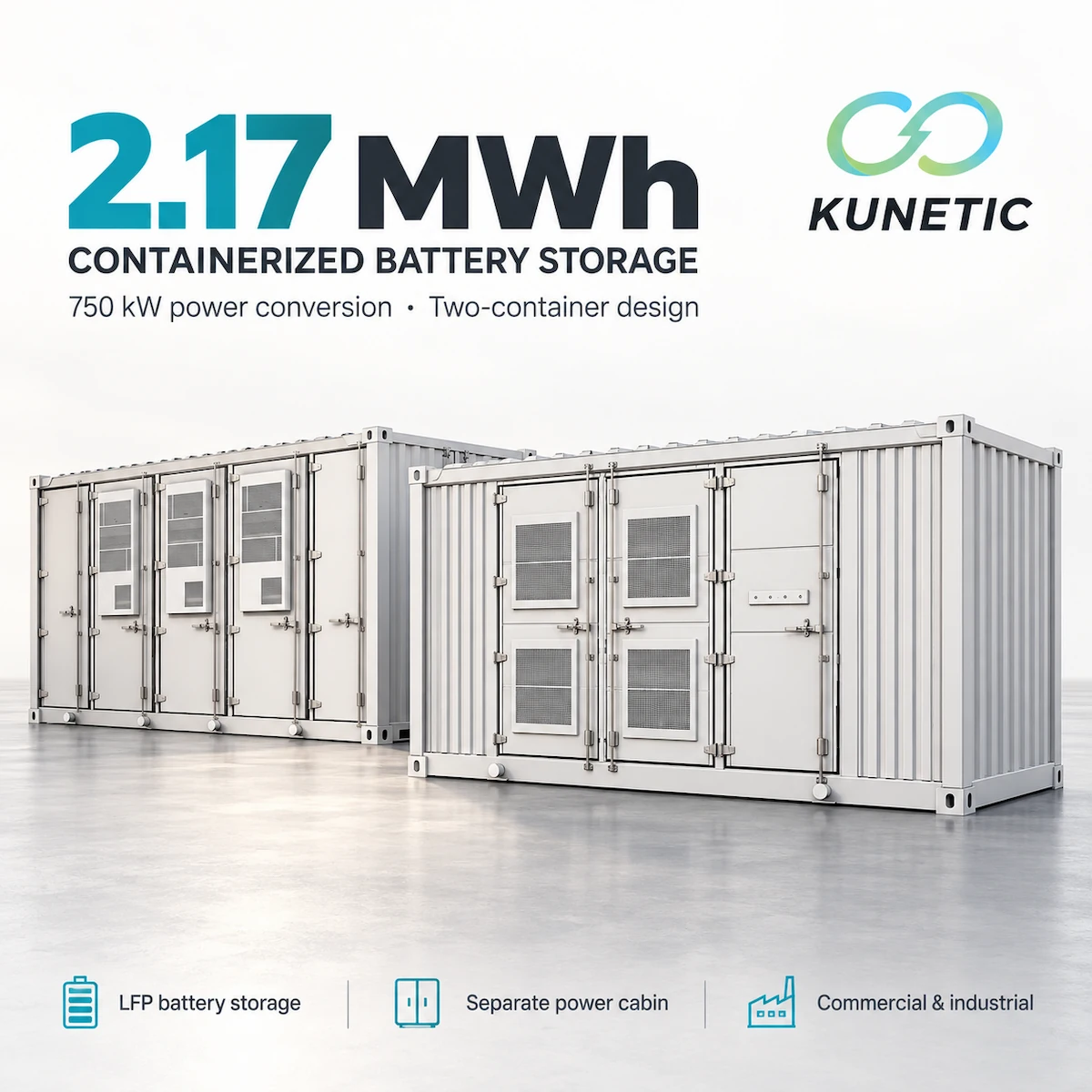
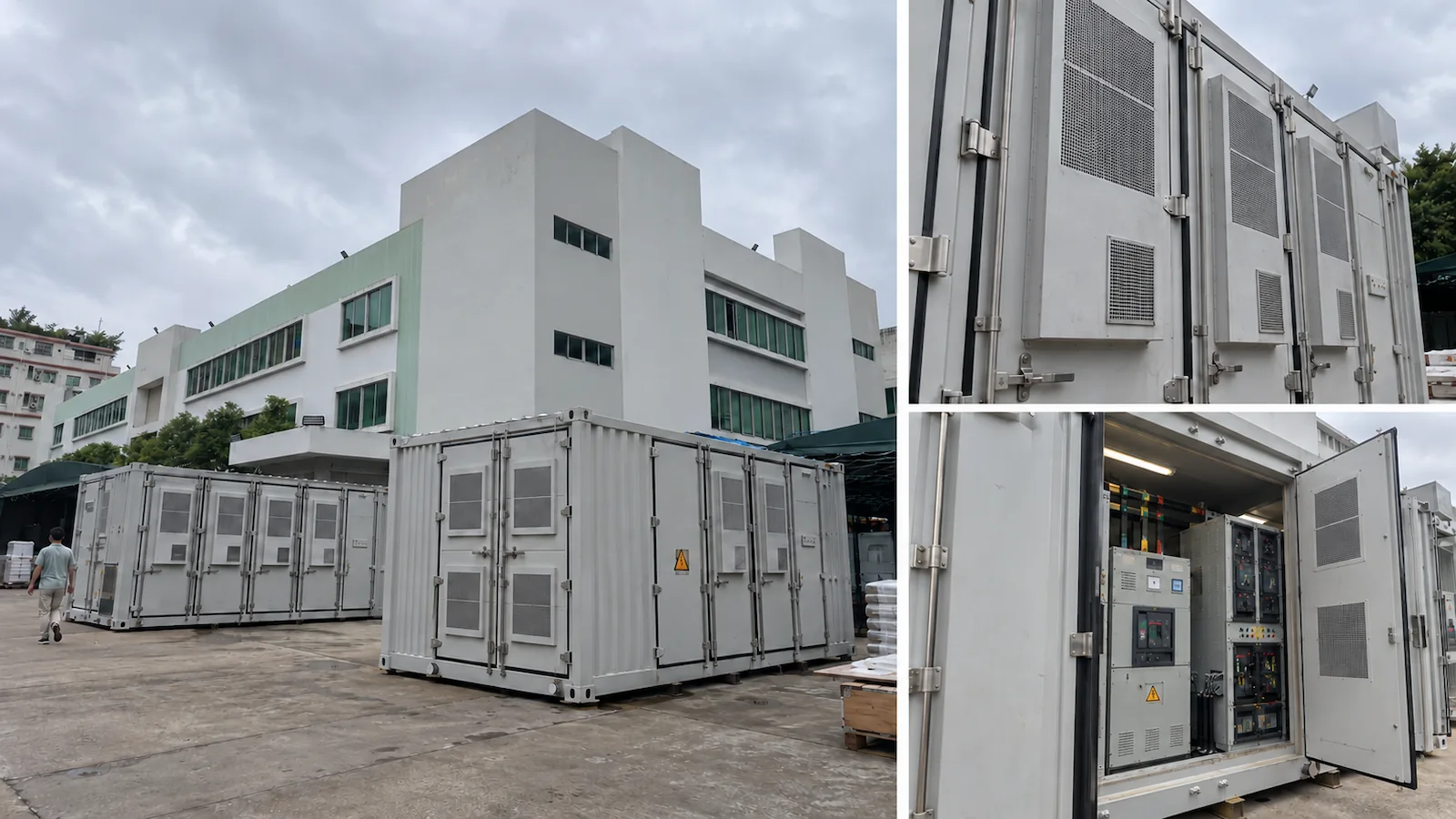
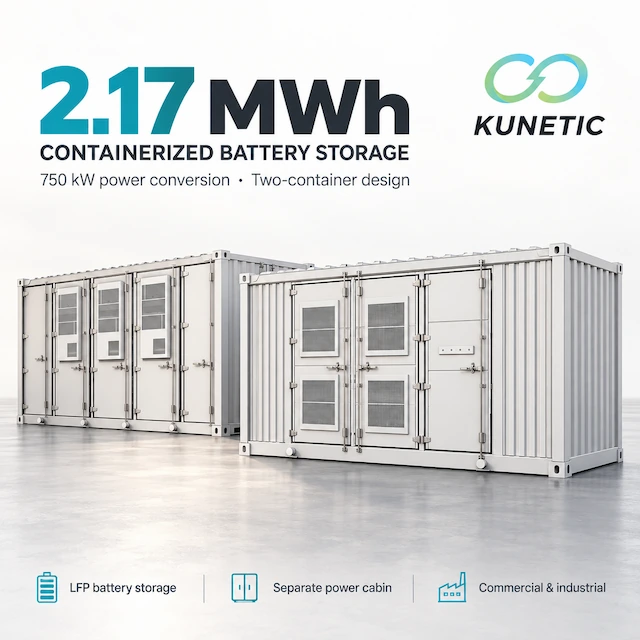
It uses two separate 20-foot high-cube cabins: one for the battery and one for power equipment. Plan foundations, lifting access and service space for both.
Industrial solar & battery storage
KUNETIC 750kW / 2.17MWh Containerized Battery Energy Storage System
This containerized BESS pairs 2.17MWh of battery storage with 750kW of AC power conversion. It serves factories, industrial parks and larger commercial sites. The LFP battery has its own cabin with active cooling. A separate power cabin houses the equipment that converts and distributes power. The system connects at 400V, three-phase. Six 130kW MPPT units provide 780kW of PV input for solar-storage projects. Both cabins use 20-foot high-cube enclosures with exterior service doors. Optional EMS and STS equipment, along with project customization, help match the system to your site's needs.
 2.17 MWh Nominal battery energy
 750 kW Rated AC power
 780 kW PV input configuration
 2 × 20 ft Separate equipment cabins
Industrial battery storage for your site's energy needs
Store solar energy for use after PV output falls. This containerized battery energy storage system provides a 2.17MWh nominal energy block and a 750kW AC power stage. Energy capacity helps define how long storage can serve a load. The power rating sets how much it can supply at one time.
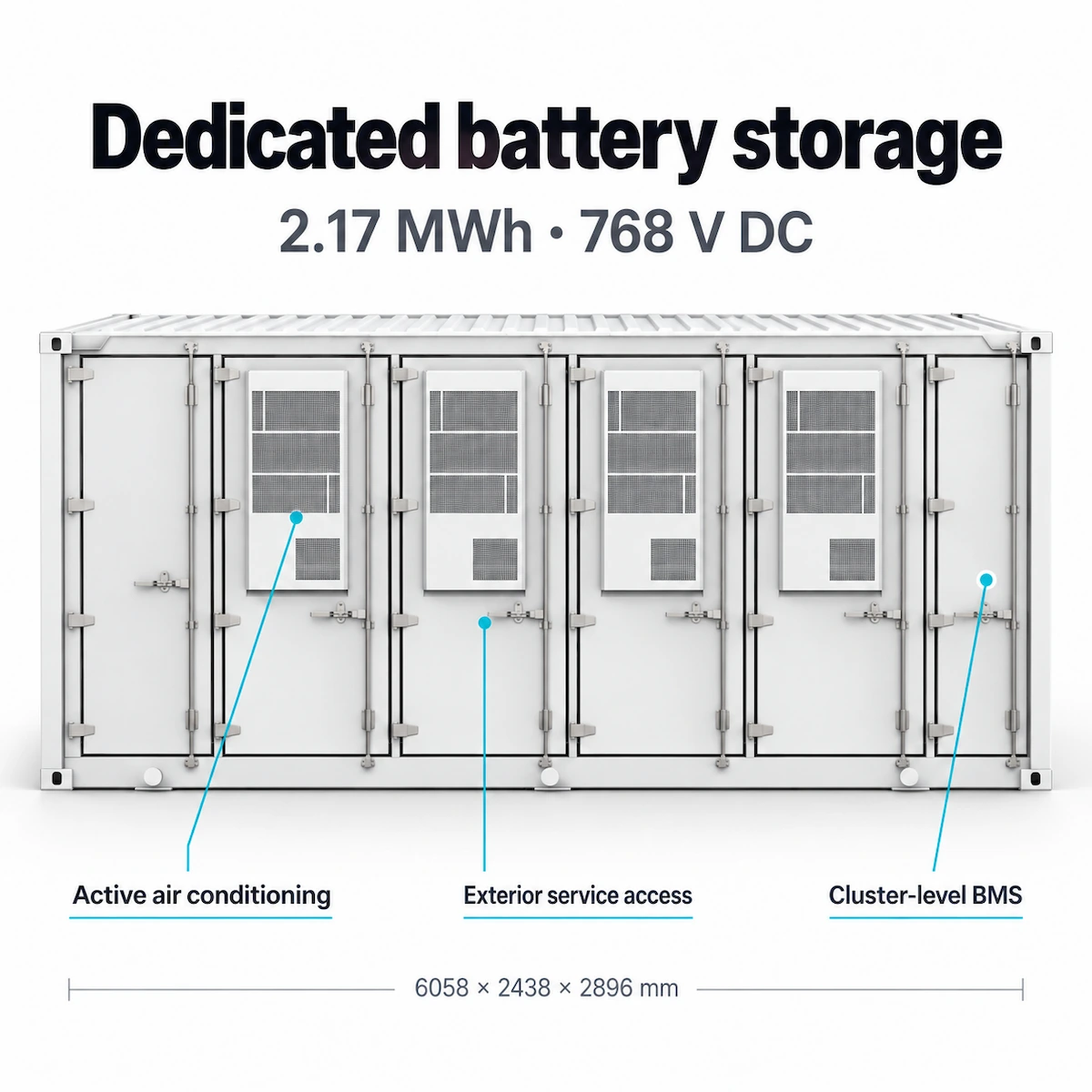
The battery cabin holds LFP battery clusters, a battery management system (BMS) and air-conditioning equipment. The power cabin groups the PCS, PV controls and distribution equipment. With separate enclosures, technicians can access each part through its own service doors.
A dedicated battery cabin and a separate power cabin
Nine 314Ah battery clusters provide about 2,170kWh of nominal energy at 768V DC. The BMS monitors the clusters and provides battery protection. Active air conditioning controls the thermal environment inside the battery cabin.
The electrical cabin provides 750kW of rated AC output at 400V through a three-phase, five-wire connection. Its PV section uses six 130kW MPPT units. A DC connection links it to the battery cabin. The two enclosures remain separate parts of the installation.
Customize the system around your operating plan. EMS and STS are available as options, so you can select energy management and transfer functions alongside the battery and power equipment. Tell us which loads matter most and how you want to use storage.

Put stored energy to work around your factory's load profile
For a factory with rooftop or ground-mounted PV, the battery stores excess energy for later use. An industrial park can use the larger storage block when planning shared energy infrastructure. Sites with diesel generators can consider the equipment for a hybrid power supply.
Start with your site's measured demand. A production line may need high power during a short peak. Refrigeration may need less power over a longer overnight period. Your load curve shows both needs and helps us assess the battery size and discharge power.
Tell us whether your goal is solar self-use, peak shaving or backup power for selected loads. Choose optional EMS and STS equipment around the control and transfer functions you need. Explore our commercial and industrial energy storage solutions for broader site planning.
Choosing 2MWh battery storage for a factory
The 2.17MWh figure is nominal stored energy. The 750kW figure is rated AC power. Divide nominal energy by a steady load for a first sizing estimate: 4.34 hours at 500kW or 2.89 hours at 750kW. Actual battery-only runtime is shorter. Allow for the usable charge window, conversion losses and the system's own power use.
Compare that estimate with your daily load data. Account for motor starts and changes in production demand. You may also want to hold energy in reserve for essential equipment. Send us a load curve or equipment list to check whether this power and energy combination fits your site.
Nominal energy ÷ constant load
500 kW4.34 h
750 kW2.89 h
Plan the site around two 20-foot cabins
Each cabin measures about 6,058 × 2,438 × 2,896mm. The battery cabin weighs about 26 tonnes; the electrical cabin weighs about 12 tonnes. Plan foundations and delivery access for both. Leave space for doors to open, air to flow and technicians to reach the equipment.
The enclosure protection specification is IP54. Choose a position with drainage and ventilation, and keep service access clear. Review lifting access early. At a working factory, the delivery route may need to pass buildings, pipework or other equipment.
Compare our 750kW / 1.446MWh solar-diesel BESS container if your site needs a different energy capacity or equipment layout. That model uses liquid cooling. Choose between them by checking the required energy window, site space and system arrangement.
Technical specifications
PRODUCT
750kW / 2.17MWh Two-Cabin BESS
| Battery cabin | |
|---|---|
| Nominal battery energy | Approximately 2,170kWh / 2.17MWh |
| Cell chemistry | Lithium iron phosphate (LFP) |
| Cell capacity | 314Ah |
| Battery clusters | 9 |
| Nominal DC voltage | 768V DC |
| Specified DC operating range | 650–876V DC |
| Thermal management | Active air conditioning |
| Dimensions | 6,058 × 2,438 × 2,896mm |
| Approximate weight | 26 tonnes |
| Power cabin | |
| Rated AC output power | 750kW |
| AC connection | 400V, three-phase, five-wire |
| Frequency | 50/60Hz |
| PV input configuration | 780kW, comprising 6 × 130kW MPPT units |
| Dimensions | 6,058 × 2,438 × 2,896mm |
| Approximate weight | 12 tonnes |
| Installation | |
| Delivery arrangement | Separate battery cabin and electrical cabin |
| Enclosure protection specification | IP54 |
| EMS and STS | Optional; customization available for the project |
 Technical Data
Downloads
Request the product datasheet
Get the battery and power-cabin data for your project. Tell us your installation country and target capacity so we can send the relevant product information.
Frequently asked questions
Its nominal battery energy is approximately 2.17MWh, and its rated AC power is 750kW. MWh measures stored energy; kW measures power. The system is not rated at 2MW output.
It depends on the loads you supply. At a steady 500kW, nominal energy divided by load gives 4.34 hours. That is before losses, reserve settings and the system's own power use. A practical estimate needs your load curve and usable battery window.
The electrical design includes six 130kW MPPT units for PV input. It also provides interfaces for grid, generator and site loads. Share your PV and generator details so we can review the operating modes and switching needed at your site.
Yes. EMS and STS are optional, and KUNETIC supports project customization. Select the energy management functions and transfer requirements around your site. If sensitive loads need a specific transfer time, include that requirement when requesting a system proposal.
Send your installation country, peak demand and a daily load curve or equipment list. Include PV capacity and any generator details. Tell us your goal, such as using more solar energy on site or keeping selected loads supplied during an outage.
Plan battery storage for your industrial site
Tell us how your factory or commercial facility uses power. Share your peak load, daily energy use and existing solar or generator equipment. KUNETIC will help you compare storage options and develop a configuration around your site's needs.
Request Product Datasheet
KUNETIC 750kW / 2.17MWh Containerized Battery Energy Storage System
Datasheet request
Request received. We will send the datasheet shortly.
Plan battery storage for your industrial site
KUNETIC 750kW / 2.17MWh Containerized Battery Energy Storage System
Product inquiry
Tell us about your site load, PV capacity, backup requirements, or target project size. Our engineers will help configure the right system for your needs.
Inquiry received. Our team will respond shortly.