Reliable Energy Storage — Download Free Catalog Download Now
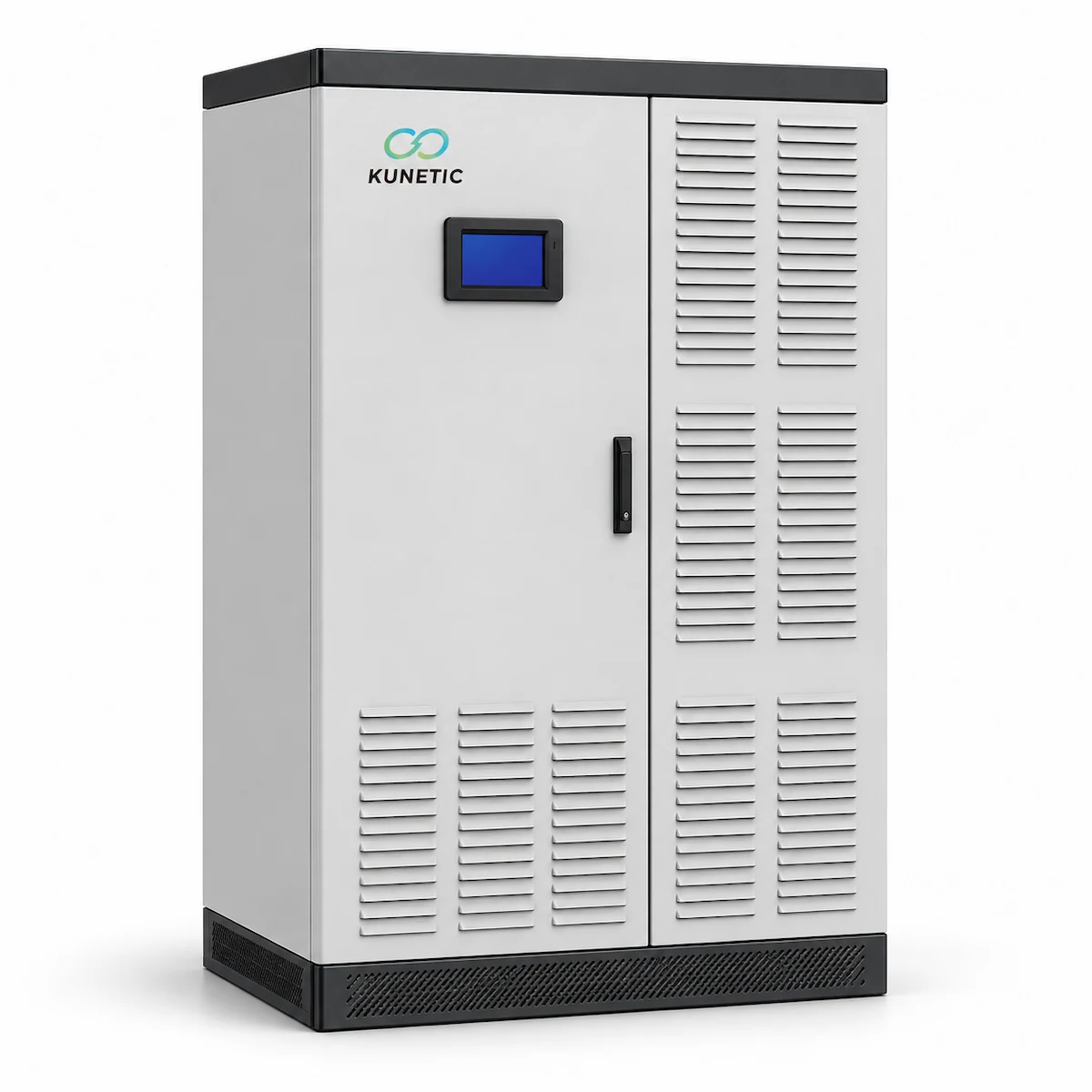
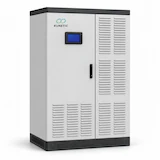
KUNETIC 100kW and 120kW commercial hybrid solar inverter cabinet on white

COMMERCIAL HYBRID INVERTER

KUNETIC 100kW / 120kW Commercial Hybrid Solar Inverter for Battery Storage

Bring solar generation and battery storage into your business power system. This 100kW / 120kW commercial hybrid solar inverter combines MPPT, power conversion, static transfer switching and an isolation transformer in one floor-standing cabinet. Connect a matched external battery and choose operating modes around your daytime generation, working hours and reserve power needs. EMS is available as an option.

100 / 120 kW Rated AC Power
400 V Three-phase AC
3 MPPT 3 × 60 kWp PV Input
292–430 Vdc External Battery Window

Commercial solar + battery storage

Connect your energy sources around the way your business works

A factory can produce surplus solar power at midday and need stored energy later in the shift. This commercial solar inverter connects PV and battery power with a 400V three-phase site supply. Use it to plan solar self-consumption, evening operation or a reserve for selected equipment.

Put solar generation to work

Three MPPT inputs support a maximum PV array rating of 3 × 60kWp. Connect suitable strings of solar panels through the solar charging stage and store available surplus for later use. Design the strings within the specified voltage and input limits.

Coordinate battery charging and discharging

The PCS converts power between a matched high-voltage battery and the AC system. Choose 100kW or 120kW for the load, then select battery capacity for the energy you want to shift or reserve.

Reduce separate equipment to integrate

MPPT, PCS, STS and an isolation transformer share one cabinet. This brings the conversion and switching functions together for a more organized plant-room installation. Add the optional EMS when the project needs that layer of site energy management.

The system connection

One energy hub for solar, battery and business loads

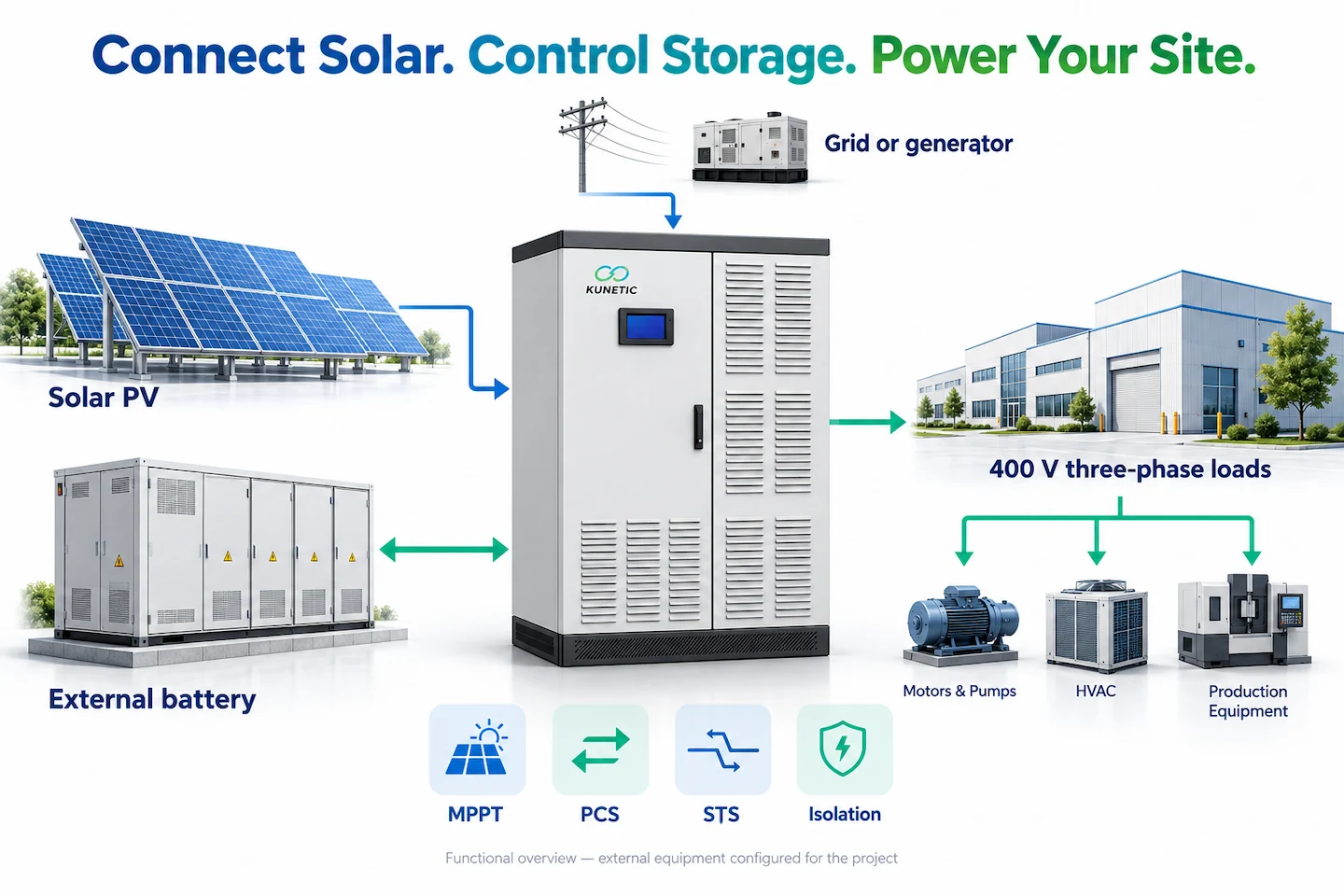
Solar PV enters through the MPPT stage, a separate battery connects to the DC battery input, and the AC side serves three-phase loads. A grid or diesel-generator supply can form part of the system design. Size the external array, battery and site distribution for the installation.

Commercial solar and battery power paths through the KUNETIC inverter to 400V site loads

Solar PV

Use the three MPPT inputs for a suitable solar array. The operating MPPT window is 450–850Vdc and the specified PV open-circuit limit is 900Vdc. Check string voltage across the local temperature range when planning the array.

External battery

Match the battery's operating voltage to the 292–430Vdc input window, together with its charge/discharge current and BMS communication. KUNETIC can help configure the battery side for the required energy and operating schedule.

Grid, generator and site loads

Plan a 400V three-phase connection for the selected loads. For backup or generator-supported operation, share the load starting requirements and available supply so the switching arrangement can be designed for the site.

Power and energy, selected together

Choose the power your site needs. Size the battery for the hours.

Choose 100kW or 120kW rated AC power on the same cabinet platform. Compare the loads that will run together and their starting requirements. Battery capacity determines stored energy, while the inverter rating sets its AC power limit.

100 kW

100 kW

A 100kW option for commercial solar-storage projects whose planned demand fits this power level. Match the battery and PV system to the site's energy use, rather than selecting them from the inverter rating alone.

120 kW

120 kW

An additional 20kW of rated AC power for sites with a higher simultaneous load requirement. The external battery still needs enough usable energy and discharge capability for the intended duty.

Start with the electricity you use

Send a recent demand profile or interval meter data, your PV plan and the equipment you want to support. These details help compare the two power options and a suitable battery capacity without relying on an assumed runtime.

Compare the two power options for your site →

Operating around your business

Use stored energy when it matters to your business

Load-priority, battery-priority and peak-shaving / valley-filling modes help you schedule energy around the tariff, production hours and reserve you need. Savings depend on electricity rates and how much energy the site can usefully shift.

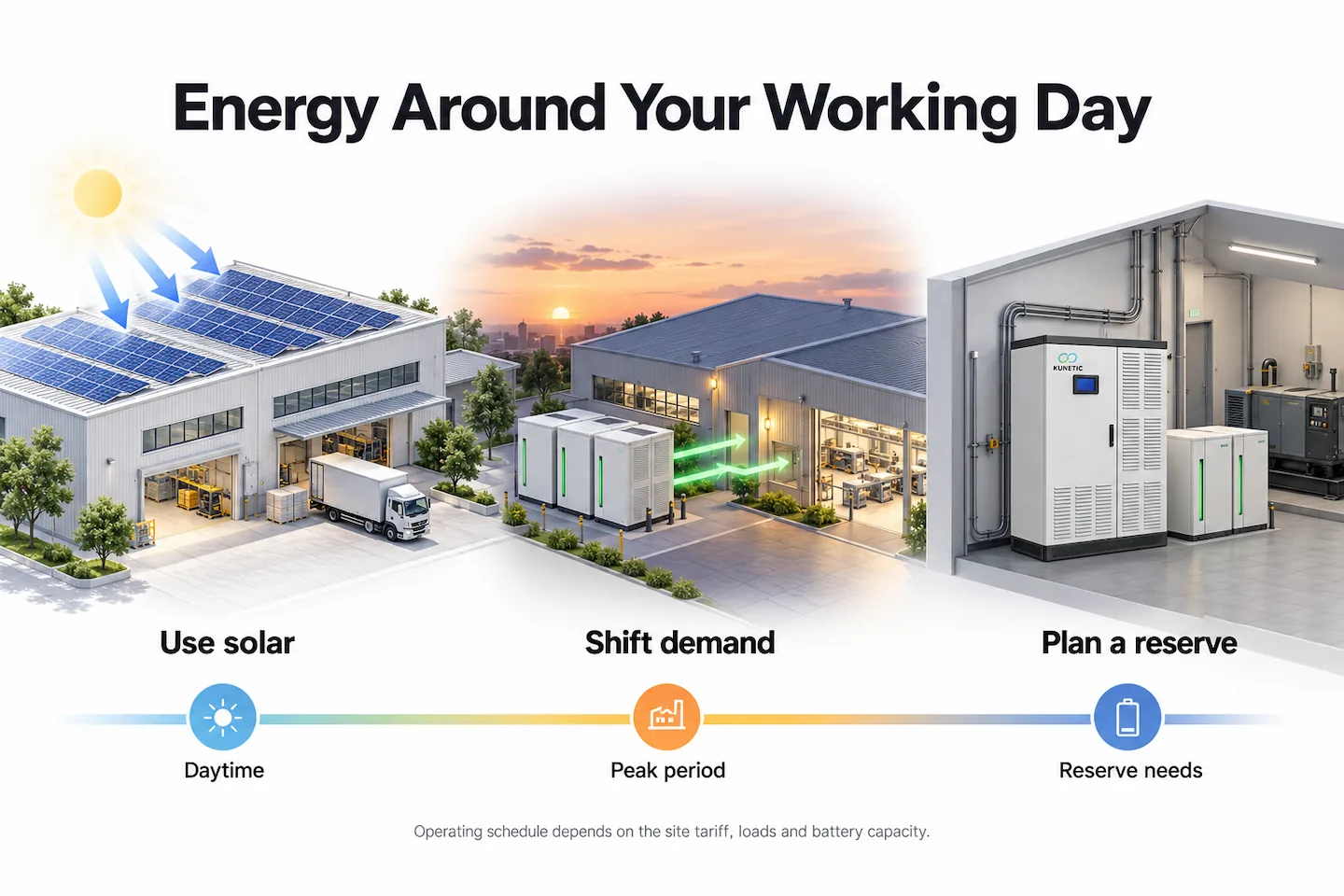
Solar self-consumption, demand shifting and reserve planning around business operations

During solar production

Use available generation for business demand and direct suitable surplus into the battery. Load-priority operation puts the site's consumption at the center of the energy plan.

During a higher-cost period

Use stored energy to offset part of the site's demand. Where the tariff rewards shifting consumption or limiting peaks, the peak-shaving / valley-filling mode provides an operating basis for that schedule.

When reserve power is the priority

Use battery-priority settings to support the required storage objective. For an outage plan, identify the essential loads, needed duration and generator availability so the battery and transfer arrangement can be matched to them.

Indoor installation

An integrated cabinet for the electrical room

This energy storage inverter uses a floor-standing enclosure measuring 850 × 800 × 1850mm, with bottom cable entry and a local display. Forced ventilation manages airflow. The IP20 cabinet belongs in a dry indoor electrical space with operation and service access.

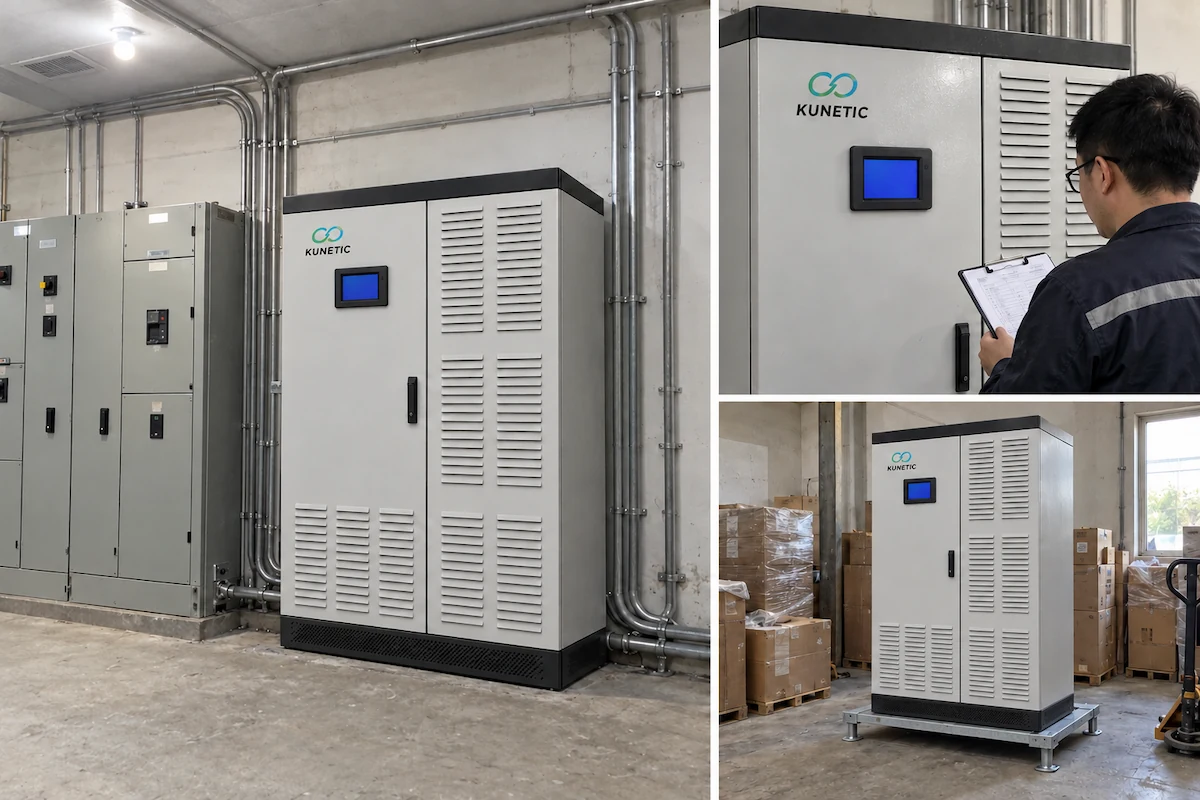
Indoor equipment arrangement concepts and warehouse preparation design views
Indoor equipment arrangement concepts

Plan a workable equipment space

Allow for the cabinet's 900kg unit weight, cable routes and ventilation when choosing its location. The specified operating temperature is 0–40°C. Keep the enclosure in a suitable indoor environment and provide the required service clearances in the installation design.

Connect monitoring to the project

RS232, RS485 and LAN monitoring interfaces are listed for the series. Optional SNMP, Wi-Fi and 4G can support different communication needs. Select the interfaces and optional EMS around the way the site will be operated and monitored.

Technical data

100kW / 120kW hybrid inverter specifications

Compare the rated AC power, PV input and battery voltage before choosing a configuration. Battery storage capacity is configured separately from the inverter cabinet.

AC POWER
100 kW
120 kW
Comparison of AC, solar PV, battery and cabinet specifications for the 100kW and 120kW hybrid inverter models
AC output and connection
Rated AC power100 kW120 kW
Rated apparent power100 kVA120 kVA
Rated voltage400 V400 V
AC systemThree-phase, five-wire (3W+N+PE)Three-phase, five-wire (3W+N+PE)
AC voltage range320–460 V320–460 V
Rated frequency50 / 60 Hz50 / 60 Hz
Isolation transformerIncludedIncluded
Solar PV input
Maximum PV array power3 × 60 kWp3 × 60 kWp
Number of MPPT inputs33
Rated power per MPPT60 kW60 kW
MPPT operating voltage450–850 Vdc450–850 Vdc
PV open-circuit voltage limit900 Vdc900 Vdc
Battery and control
Battery input voltage292–430 Vdc292–430 Vdc
Battery capacityExternal, configurableExternal, configurable
Operating modesLoad priority; battery priority; peak shaving / valley fillingLoad priority; battery priority; peak shaving / valley filling
Integrated equipmentMPPT, PCS, STS, isolation transformerMPPT, PCS, STS, isolation transformer
EMSOptionalOptional
Monitoring interfacesRS232, RS485, LANRS232, RS485, LAN
Optional communicationSNMP, Wi-Fi, 4GSNMP, Wi-Fi, 4G
Cabinet and environment
Dimensions (W × D × H)850 × 800 × 1850 mm850 × 800 × 1850 mm
Unit weight900 kg900 kg
Protection ratingIP20, indoorIP20, indoor
Operating temperature0–40°C0–40°C
CoolingForced ventilationForced ventilation
Cable entryBottomBottom
Technical data cover Technical Data

Downloads

Request the 100kW / 120kW inverter datasheet

Get the electrical data for your solar and battery storage plan. Share your required AC power, battery voltage and installation country so we can help you compare the relevant configuration.

FAQ

Questions about commercial hybrid inverters

The cabinet includes MPPT, PCS, STS and an isolation transformer. Battery storage is external and configured separately. This lets you choose stored energy around the amount you want to shift each day or the reserve required for selected loads. EMS is optional.

A battery PCS converts power between the battery's DC side and the site's AC side. This hybrid cabinet also integrates MPPT solar charging, static transfer switching and an isolation transformer. It accepts direct PV input and a matched external battery. Conventional PV-only string inverters have a different role; compare the battery connection and backup arrangement when choosing equipment.

Choose a battery whose full operating range fits the inverter's 292–430Vdc battery window. BMS communication and charge/discharge current also need to match. Send the battery datasheet to KUNETIC for a compatibility review; nominal voltage alone is not enough to select a battery.

Compare the simultaneous load, starting requirements and the power you want the inverter to provide. The 120kW model adds 20kW of rated AC power. Battery capacity is a separate choice based on usable energy, discharge capability and the intended operating hours.

The series supports connections for PV, an external battery, loads and a grid or diesel-generator supply. Share the generator details and the loads that need backup so the power paths, controls and transfer arrangement can be matched to the application.

The IP20 cabinet is intended for a suitable dry indoor electrical space. Its specified operating temperature is 0–40°C. Plan the floor loading, bottom cable entry, ventilation and service access around the installation location.

EMS is optional. The series lists load-priority, battery-priority and peak-shaving / valley-filling operating modes. Discuss the monitoring and site control functions you need so the communication options and EMS can be selected together.

OEM / ODM support

Configure the system around your project

Project configuration

Discuss the inverter rating, external battery capacity, monitoring options and site supply arrangement with KUNETIC. A matched equipment plan helps turn the load and solar requirements into a practical commercial storage proposal.

Brand and documentation support

OEM / ODM support is available for project and distribution requirements. Talk to us about branding, documentation and the configuration you need for your market.

KUNETIC OEM ODM energy storage cabinet customization workflow for EPCs, integrators, and distributors

Plan your commercial solar and battery system

Tell us your installation country, required inverter power, PV capacity and battery plan. Add a load profile or the equipment you want to support, and we can help you compare a 100kW or 120kW configuration for your business.