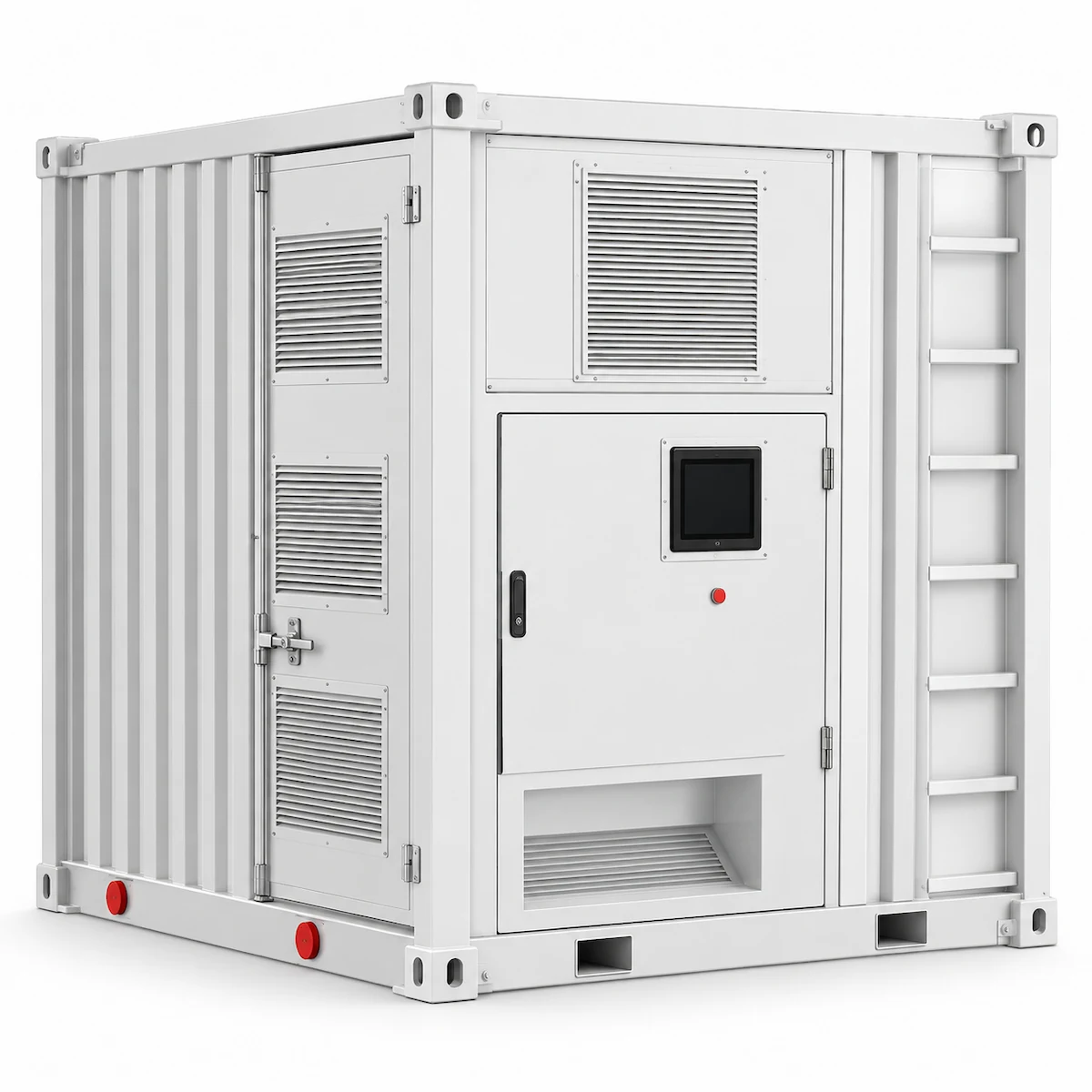
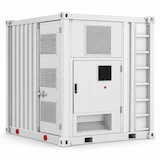
KUNETIC 150–500kWHybrid Generator Battery Storage System
Reduce diesel use at light loads, create quieter engine-off periods and support changing industrial demand. KUNETIC's DG-Coupled battery energy storage system pairs LFP lithium-ion batteries with a separate diesel generator and optional solar input.
Choose 150, 250 or 500kW power classes with battery options across 150–600kWh. Build the supply around your factory, construction site or remote facility. Plan parallel units when the project needs more storage.
150–500 kW AC Power Options
150–600 kWh LFP Energy Options
DC-coupled PV Solar Integration
IP55 / C4 Outdoor Design
DIESEL + BATTERY + SOLAR
Get more value from your generator, fuel and solar energy
Generators are often sized for equipment starts and demand peaks. A site may draw far less power for the rest of the day. Battery storage can supply lighter loads and work alongside the generator when demand rises, giving the site more ways to meet its power needs.
Spend less fuel on light loads
Use stored energy during suitable low-demand periods and bring the generator in for supply and charging when needed. This reduces unnecessary engine running and helps move generator operation toward more useful loading. Add solar to replenish the battery and reduce the energy that must come from diesel.
Reduce runtime-related maintenance
Fewer engine-on hours can reduce servicing tied to generator running hours. For remote sites, fewer service visits can mean less travel and fewer routine consumables. The benefit depends on the generator's duty and maintenance schedule.
Match the supply to the work being done
01
Quieter battery-led periods
Supply lighting, controls and other lighter loads from stored energy while the diesel engine is off. With enough battery capacity for the load, this creates quieter intervals around camp cabins and between production runs.
02
Useful generator operation and charging
When stored energy needs replenishing, the generator can supply the live load and charge the battery with its available power margin. Coordinated operation combines productive power generation with energy stored for the next battery-led period.
03
Support for peaks and changing loads
Battery discharge can contribute alongside the generator as demand rises. Storage also helps absorb load fluctuations, reducing the need for the engine to follow every change on its own. Motor and pump starting duty determines the required power margin.
04
More use from available solar
DC-coupled PV through MPPT brings renewable solar energy into the hybrid power system. Solar can supply current demand or charge the battery for later use. This reduces diesel-generated energy when solar production is available.
Coordinate the energy sources and keep the site in view
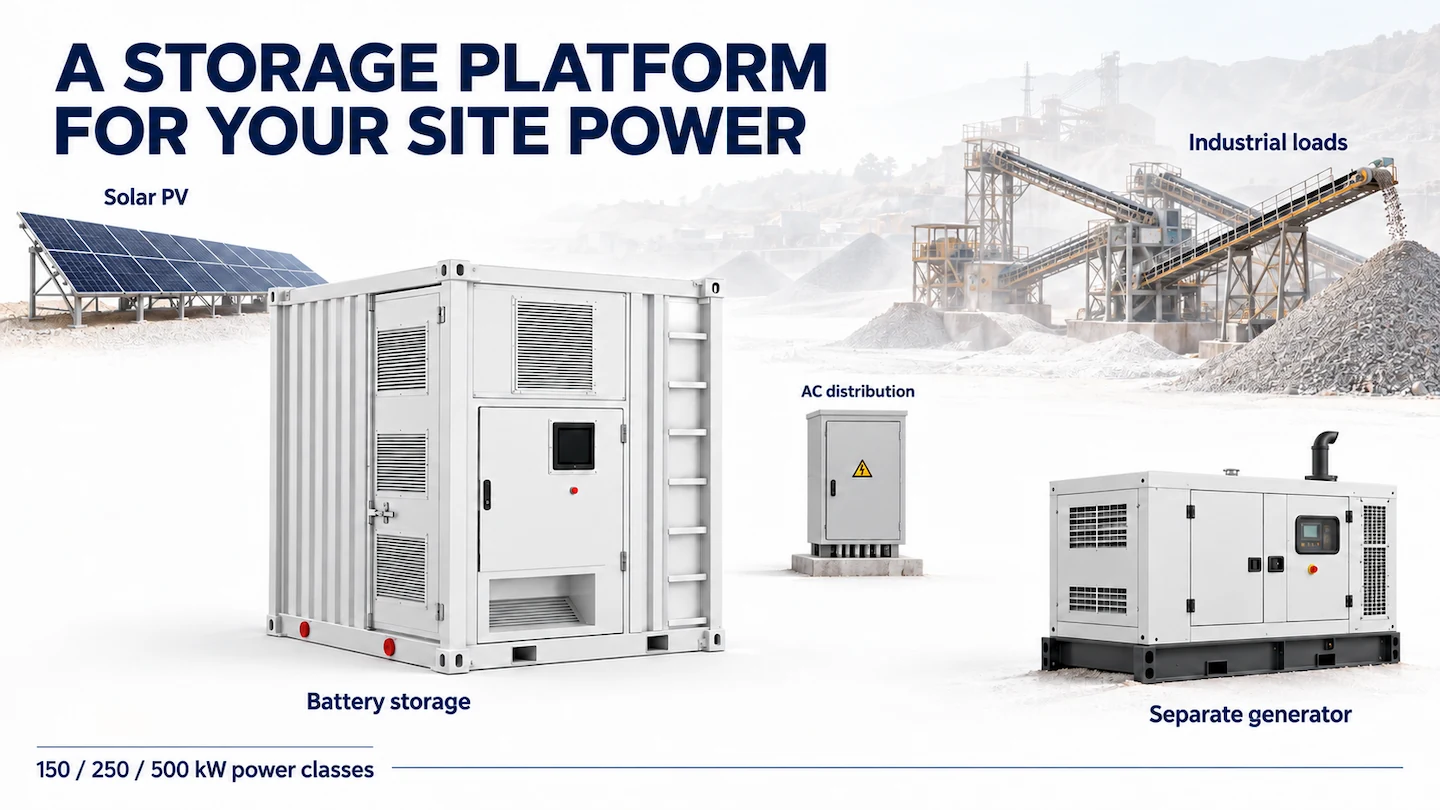
The generator supplies the AC bus and the battery connects through power conversion. PV enters through MPPT on the DC side. The system coordinates stored energy with diesel generation and solar supply. Where a grid connection is available, it can also form part of the site design.
Functional system overview · Generator and solar array are separate equipment.
The storage platform works with a separate diesel generator and solar array. Explore our solar, storage and diesel solutions for the wider site power arrangement.
EMS dispatch and remote visibility
The EMS combines operating data, dispatch and remote monitoring so operators can follow system status and coordinate battery operation with generator demand. RS485 or Ethernet links support generator communication; remote access also requires a suitable communications connection at the site.
VSG-assisted generator coordination
Virtual synchronous generator (VSG) control helps the storage converter operate in step with a compatible diesel generator. Combined with battery dispatch, this supports coordinated hybrid supply as site loads change.
Power quality for industrial loads
Harmonic control and reactive-power compensation support industrial power quality. The specification lists THDi below 3% at rated power.
PROJECT APPLICATIONS
Practical benefits for diesel-powered industrial sites
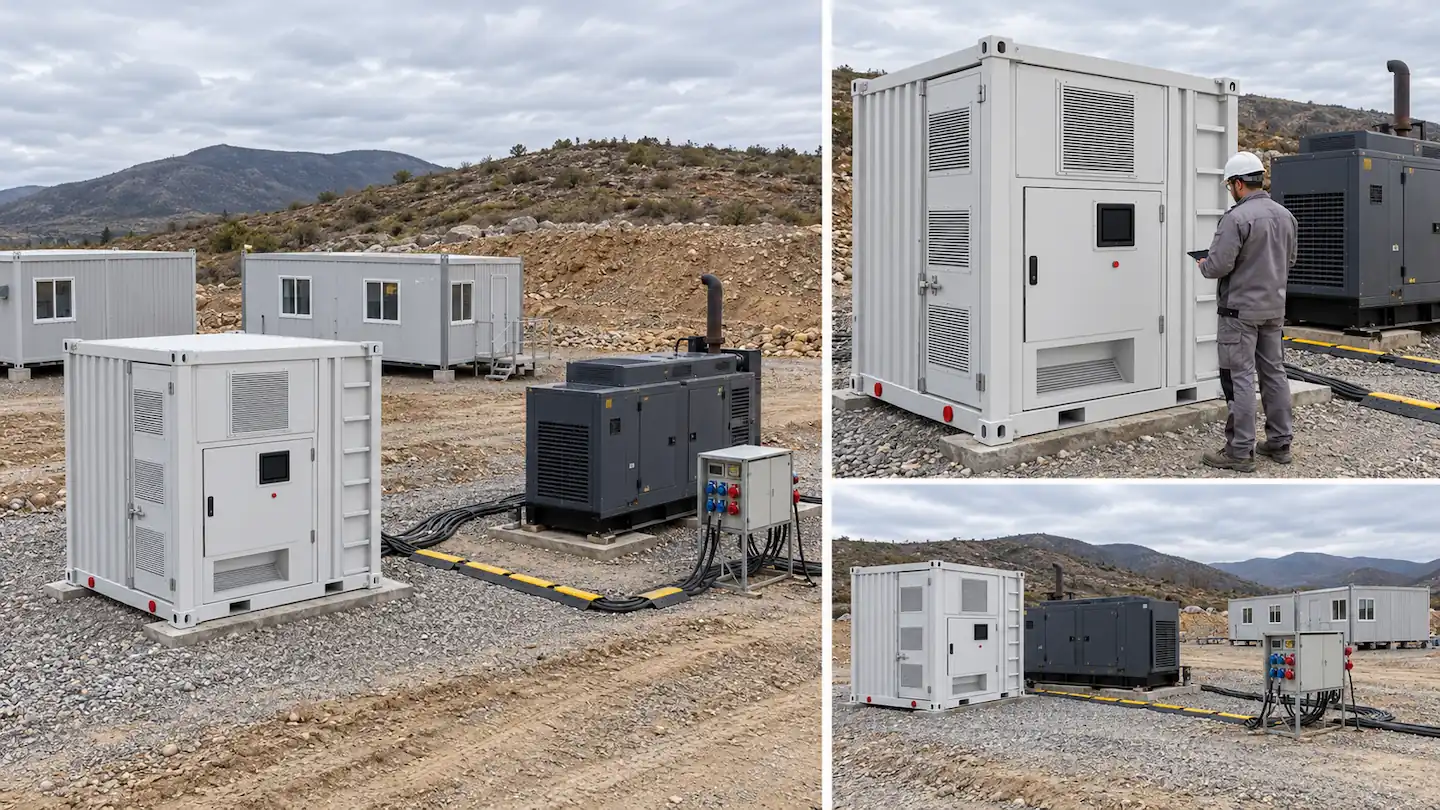
Construction-camp deployment concept · Battery storage, generator and temporary distribution.
Factories and workshops
Keep generators available for production demand while using battery power for suitable lighter periods after machinery stops. Stored solar can serve later loads, and battery support can contribute during demand peaks. This is especially useful where grid capacity is limited or unreliable.
Construction and temporary facilities
Combine power for tools and pumps with quieter battery-led supply for site cabins between busy periods. Generator charging supports longer working days. The arrangement can change with the site's equipment, accommodation and demand as construction progresses.
Mining and oilfield support
Coordinate storage with diesel supply for pumps, conveyors and remote support facilities. Managing variable demand and reducing unnecessary engine hours can ease fuel and maintenance logistics where service access is difficult. Equipment starts remain central to power selection.
Island and off-grid facilities
Use available solar with battery storage and keep generator support for longer supply gaps. Battery-led periods can reduce engine noise near accommodation and cut diesel-generated energy when solar is available. Capacity follows the island's daily demand and renewable supply.
Choose capacity for today's duty and tomorrow's growth
Choose AC power around sustained demand and equipment-starting events. Choose battery energy around the duration of lighter-load periods, recharge opportunities and available solar. The series offers 150kW with 150–300kWh, 250kW with 200–400kWh, and 500kW with 400–600kWh battery options.
To estimate battery-only duration, divide usable AC energy by average load. Account for the operating charge window, conversion losses and auxiliary demand. A daily load profile helps turn a broad capacity range into a useful configuration for your working schedule.
Built for transport and demanding outdoor sites
A reinforced enclosure and anti-vibration design support project transport and field deployment. IP55 enclosure protection and the C4 corrosion-protection specification help address outdoor exposure, including the moisture and corrosion concerns of remote or coastal sites. Temperature and smoke detection work with aerosol fire suppression as part of the battery protection system.
Air conditioning manages battery temperature in the 150kW class; the 250kW and 500kW classes use liquid cooling. Thermal management helps maintain consistent battery temperatures during operation. The listed ambient range is −20°C to +55°C, with installation altitude up to 3,000m; local conditions determine any operating derating.
Leave room for access, ventilation and maintenance when planning foundations and cable routes. KUNETIC can help arrange storage, generator and distribution equipment around your factory or industrial park and its service needs.
TECHNICAL DATA
Technical data
150, 250 and 500kW hybrid battery storage configurations
CONFIGURATION
150kW class
250kW class
500kW class
Power and battery
Rated AC output
150kW
250kW
500kW
Battery energy configuration
150–300kWh
200–400kWh
400–600kWh
Battery chemistry
LFP
LFP
LFP
Thermal management
Air conditioning
Liquid cooling
Liquid cooling
Generator, PV and AC connections
Generator input range
100–300kVA
100–300kVA
100–500kVA
Generator input
AC 400V, 50/60Hz
AC 400V, 50/60Hz
AC 400V, 50/60Hz
Generator communications
RS485 / Ethernet
RS485 / Ethernet
RS485 / Ethernet
PV coupling
DC coupling through MPPT
DC coupling through MPPT
DC coupling through MPPT
PV power range
100–200kW
100–200kW
100–400kW
PV communications
RS485
RS485
RS485
Rated output voltage
400V, 3L/N/PE
400V, 3L/N/PE
400V, 3L/N/PE
Frequency
50/60Hz
50/60Hz
50/60Hz
Rated output current
215A
360A
720A
THDi at rated power
<3%
<3%
<3%
Outdoor system
Enclosure protection
IP55
IP55
IP55
Corrosion-protection specification
C4
C4
C4
Operating ambient range
−20°C to +55°C
−20°C to +55°C
−20°C to +55°C
Storage temperature
−20°C to +50°C
−20°C to +50°C
−20°C to +50°C
Relative humidity
0–95%, non-condensing
0–95%, non-condensing
0–95%, non-condensing
Altitude
≤3,000m
≤3,000m
≤3,000m
Listed dimensions, L × W × H
2,800 × 2,290 × 2,200mm
2,800 × 2,290 × 2,200mm
3,600 × 2,290 × 2,200mm
Listed weight
3.2t
3.2t
6.5t
Technical Data
Downloads
DG-Coupled Hybrid Storage Technical Data
Request the technical data for your power class, battery capacity and generator pairing. Include a load profile if available, and we can help relate the options to your site's working hours and energy priorities.
Questions about diesel savings, expansion and generator pairing
It is a battery energy storage and control platform that works with a separate diesel generator. The storage unit adds battery-led supply, energy shifting and coordinated load support to the hybrid power arrangement.
It can be considered for an existing generator with compatible communication and control capabilities. The series supports RS485 or Ethernet interfaces. Share the generator and controller models so KUNETIC can propose the appropriate pairing.
Yes. Battery-led operation lets suitable loads run while the generator is stopped, reducing engine noise during those periods. The connected load must fit the power rating, with enough usable battery energy for the intended duration.
The opportunity depends on current generator loading, the length of low-load periods, solar contribution and battery dispatch. Fewer engine hours can also reduce runtime-related servicing. Compare the proposed arrangement with your site's present fuel use and service schedule to estimate the benefit.
The series supports multi-unit parallel expansion. Add units through a parallel arrangement sized for the project's power and battery energy needs. Controls and protection coordinate those units with the generator.
Yes. DC-coupled PV enters through MPPT. The 150kW and 250kW classes list a PV range of 100–200kW; the 500kW class lists 100–400kW. Solar can supply energy for current demand and later battery-led operation.
Use sustained demand and the largest starting events to select power, then choose battery energy around battery-led hours and recharge opportunities. A load profile and generator details let KUNETIC compare the 150, 250 and 500kW options for your site.
Find the hybrid storage arrangement for your site
Tell us how your site uses power and what you want to improve: diesel consumption, generator running hours, noise-sensitive periods or capacity for new equipment. Include the installation country, generator model and any load or PV data so KUNETIC can propose a suitable configuration.
Request Product Datasheet
KUNETIC 150–500kW Hybrid Generator Battery Storage System
Datasheet request
Request received. We will send the datasheet shortly.
Find the hybrid storage arrangement for your site
KUNETIC 150–500kW Hybrid Generator Battery Storage System
Product inquiry
Tell us about your site load, PV capacity, backup requirements, or target project size. Our engineers will help configure the right system for your needs.

 English
 Deutsch
 Español
 Français
 Italiano
 Polski
 Română
 العربية




 Technical Data