


Reliable Energy Storage — Download Free Catalog Download Now
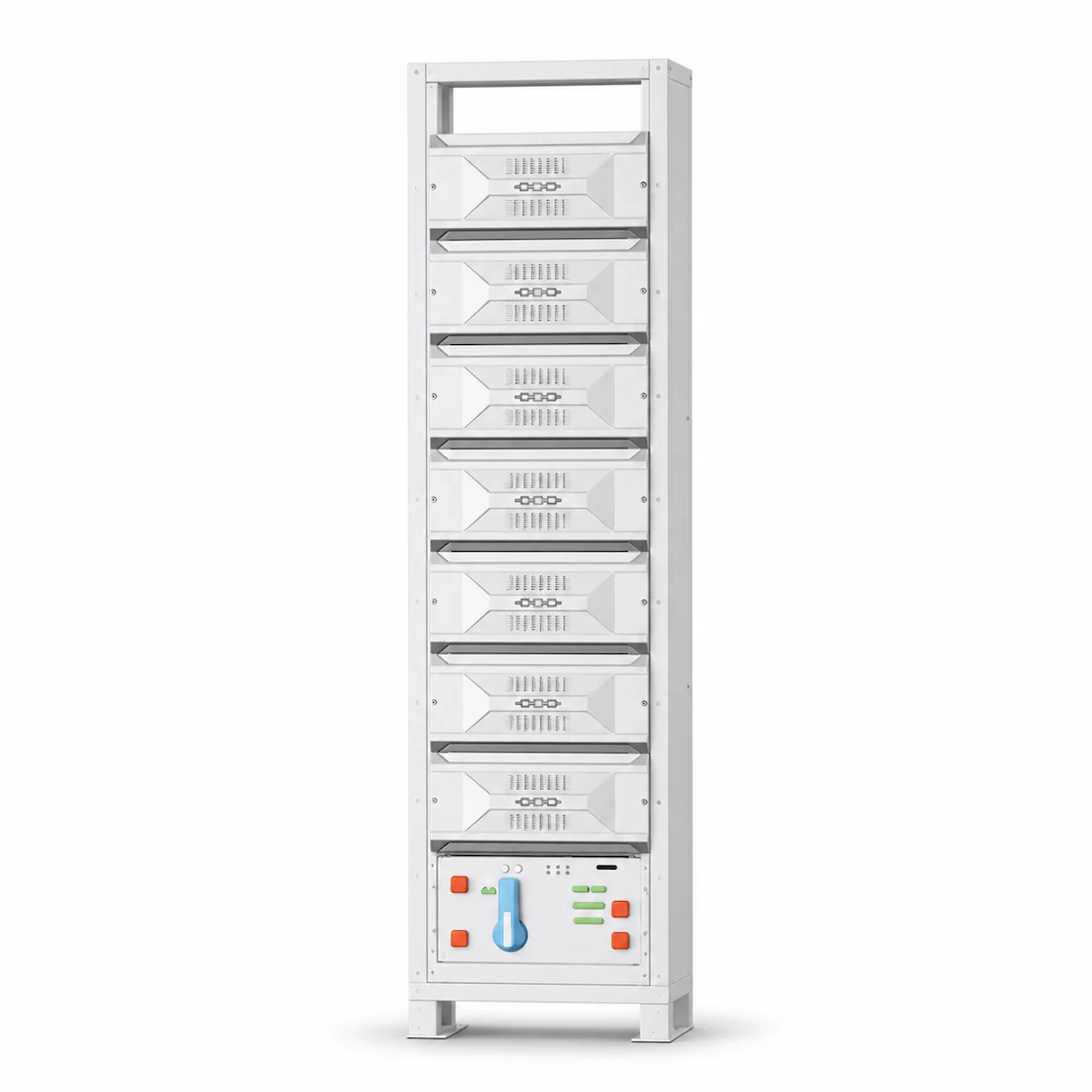
White indoor battery storage rack with seven LFP packs on a white background

Commercial & Industrial Storage

63–110 kWh Indoor Battery Storage Rack for Commercial Solar

Add battery storage to an existing equipment room and save surplus rooftop solar for later in the day. The KUNETIC commercial battery storage rack gives factories and commercial buildings four LFP configurations from approximately 63 to 110 kWh, all in a single column 564 mm wide. Choose the rack for the amount of energy you want to store. Match it with an external power conversion system (PCS) to suit the power needs of your site.

63–110 kWh Rated Energy Range
307.2–537.6 V Nominal DC Voltage
206 Ah LFP Cell Capacity
564 mm Rack Width

Features

A Compact Rack for Existing Equipment Rooms

  • Fit the rack into a compact equipment area

    The rack is 564 mm wide and 880 mm deep, so the frame itself occupies about 0.50 m². Use that footprint to shortlist a location in a protected indoor equipment room. Allow additional space to bring the rack into the room and to service it once installed.

  • Choose from four pack configurations

    Four, five, six or seven battery packs let you size the rack to the site. The smaller configurations suit projects that need around 63 or 79 kWh. The six- and seven-pack options give you approximately 95 and 110 kWh in the same width and depth.

  • Battery management built into the rack

    The battery management system (BMS) monitors battery conditions and helps protect the packs during charging and discharging. The control unit sits below the battery modules, at the front of the rack.

Open rack frame, LFP battery packs and bottom control unit

Choose the Capacity and DC Voltage Together

Check how much surplus solar you typically have, or how much energy you need for a particular shift. Then compare the voltage of the racks in that capacity range.

63, 79, 95 and 110 kWh indoor racks with four, five, six and seven battery packs
  • 4 packs give you about 63 kWh at 307.2 V nominal DC.
  • 5 packs give you about 79 kWh at 384 V nominal DC.
  • 6 packs give you about 95 kWh at 460.8 V nominal DC.
  • 7 packs give you about 110 kWh at 537.6 V nominal DC.

If you are comparing 100 kWh batteries, check the electrical ratings of each model. Our 80–261 kWh high-voltage rack series includes a 100.48 kWh configuration rated at 320 V nominal DC. For a PCS designed around a lower battery voltage, this is another option in the same capacity class.

These are rated DC energy figures. The energy you can deliver to your loads will depend on the usable battery range, the reserve you keep and conversion losses.

Fit the Rack into Your Solar and PCS System

You can keep your existing PV inverter in a suitable AC-coupled retrofit. It continues to supply the site's AC distribution. A separate bidirectional PCS charges the rack when there is surplus solar and converts stored energy back to AC when the site needs it. Site metering and controls determine when the battery charges and discharges.

AC-coupled commercial solar arrangement with a separate PV inverter, bidirectional PCS and indoor rack

Check the battery voltage range, current limits and BMS communication before selecting the PCS. For example, the five-pack rack operates between 336 and 432 V DC. A PCS with a 450 V minimum battery input would sit above that entire range. The rack's rated current is 103 A. Use the operating voltage and current limits together when checking the AC power your system can deliver.

For a package that combines power conversion and battery storage, compare the 50 kW hybrid solar system with 111 kWh battery storage.

Applications

Indoor rack in an equipment room leading to a manufacturing workshop

Use midday solar on a later production shift

If your factory generates more solar power than it uses at midday, an indoor battery rack can store some of that surplus for later production. Compare the hours when the roof produces excess power with the hours when equipment is still running. That gives you a better basis for choosing the rack capacity and PCS power.

Indoor rack and distribution equipment in a commercial plant room

Reduce peak grid demand in a commercial building

A commercial building can draw more power when HVAC, lighting and other equipment run at the same time. With a matched PCS and demand controls, the battery can support those loads during short peaks. Use your meter data to see how high the peaks are and how long they last. Those two numbers help determine the power the PCS must deliver and the energy the battery needs to hold.

Technical Data

Indoor Battery Storage Rack Specifications

Electrical and installation data for the four indoor rack configurations
Parameter4 packs5 packs6 packs7 packs
Battery and Electrical
Rated battery energy63.288 kWh79.104 kWh94.92 kWh110 kWh
Nominal DC voltage307.2 V384 V460.8 V537.6 V
Operating DC voltage268.8–345.6 V336–432 VRequest configuration data470.4–604.8 V
Cell chemistry and capacity206 Ah LFP206 Ah LFP206 Ah LFP206 Ah LFP
Rated current103 A103 A103 A103 A
Rack and Installation
Width × depth564 × 880 mm564 × 880 mm564 × 880 mm564 × 880 mm
Rack height1,260 mm1,490 mm1,720 mmRequest configuration data
Approximate weight560 kg690 kg820 kg950 kg
InstallationIP20, indoor rackIP20, indoor rackIP20, indoor rackIP20, indoor rack

Include room for handling, cable routing, ventilation and service access when you check the layout. For an exposed equipment area, compare our 100–143 kWh outdoor commercial battery storage system.

Technical data cover Technical Data

Downloads

Indoor Battery Storage Rack Datasheet

Request the configuration data for the capacity you are considering. If you already have a PCS model in mind, include it so we can review the voltage range, current limits and communication requirements with you.

FAQ

The six-pack rack is closest, with about 95 kWh at 460.8 V nominal DC. For more energy, the seven-pack rack offers about 110 kWh at 537.6 V. Compare the rated energy you need and the PCS input range to choose between them.

A suitable AC-coupled retrofit can keep your existing PV inverter on the AC side. A separate bidirectional PCS then connects the battery to the site's AC distribution. Share the PV inverter and proposed PCS models so we can review the arrangement.

The 564 × 880 mm frame occupies about 0.50 m². Your room also needs space for the installation route, cable runs, ventilation and service access. Check the floor loading against the weight of the selected configuration.

The rack can supply energy as part of a backup system with a compatible PCS and suitable isolation and switching. Tell us which loads need to stay on and for how long so the power and energy requirements can be checked together.

Find the Right Rack for Your Equipment Room

Send us your target storage capacity, room dimensions and any PCS model you have shortlisted. If you already have solar, a daily generation and load profile can help us compare which rack size makes sense for your site.

OEM / ODM

Plan a Rack Configuration for Your Projects

Share your target market, preferred capacity, PCS and branding requirements. We can review configuration, labelling and documentation options with you for an individual site or a repeat project.

Discuss Your Project