
 English
 Deutsch
 Español
 Français
 Italiano
 Polski
 Română
 العربية
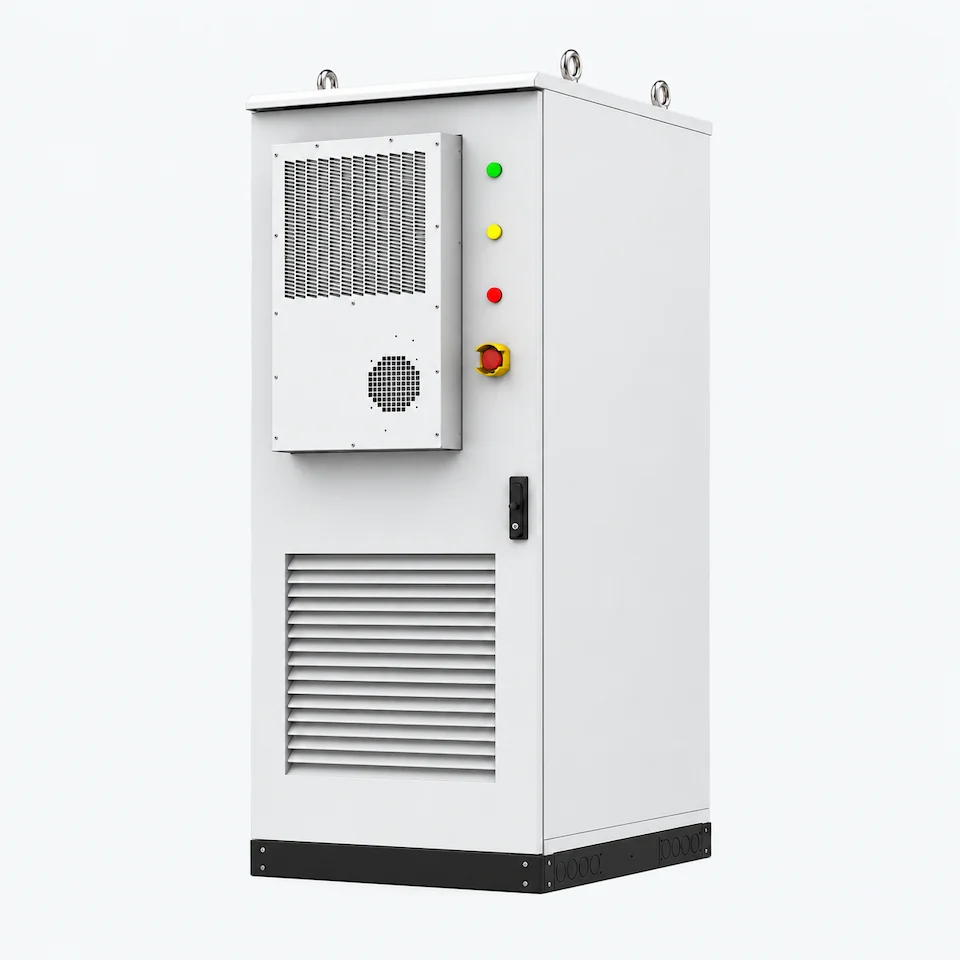
SMALL COMMERCIAL ESS
PowerStone 33 kW / 64.3 kWh Commercial Energy Storage System
PowerStone is an all-in-one commercial battery storage system combining 33 kW of rated AC power and 64.3 kWh of LFP battery energy with integrated MPPT, ATS and EMS. It stores solar energy for later use and can be configured for essential-load backup or solar–battery–diesel operation at small factories, shops, farms and remote sites. The IP54 cabinet separates the battery and electrical compartments, with dedicated cooling and drawer-style inverter modules for service access. Expand from one to four cabinets for up to 257.2 kWh of nominal storage, with electrical coupling and coordinated controls configured for your project.
 33 kW Rated AC Power
 64.3 kWh LFP Battery Energy
 39 kW Max. PV Array 1–4 cabinets Parallel Expansion
Integrated battery, solar and backup functions
PowerStone combines a 64.3 kWh LFP battery, 33 kW inverter, MPPT, ATS and EMS in one cabinet. The compact format reduces the separate enclosures and interfaces to coordinate on site.
- 51.2 VLow-voltage LFP battery
- Battery and BMS in the upper compartment.
 5-in-1Battery, inverter, MPPT, ATS & EMS
- One coordinated platform for storage, solar and backup.
- ModularDrawer-style power modules
- Access individual inverter modules for servicing.
 IP54Outdoor enclosure
- Dedicated thermal management and cabinet monitoring.
Parallel expansion up to 257.2 kWh
Configure one to four cabinets as storage demand grows. Nominal battery energy scales in 64.3 kWh steps; the electrical coupling and coordinated controls are selected for the project.
- 1 cabinet
- 64.3 kWh
- 2 cabinets
- 128.6 kWh
- 4 cabinets
- 257.2 kWh
AC/DC coupling options and EMS master–slave coordination support the project configuration. Nominal battery energy shown. Final power, coupling, distribution, protection and cabinet spacing are defined in the project configuration.
Battery and electrical compartments
The upper battery compartment is physically separated from the lower power-electronics compartment. Each zone has its own cooling arrangement.
- 01
64.3 kWh LFP battery. 64.3 kWh nominal LFP energy at 51.2 V, with battery-management supervision in the upper compartment.
- 02
Dedicated thermal management. Closed-loop air conditioning cools the battery compartment. Forced air serves the separate lower electrical compartment.
- 03
Modular power conversion. Drawer-style inverter modules provide 33 kW total rated AC power and access for module-level servicing.
- 04
Integrated MPPT, ATS and EMS. MPPT handles direct solar input, ATS manages the configured source changeover, and EMS coordinates the operating strategy.
PV, battery, grid and generator connections
Direct solar input passes through the MPPT. The battery and inverter provide stored-energy conversion, while the ATS handles the configured AC-source arrangement. EMS coordinates monitoring and dispatch.
PowerStone integrated cabinet
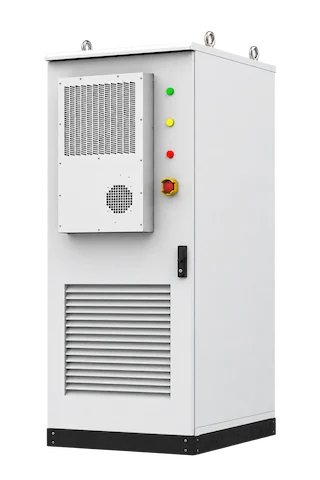
- MPPT
- Direct PV conversion
- LFP battery + BMS
- 64.3 kWh · 51.2 V
- Modular inverter
- 33 kW rated AC
- ATS + EMS
- Source switching & coordination
Functional overview, not an installation wiring diagram. PV panels, generator and site distribution are separate unless listed in the quotation.
Drawer-style inverter module servicing
Slide rails and front handles provide access to individual power modules. Alarm information helps the service team identify the affected module and prepare the correct spare.
A qualified technician identifies the affected module from alarms and operating data, follows the system isolation procedure, then services the drawer-style module with the correct spare. Recognition, safety checks and normal operation are verified before returning the system to service.
Battery and cabinet protection. BMS supervision monitors battery conditions and charge/discharge operation. Separate battery A/C and electrical-compartment forced air manage the two thermal zones. Temperature, smoke, water-ingress and access monitoring feed the control system; aerosol suppression and contactor isolation form part of the protection design.
Cabinet layouts, handling and site access
Plan cabinet placement, unloading and service access before installation. For remote sites, review PV, storage and generator requirements together.
For workshops, factories, retail and hospitality, review mixed single-phase and three-phase loads, production shifts and essential circuits. Farms and rural businesses can plan capacity around processing, cooling and irrigation; remote sites and islands can coordinate solar, storage and diesel where the grid is limited or unavailable.
Allow additional space for airflow, door opening, electrical access and maintenance. Share the site plan and unloading route so the layout can be checked before delivery.
PowerStone specifications
33 kW rated AC power and 64.3 kWh nominal battery energy, with the electrical and installation details below.
| Battery chemistry | Lithium iron phosphate (LFP) |
| Nominal battery energy | 64.3 kWh |
| Nominal battery voltage | 51.2 V |
| Battery voltage range | 44.8–57.6 V |
| Maximum PV array power | 39 kW |
| MPPT voltage range | 60–450 V DC |
| Rated AC power | 33 kW |
| Rated AC voltage | 400 / 230 V |
| Frequency | 50 / 60 Hz |
| Peak conversion efficiency | 96% |
| Dimensions, W × D × H | 750 × 850 × 2000 mm |
| Weight | ≤650 kg |
| Ingress protection | IP54 |
| Cooling method | Battery compartment A/C; electrical compartment forced air |
| Operating temperature | −20°C to +55°C |
| Parallel expansion | Up to 4 cabinets; configuration dependent |
| Maximum nominal battery energy, 4 cabinets | 257.2 kWh (4 × 64.3 kWh) |
Nominal battery energy is not usable AC output. The 96% figure is peak conversion efficiency, not system round-trip efficiency. Operating limits and temperature derating are confirmed for the project configuration.
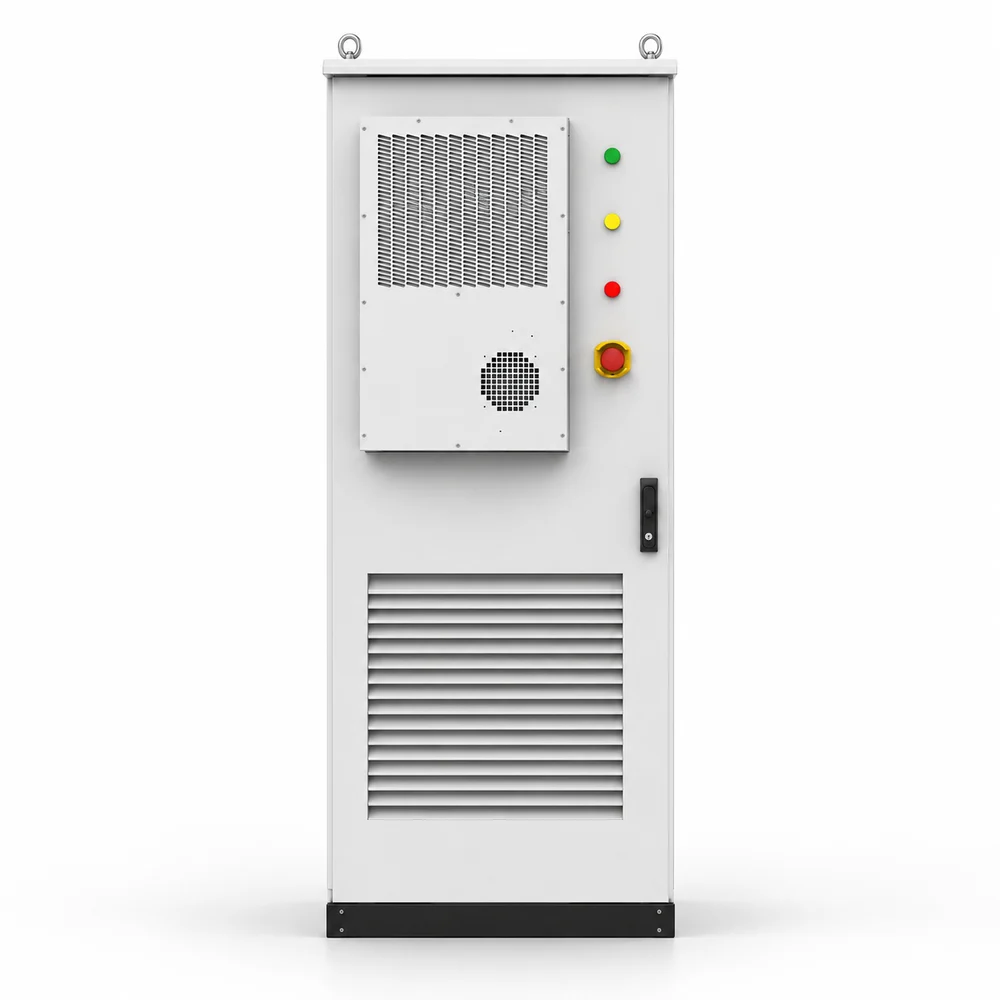 Technical Data
Downloads
PowerStone Technical Data
Request battery, PV input, three-phase AC and installation data for your project review.
Questions about PowerStone commercial storage
Use these answers to prepare a load list and project brief.
What is the difference between 33 kW and 64.3 kWh?
33 kW is the system’s rated AC power. 64.3 kWh is the nominal energy stored in the battery. Power tells you how much equipment the system can supply at a time; energy helps determine how long it can run. Usable energy depends on the operating SOC window and system losses.
How long can PowerStone support my loads?
Start with the average power of the loads you want to support and their required running time. Runtime is usable AC energy divided by average load. The nominal 64.3 kWh figure should not be used as a guaranteed AC energy output. Motor starting, temperature, reserve SOC and conversion losses also affect the result.
Can I expand PowerStone later?
The PowerStone platform supports up to four cabinets in parallel. One cabinet provides 64.3 kWh of nominal battery energy; two provide 128.6 kWh and four provide 257.2 kWh. AC/DC coupling, coordinated control, distribution equipment and protection are selected for the project. These energy totals are not a guarantee of usable energy or aggregate AC output.
Can I connect an existing solar installation?
PowerStone accepts direct PV input within its electrical limits. Retrofitting an existing AC-connected solar inverter is a different design task. Share the inverter model and site single-line diagram so we can review coupling, controls and protection before proposing a connection.
Are solar panels and a generator included?
The 39 kW figure is the maximum PV array power, not an included solar-panel package. Panels, mounting, a generator and site electrical works are quoted separately when required. Your project quotation will identify the cabinet equipment, optional devices and installation scope.
Can it supply single-phase and three-phase equipment?
The system has a 400/ 230 V three-phase AC architecture. The load schedule must account for each phase, equipment starting current and the inverter’s operating limits. Share your mixed-load list for review; the total 33 kW rating should not be treated as 33 kW available on any one phase.
Can PowerStone provide backup during a power cut?
Backup operation requires the appropriate switching, protection and load arrangement. We will review the essential circuits and their starting requirements as part of the configuration. If your equipment needs uninterrupted power, tell us its transfer-time tolerance so the complete system can be assessed.
Is it suitable for my country and installation site?
Provide the country, grid-connection arrangement and site conditions. The 400/ 230 V rating does not by itself establish local grid approval. Grid settings, project documentation, ambient conditions, ventilation and the installation location need to match the proposed equipment and destination.
What do you need for a project quotation?
Tell us the site location, application, continuous and peak loads, existing or planned PV capacity, and the backup time you want. An electricity bill or load profile helps us assess the operating pattern. Also mention any generator, export limit or space restriction.
Request a Project Quote
Tell us about your site load, PV capacity, backup requirements, or target project size. Our engineers will help configure the right system for your needs.
Request Product Datasheet
PowerStone 33 kW / 64.3 kWh
Datasheet request
Request received. We will send the datasheet shortly.
Request a Project Quote
PowerStone 33 kW / 64.3 kWh
Product inquiry
Tell us about your site load, PV capacity, backup requirements, or target project size. Our engineers will help configure the right system for your needs.
Inquiry received. Our team will respond shortly.