English
 Deutsch
 Español
 Français
 Italiano
 Polski
 Română
 العربية
PROJECT DESIGN · ETHIOPIA
Ethiopia Commercial Battery Backup: A Workshop Design
A workshop with clear power priorities
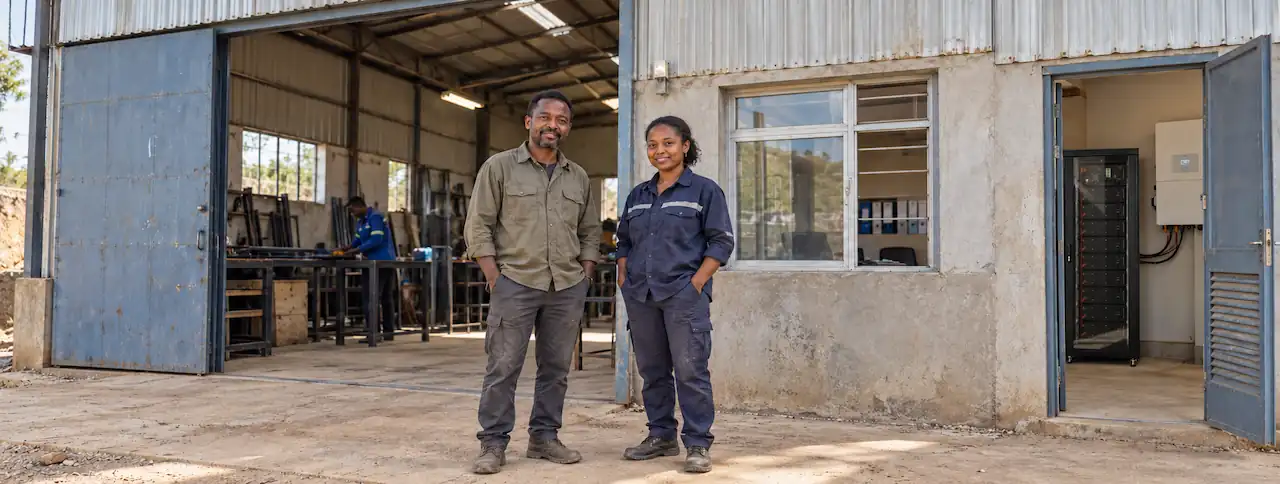
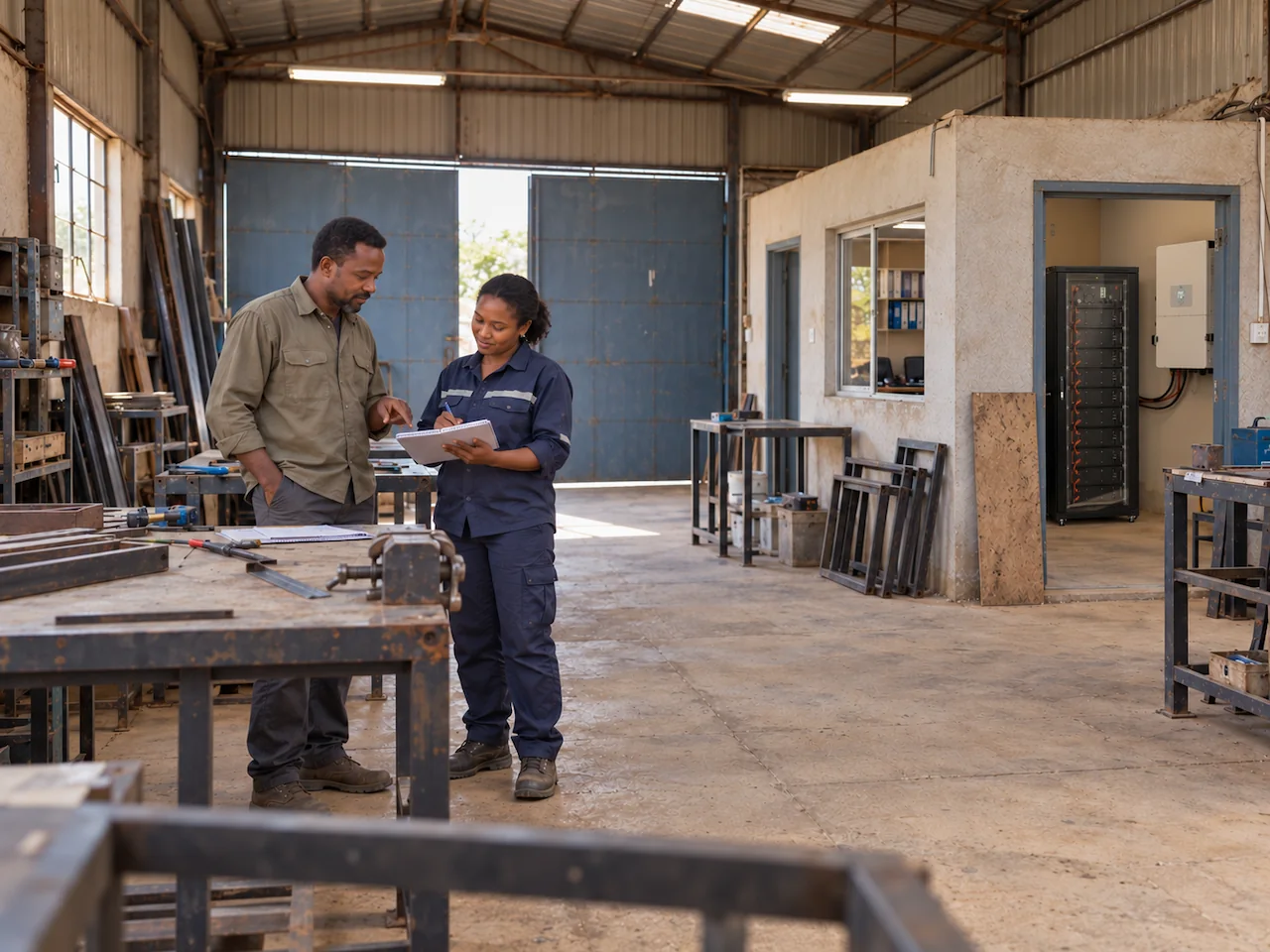
This proposed Ethiopia commercial battery backup design is for a small workshop. The equipment room sits beside the working bay. It houses a 50kWh-class high-voltage battery rack and a separate 50kW three-phase hybrid inverter.
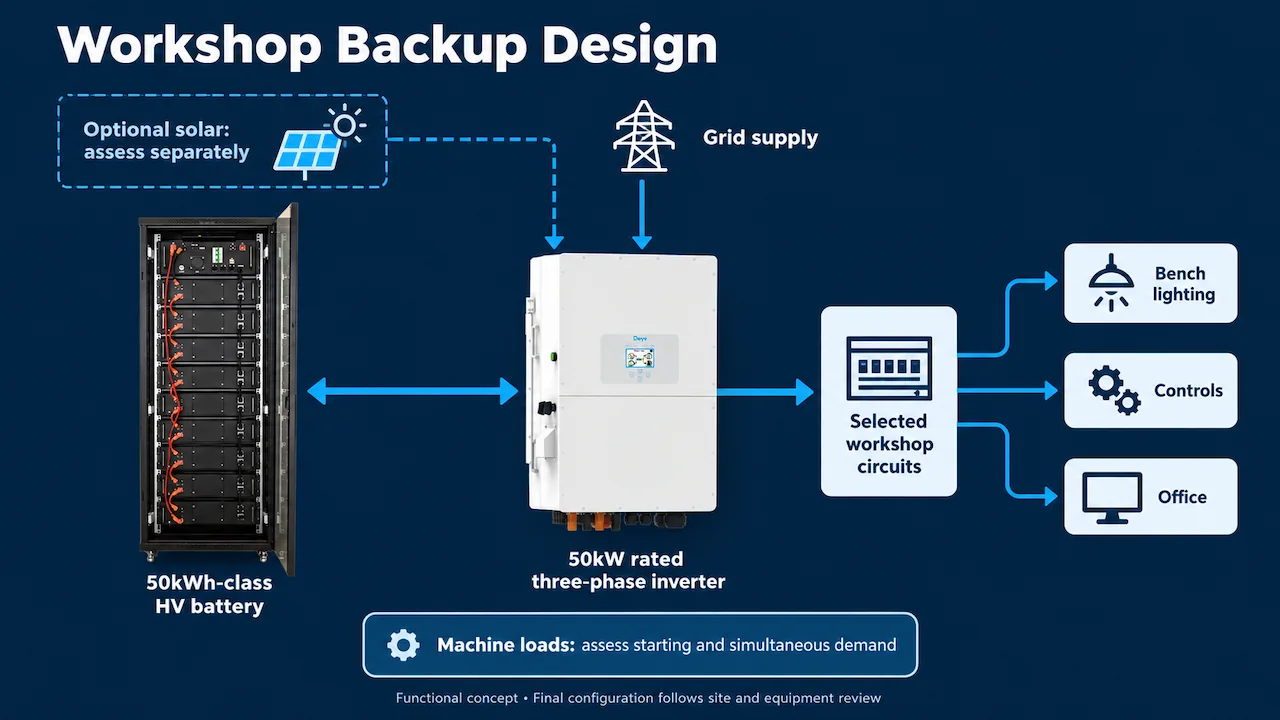
Workbench lighting, selected control circuits and office equipment are starting points for the priority list. Review each production machine’s running and starting demand. Then decide whether it belongs on the backup list or can wait during an interruption.
In the proposed layout, materials enter through the main bay. A small office sits near the entrance, while storage and conversion equipment have a service space at the side. Staff can reach the working area without passing between the battery and inverter.
A separate room for storage and conversion
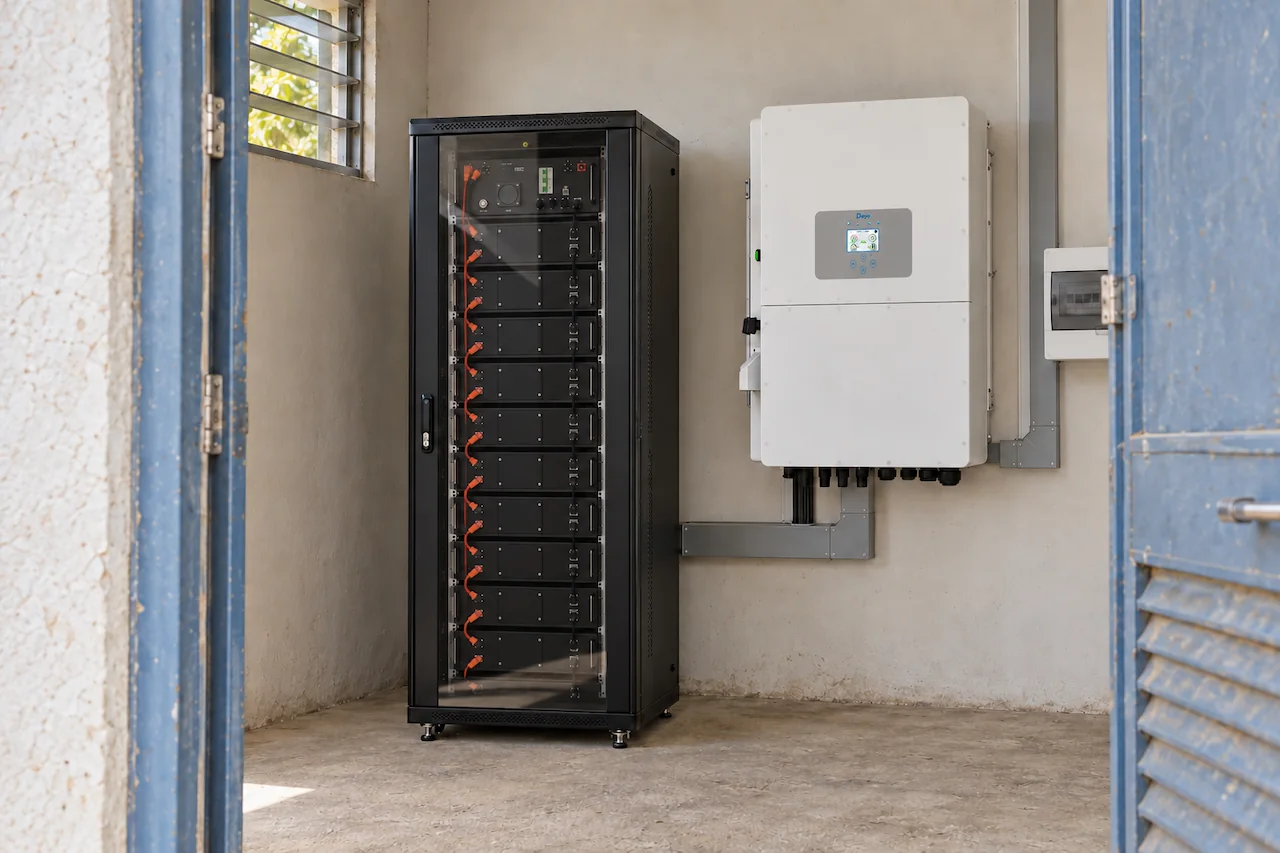
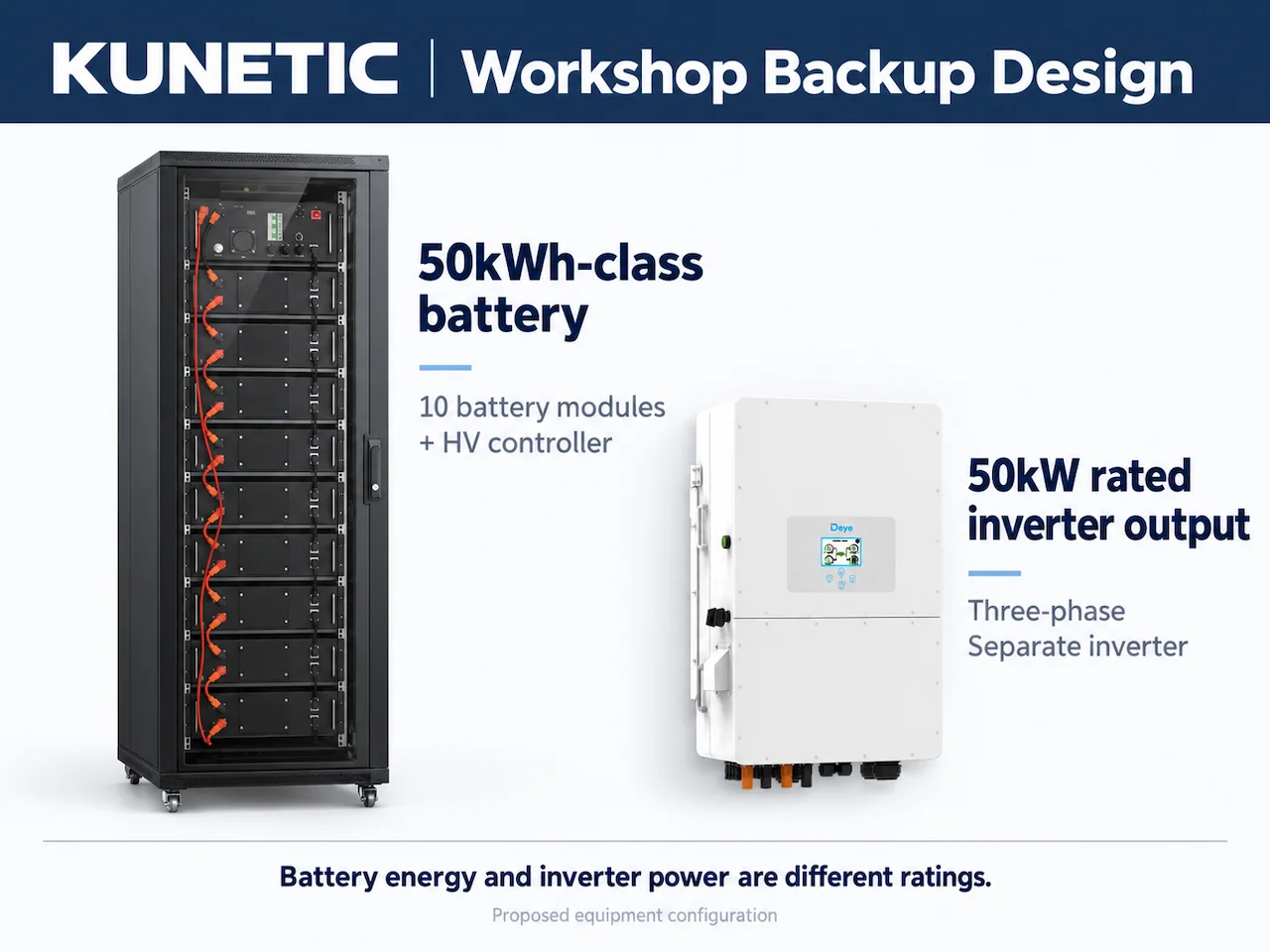
In this layout, the battery stands in a tall rack cabinet inside a protected service room. Ten battery modules and a high-voltage controller form one set. The separate inverter mounts on the adjacent wall, with room to reach the display and inspect the installation.
The side entrance gives the service room an access route away from the main working bay. That keeps deliveries and inspections out of the path used for tools and materials. The cabinet should be reachable without moving a workbench or storing materials in front of it.
Before delivery, the installer checks the access route, floor and wall space, and cable paths. They also review the equipment’s installation requirements. Discuss door openings and the space needed to move the equipment into position before fixing the room layout.
The installer also reviews the room’s ventilation and ambient conditions, along with the site elevation. Our solar battery installation guide covers equipment location and the installer’s scope in more detail.
Keep solar as a separate design decision
Solar modules are not included in this battery-and-inverter package. The workshop can discuss solar as a separate part of the project, based on its available space, electricity demand and existing equipment.
For an existing array, send the module details, inverter model and connection information. For a new array, roof photographs, dimensions, shading and access help start the assessment. Available space, module electrical data and the inverter’s limits guide the array selection.
The functional diagram keeps that option separate from the proposed battery, inverter and selected workshop circuits.
What the proposed equipment package includes
| Equipment | Proposed quantity or rating | Role at the workshop |
|---|---|---|
| High-voltage battery rack | 1 set; 50kWh class; ten modules and a high-voltage controller | Stored energy for the agreed operating plan |
| Separate three-phase hybrid inverter | 1 × 50kW rated inverter | Conversion and control within the selected battery and site configuration |
Allow an indicative battery-and-inverter equipment budget of US$15,000–18,000, FOB Shenzhen. Final equipment selection, battery connections and the agreed supply scope determine the quotation.
Freight, import charges and local installation are quoted separately. Confirm which cables, mounting items and protection devices are included in the equipment supply. Local distribution changes and connection work also need a clear scope. Solar modules and their mounting system would be assessed and quoted separately.
Bring the workshop operating picture to KUNETIC
Send the machine list, nameplate photographs, working hours and the equipment you want available during an interruption. Include the operating period you want to plan for and any controls that need special attention when power changes.
Add the site location and elevation, supply and distribution-board details, and photographs of the proposed equipment room. KUNETIC and the local installer can use these details to discuss equipment choices, agree the backup scope and identify the remaining site work.
Questions about this workshop design
Can this package back up every machine in the workshop?
The load review decides the scope. A workshop with a few selected circuits has different needs from one that starts several machines together. Identify those combinations so the battery, inverter and distribution arrangement can be checked against the work you want to continue.
How is backup duration estimated for this workshop?
Use the demand and operating time of the selected equipment, together with available battery energy, conversion losses and reserve settings. A 50kWh-class battery is an energy rating. The workshop’s actual load pattern determines the operating period to assess.
Are solar panels included in this equipment package?
No. The package described here contains the battery rack and separate inverter. Solar can be included in a wider proposal after reviewing the site and any existing system. Ask for the equipment supply and local installation scopes to be itemised together.
What if a machine cannot tolerate a power interruption?
Flag that machine or control circuit at the start of the enquiry. Its transfer and operating requirements need a specific review alongside the backup design. The installer can then assess the connection arrangement for that equipment and its specific operating needs.