English
 Deutsch
 Español
 Français
 Italiano
 Polski
 Română
 العربية
PROJECT DESIGN · KENYA
Kenya Office Solar Battery Backup: A 5.95kWp + 10.24kWh Design
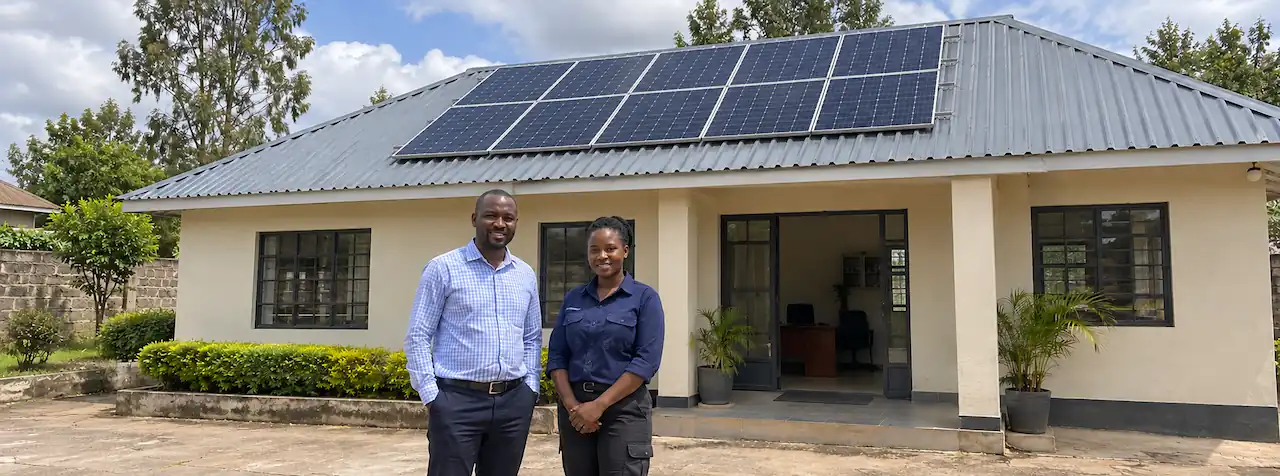
A small office, with the working day in view
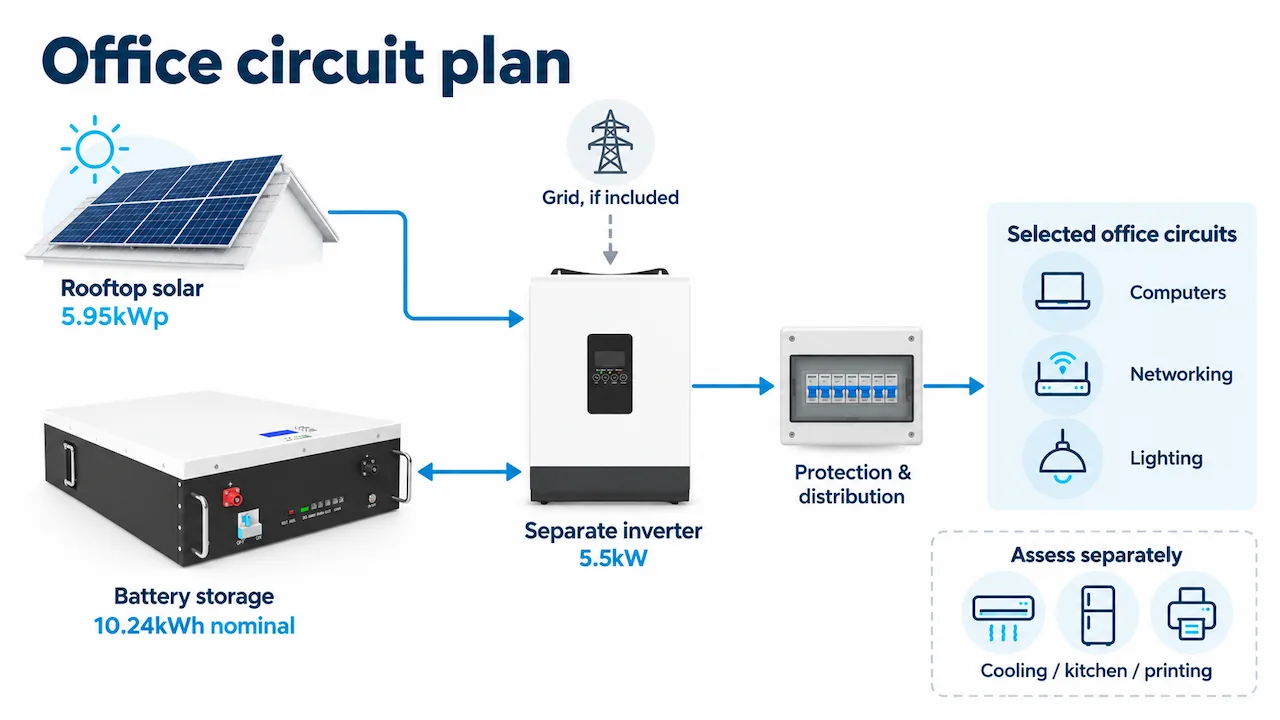
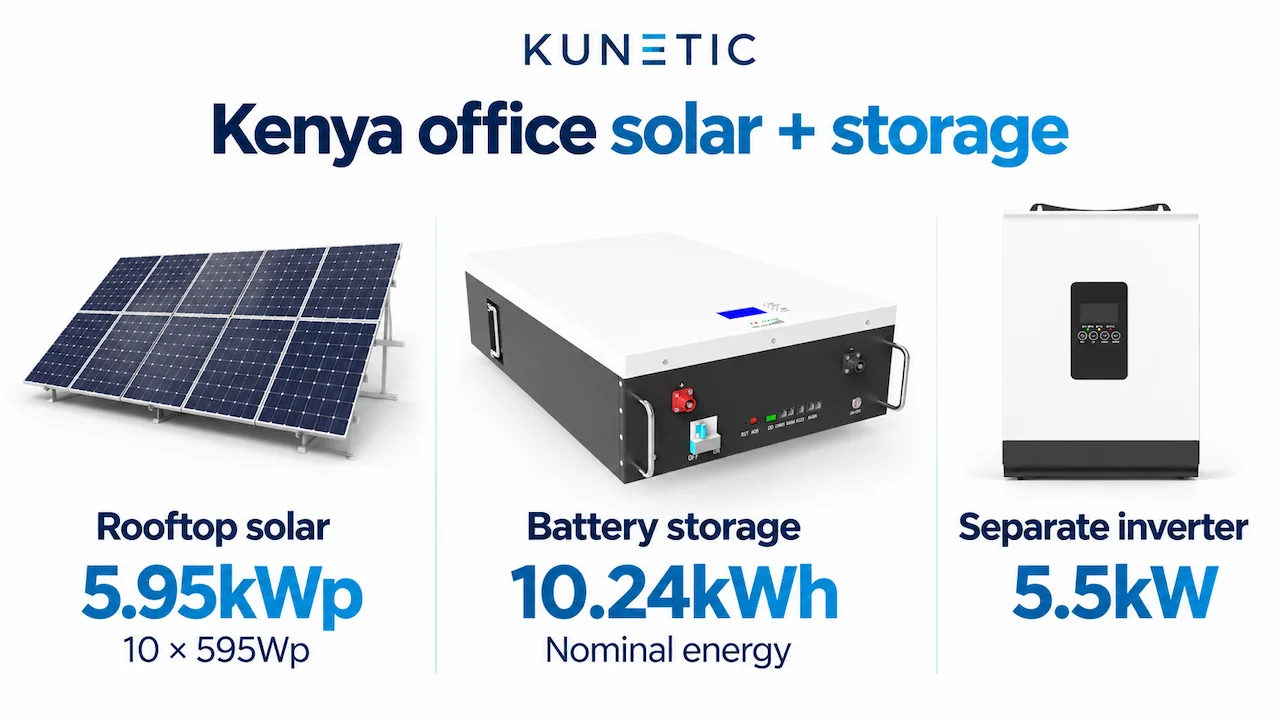
This proposed Kenya office solar battery backup design is for a low-rise workplace. Ten solar modules sit on the roof, with a protected indoor area for the battery and inverter. It pairs 5.95kWp of solar with a 10.24kWh nominal battery and a separate 5.5kW inverter.
The office layout starts with the desk area. Staff need computers, network equipment and lighting during the working day. A service space keeps the battery and inverter away from the desks while leaving them accessible for inspection.
The business owner starts by choosing which work needs to continue when grid power is interrupted. That list shapes the backup circuits and the operating period to plan around.
Finding room for ten solar modules
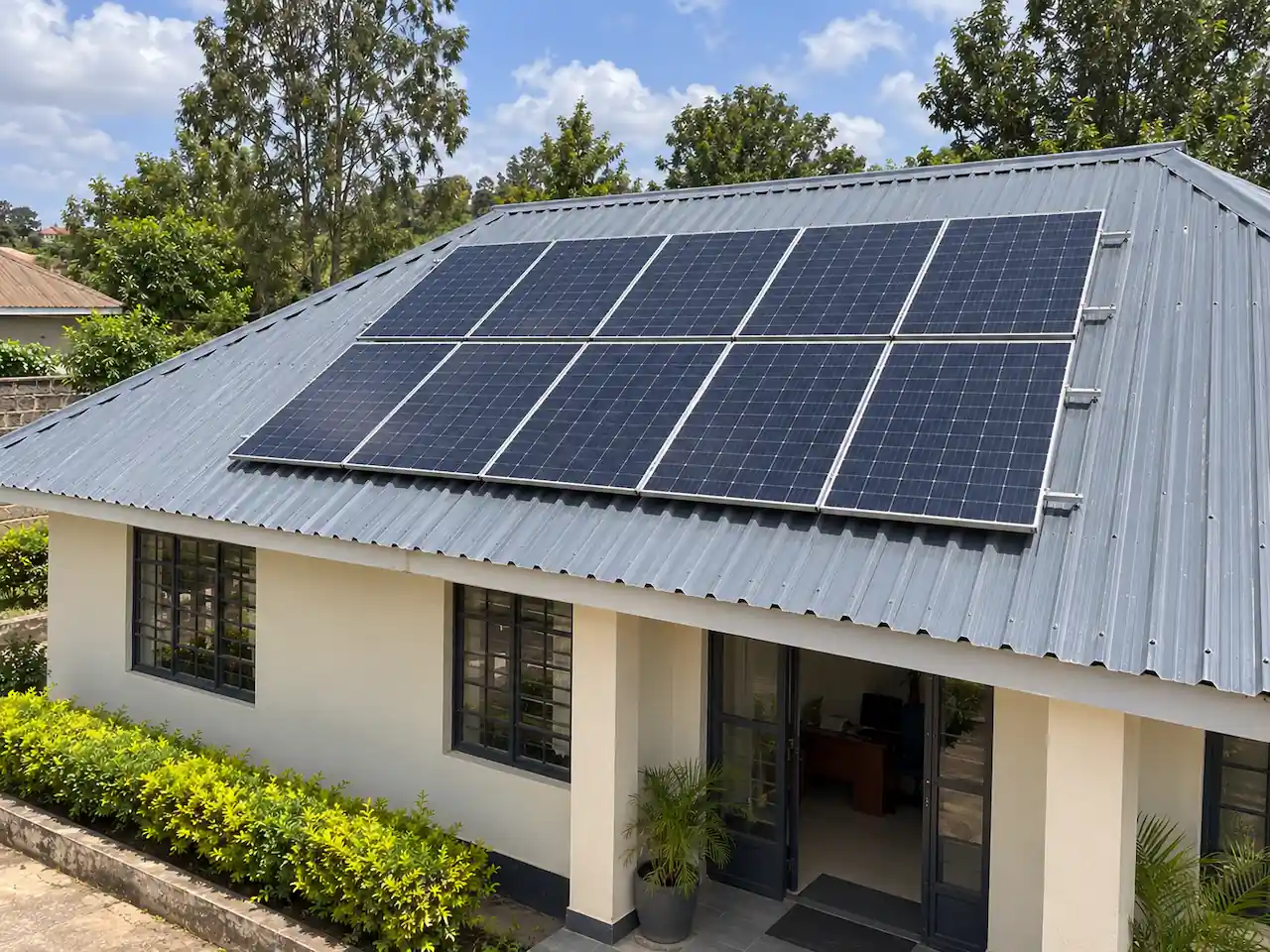
Above the workspace, ten 595Wp modules provide a combined nameplate capacity of 5.95kWp. The proposed roof arrangement groups the modules into an array with space around it for inspection and maintenance.
Before ordering the mounting package, the installer needs roof dimensions, photographs, the roof construction and nearby shading information. These details determine how the array can fit without obstructing roof access or drainage.
A site survey should also check how modules and mounting materials can be brought onto the roof. Planning that access helps keep equipment handling away from the office entrance and normal staff movements.
Module placement and electrical string design are separate checks. The final inverter model, module electrical data and site conditions determine the string arrangement. The roof illustration shows the intended physical layout; the installer develops the installation details.
A protected place for the battery and inverter
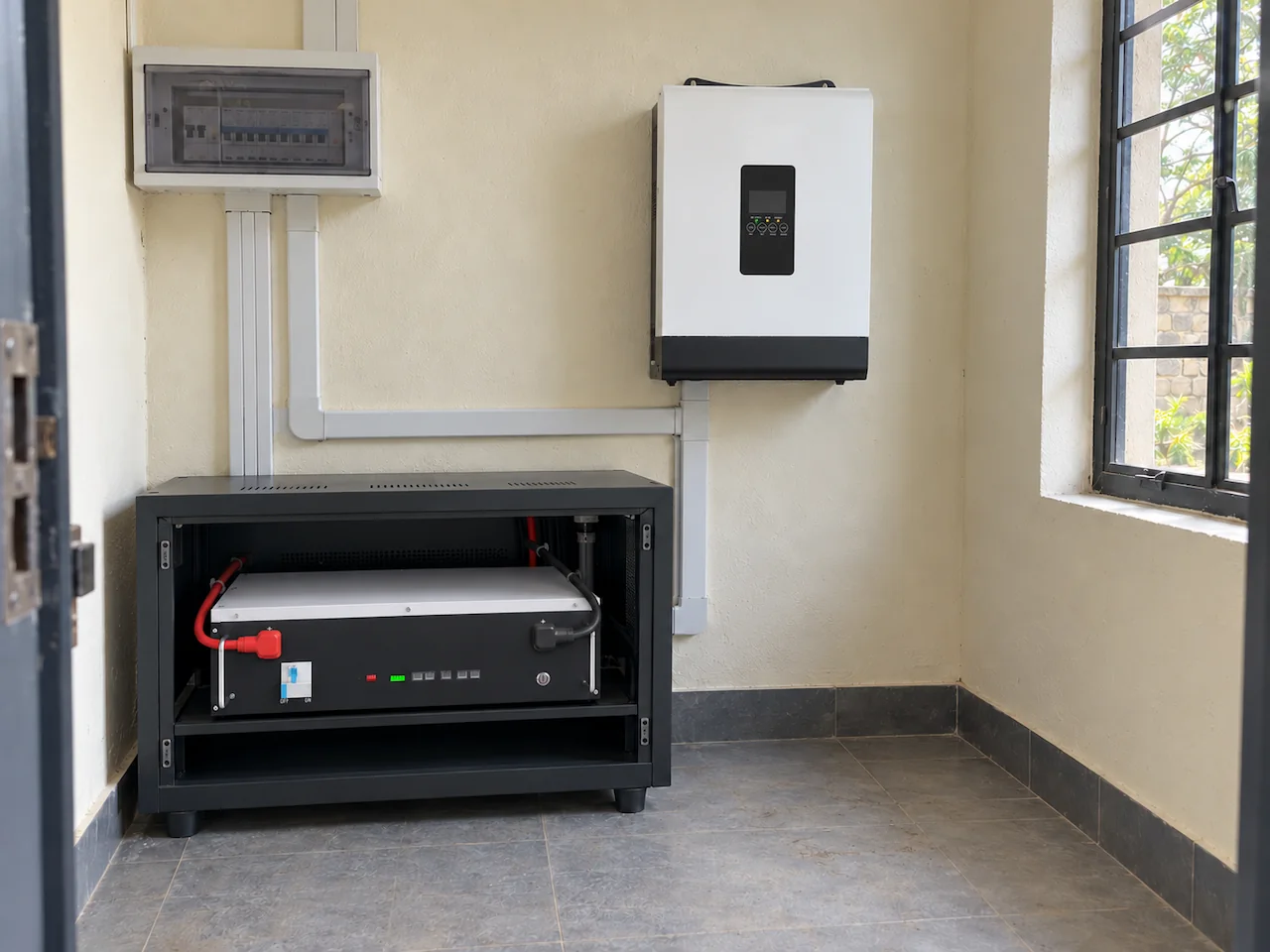
The equipment area sits inside the office building, in a dry service space outside the main desk area. One rack-format battery module sits on suitable support inside a cabinet. The separate inverter mounts on the wall nearby.
Staff can reach the display in the service area. A technician can inspect connections without working between desks or moving office furniture. The room layout also needs to accommodate cable routes and the distribution equipment.
The proposed inverter has an IP20 rating, so the design keeps it indoors. The installer checks ventilation, mounting requirements, access and protection against the selected equipment instructions. Our solar battery installation guide covers the wider installation planning discussion.
Keeping the right office circuits in the plan
Back in the workspace, the priority list begins with the devices the business wants available: selected computers, the router, network equipment and essential lighting. Their combined demand and working hours determine the backup requirement.
A kettle, printer or air conditioner can change that demand considerably. Each needs its own review, including starting requirements and whether it must operate alongside the selected office equipment. The circuit plan should make those choices clear before installation.
The battery’s 10.24kWh nominal energy rating is the starting point for assessing backup duration. The separate inverter has a rated output of 5.5kW. The battery’s output limits also matter. The battery and inverter must work together and support the loads used at the same time.
If particular computers or communications equipment require uninterrupted power, include that requirement in the enquiry. The required transfer behaviour needs checking alongside the rest of the design.
What the proposed equipment package contains
| Equipment | Proposed quantity or rating | Role at the office |
|---|---|---|
| Solar modules | 10 × 595Wp; 5.95kWp total | Rooftop generation |
| LiFePO4 battery | 1 × 51.2V, 200Ah; 10.24kWh nominal | Stored energy for the agreed operating plan |
| Separate inverter | 1 × 5.5kW | Conversion and control within the selected configuration |
| PV mounting package | For the proposed array | Module support, adapted to the roof |
Allow an indicative equipment budget of US$3,000 to US$4,000, FOB Shenzhen for planning this package. The final equipment selection, mounting arrangement and agreed supply scope determine the quotation.
Freight, import charges and local installation are quoted separately. Confirm which cables, protection devices and distribution changes are included in the equipment quotation and which belong to the installer’s work. With that scope agreed, the buyer can compare equipment quotations and budget for the remaining site work.
Bring the office load list into the next discussion
Start with the office devices, their power ratings and the hours they need to operate. Add the circuits to keep available during an interruption and the backup period the business wants to plan for.
Send roof photographs and dimensions, the site location and details of any existing solar equipment. Distribution-board information helps connect the load list to a workable equipment layout. KUNETIC can then discuss equipment choices and quotation scope with the buyer and local installer.
Questions about this Kenya office design
Can this design back up the whole office?
The scope depends on the office load list and circuit arrangement. Computers and lighting may be the priority, while cooling or kitchen equipment needs separate consideration. Identify the equipment that must operate together before deciding whether the proposed package fits the whole office.
How long could the 10.24kWh battery support office loads?
Duration depends on actual demand, available battery energy, conversion losses and reserve settings. Share the devices and required operating period so the proposal can be assessed against that requirement. The nominal capacity alone does not give a reliable office runtime.
Can the battery and inverter be installed outdoors?
This design uses a protected indoor equipment space. Its proposed IP20 inverter belongs in that arrangement. If indoor space is unavailable, discuss a suitable equipment and enclosure configuration, including ventilation and access, before changing the location.
Can this be added to an office with existing solar?
Send the existing inverter model, array details and available distribution information. Those details help determine whether equipment can be retained and how storage could be integrated. The connection approach should be settled before ordering a battery or replacement inverter.