
 English
 Deutsch
 Español
 Français
 Italiano
 Polski
 Română
 العربية
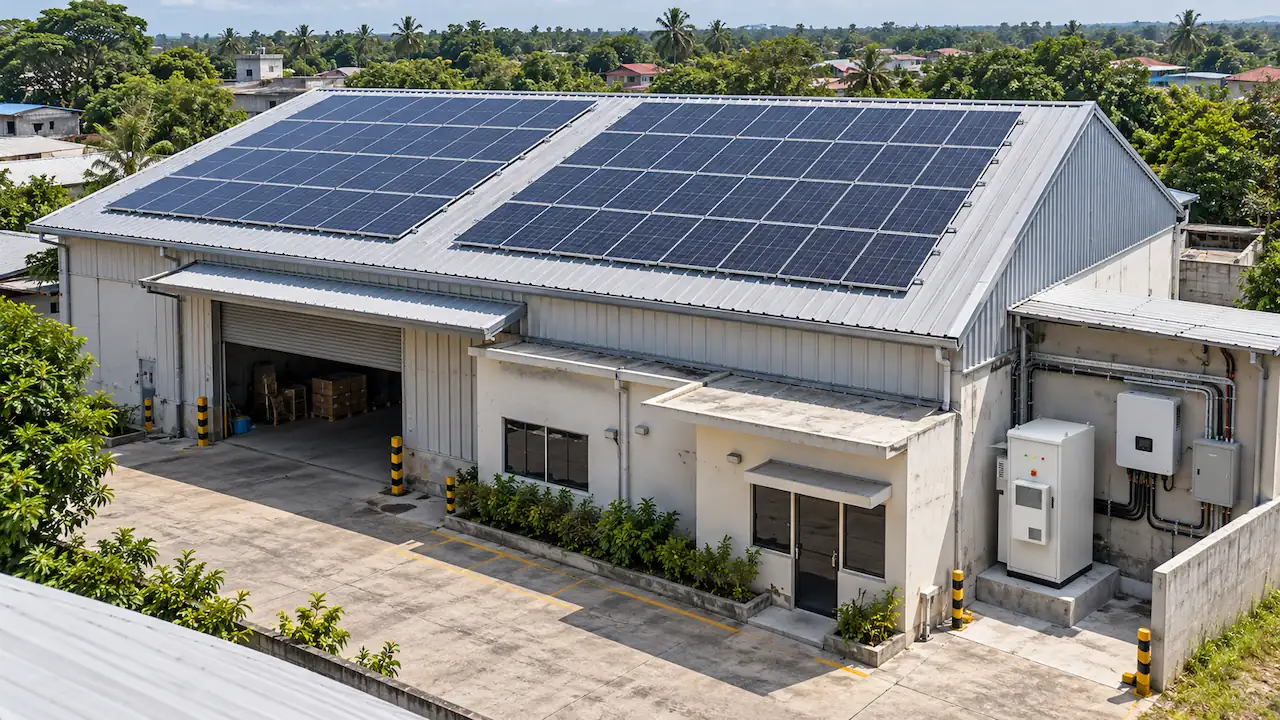
PROJECT DESIGN · PHILIPPINES
Philippines Commercial Solar Battery Storage: 50kWp + 120kWh
A solar and battery plan around the working site
The warehouse roof has space for solar panels. Below it, deliveries and office work need clear access. This design puts the battery and inverter in a separate service area.
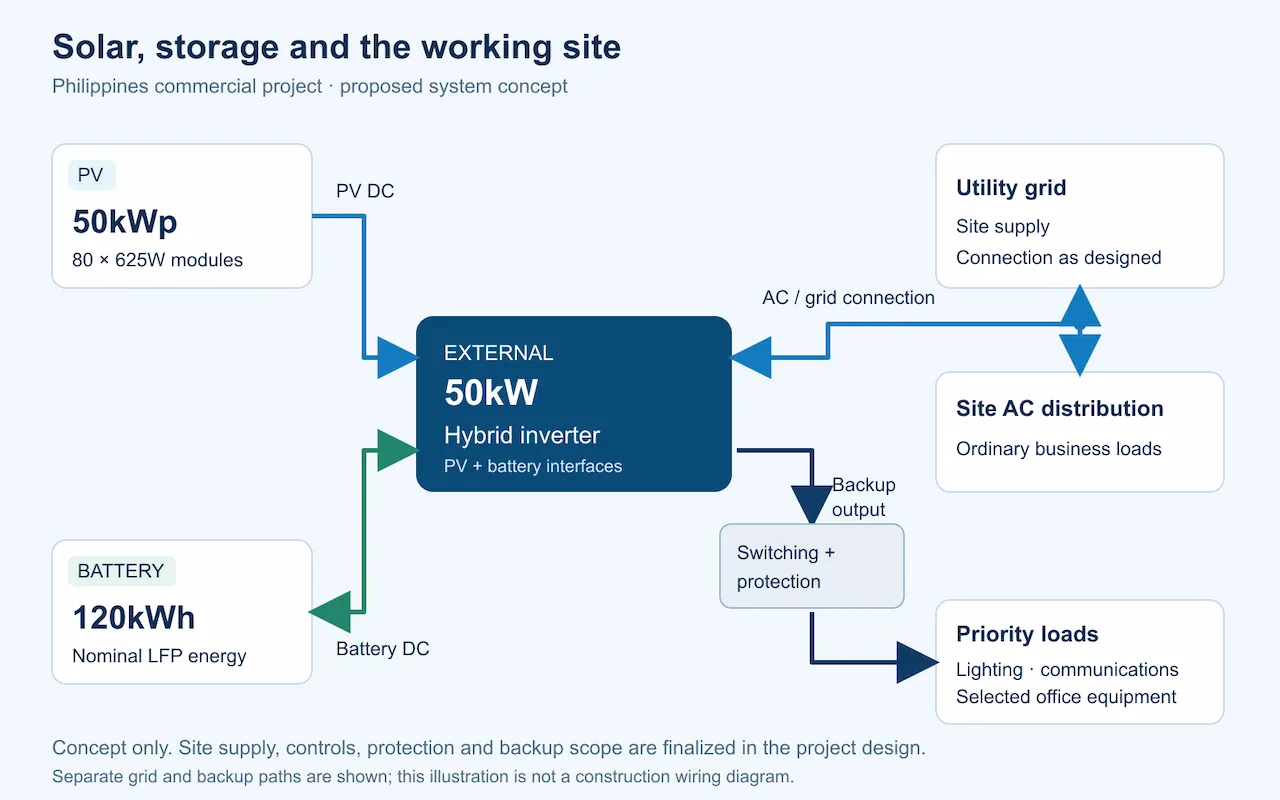
KUNETIC's commercial solar battery storage proposal for the Philippines pairs 50kWp of solar PV with 120kWh of nominal LFP battery energy. A separate 50kW hybrid inverter links the solar and battery to the site's AC power system.
The warehouse with an attached office is a design setting for this proposal. It shows how the equipment could fit the site. Roof checks, the site supply and business hours guide the final layout.
Putting the roof to work during business hours
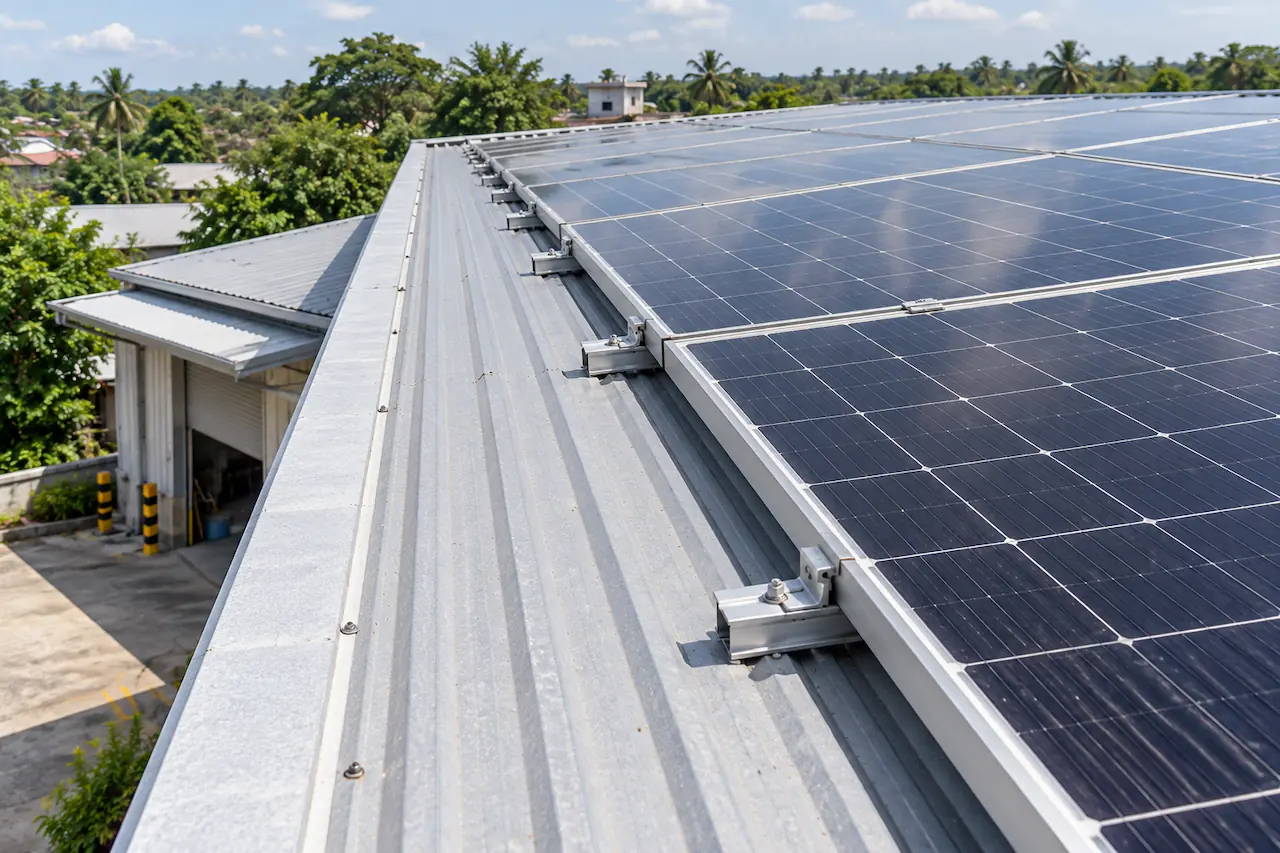
The proposed roof array has 80 monocrystalline solar modules rated at 625W each. Together, they provide 50kWp of rated PV capacity. The layout leaves routes for roof checks and maintenance.
Solar power can serve the business as the team works below. When output exceeds site demand, available surplus can charge the battery through the hybrid inverter. The site's load pattern helps decide when to store that energy and when to use it.
The project team checks roof strength, shade, drainage and access before fixing the layout. It also checks the solar module strings against the chosen inverter. These checks help the installer plan the roof work and electrical connections together.
An outdoor equipment area that stays accessible
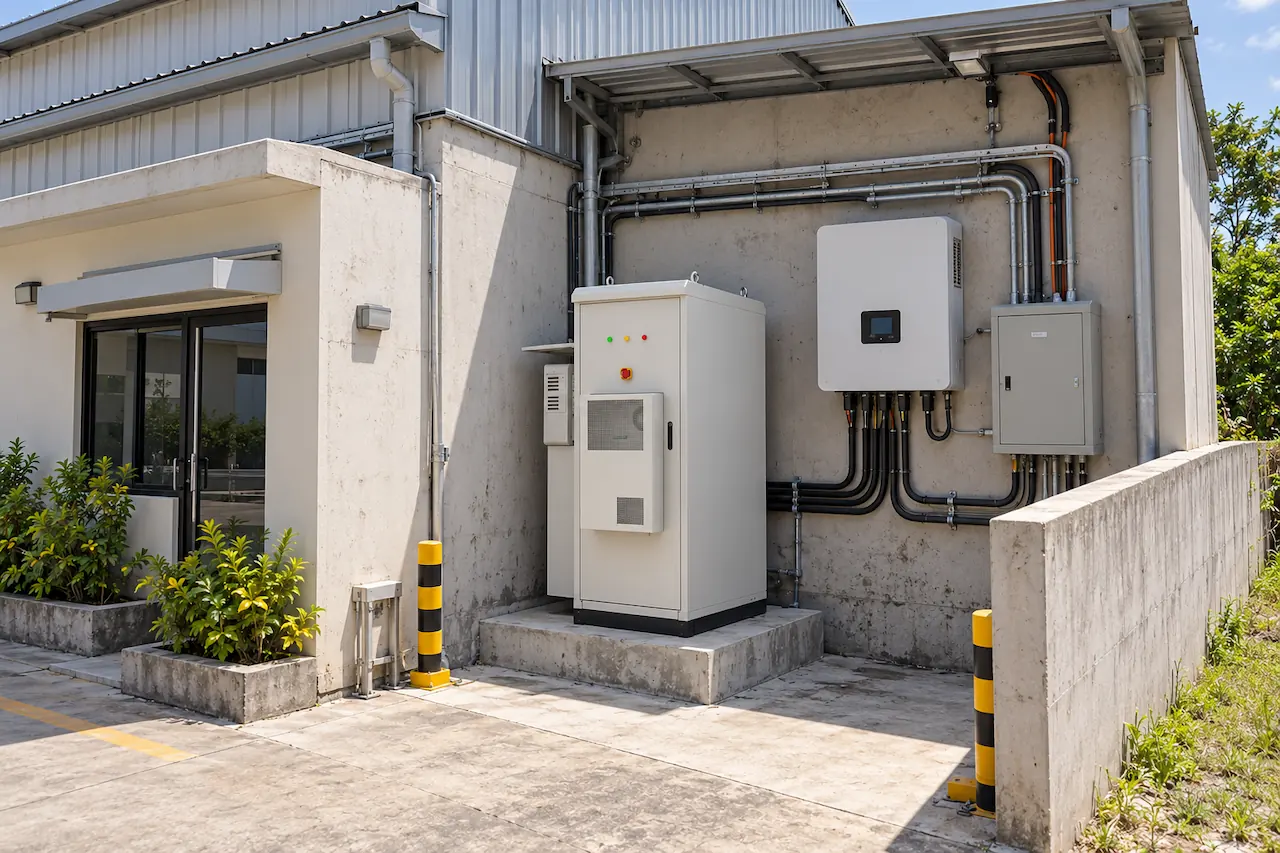
In this design, the battery sits beside the building, clear of the main delivery and walking routes. The owner can reach the controls without crossing a busy loading area. The service team also needs room to open the cabinet and maintain its cooling equipment.
The cabinet shares this area with the external inverter and nearby power distribution equipment. The installation plan includes a suitable base, drainage and enclosed cable routes. The equipment requirements and local site design set the final spacing.
One cabinet, with the inverter outside
The 120kWh outdoor battery cabinet stores DC energy. The separate 50kW hybrid inverter links the proposed solar and battery to the site's AC power system.
This means allowing space for both devices and the cables between them. KUNETIC reviews the final inverter model with the site supply and backup plan. Keeping that scope clear helps the owner and installer agree on the work needed at the site.
Planning power around the business day
The power plan starts with demand across the day. Daytime solar can supply the business as it works. Stored energy can serve later demand. The owner can plan the charging schedule and battery reserve around the loads they want to support.
For backup, start with the services that need power. Lighting, communications and selected office equipment are possible priorities in this warehouse-and-office design. Larger motors, air conditioning and other substantial loads need a separate review, including their starting power.
The installer plans switching and protection for the chosen loads, inverter and site supply. Backup duration depends on the load, usable battery energy and reserve. The 120kWh rating describes nominal battery energy. A load list and required run time help the team size the backup scope.
The proposed configuration and equipment budget
| Item | Proposed configuration |
|---|---|
| Solar array | 50kWp: 80 × 625W monocrystalline modules |
| Battery storage | 120kWh nominal LFP outdoor battery system |
| Hybrid inverter | 50kW, external to the battery cabinet |
| Battery nominal voltage | 384V DC |
| Maximum battery charge/discharge current | 140A |
| Battery enclosure protection | IP54 |
| PV mounting | Mounting equipment for the proposed 50kWp array |
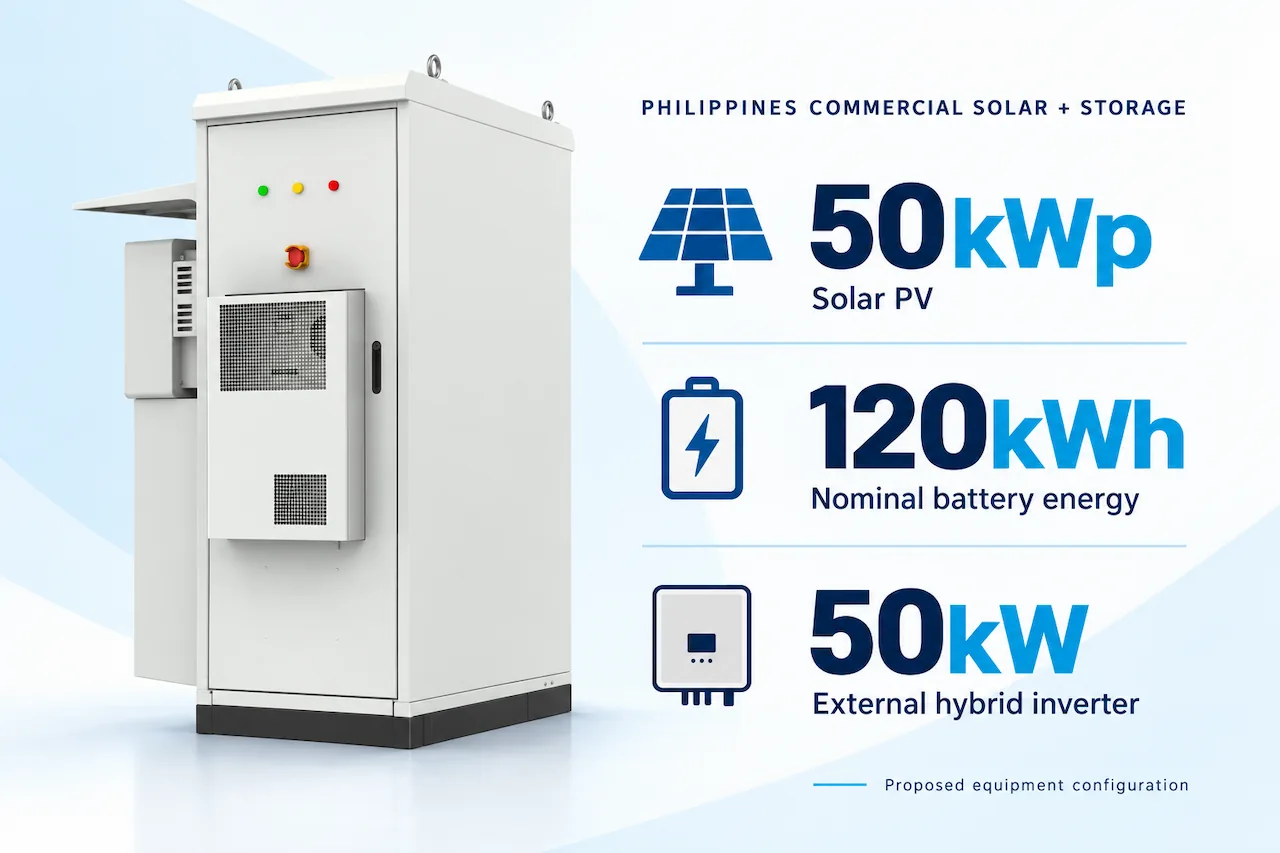
The indicative equipment planning budget is US$25,000 to US$32,000, FOB Shenzhen. This covers the proposed battery, external inverter, solar modules and mounting equipment. Freight, import charges, construction and local installation are quoted separately.
The final quote depends on the chosen equipment and site work. Roof structure, electrical connections, protection and switching all affect the scope. Delivery needs also affect the quote. These details give the owner a clearer basis for comparing offers.
For related options, explore the eBlock outdoor battery cabinet. It uses an external PCS, a relevant arrangement for this type of design. The project quote identifies the equipment chosen for your site. The commercial battery storage guide has further sizing guidance.
Plan a system for your commercial site
For a business planning solar battery storage in the Philippines, start with recent electricity bills and operating hours. Add load readings if available. Photos of the roof, the planned equipment area and the power distribution equipment help the team review the layout.
Tell KUNETIC which loads you want to support and for how long. Include any existing solar equipment and the site's supply voltage, frequency and phase arrangement. The team can then review the roof array, battery, inverter and installation scope together.
Explore the commercial-building solar and storage plan for related site options.
Project questions
Can the system support the whole site during an outage?
The backup scope starts with the loads you want to keep running. Share their running and starting power, required run time and acceptable break in supply. The team can then check the inverter, usable battery energy and switching against those needs.
Can it work with existing solar?
An existing array may form part of the plan. First, the team reviews its inverter, electrical connections and settings. Send the equipment models and a system diagram, if available. These help KUNETIC assess how to connect the systems at your site.
What does the equipment budget include?
The indicative FOB Shenzhen range covers the proposed battery, external inverter, modules and PV mounting equipment. Shipping, import charges, civil work and local installation are separate. Your project quote lists the chosen equipment and the agreed supply scope.
What information is needed for a project quote?
Provide the site location, electricity bills, operating hours and load data. Add roof and equipment-area photos. For backup, list the priority loads and required duration. These details help the team choose a suitable system and define the work needed to connect it.