
 English
 Deutsch
 Español
 Français
 Italiano
 Polski
 Română
 العربية
PROJECT DESIGN · GHANA
Ghana Solar-Powered EV Charging Station: A 55kWp Design
Start with the site your charging business needs
At the entrance, a driver needs to see where to turn, where to park and where to plug in. The operator also needs room for the solar canopy and the equipment supplying the charging bays.
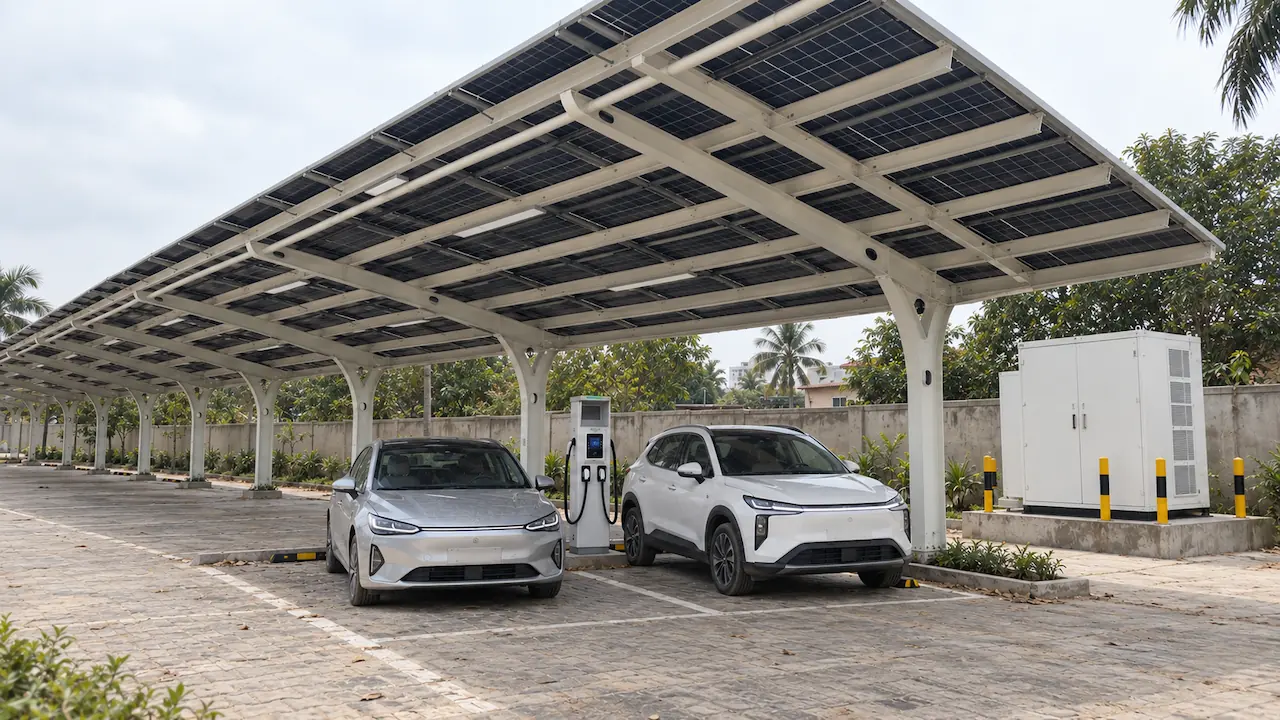
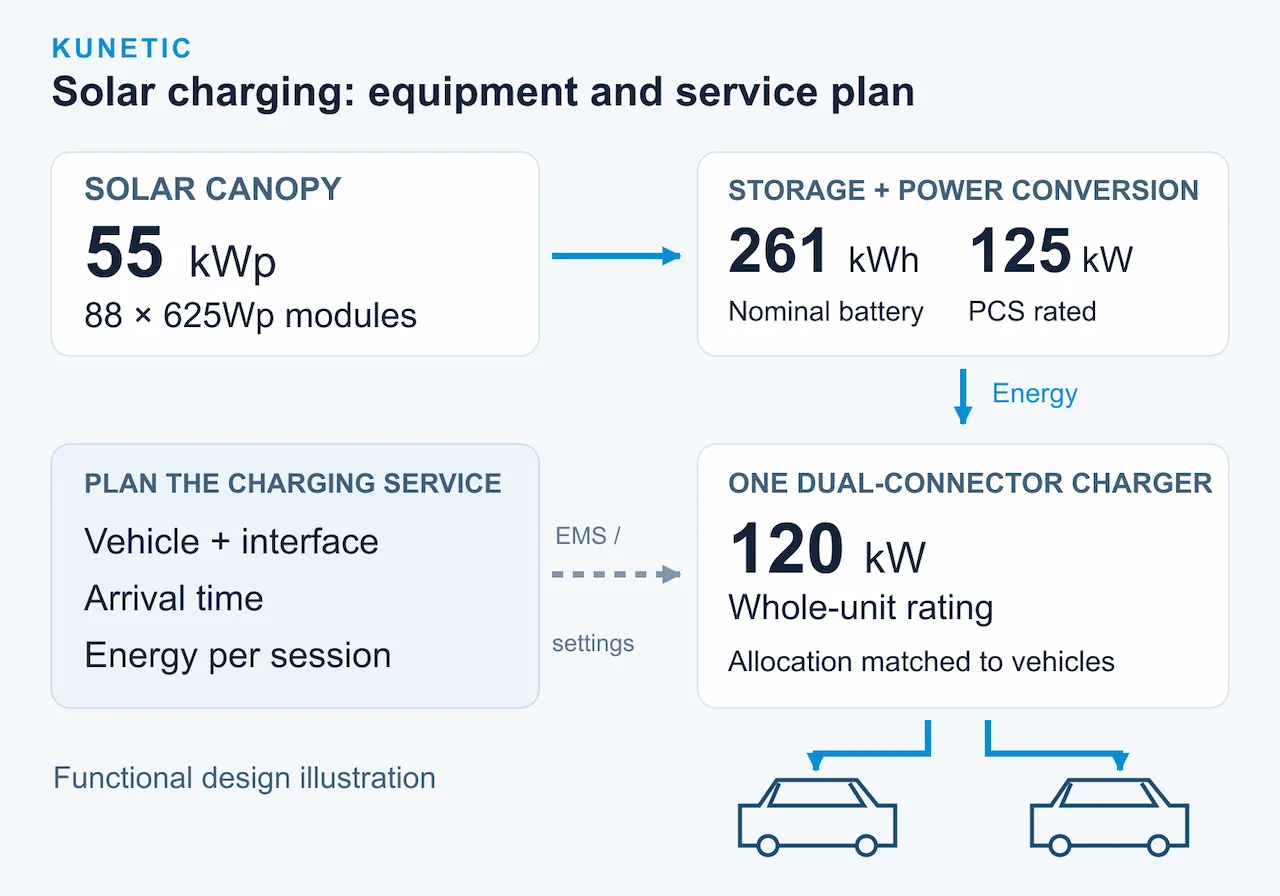
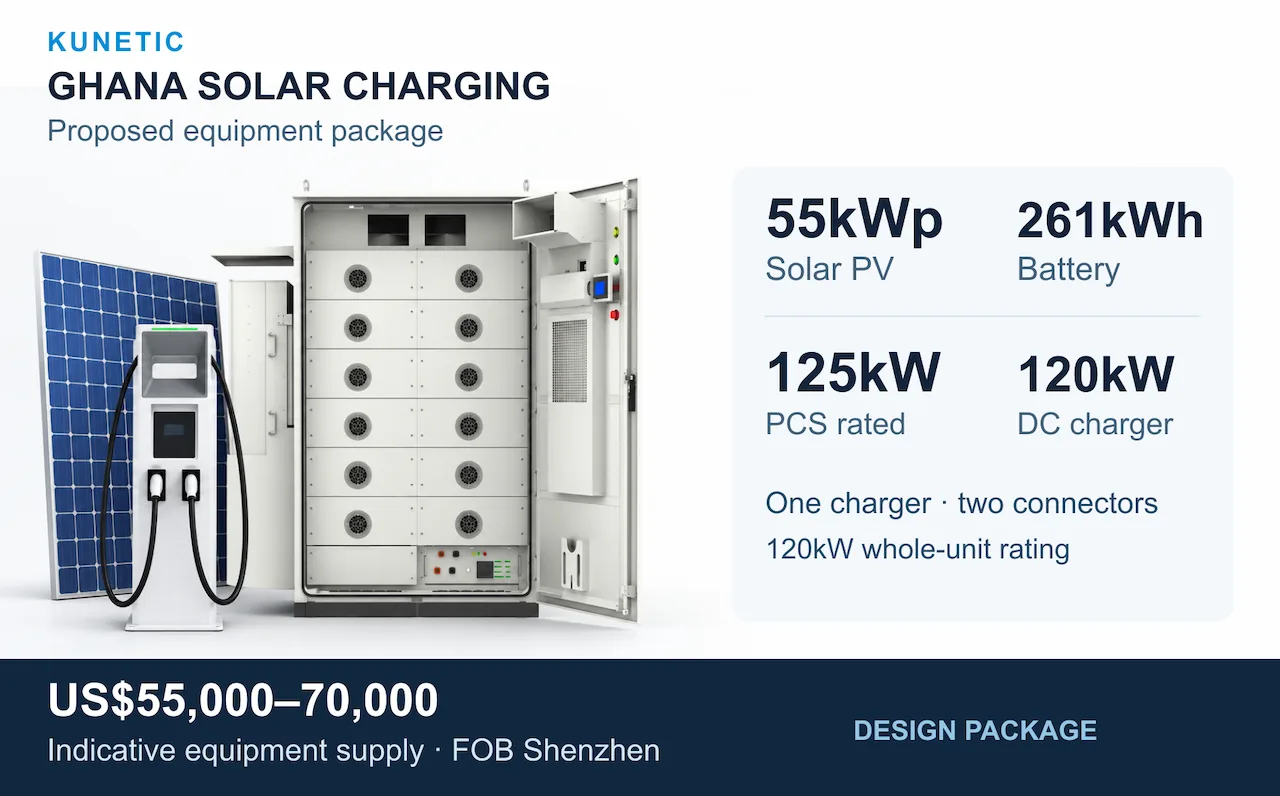
This Ghana proposal begins while the customer is still choosing the land. The aim is to build a solar-powered charging business. The proposed system pairs a 55kWp solar carport with 261kWh of nominal battery storage. It includes a 125kW power conversion system (PCS). One 120kW dual-connector DC charger serves the two charging positions. With the equipment laid out, the operator can compare candidate plots before committing to a site.
Make the solar canopy work for drivers
Solar carport EV charging layout
The carport has 88 solar panels, each rated at 625Wp. The canopy covers adjoining parking space. Two charging positions sit within this larger covered area. That gives the array room while bringing shade to the places where drivers stop.
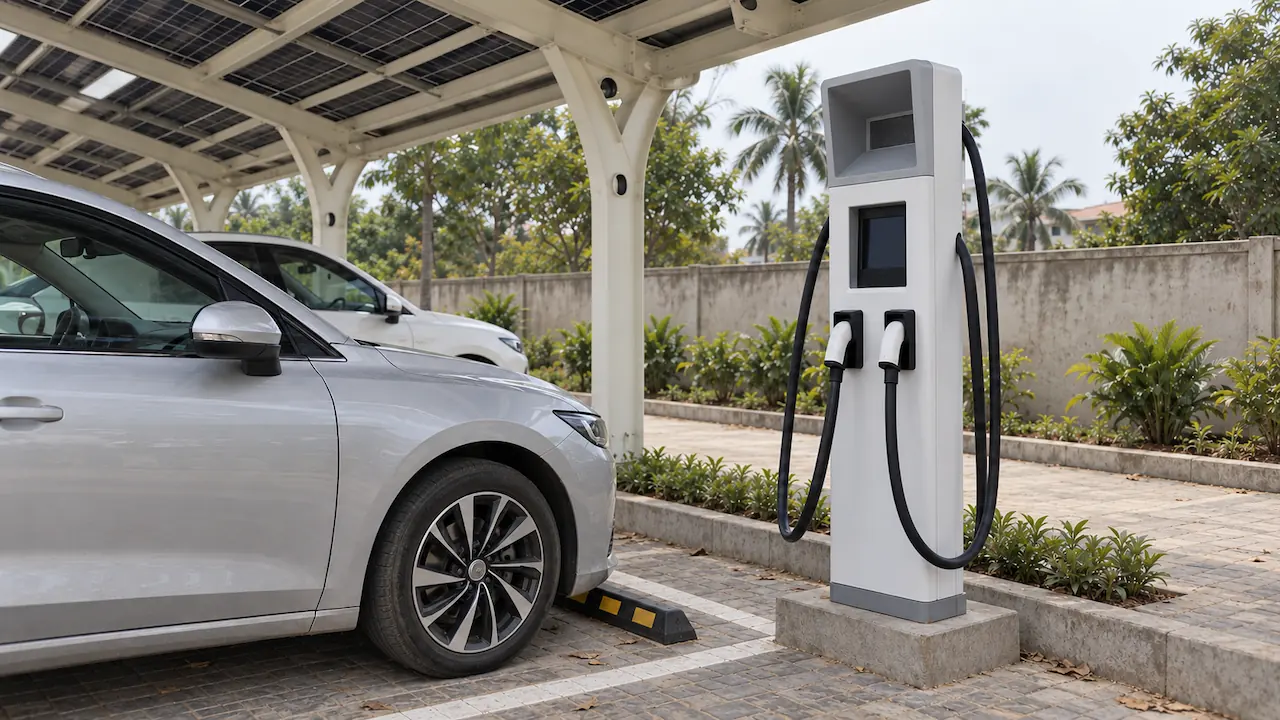
The canopy layout needs to account for its columns as well as charger placement and parking markings. A column beside a car door can make access awkward. The charger also needs enough cable reach for the parked vehicles.
A clear route through the forecourt
The layout places the dual-connector charger between the charging positions. Vehicles can approach from the circulation lane, while a separate walking route connects the bays to the site entrance. The installer checks cable reach and storage against the operator's vehicle list.
See the Nigeria solar EV charging design for another carport, battery and charging layout.
Give storage its own service area
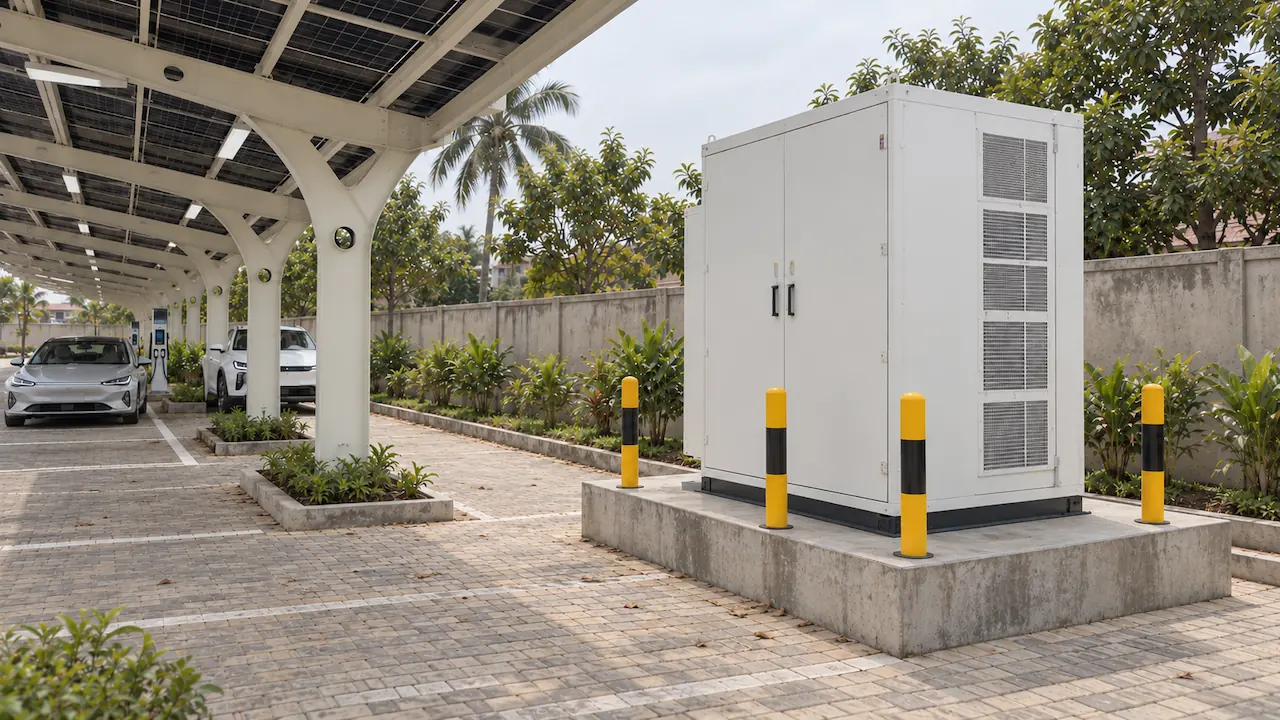
Battery storage for EV charging occupies a separate service area beside the forecourt in this design. Protective barriers separate it from vehicle movements. An access route lets the installer reach the enclosure for inspection and maintenance.
The proposed equipment package brings together the 261kWh battery, 125kW PCS, solar charging controls and energy management. The cabinet specification also includes air conditioning and fire suppression.
The installer reviews the foundation, drainage, cooling-air path and maintenance access before fixing its position. These checks help the operator compare plots. A narrow strip beside the last parking bay may leave little room to reach the equipment.
Plan charging around the vehicles and arrival times
The vehicle list helps settle the charger specification. Inlet standards, charging voltage and the power a vehicle can accept all affect the equipment choice. The proposed charger has a 120kW whole-unit rating and two connectors. Agree its power-sharing settings once the charger and intended vehicles have been specified.
Daytime customers may be served while the canopy is generating. For evening charging, review the energy needed per session and the reserve to hold in storage.
The operator needs an arrival schedule for this solar-powered EV charging station. It should list the energy needed per session and each driver's expected stay. The proposed solar and battery sizes can then be assessed against that schedule and the selected site's solar conditions.
For system options, explore our solar, storage and EV charging solution.
What the proposed equipment package covers
The indicative equipment planning range is US$55,000-70,000, FOB Shenzhen. It covers the solar, carport, storage and charging package described here. It gives the operator a supply budget to discuss alongside the cost of preparing and building the site.
| Equipment or scope | Proposed configuration |
|---|---|
| Solar modules | 55kWp from 88 × 625Wp modules |
| Carport structure | BIPV canopy structure for the proposed array |
| Battery and power conversion | 261kWh nominal storage with 125kW PCS. Solar controls and energy management. Cabinet air conditioning and fire suppression. |
| DC charging equipment | One 120kW dual-connector charger. Confirm vehicle interfaces and power sharing when specifying the unit. |
| Local works and delivery | Freight, insurance, import charges, foundations, canopy erection, local electrical works, installation, commissioning and approvals quoted separately |
The agreed equipment models, vehicle interfaces and delivery scope determine the final quotation. A review of the candidate site also helps the local contractor define structural work, protection equipment and cable routes.
Bring your candidate site into the design
Send KUNETIC photographs and dimensions of the plot, showing its entrance, parking area and possible equipment position. Add the vehicles you want to serve, their connector types, expected arrival times and energy needed per session.
Tell us if the business must run solely on solar and storage. Include the local construction or installation services you need. We can use these details to discuss the canopy, equipment package and charging service you want to offer.
Frequently asked questions
Can I plan the equipment before securing the land?
Yes. A preliminary equipment layout can help you compare plots. Send photos, rough dimensions and entrance positions for each plot. KUNETIC can then review the canopy, vehicle routes and battery service area together. The selected plot then becomes the basis for detailed design.
Does a dual-connector charger supply 120kW to each car?
The 120kW rating applies to the charger as a whole. With two cars connected, available power depends on the charger's allocation controls, vehicle acceptance and the station's supply conditions. Confirm the intended simultaneous-charging arrangement when choosing the charger.
What needs to be assessed for solar-only charging?
Start with session energy and arrival times. Then assess solar production at the site, usable storage and the operating reserve. This connects the service hours you want to offer with the equipment and control settings needed to support them.
What is included in the equipment budget?
The range covers solar modules, the carport structure, the battery and PCS package, and one dual-connector DC charger. The supply basis is FOB Shenzhen. Define delivery, import and local construction or installation costs separately for the project.