
 English
 Deutsch
 Español
 Français
 Italiano
 Polski
 Română
 العربية
PROJECT DESIGN · MALDIVES
Maldives Solar Battery Storage for a Food Retail Business
A shop that still needs power after closing
A food shop's electricity use does not end when the shutters come down. Refrigerated cabinets still cycle and stock needs cooling. Lighting and communications may also be needed after the sales floor closes.
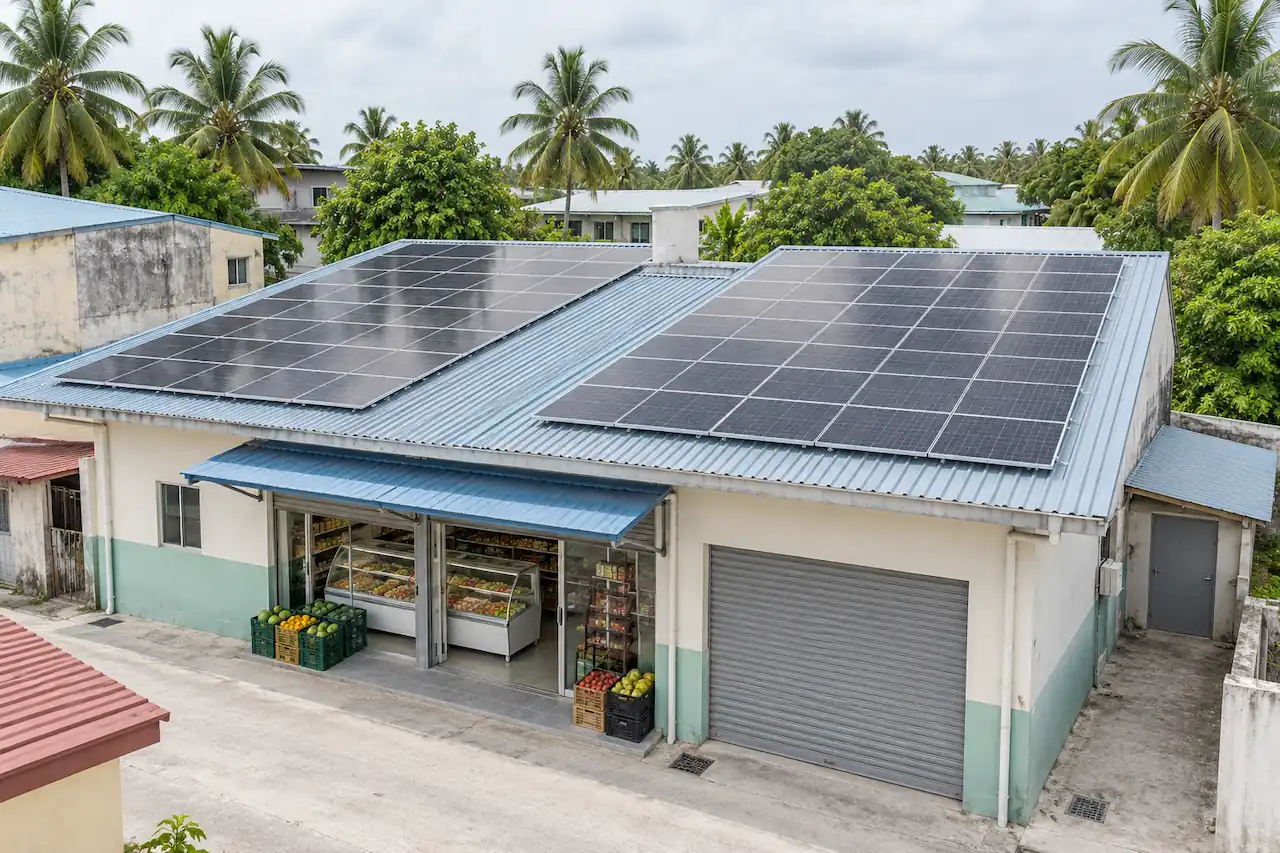
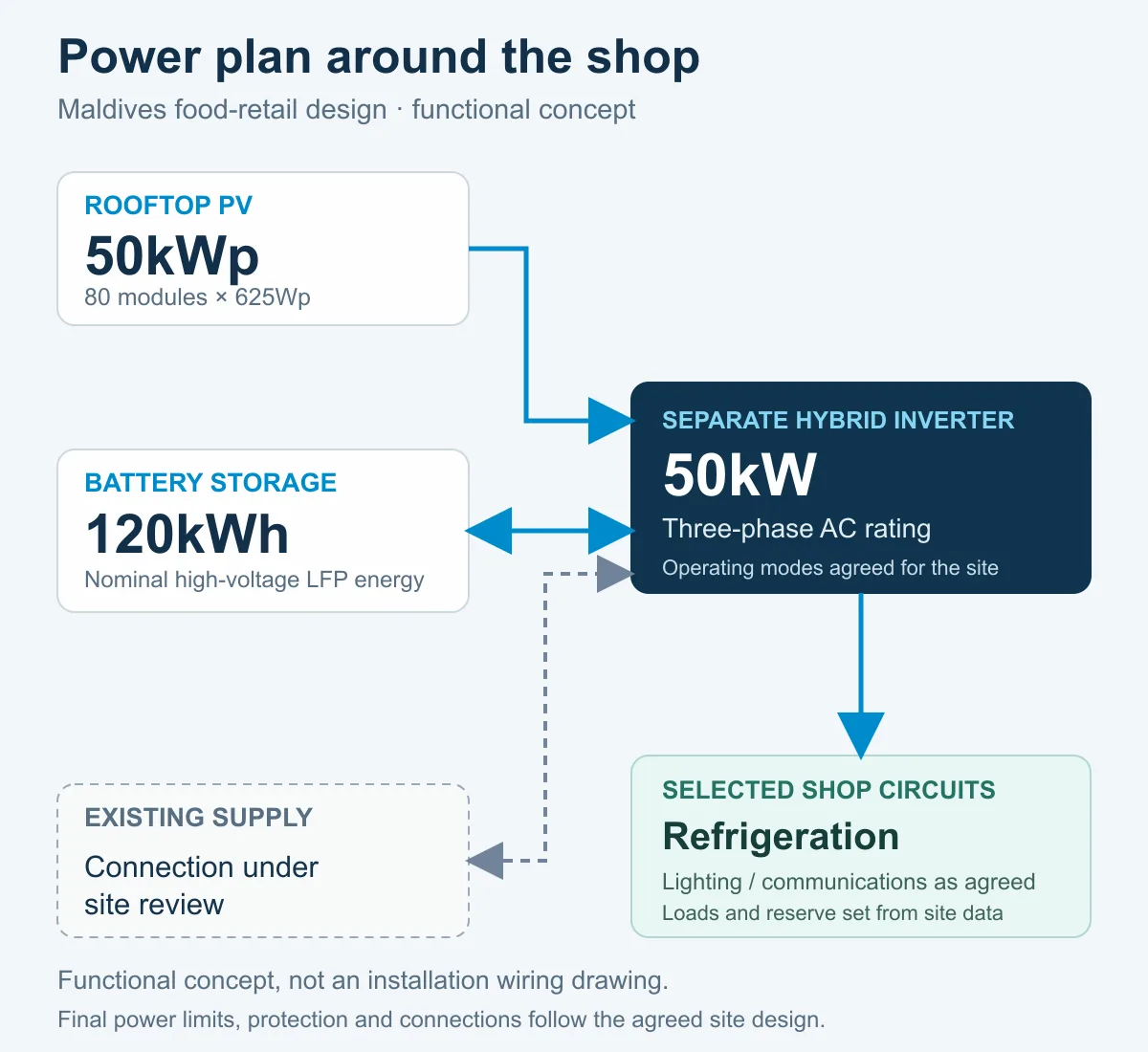
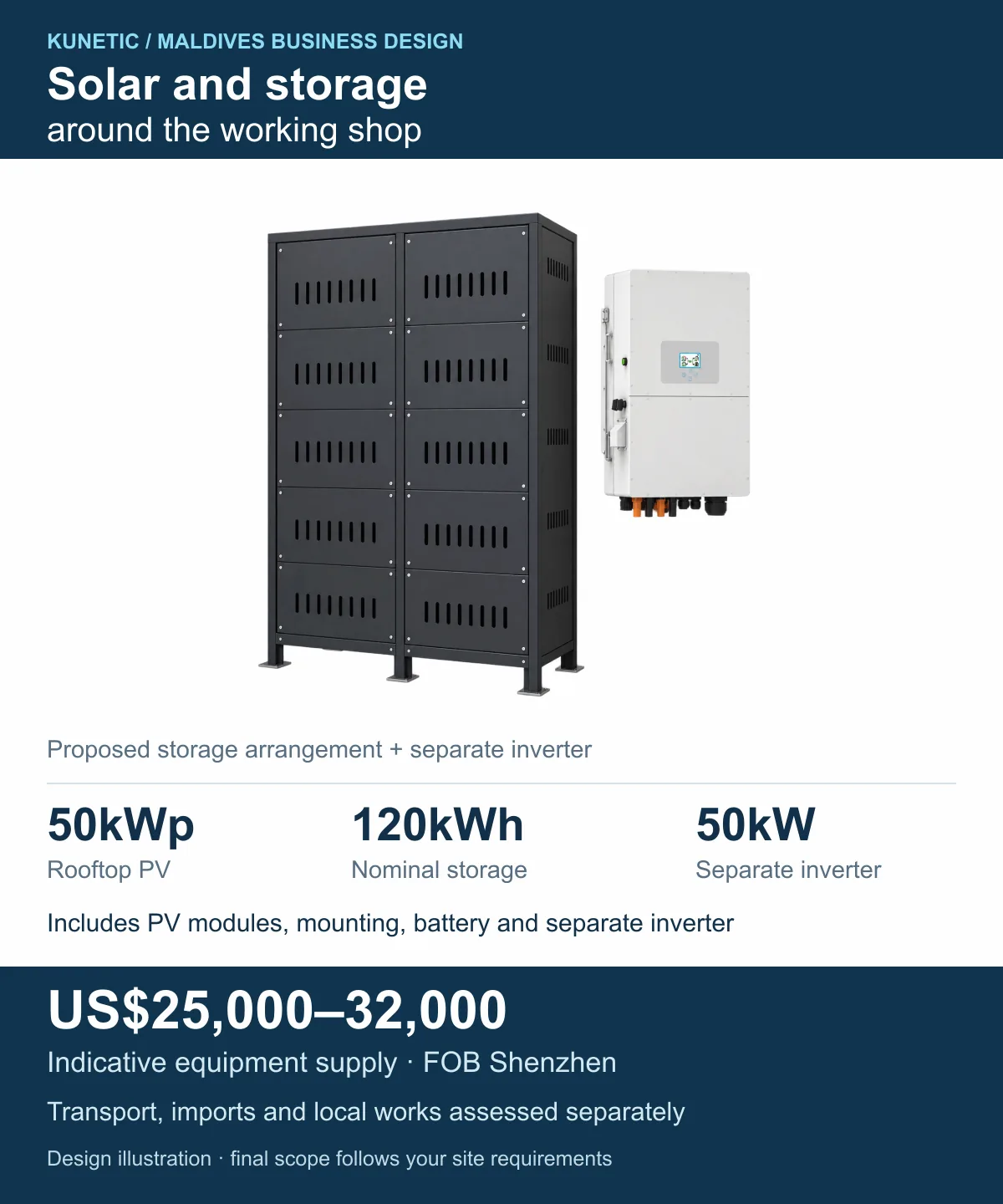
This proposed Maldives solar battery storage design is for a local-island food retailer. It pairs 50kWp of rooftop PV with a nominal 120kWh battery. The inverter is a separate 50kW three-phase hybrid unit. The layout follows the shop from its roof to a protected service room, then to the circuits selected for evening use.
Start with the shop's working day. List the equipment used during trading and the loads that stay on overnight. Note what can wait when the battery reserve is needed elsewhere.
Put the roof to work without blocking access
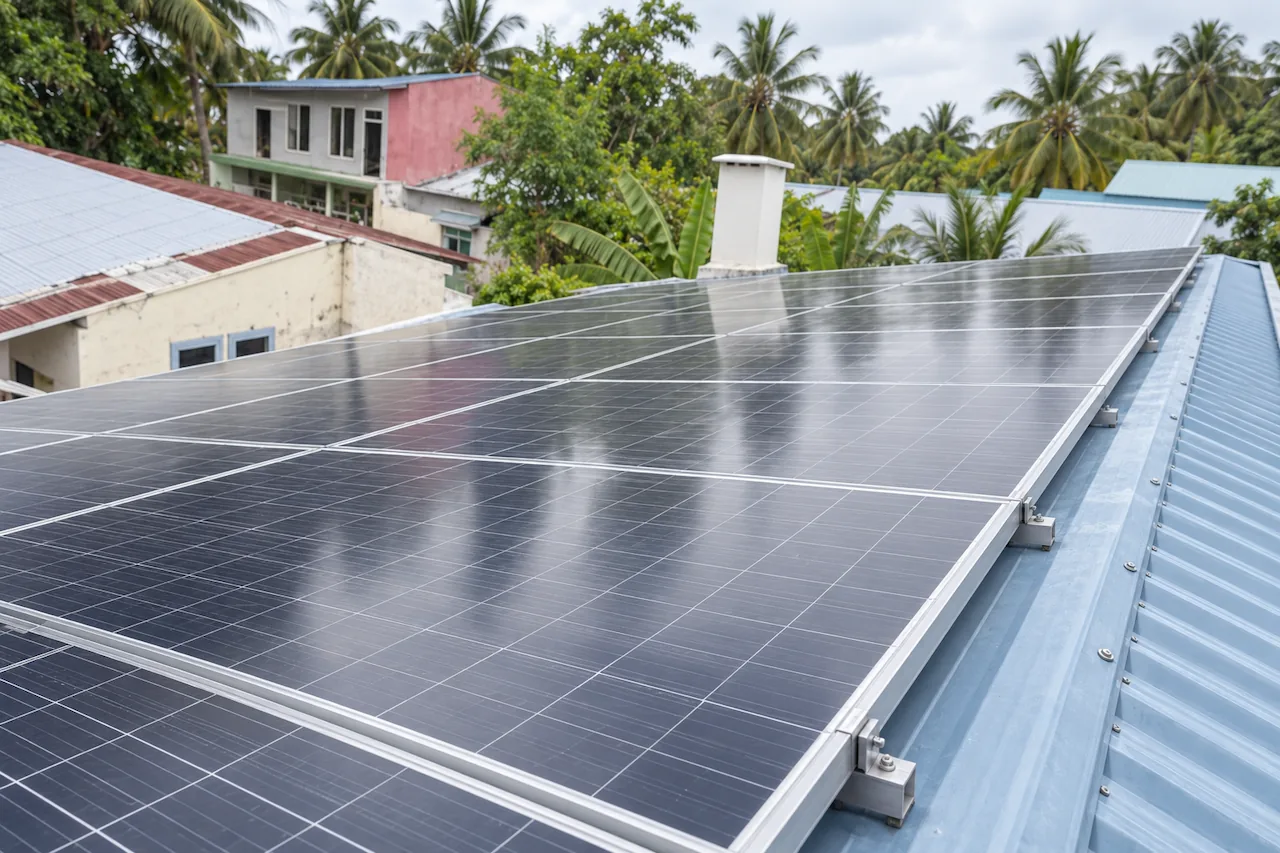
The proposed array uses 80 modules rated at 625Wp each, giving 50kWp in total. For the shop, the roof layout needs to leave room for maintenance as well as generation.
KUNETIC and the local installer would first review the roof dimensions, obstacles and shading with the owner. Roof strength, drainage, mounting and wind exposure also affect where modules can go. Mark inspection and maintenance routes on the measured roof plan before fixing the array layout.
In the proposed scene, PV occupies suitable roof sections, with a clear route for someone to inspect the modules and their supports. The installer also needs to plan the cables around that access and work out how they will reach the service room below.
Keep storage in a protected service room
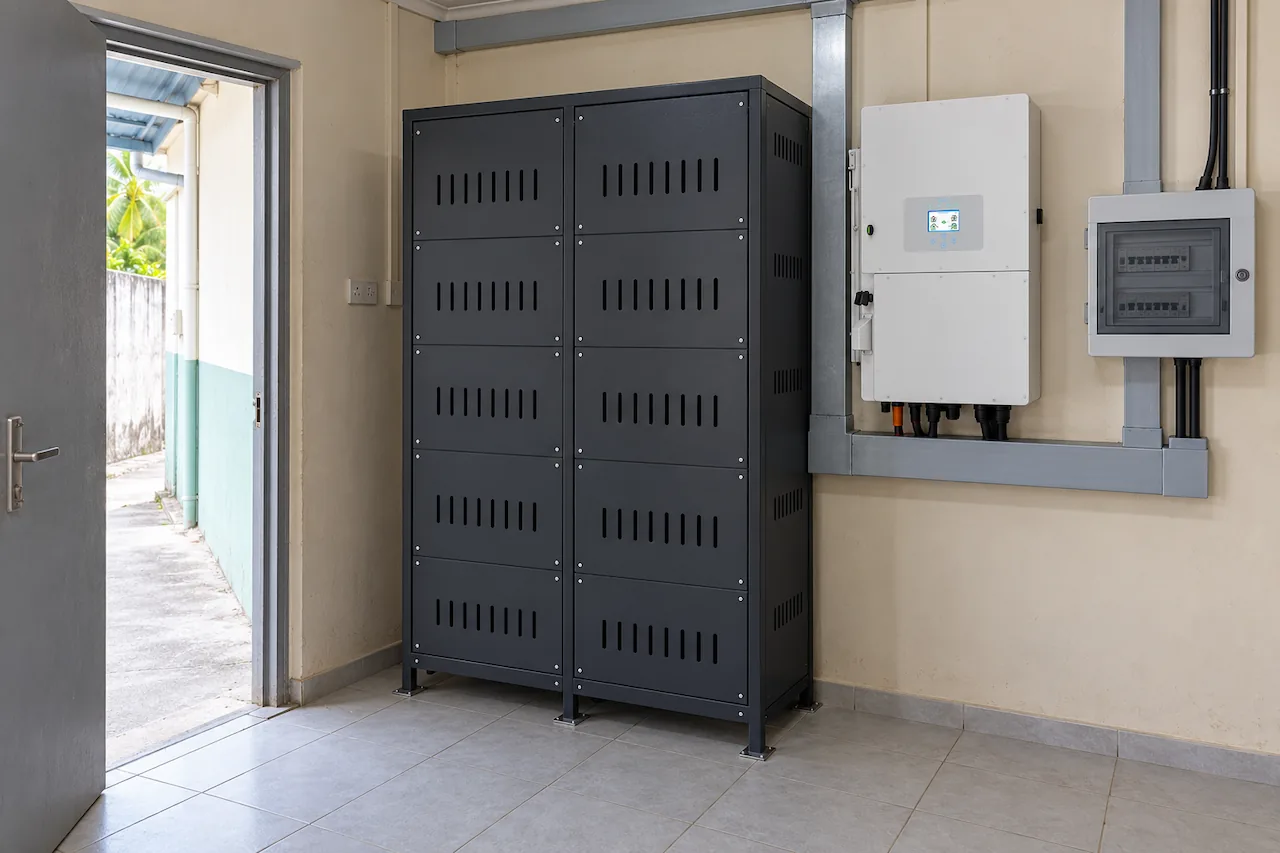
The service room needs a position for each device. The proposed package pairs a 120kWh high-voltage LFP battery assembly with one wall-mounted hybrid inverter. Mounting the inverter beside the storage area keeps its display within reach for inspection.
The proposed room keeps equipment away from customers and stored food. Choose the enclosure and room conditions for the selected devices, and leave access for servicing. Moisture and local salt exposure also need attention when choosing the enclosure and planning maintenance.
A nearby distribution enclosure can make the selected circuits easier to identify and inspect. The local installer develops the protection, isolation, earthing and cable design. Keep the working area clear when stock deliveries arrive or staff are busy behind the shop.
Plan around refrigeration and the evening shift
During trading hours
Daytime demand may include refrigerated displays, lighting, checkout equipment and office loads. Air conditioning, pumps or other appliances need their own entries in the load list.
Available solar generation can serve concurrent demand and charge the battery within the agreed system settings. The allocation changes with weather, consumption and the battery's state of charge. A 50kWp array does not provide a constant 50kW throughout the day.
After the shutters close
Begin with the refrigeration that needs power after closing. Add lighting, security or communications circuits to the evening plan as agreed. Compressor starts, cycling patterns and simultaneous operation matter alongside daily energy use.
The 120kWh figure describes nominal stored energy. Usable energy, reserve settings, conversion losses and permitted battery output determine what the system can deliver to those circuits. Battery-only operation needs a check of the inverter's backup rating, the battery's discharge limits and the connected loads.
The connection plan also follows the shop's existing supply. KUNETIC and the installer would agree the operating modes, switching and controls for any grid or generator connection. They would then define the site's electrical work.
The proposed supply package and equipment budget
The commercial solar battery package includes four main equipment groups.
| Equipment | Proposed configuration | Role at the shop |
|---|---|---|
| Rooftop PV | 80 × 625Wp modules, 50kWp total | Solar generation during available daylight |
| Battery storage | 120kWh nominal high-voltage LFP assembly | Energy storage for the agreed operating plan |
| Separate hybrid inverter | One 50kW three-phase unit | Power conversion and compatible system operation |
| PV mounting | Package matched to the 50kWp array | Module support matched to the agreed roof layout |
The indicative equipment planning range is US$25,000 to US$32,000, FOB Shenzhen. This covers the modules, mounting package, battery and separate inverter.
Freight, insurance and import charges sit outside the equipment range. Local electrical protection and cabling also need a separate allowance, along with structural work, installation, commissioning and approvals. Before shipment, review island delivery and the route from the unloading point to the equipment room. KUNETIC can prepare the final quotation once the equipment, roof layout, connection requirements and supply scope are agreed.
Questions about this Maldives business design
Can this system keep the shop's refrigeration running overnight?
That requires a load assessment. Share appliance ratings, compressor starting information, operating hours and measured consumption where available. KUNETIC can then review the selected circuits, usable battery energy and reserve target against the required period.
Does an island business need to disconnect from the grid?
No. The design should reflect the existing supply and utility requirements. A compatible hybrid arrangement may retain the grid or incorporate a generator where specified. A generator is not included in this equipment package.
What must be checked before fitting 80 modules on the roof?
Confirm module dimensions, roof structure, mounting design, wind exposure, shading, drainage and access. The final module arrangement follows those checks. Roof photographs are useful for discussion, but dimensions and a local assessment are needed to develop the layout.
What does the equipment budget include?
It covers PV modules, the mounting package, battery storage and the separate inverter on an indicative FOB Shenzhen basis. Transport, imports and local works are separate. Confirm these scopes together so the purchase budget reflects the whole project.
Plan a comparable system for your shop
Send KUNETIC roof and service-area photographs, dimensions, supply details and a daytime/evening load list. Include the refrigeration equipment and the circuits you want to retain during the reserve period.
You can use our island power planning guide to review the wider application. For a proposal around your building and operating hours, share your shop's power requirements.