
 English
 Deutsch
 Español
 Français
 Italiano
 Polski
 Română
 العربية
PROJECT DESIGN · OMAN
Oman Hotel Battery Storage: A 160kWh + 30kW Design
A guesthouse design built around everyday service
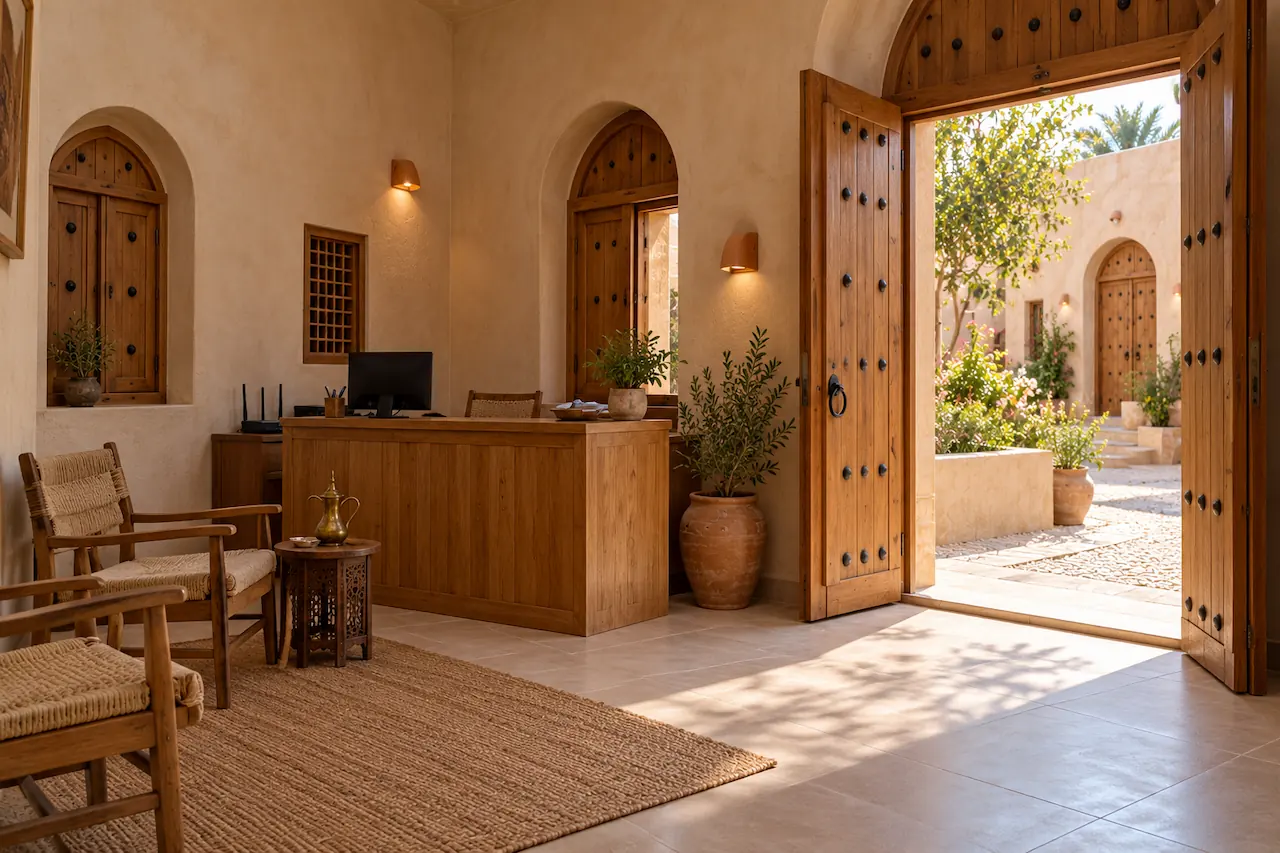
A guest checks in at reception while the desk computer and booking connection are in use. After dark, entrance and room lighting become part of the service. For a small property, these everyday needs are a useful starting point for a hotel battery storage plan.
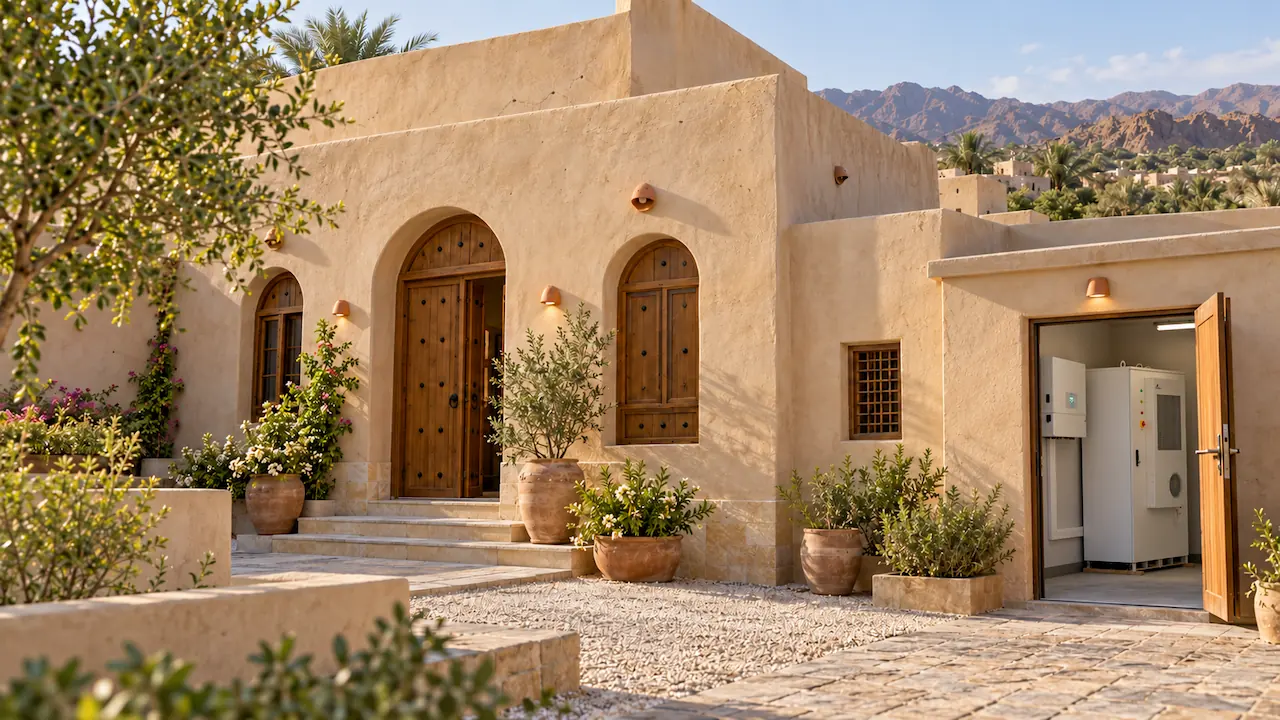
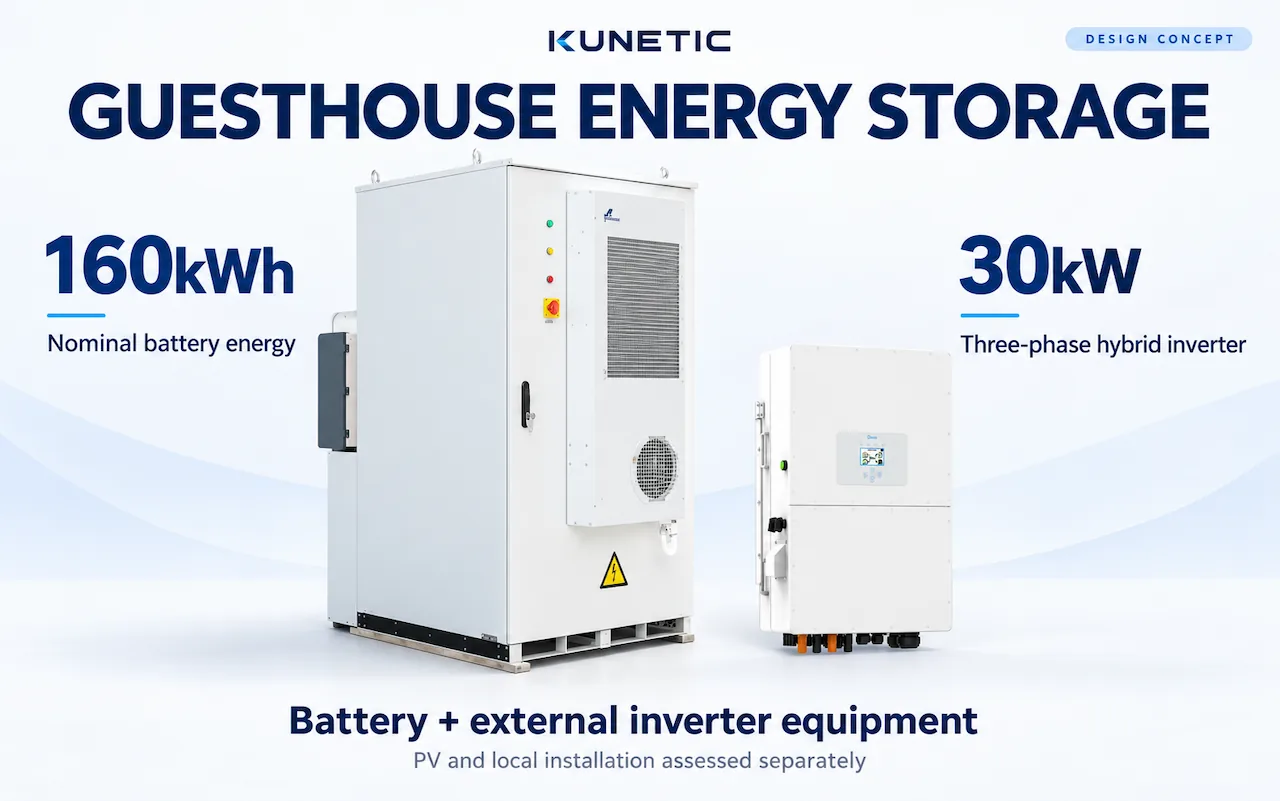
For this Oman proposal, KUNETIC pairs 160kWh of nominal battery energy with a separate 30kW three-phase hybrid inverter. The design setting is a low-rise guesthouse. Guest spaces are at the front, with a separate service area for the equipment.
The owner chooses the services to support, and the electrical plan follows those priorities. This guesthouse concept shows where the proposed equipment could go and what KUNETIC needs to tailor it to a property.
Choose the services to keep running
Reception, lighting and connected services
Start at reception. The desk computer, booking connection and network equipment are candidates for the priority-load list. Add the chosen entrance, common-area and guest-room lights. Include refrigeration if it is part of the service the owner wants to support.
For battery backup for hotels, agree which circuits to support and for how long during a power outage. Equipment ratings and hours of use help KUNETIC size the system.
Review larger loads separately
Air conditioning needs its own discussion. The owner may want to support selected rooms or a common area. The load review checks what can run alongside the other circuits. Water heating, pumps and kitchen equipment also need their running and starting demands checked.
The installer can then plan those circuits. Part of that work is to check the loads on each of the three phases.
Give the equipment its own service area
In this layout, the equipment has its own service room or annex. Access is separate from the guest rooms. The tall battery cabinet, separate wall-mounted inverter and distribution equipment form one accessible working area.
The battery cabinet has dedicated air conditioning. Leave space for cooling airflow and heat to escape, as well as access to the cabinet for service. Check that the equipment and layout suit the site's heat and other conditions.
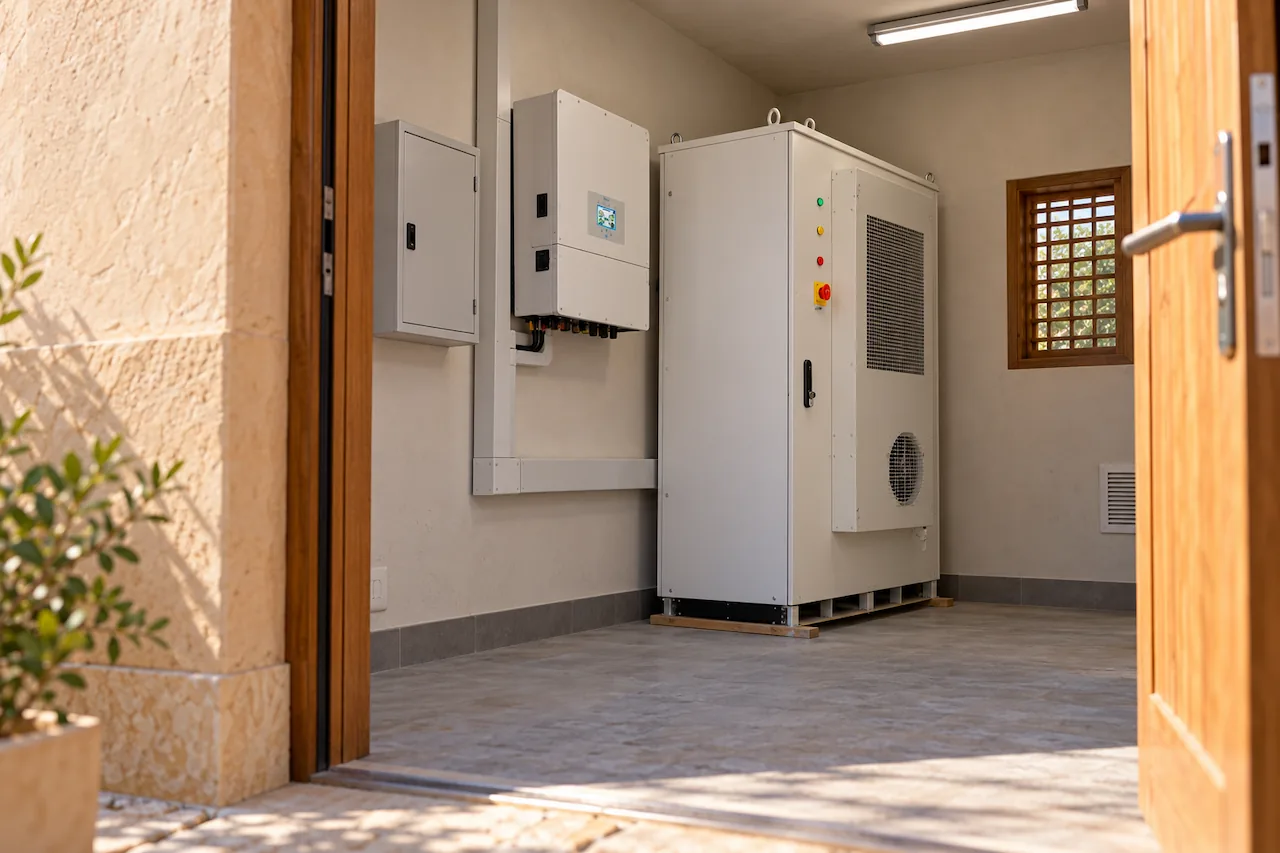
A separate service area keeps inspection and maintenance away from guest activity. Here, the installer can plan the base and cable routes. There is also space to plan the isolation and distribution equipment. The local design and equipment requirements set the final position and clearances.
Pair 160kWh storage with a 30kW three-phase inverter
The 160kWh battery holds energy for the selected services. The separate 30kW hybrid inverter supplies AC power from that stored DC energy. The cabinet and inverter occupy separate positions in the service area.
Check that the inverter can support the chosen circuits together. Include starting loads and the load on each phase. Hours of use then help KUNETIC size the usable battery energy and reserve.
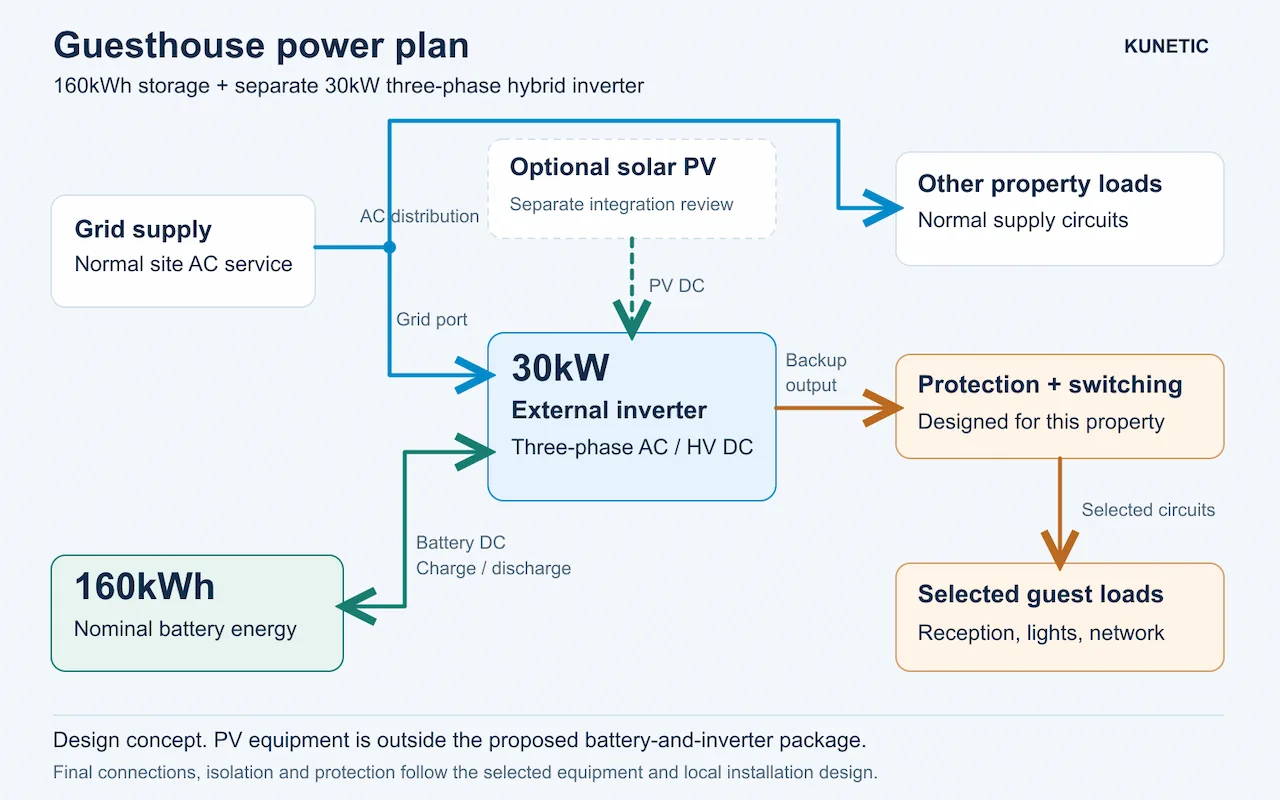
Selected guesthouse circuits connect to the planned backup arrangement. The installer designs protection and switching for the supply, inverter and chosen loads. System integration includes checks of battery communication and controls.
KUNETIC can review existing or planned solar at the same time. PV is an optional integration path here; an array and mounting system are outside this equipment package. The plan sets charge times and reserve to suit the site's supply and chosen services. Any solar input also affects that plan.
What the proposed equipment package covers
The equipment package includes the battery cabinet and external inverter. The property's electrical arrangement determines the local installation work.
| Item | Proposed scope |
|---|---|
| Battery storage | 160kWh nominal high-voltage battery system |
| Cabinet thermal management | Dedicated battery air conditioning |
| External inverter | 30kW three-phase hybrid inverter |
| Solar PV | Array, mounting and integration assessed separately |
| Site electrical work | Local protection, switching, cabling and installation defined for the property |
| Delivery and civil work | Freight, import charges and local civil work priced separately |
The proposed battery and external inverter package has an indicative equipment planning range of US$22,000-28,000, FOB Shenzhen. The final quotation depends on the confirmed equipment, accessories and supply scope. Freight, import charges, solar equipment and local installation sit outside this range.
The owner can use this scope to compare equipment proposals and coordinate with a local installer. KUNETIC can then quote against the property's load brief and installation conditions.
Plan the system around your property
Send KUNETIC a load list with hours of use and the services you want to keep running. Add details of the three-phase supply. Photos of the distribution boards and proposed service area help explain the installation space. Include any existing solar, inverter or generator details so the connection options can be reviewed.
For broader application choices, see our hotel and resort energy storage solutions. Our commercial battery storage guide covers the sizing questions behind an equipment proposal.
Discuss your guesthouse power plan with KUNETIC, or explore other case studies.
Frequently asked questions
Can this design support guest-room air conditioning?
Include the chosen air-conditioning circuits in the load review. Check running and starting demand, hours of use and the load on each phase. Review these alongside reception, lighting and other priorities. The results guide which circuits to include and how much battery reserve they need.
Can the system work with existing solar?
Send the solar array capacity, inverter model and a sketch of the current electrical layout. KUNETIC can then assess how to connect the existing solar and control it. New PV modules and mounting are separate from the battery and inverter equipment in this proposal.
Where should the battery cabinet be installed?
Use a separate service area with space for cooling and access. Keep service work away from guest activity. The installer checks site conditions, cable routes and equipment requirements before choosing the location. Confirm that the enclosure suits the proposed space before the plan is fixed.
What should I send for a tailored quotation?
Send the chosen load list, equipment ratings and hours of use. State how long you want to support those loads. Add supply details, photos of the boards and service area, and any existing generation equipment. Include delivery needs to help coordinate the equipment quote and local installation scope.