English
 Deutsch
 Español
 Français
 Italiano
 Polski
 Română
 العربية
PROJECT DESIGN · PHILIPPINES
Solar and Battery Backup for a Cold Room in the Philippines
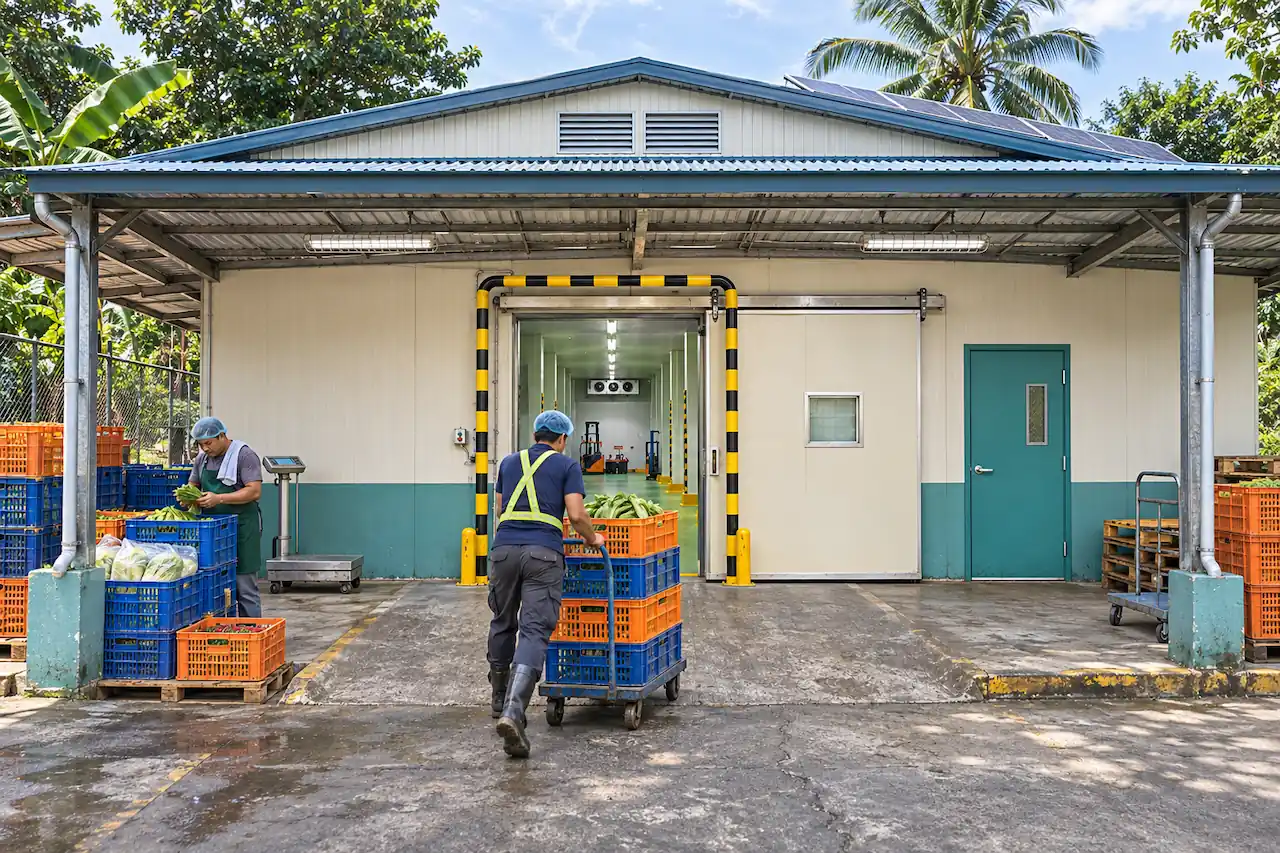
Follow a delivery from the loading door to the cold room
At the receiving bay, a worker wheels a trolley of produce through the insulated door. Each trip lets warm air into the cold room. The refrigeration equipment brings it back to the set temperature. After the last delivery, the crew can put away the handling equipment. Cooling and temperature alarms still matter after everyone leaves.
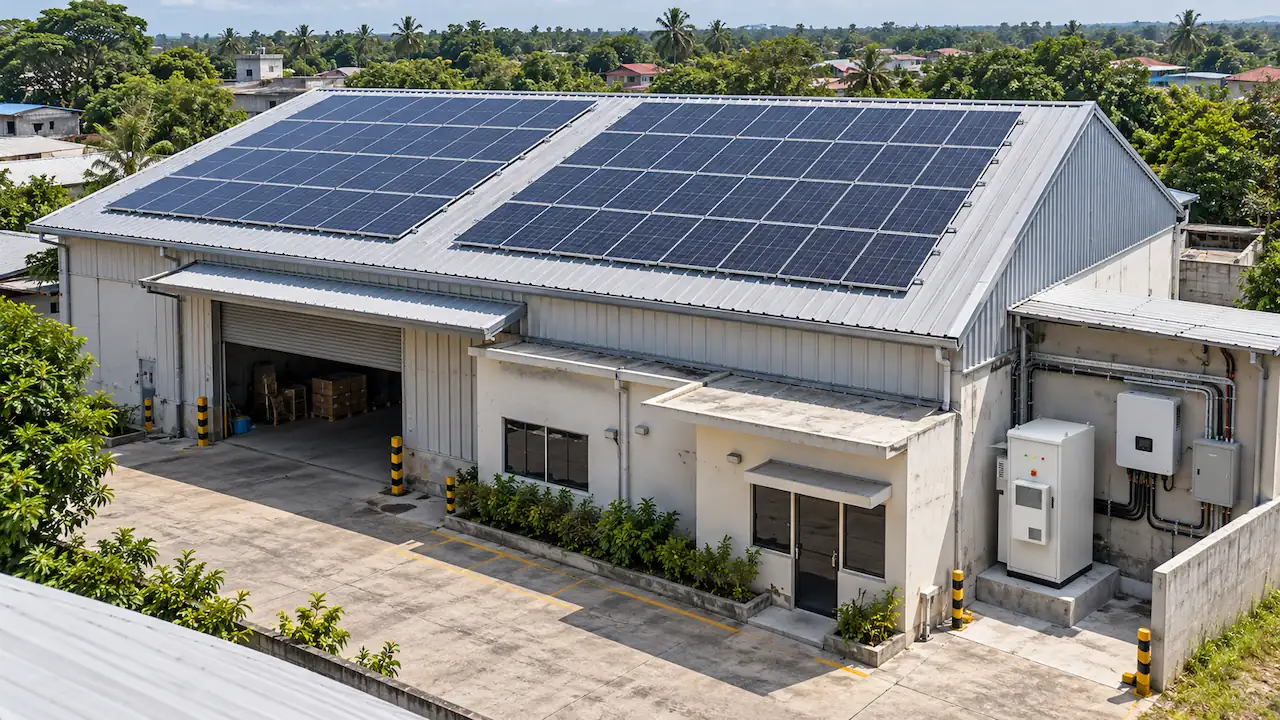
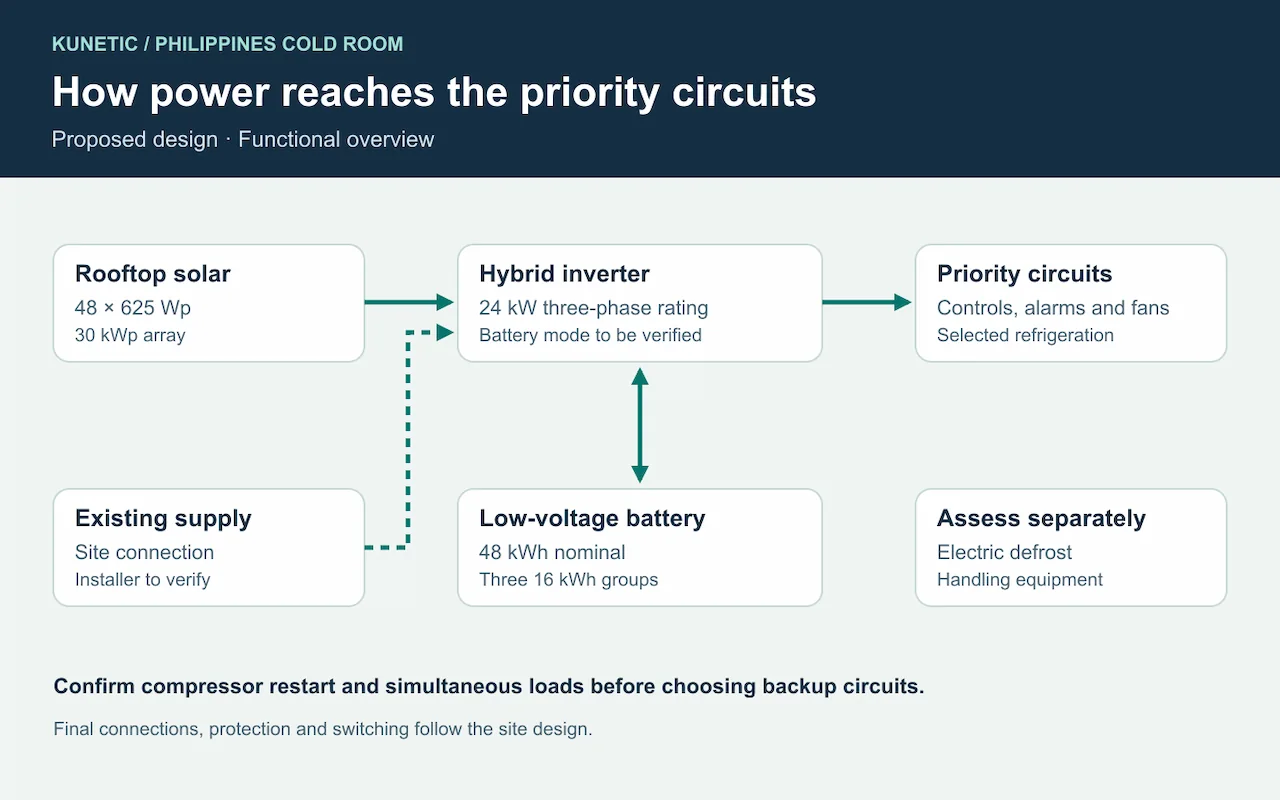
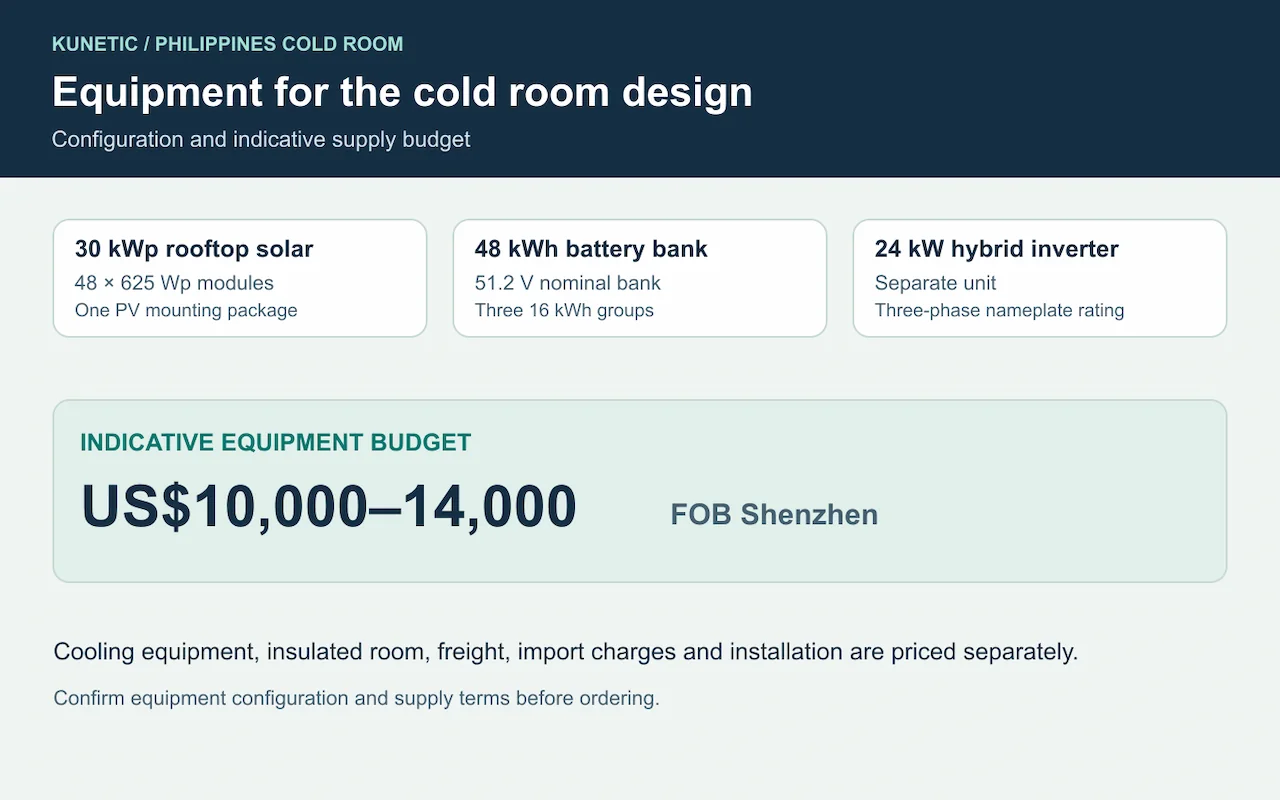
This proposed cold room design in the Philippines pairs 30 kWp of rooftop solar with a 48 kWh nominal battery bank and a separate 24 kW three-phase hybrid inverter. The operator can use this package to review what solar can supply during receiving and which circuits would need battery backup during an evening outage.
Plan solar power for cold storage around the working roof
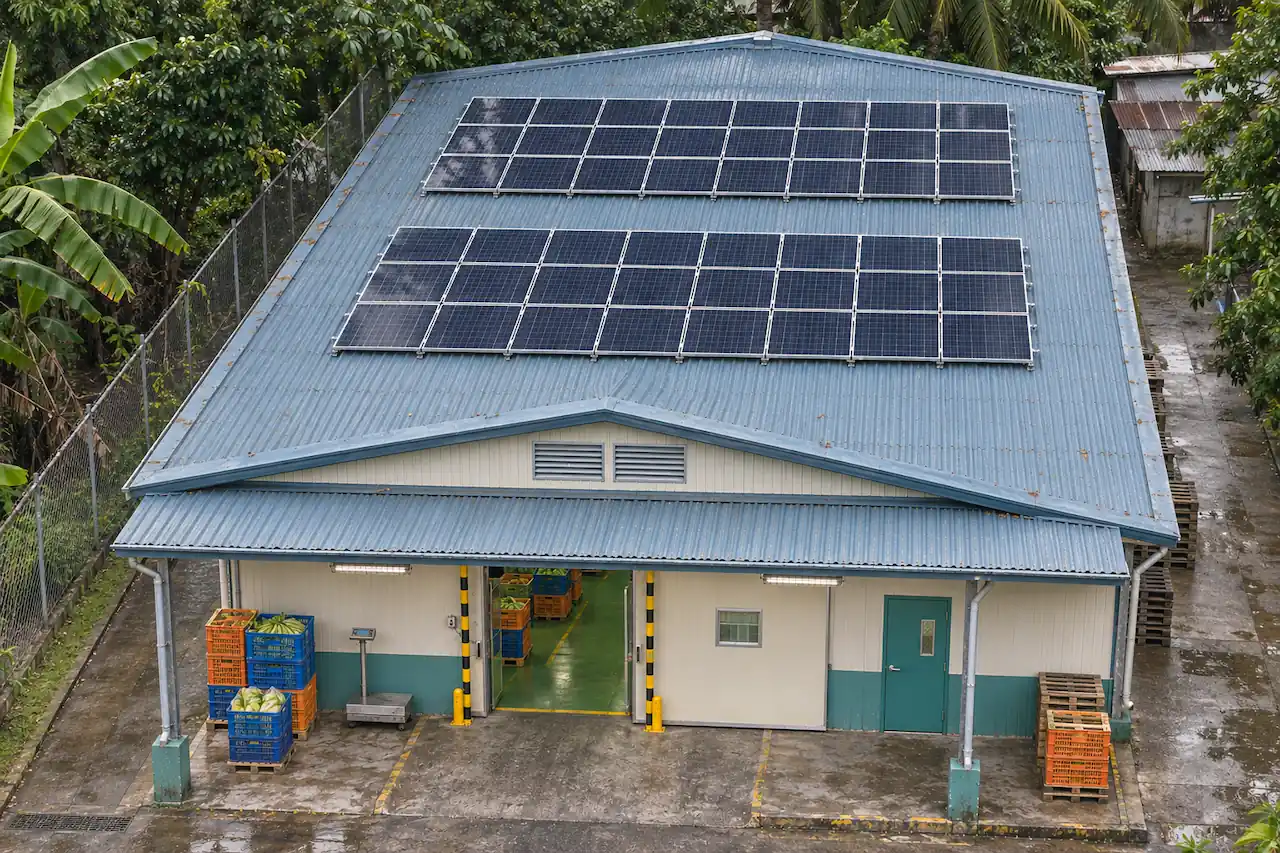
The rooftop solar system uses 48 modules rated at 625 Wp each. On a site walk, mark out roof vents, the shadows from nearby structures, and the routes staff use to reach roof equipment. Check how much of the roof remains usable after allowing space for inspection and maintenance.
Trace the proposed cable route from the roof to the equipment room. It should fit the building without interfering with the loading door or the space needed to service the refrigeration system. The final module layout follows the roof assessment. Daytime solar generation can help supply refrigeration while deliveries are coming in, with the amount available to charge the battery depending on the site's other loads and the solar output at the time.
Give the battery and inverter their own service area
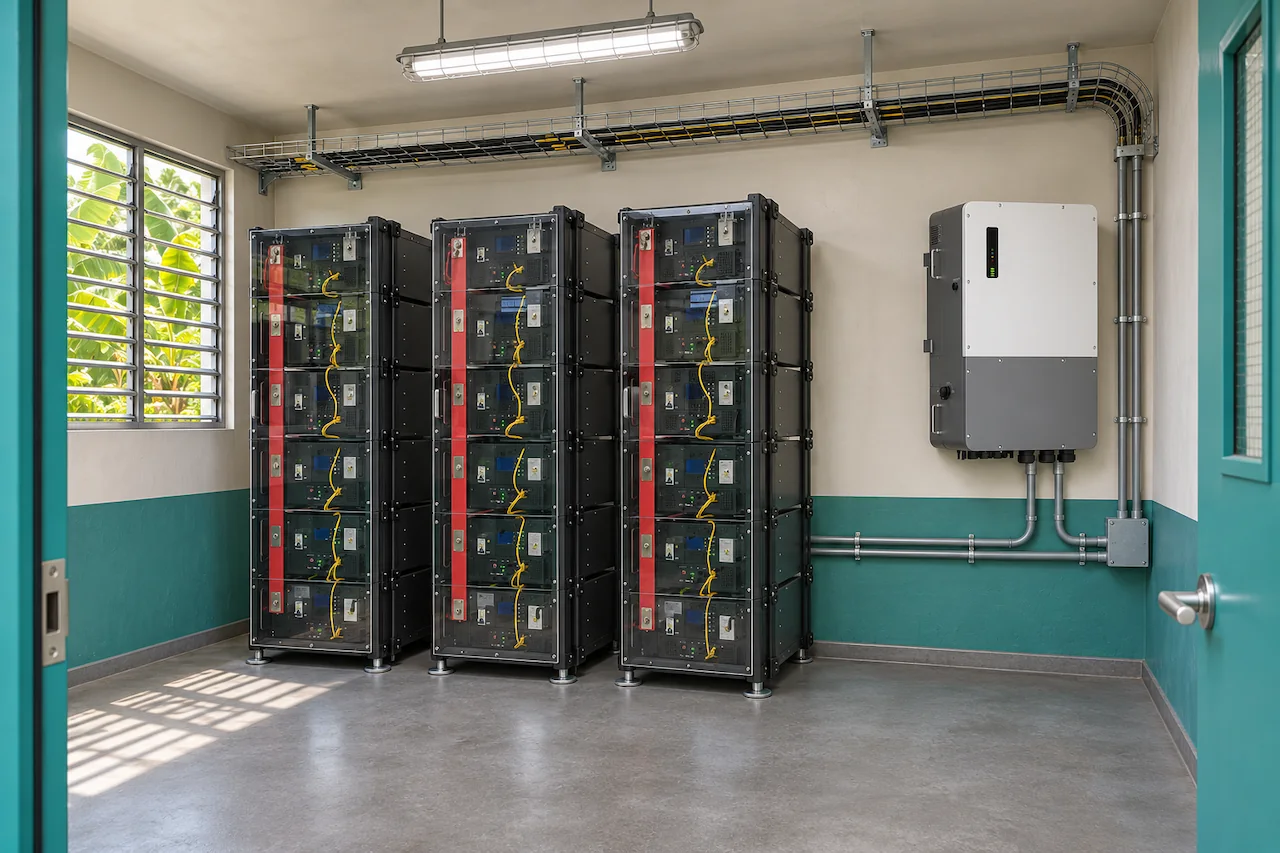
The package uses three 16 kWh battery groups in one nominal 48 kWh low-voltage bank, with a separate three-phase hybrid inverter. The proposed service area sits clear of crate handling, washdown and refrigeration maintenance. Leave room to reach the equipment, work at the panel and remove a unit if it needs replacing.
Before ordering, ask the installer to check battery and inverter communication and the current the bank can supply. Use the inverter's 24 kW nameplate rating to identify the model, then check how much power it can deliver in battery mode. Ask how much is available on each phase and how long the equipment can support a starting load.
Decide what needs power after the loading door closes
Walk through an evening outage with the refrigeration technician. Start with the temperature controller and alarm. Then trace the circuits for the fans and cooling equipment that would have to run. Put handling equipment and defrost on a separate list. Check how long defrost can wait and whether the controller would start a cycle while the room is on battery power.
Check what happens when power returns to the cooling circuits. A compressor can draw more at startup than it does once running. Ask whether the compressor and fans restart together, whether controls impose a restart delay, and which phases carry those loads. Review those details with the inverter and battery ratings before agreeing on the circuits to support.
For an initial energy check, a group of circuits averaging 4 kW over three hours would use 12 kWh at the loads. The installer would then account for conversion losses, the minimum battery reserve and the state of charge when the outage starts. Use a load log to replace the illustrative figures with the cold storage unit’s actual power consumption.
Check what the equipment budget covers
The indicative equipment budget is US$10,000–14,000 FOB Shenzhen for the four items below. When comparing supplier quotes, check that each covers the same equipment.
| Item | Quantity | Proposed specification |
|---|---|---|
| PV modules | 48 | 625 Wp per module, 30 kWp total |
| Roof mounting package | 1 set | For the proposed array, subject to roof review |
| Battery bank | 1 bank | Three 16 kWh groups, 48 kWh nominal total |
| Separate hybrid inverter | 1 | 24 kW three-phase nameplate rating |
Request separate prices for the refrigeration unit and insulated room, freight, import charges and local electrical installation. If the site already has a generator or transfer equipment, include it in the electrical review before the installer prices that work.
Share an overnight load profile for a design review
Send the compressor, fan and defrost nameplates, a nighttime load log and the temperature range the room needs to maintain. Add the usual outage window, a roof drawing, the service voltage and details of any generator or transfer equipment. A log that captures a compressor restart is especially helpful when the installer checks short peaks.
If the receiving area shares a supply with other warehouse loads, see KUNETIC's logistics and warehouse power solutions. The Philippines commercial solar and battery case shows a larger warehouse and office design. Select Plan Your Cold Room Backup to share your site and load details.
Questions about solar and battery backup for a cold room
Can the battery keep the cold room running all night?
Estimate this from measured overnight demand and the usable energy available when an outage starts. Include battery reserve and conversion losses. Frequent door openings or warmer conditions can change how often the compressor runs.
Can the 24 kW inverter restart the compressor?
Check the compressor's starting current and how long it lasts, then compare them with the inverter's battery-mode limits, including per-phase limits. Check the restart sequence and the battery's discharge capability at the same time.
Should the backup include electric defrost?
Ask the refrigeration technician whether defrost can be deferred for the expected outage and whether the controller supports that operating mode. If defrost must run, include its demand and any overlap with the cooling equipment.
What is included in the equipment budget?
The range covers the PV modules, roof mounting package, battery bank and hybrid inverter. The refrigeration unit, insulated cold room, freight, import charges and local electrical installation are priced separately.