
 English
 Deutsch
 Español
 Français
 Italiano
 Polski
 Română
 العربية
Use more of your own generation
Store surplus solar energy for later use at the site. Matching the battery to your daily surplus helps make better use of the PV system already on your roof.
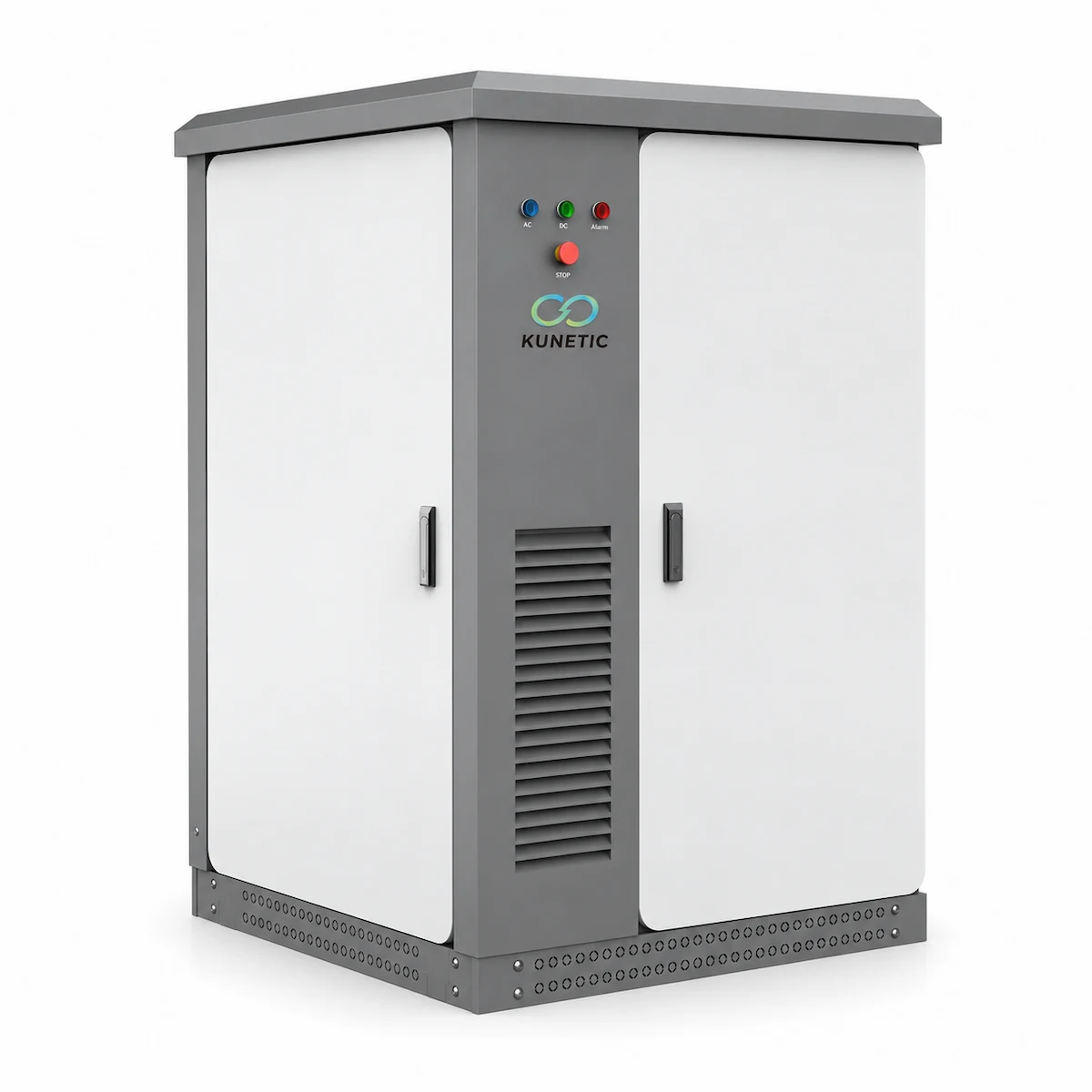
COMMERCIAL SOLAR STORAGE
Keep more of the solar energy your business produces. Choose 61.44 or 71.68 kWh of nominal LFP storage for a workshop, farm or smaller commercial site. The high-voltage battery platform combines modular packs, battery management and thermal management in a compact enclosure. A suitable inverter or PCS lets you use stored energy later and shift consumption away from expensive tariff periods. Backup is available with a compatible system configuration.
 61–71 kWh Two LFP Energy Options
 614 / 717 V Nominal Battery Voltage
 IP55 Outdoor Enclosure
 Smart BMS Battery Management
For your commercial solar project
A workshop may produce more solar electricity at lunchtime than it can use, then buy power later to keep working. A farm or small hotel may have a different pattern, with demand rising after the best solar hours. This commercial energy storage cabinet stores electricity from available generation for those later periods. Use your generation and meter data to estimate the energy you could shift each day.
Store surplus solar energy for later use at the site. Matching the battery to your daily surplus helps make better use of the PV system already on your roof.
Charge during suitable generation or lower-cost periods and discharge when stored energy is more valuable. For sites paying demand charges, a suitable schedule can also target peak demand. Plan it around opening hours and the reserve you want to keep; energy cost savings depend on the tariff and daily use.
The IP55 enclosure brings the battery equipment into one outdoor cabinet. Its defined footprint helps you assess a utility yard or plant area without taking over a workshop or storeroom.
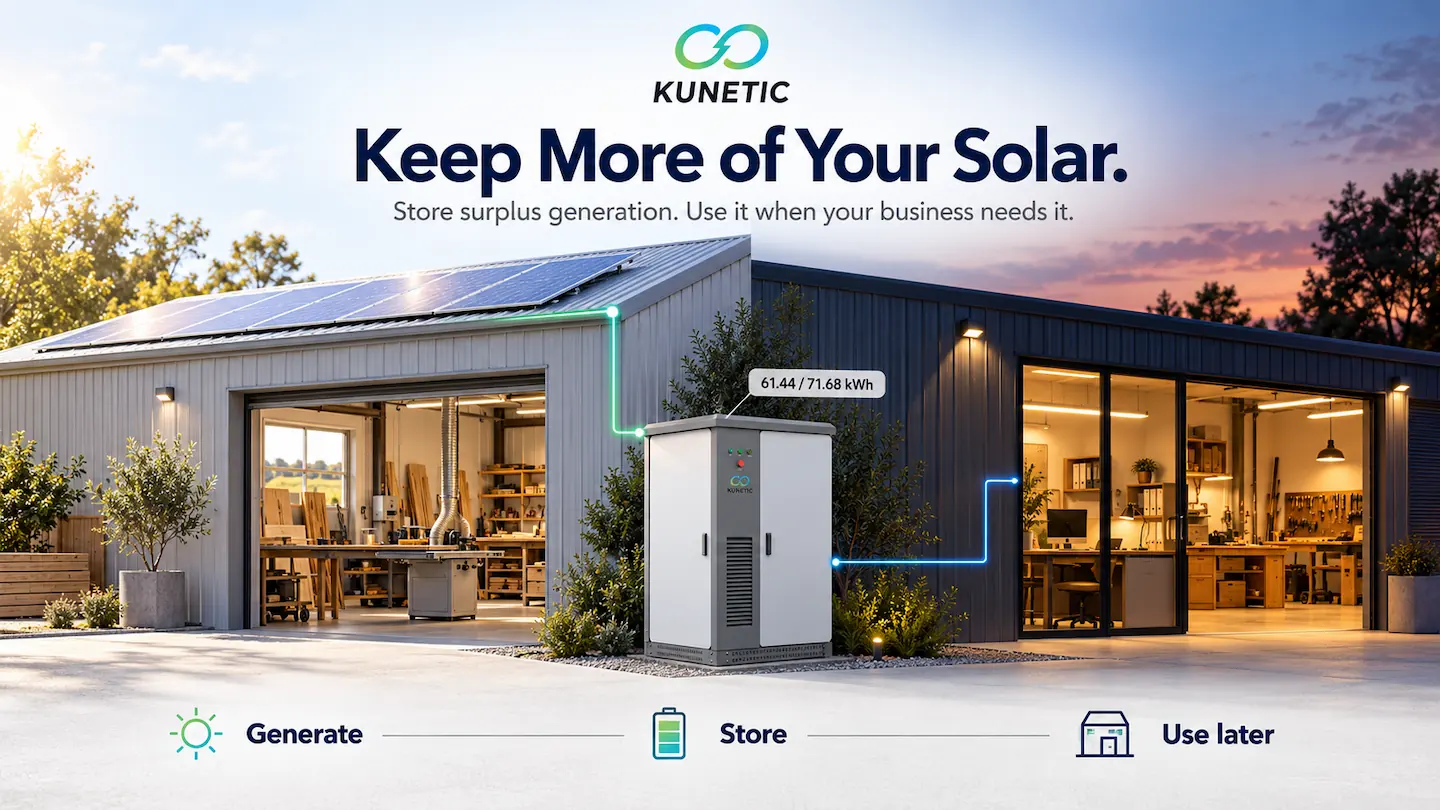
Solar generation, stored energy and business demand rarely follow the same timetable. A suitable inverter or PCS connects the battery to the site's AC supply and controls charging and discharging. PV integration uses the selected inverter or charging arrangement.
Two energy options
For a project in the 60kWh battery class, compare the available energy with your daily requirement. Both configurations use the same cabinet platform. The 61.44 kWh option has six series-connected battery modules; the 71.68 kWh option has seven and adds 10.24 kWh of nominal stored energy. The different battery voltages also affect inverter or PCS selection.
For an initial example, a 20 kW load running for two hours needs 40 kWh at the loads. Add allowance for the usable battery window, conversion losses and your chosen reserve. Check running and starting power separately when selecting the inverter or PCS. The listed 50 kW PCS matching option is a conversion-equipment rating; actual continuous system output also depends on the battery's voltage and current limits.
Compare the configurations for your site →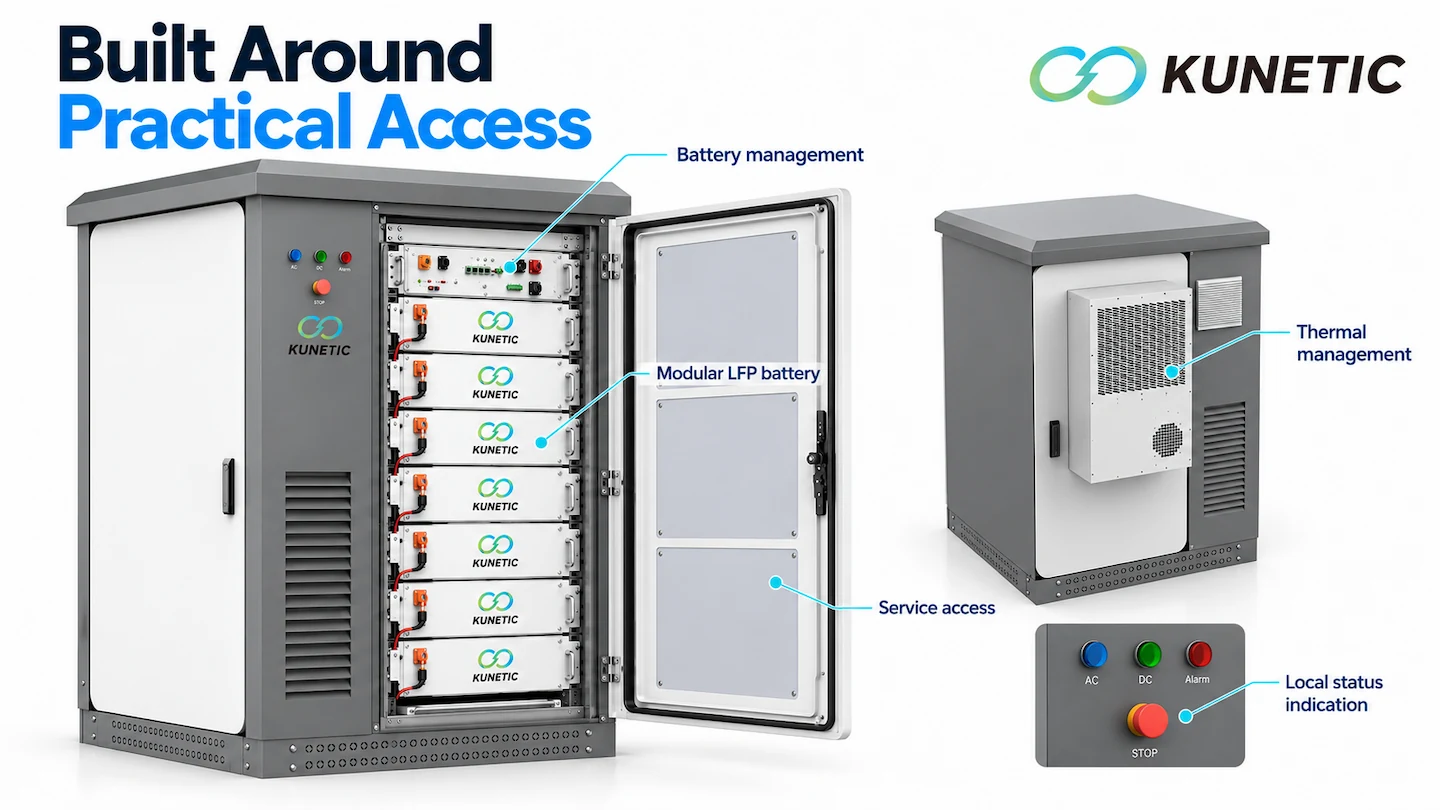
The battery compartment groups the LFP packs in a single vertical stack, with battery management and electrical connections arranged above and alongside the modules. Front access supports inspection, while the external thermal-management equipment remains accessible from the rear. Plan space for both sides when choosing the installation position.
LFP battery and BMSThe 100 Ah battery platform uses six or seven modules in series. The battery management system (BMS) monitors operating status and supports the cabinet's electrical protection functions, with CAN 2.0 communication for the selected system equipment.
 Thermal management and monitoring
The cabinet includes fan cooling and thermal-management equipment. Remote monitoring and software support help the operations team review system status, while the local lamps and emergency-stop control provide visible status and an on-site shutdown point.
Designed around your site
Small factory service yards, farm utility areas and commercial building plant spaces are useful starting points. Position the cabinet near the electrical connection while keeping access routes, cooling paths and maintenance space clear.
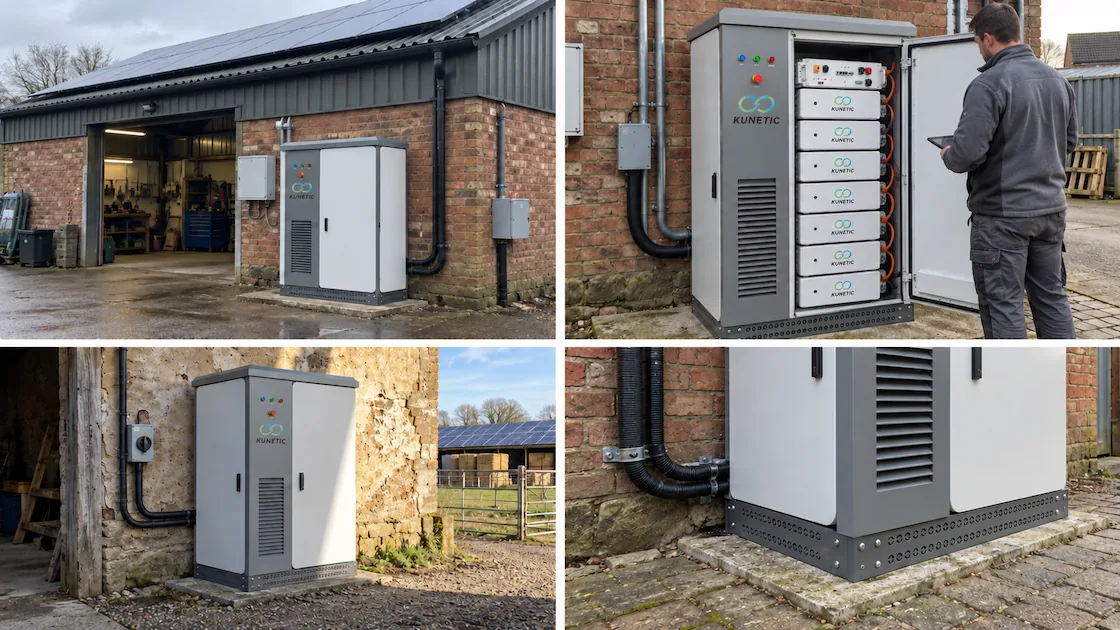
The cabinet measures approximately 1066 × 1274 × 1675 mm. That is about 1.36 m² for the cabinet body alone; the installation also needs room for open doors, cooling, service access and any required fire separation. Allow for approximately 900 kg for the 61.44 kWh version or 1000 kg for the 71.68 kWh version when planning the base and unloading route.
Technical data
Compare the battery and cabinet data below. Select the inverter or PCS using the complete voltage window, battery current limit and site electrical requirements.
| Battery platform | ||
|---|---|---|
| Battery chemistry | Lithium iron phosphate (LFP) | Lithium iron phosphate (LFP) |
| Rated capacity | 100 Ah | 100 Ah |
| Series-connected modules | 6 | 7 |
| Nominal battery energy | 61.44 kWh | 71.68 kWh |
| Nominal battery voltage | 614.4 V DC | 716.8 V DC |
| Battery operating voltage | 537.6–691.2 V DC | 627.2–806.4 V DC |
| Rated charge/discharge current | 50 A | 50 A |
| Maximum charge/discharge current | 100 A | 100 A |
| Recommended depth of discharge | 90% | 90% |
| Integration and enclosure | ||
| Reference PCS matching option | 50 kW; output subject to battery limits | 50 kW; output subject to battery limits |
| Reference AC-side voltage | 400 V AC | 400 V AC |
| Battery communication | CAN 2.0 | CAN 2.0 |
| Enclosure protection | IP55 | IP55 |
| Cooling | Fan cooling / thermal-management unit | Fan cooling / thermal-management unit |
| Fire suppression | Aerosol system | Aerosol system |
| Operating temperature | −10 to 50°C | −10 to 50°C |
| Cabinet dimensions (W×D×H) | 1066×1274×1675 mm | 1066×1274×1675 mm |
| Approximate cabinet weight | 900 kg | 1000 kg |
 Technical Data
Downloads
Get the configuration data for your preferred capacity. Include the project country, existing PV inverter and site voltage so KUNETIC can help match the cabinet to your commercial solar installation.
FAQ
Compare your available solar surplus with the electricity you want to use later. The 71.68 kWh version adds 10.24 kWh of nominal storage to the 61.44 kWh configuration. Meter data and the intended charge/discharge schedule help determine whether that additional energy is useful at your site.
Yes, with a suitable inverter or PCS and the appropriate control arrangement. Send your inverter model and electrical drawing. KUNETIC can then check the battery voltage window, communication and PV connection together. Solar panels connect through the selected conversion equipment.
The PCS rating describes the conversion equipment. Battery voltage, current limits, operating settings and the selected configuration determine the power the complete system can deliver continuously. Use both the battery data and PCS specifications when planning the site load.
A compatible backup configuration lets the cabinet supply selected loads during an outage. Select the loads to support and provide compatible islanding controls, grid isolation and transfer equipment. The required power and backup period determine the energy reserve and conversion equipment.
The cabinet body is approximately 1066 mm wide, 1274 mm deep and 1675 mm high. Allow additional space to open doors, reach service points and keep cooling equipment clear. Include the cabinet weight, cable route and local installation requirements when preparing the base and delivery route.
OEM / ODM support
Match the cabinet with suitable power-conversion equipment, site voltage and the intended solar or backup arrangement. Share existing equipment details to help build a practical system configuration.
Discuss cabinet branding, identification labels and finish requirements for your market. Battery-module labels and cabinet graphics can follow one consistent brand presentation.
Request configuration documents for your installer and plan packing, unloading and site access around the selected cabinet and delivery location.
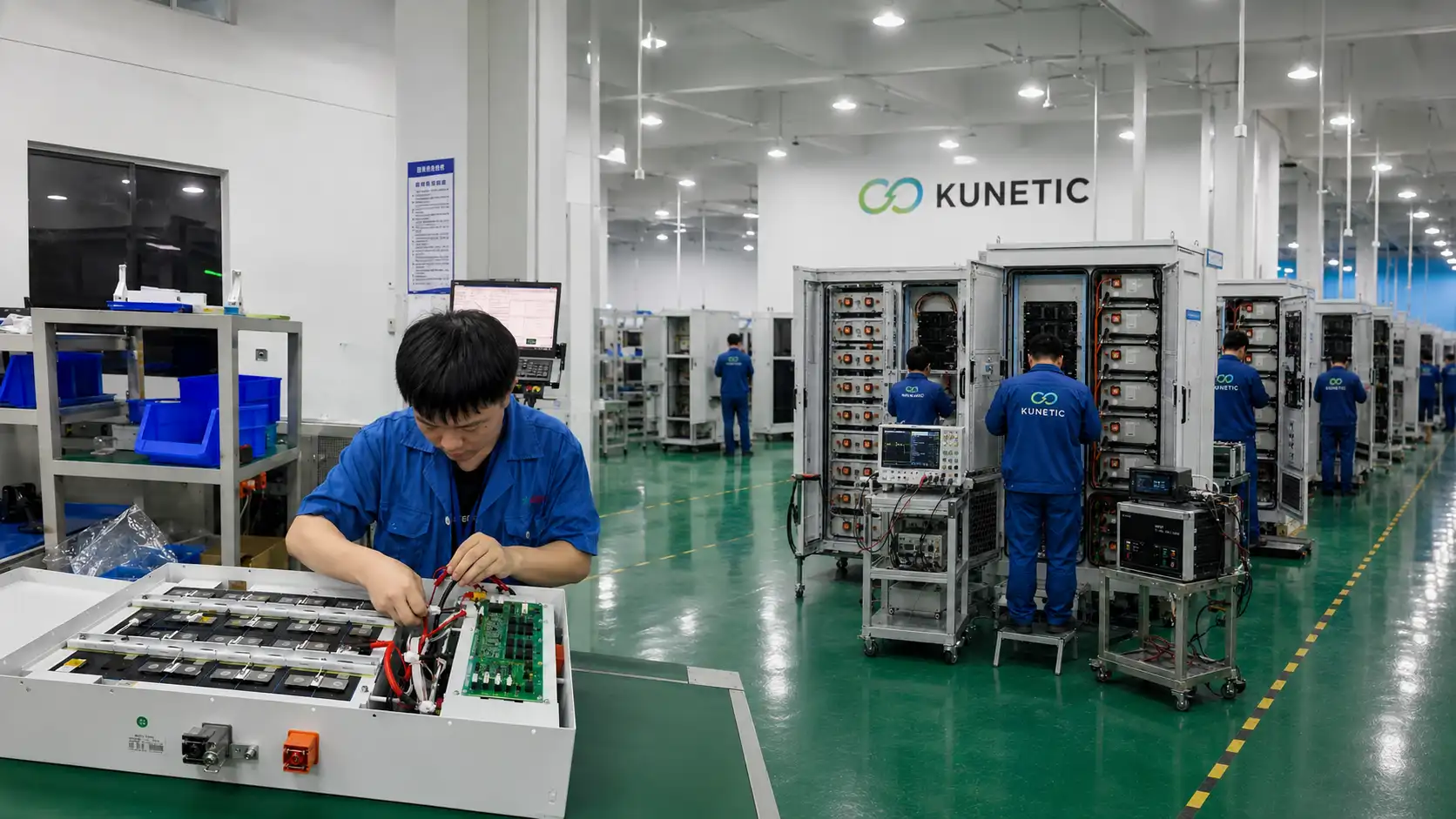
Send your daily energy use, PV system details and installation location. KUNETIC can help compare the 61.44 and 71.68 kWh options and match the storage configuration to your business.
KUNETIC 61–71 kWh Commercial Solar Battery Storage Cabinet
Datasheet request
Request received. We will send the datasheet shortly.
KUNETIC 61–71 kWh Commercial Solar Battery Storage Cabinet
Product inquiry
Tell us about your site load, PV capacity, backup requirements, or target project size. Our engineers will help configure the right system for your needs.
Inquiry received. Our team will respond shortly.