
 English
 Deutsch
 Español
 Français
 Italiano
 Polski
 Română
 العربية

Use more of your own solar
Store suitable surplus generation and release it during operating hours when solar output is lower.
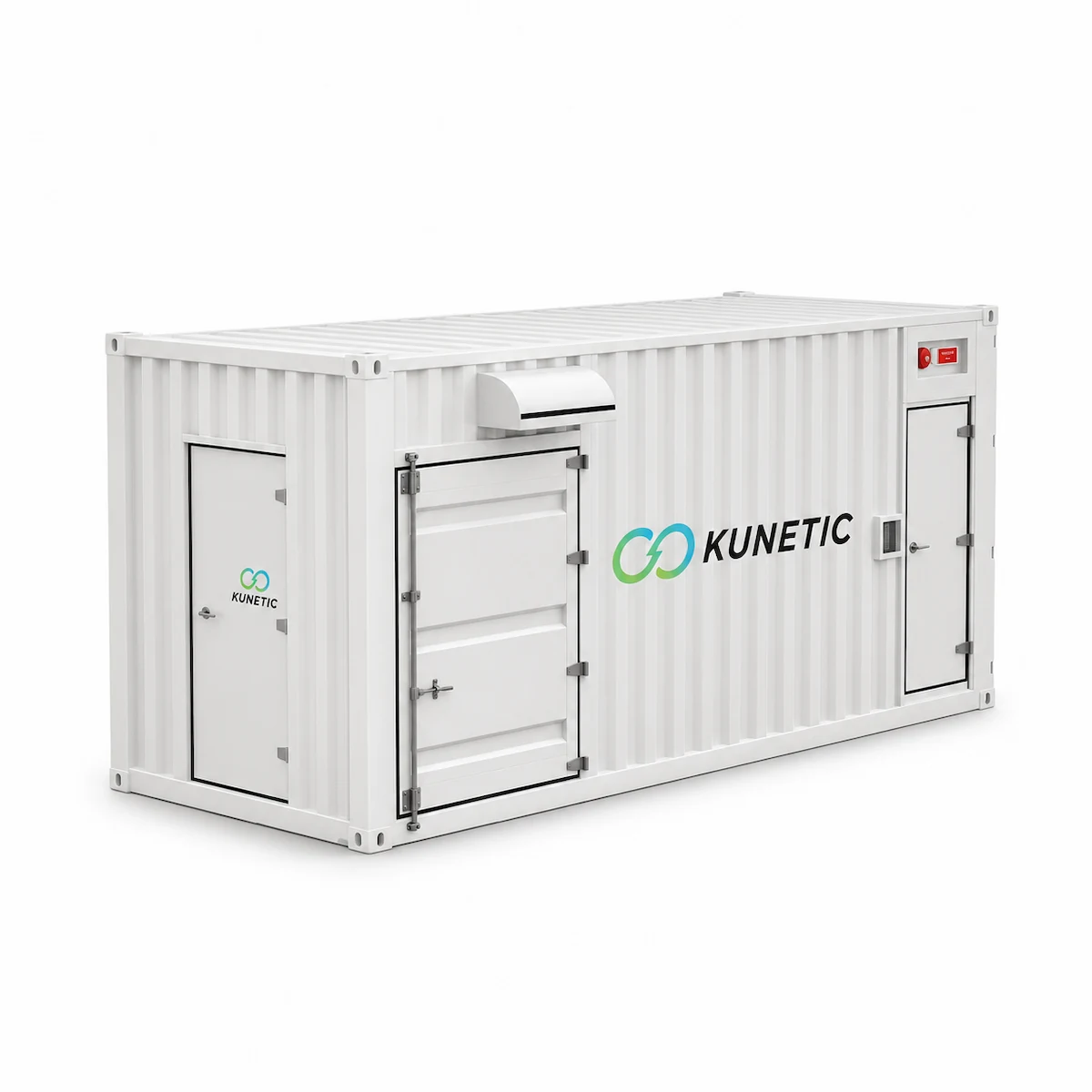
COMMERCIAL SOLAR + STORAGE
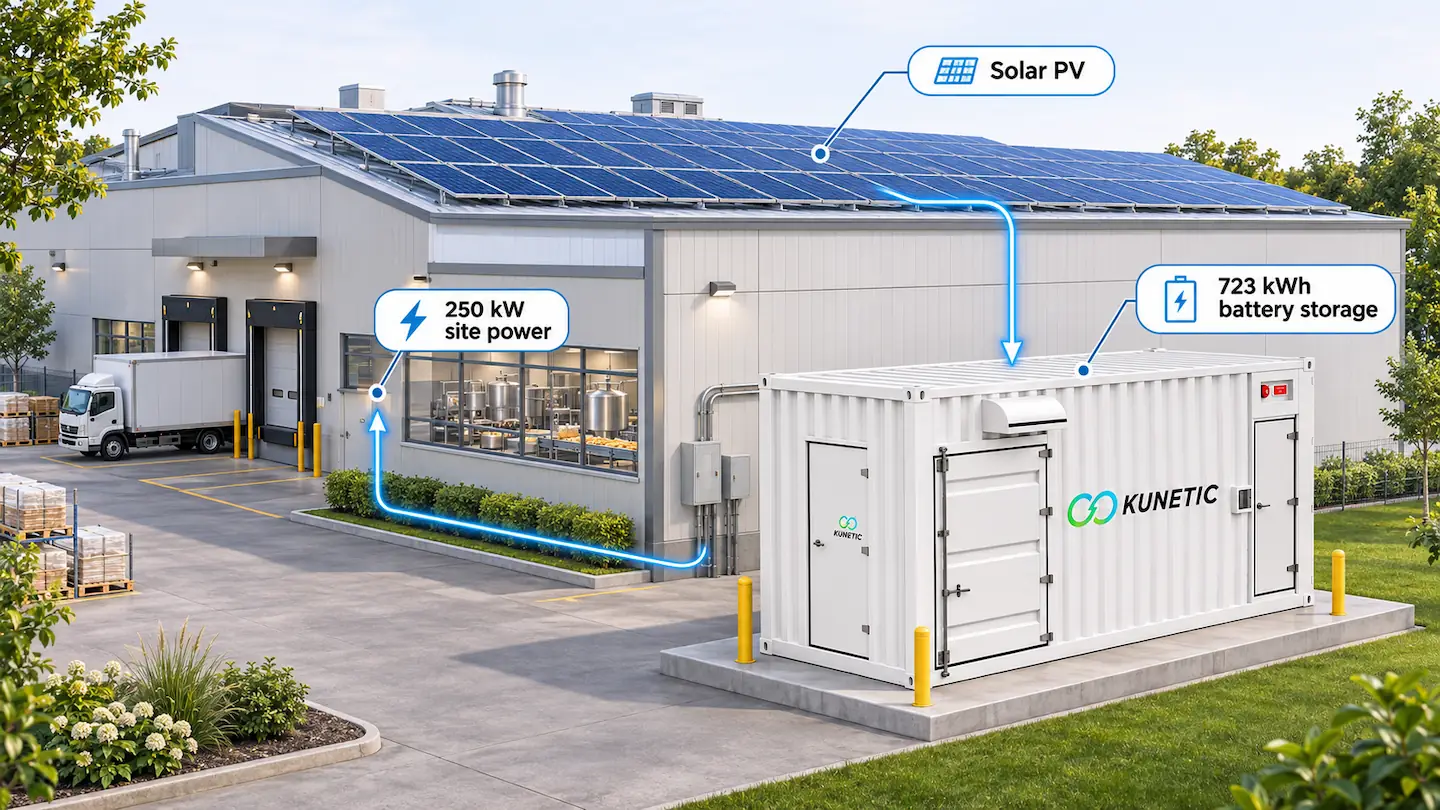
Turn more of your solar generation into power for your business. This 250kW solar BESS container brings 723kWh of LFP battery storage and five MPPT channels into a 20-foot system for commercial and industrial sites. Store available daytime generation, shift energy into later operating hours and manage demand around your electricity tariff. The pre-assembled format brings battery racks, power conversion, cooling and protection together, reducing the equipment you need to arrange separately. KUNETIC can help match the solar connection and control configuration to your factory, warehouse or processing facility.
 250 kW Rated AC Power
 723 kWh Nominal LFP Energy 5 × 50 kW MPPT Charging Channels
 20 FT Integrated Container
Commercial solar + storage
Solar production and business demand do not always rise together. A processing line may keep running after generation falls; a warehouse may need more power toward the end of a shift. A solar BESS stores available energy for those later needs instead of treating all surplus as an export opportunity.
This commercial solar battery configuration pairs 250kW of output power with 723kWh of nominal storage. It suits sites that need substantial stored energy without moving straight to a megawatt-scale power system.
Store suitable surplus generation and release it during operating hours when solar output is lower.
Schedule battery use around peak-rate periods and site demand, using the tariff and load profile to guide operation.
Battery storage, conversion, cooling and protection share one container platform for a more organized installation.
The solar connection
Five MPPT channels, rated at 50kW each, connect a suitable PV array to the storage system. The container combines this solar charging stage with LFP batteries and 250kW AC power conversion, bringing the main equipment for commercial solar energy storage into one enclosure.
Inside the system
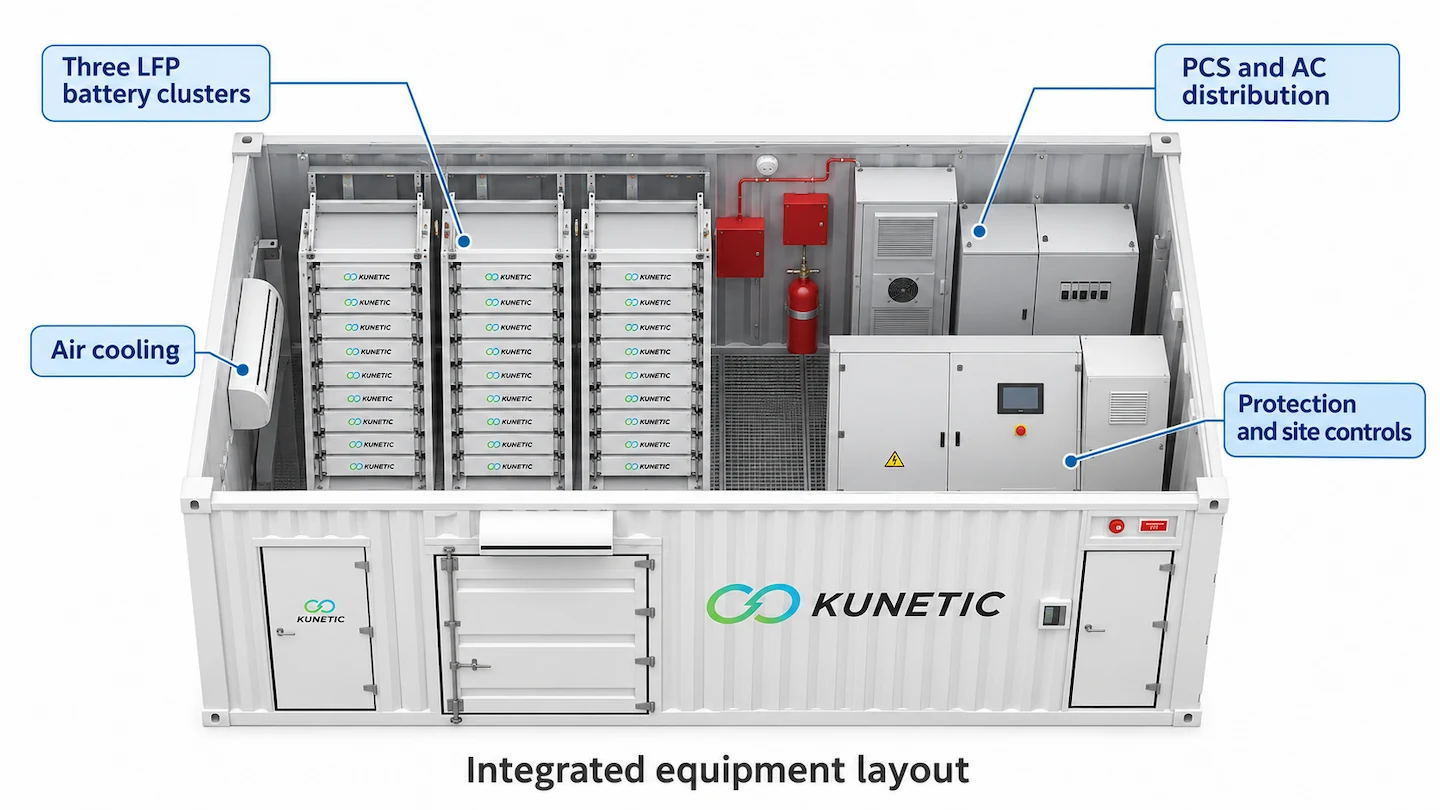
The battery arrangement uses three high-voltage clusters with 314Ah LFP cells. Each cluster contains fifteen battery packs, forming the storage side of the 723kWh system. The electrical equipment manages the connection between stored DC energy and the site's AC power.
 Battery storage and management
The battery management system (BMS) monitors the batteries and coordinates protection. Three clusters organize the battery storage into defined groups for monitoring and service.
 Power conversion and site controls
The PCS handles DC-to-AC conversion. Energy management and transfer equipment can be configured around the site's solar, grid and reserve-power requirements.
 Cooling, protection and access
Air cooling manages heat inside the container. Fire suppression and separate battery and electrical equipment areas support protection and service access.
Your operating day
Start with the electricity your site uses, then decide when the battery should charge and discharge. This is more useful than choosing an industrial BESS container from its battery capacity alone.
Use generation for active loads and store suitable surplus for the next part of the working day.
Dispatch stored energy when generation falls or grid electricity costs more. The useful saving depends on the tariff and energy actually shifted.

If backup is part of your plan, identify the loads, duration and available generator supply. Battery reserve and transfer equipment can then be selected together.
From assembly to installation
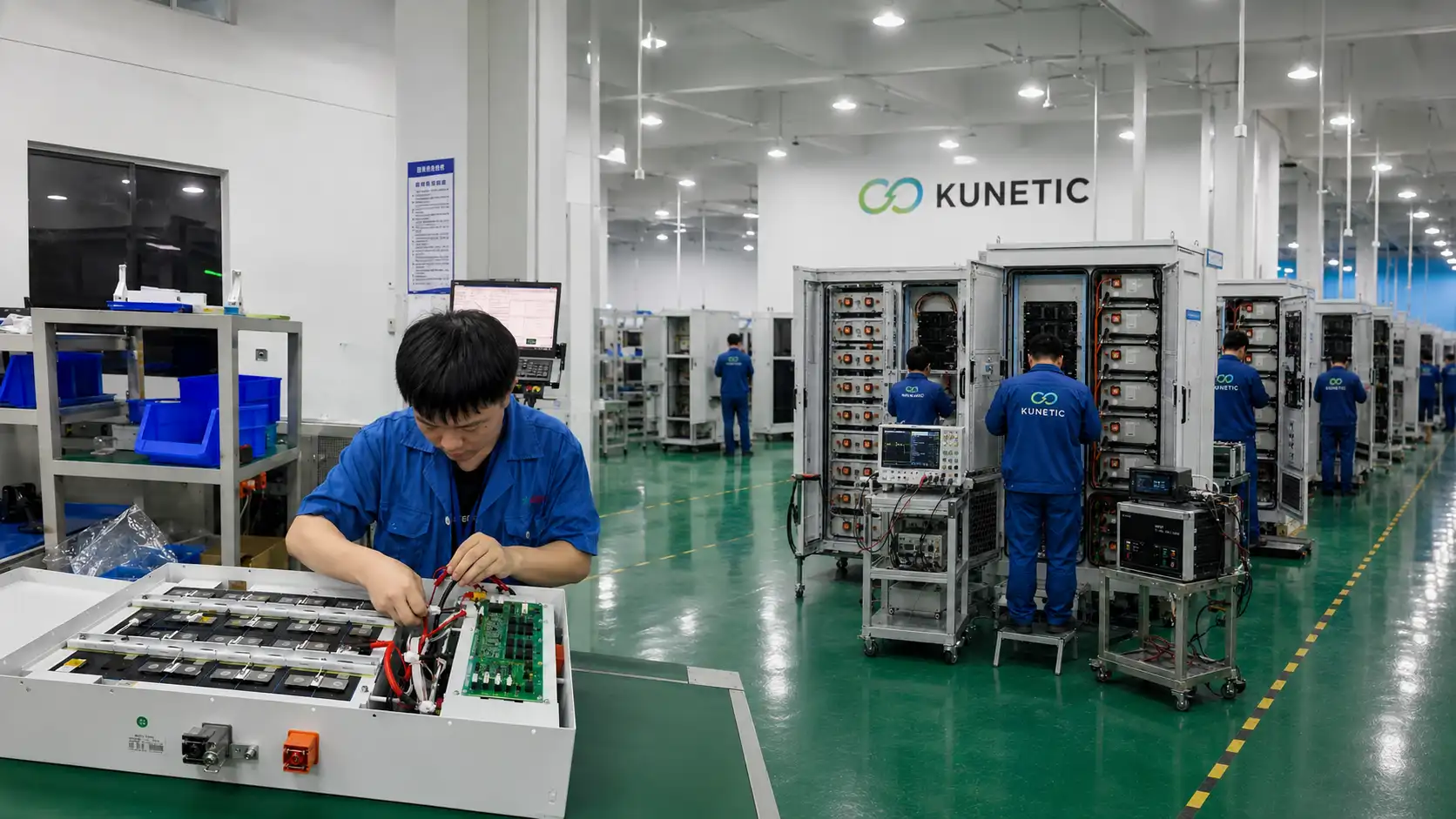
The pre-assembled system reduces on-site work by bringing the battery modules and main equipment together before delivery. Plan the foundation, lifting access and electrical connections around one 20-foot container instead of arranging separate battery and conversion equipment across the site.
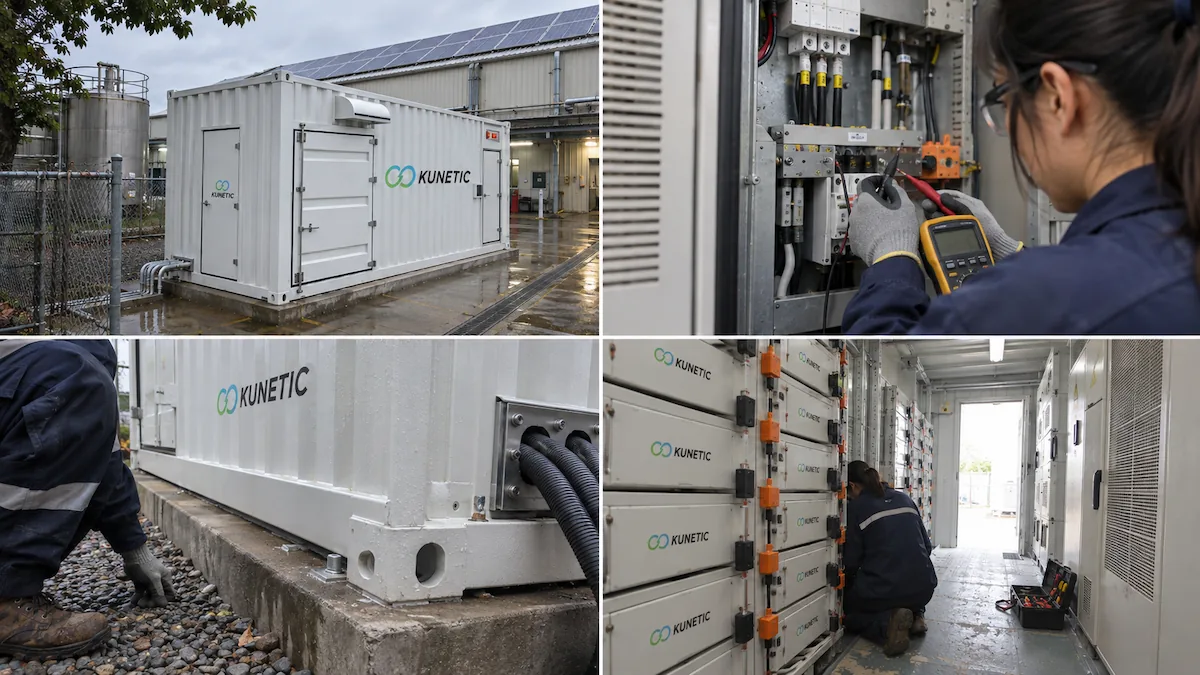
Review the foundation, lifting route, cable entry, ventilation and service access together. Installation space includes maintenance and safety clearances beyond the container itself.
Coordinate the solar inputs, AC distribution and communication with the site's electrical design. Share the installation country so the proposed connection can be reviewed for the project.
Use the load profile, solar production and tariff to set charging, demand management and reserve priorities.
Technical data
Review the battery, solar and AC ratings together when comparing the system with your site requirements.
| Battery storage | |
|---|---|
| Rated battery energy | 723 kWh nominal |
| Cell chemistry | Lithium iron phosphate (LFP) |
| Cell rated capacity | 314 Ah |
| Battery arrangement | 3 × 1P240S clusters |
| Packs per cluster | 15 × 1P16S |
| Nominal battery voltage | 768 V DC |
| Listed operating voltage | 720–850 V DC |
| Solar charging | |
| Number of MPPT channels | 5 |
| Rated power per MPPT | 50 kW |
| MPPT operating range | 420–850 V DC |
| Listed PV rated voltage | 600 V DC |
| AC connection | |
| Rated AC output power | 250 kW |
| Rated AC voltage | 380 / 400 V |
| AC system | Three-phase, 3W+N+PE |
| Rated frequency | 50 Hz |
| Container and environment | |
| Enclosure format | 20-foot container |
| System protection rating | IP55 |
| Cooling | Air cooling |
| Fire suppression | Perfluorohexanone |
| Charging temperature | 0–55°C |
| Discharging temperature | −10–60°C |
| Operating humidity | 5–85% RH |
| Listed depth of discharge | 80–90% |
| EMS and transfer arrangement | Configured for the project |
 Technical Data
Downloads
Get the electrical data for your commercial solar-storage project. Include your installation country, PV plan and required operating power so we can help you compare the configuration.
FAQ
It combines battery storage and power conversion for a commercial solar project. Available generation can be stored and used later, while the operating schedule can support solar self-consumption and demand management. This configuration provides 250kW rated AC power and 723kWh nominal battery energy.
The configuration specifies five MPPT channels rated at 50kW each. PV modules, mounting and field cabling are selected for the site. Share the array you have or plan to install so the solar equipment can be matched to the system.
An existing PV installation may need a different integration route from a new array connected directly to the MPPT stage. Send the solar inverter model, array details and site single-line diagram for a connection review.
723kWh is nominal battery energy, while 250kW is the AC power rating. Available operating time depends on usable battery energy, conversion and cooling consumption, reserve settings and the changing load. Use those factors to size the system for your required working window.
Backup operation depends on the selected controls and transfer arrangement as well as battery reserve. Share the essential loads, starting requirements and generator details so we can propose a suitable configuration.
Plan for the 20-foot enclosure plus cable access, ventilation, lifting and maintenance space. The foundation and required safety clearances depend on the site. KUNETIC can help review the proposed location during project planning.
Send the installation country, site voltage, load profile or demand data, solar capacity and the hours you want storage to cover. Add any backup needs and the proposed location. These details help us recommend the equipment and operating configuration.
OEM / ODM support
Discuss the PV connection, operating priorities, monitoring and reserve-power requirements with KUNETIC. We can help turn those inputs into a suitable commercial energy storage proposal.
OEM / ODM support is available for project and distribution requirements. Talk to us about branding, documentation and the configuration you need for your market.
Tell us where the system will be installed, how much power your site uses and how your solar generation will connect. Add a load profile or operating schedule, and we can help assess the 250kW / 723kWh configuration for your business.
KUNETIC 250kW / 723kWh Solar BESS Container for Commercial Energy Storage
Datasheet request
Request received. We will send the datasheet shortly.
KUNETIC 250kW / 723kWh Solar BESS Container for Commercial Energy Storage
Product inquiry
Tell us about your site load, PV capacity, backup requirements, or target project size. Our engineers will help configure the right system for your needs.
Inquiry received. Our team will respond shortly.