
 English
 Deutsch
 Español
 Français
 Italiano
 Polski
 Română
 العربية
Reduce Peak Grid Demand
Charge ahead of a planned peak and discharge while factory demand is high. A site-specific schedule can support production loads without treating the battery as an unlimited replacement for the grid.
COMMERCIAL & INDUSTRIAL BESS
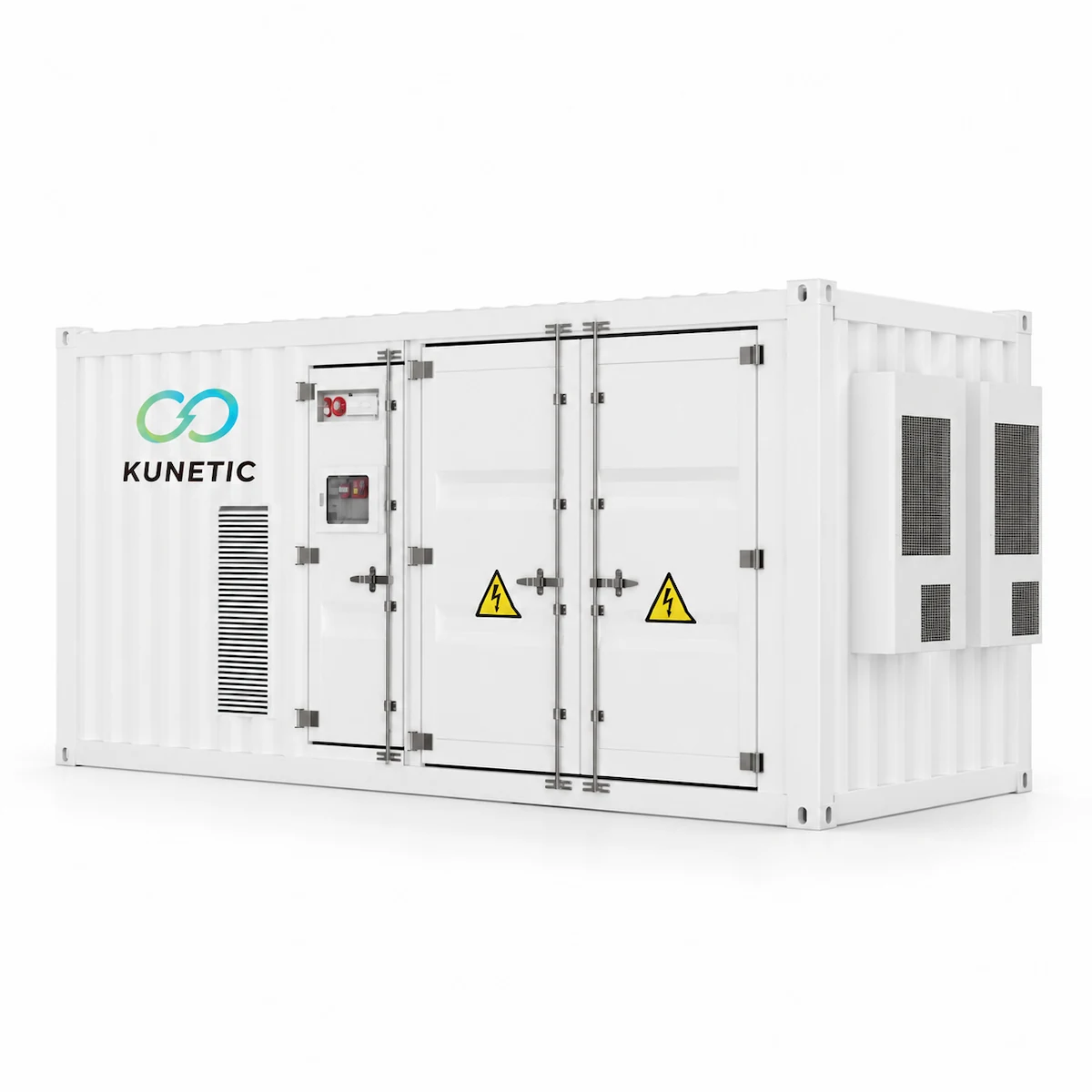
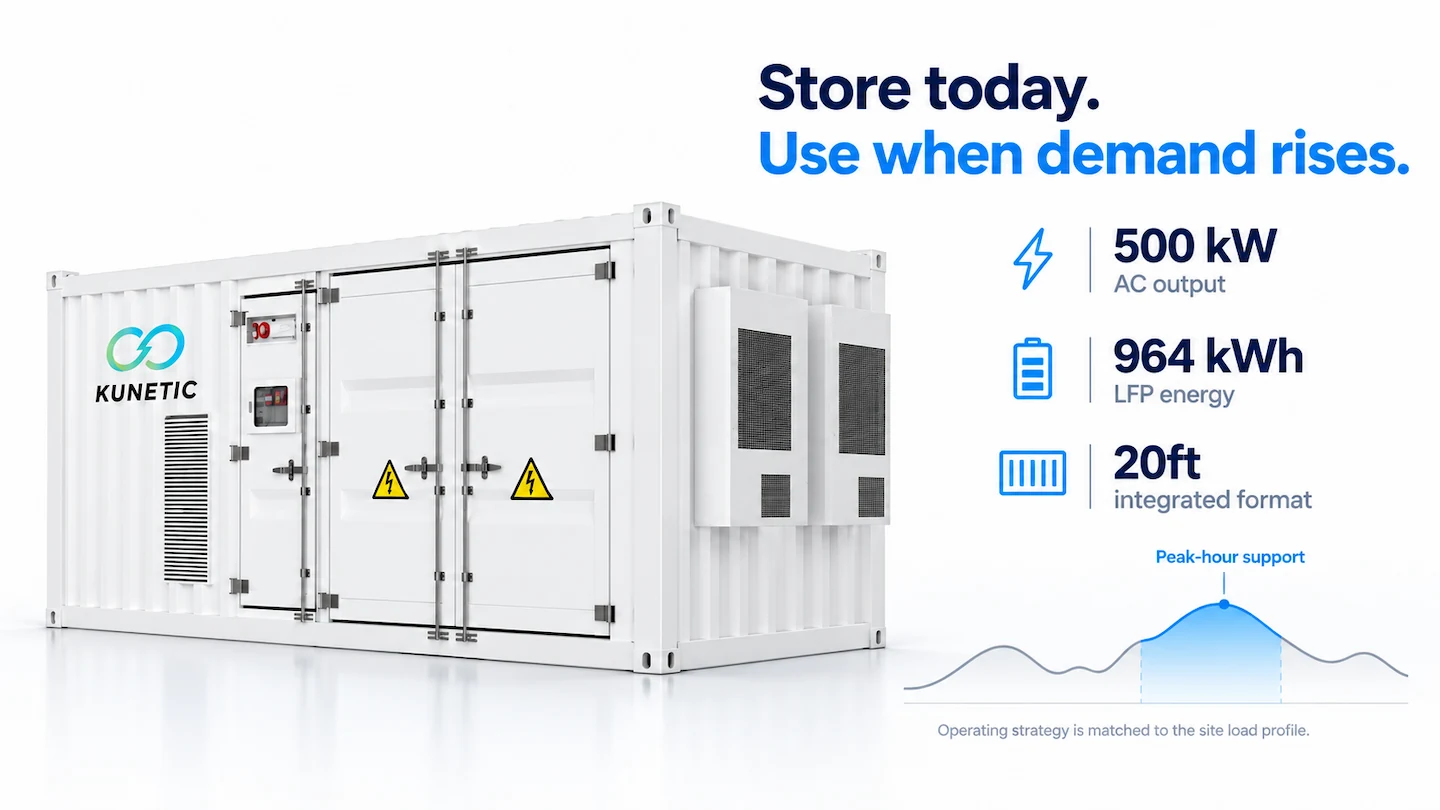
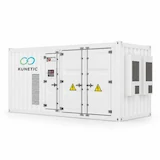
Store energy for your factory's busiest hours. This 1MWh-class BESS container pairs 500kW of AC output with 964kWh of nominal LFP battery energy. Both fit within a 20ft, air-cooled system. It gives commercial sites a defined storage platform for peak shaving and shifting energy into higher-demand periods. Four clusters of 314Ah cells form the battery platform. The container combines storage, power conversion, cooling and fire protection. Share your load profile and solar details. We can help plan charging and discharging around your working hours.
 500 kW Rated AC Output
 964 kWh Nominal LFP Energy 314 Ah LFP Cell Capacity
 20ft / IP55 Container Format
ENERGY FOR YOUR BUSINESS
A factory's highest electricity demand may last only part of the working day. A lithium battery storage container can supply part of that demand from stored energy, helping reduce the power drawn through the site meter during those periods. The useful starting point is your load curve: when the peak occurs, how high it rises and how long it lasts.
Charge ahead of a planned peak and discharge while factory demand is high. A site-specific schedule can support production loads without treating the battery as an unlimited replacement for the grid.
Store energy that would otherwise be exported or curtailed, then use it later in the day. We can select the solar interface and controls for an existing installation or a new project.
POWER × ENERGY
Start with the part of your demand that the battery should cover. Supplying 200kW of a factory peak for a short period is a different task from carrying a continuous 500kW load. Your production schedule, solar generation and reserve setting all affect the storage duty.
The 500kW PCS determines the system's AC power capability. The 964kWh battery determines the nominal energy available before the selected operating window and losses. Looking at both figures helps you choose storage for the job, rather than choosing on battery capacity alone.
Nominal energy ÷ constant load
Share interval-meter data, or list the main loads and their operating hours. Include the peaks you want to reduce and any loads you want to keep supplied during an outage.
THE STORAGE PLATFORM
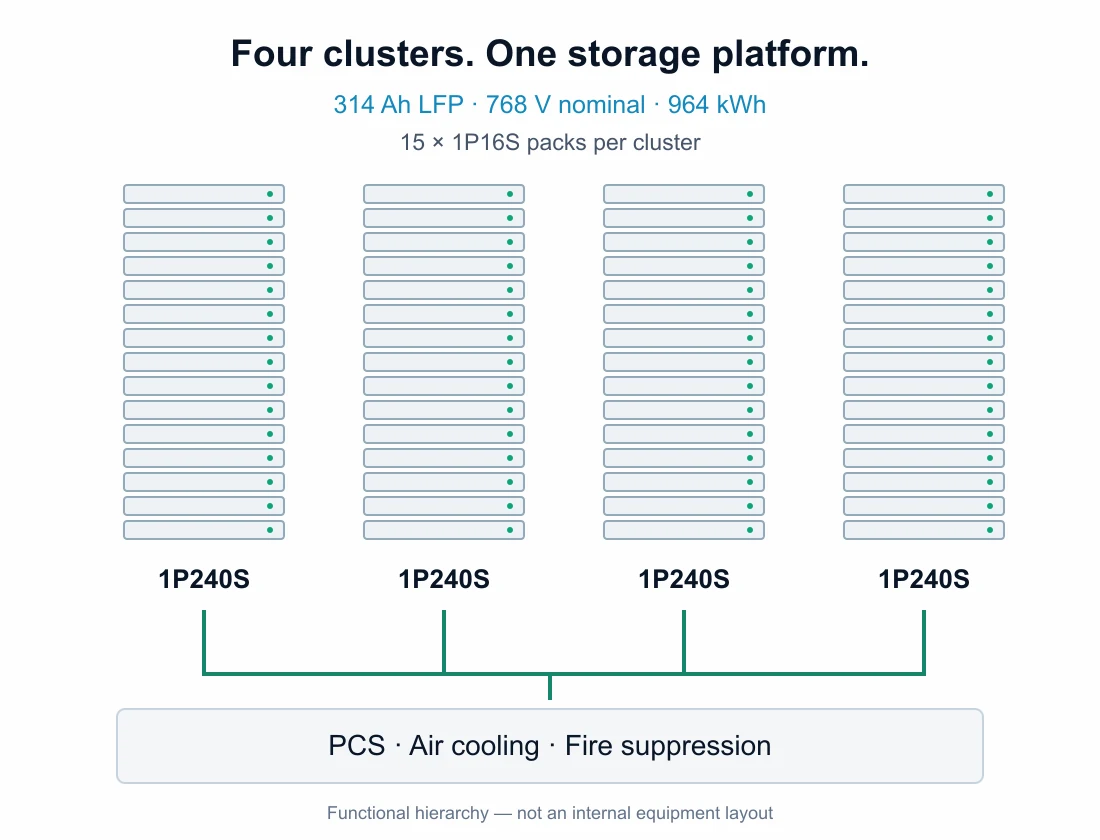
The 964kWh configuration uses four clusters of LFP lithium-ion batteries. Each cluster uses fifteen 1P16S battery packs, giving a 1P240S arrangement and a nominal battery voltage of 768V. This structure gives engineers a clear basis for matching the battery and PCS.
Air cooling manages heat within the container, while the IP55 enclosure protects the equipment in outdoor use. Battery monitoring, electrical protection and a fire suppression system provide further protection. Installation clearances, ambient conditions and routine inspection remain part of good site planning.
The listed AC configuration is 380/400V, 50Hz. Its two-way PCS connects the battery to the site's AC system. It controls charging and discharging alongside the grid and site loads. Existing solar can be considered as part of the same energy plan.

A peak-shaving scheme needs meter data and a control strategy that follows the site's import limit or schedule. Solar shifting needs coordination with generation and demand. If backup operation is required, we can help select the switching, protection and control arrangement around the loads that matter most.
Relate storage capacity to the actual surplus solar energy and evening demand. Solar array size alone does not determine the right battery capacity.
Set a charging and discharging schedule around the site's electricity tariff and production hours. The achievable benefit depends on those local conditions.
Separate the important loads from the whole-site demand. Starting currents, transfer requirements and desired reserve help define the backup configuration.
FROM THE LOAD PROFILE TO THE SITE
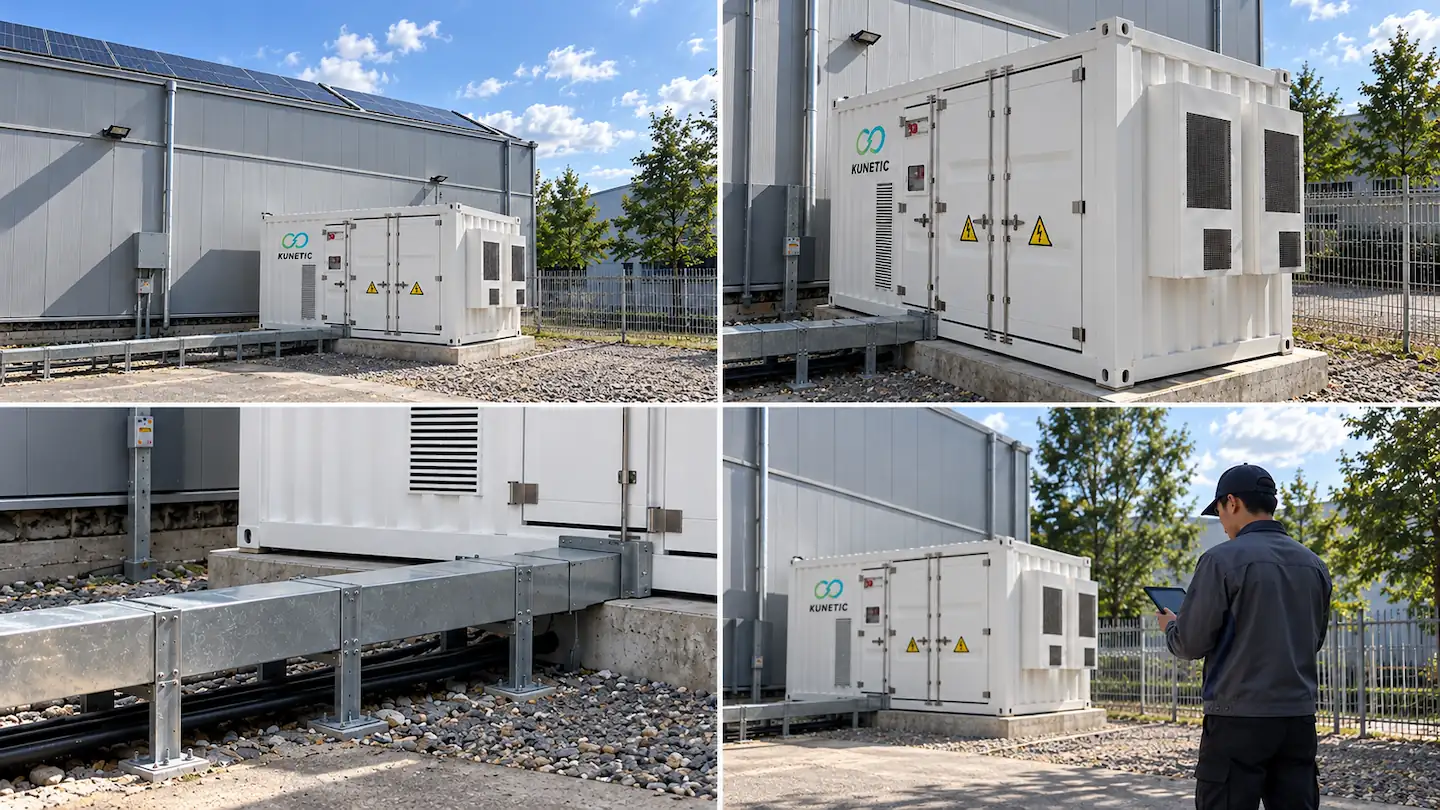
This battery energy storage system keeps large battery capacity outside occupied production space. It can serve a single facility or form part of a wider site energy plan, with the electrical interface selected for the installation.
Support recurring peaks from overlapping production processes. A load profile shows whether short peak support or longer energy shifting is the better use of the battery.
Coordinate storage with rooftop solar, lighting, refrigeration and charging demand. Match the charging schedule to the hours when surplus energy is available.
Plan storage around the shared meter and the loads served by it. Compare this 964kWh configuration with a larger system when the required energy window grows.
PRE-INTEGRATED. SITE-PLANNED.
Battery clusters, power conversion, cooling and fire protection are brought together in a container format. Factory integration reduces the need to handle and assemble individual battery modules at the installation site. It also keeps the main storage equipment in a dedicated outdoor enclosure.
At the site, plan the storage location, delivery and lifting access, a suitable foundation and the electrical connection. Access to the doors and cooling equipment should remain clear for inspection and service.
Choose a location with a suitable foundation, delivery and lifting access, and clear service routes around the container. Plan cable routes, site distribution, earthing and protection with the responsible electrical team.
Send KUNETIC your installation country, AC voltage and frequency, a site layout and the purpose of the system. We can help compare this 500kW configuration with our 2MWh container battery storage or a generator-and-battery hybrid system when your application calls for a different power arrangement.
Technical Specifications
Engineering data from the product sheet.
| Rated AC output | 500kW |
| Nominal battery energy | 964kWh |
| Cell chemistry | Lithium iron phosphate (LFP) |
| Cell nominal voltage and capacity | 3.2V / 314Ah |
| Battery pack arrangement | 1P16S |
| Battery cluster arrangement | 1P240S; 15 packs per cluster |
| Number of battery clusters | 4 |
| Nominal battery voltage | 768V |
| Battery operating voltage | 720–850V |
| AC voltage | 380/400V |
| AC connection | Three-phase, neutral and protective earth |
| Rated frequency | 50Hz |
| PCS conversion efficiency | 98% |
| AC cycle efficiency | ≥90% |
| Container format | 20ft |
| System ingress protection | IP55 |
| Thermal management | Air cooling |
| Fire suppression | Perfluorohexanone |
 Technical Data
Downloads
Request the configuration datasheet for the 500kW / 964kWh system. Include your installation voltage, load profile and solar details so we can help you review the most relevant technical information.
This is a 1MWh-class system. Its exact nominal capacity is 964kWh, paired with 500kW of rated AC output.
The nominal energy-to-load ratio is 1.93 hours before the operating window and system losses. Actual duration is shorter and depends on the usable state-of-charge range, reserve, temperature, conversion efficiency and auxiliary consumption. We use your load profile to plan the required duration.
Yes, solar integration can be planned around the existing inverter, AC system and site controls. Share the solar capacity, inverter details and expected surplus generation. We can help select the interface and scheduling approach for the project.
A backup configuration can be planned for selected factory loads. The PCS operating mode, switching, protection and control equipment must suit the required transfer performance and starting loads. Tell us which equipment must remain supplied and for how long.
The documented system brings together four LFP battery clusters, power conversion, air cooling, an IP55 enclosure and perfluorohexanone fire suppression. Solar input equipment and backup switching are selected for the application.
The battery and PCS configuration, control functions, solar interface, backup equipment, delivery destination and site requirements all affect the proposal. Send a load profile and installation details to receive a configuration-based quotation.
Tell us what you want storage to achieve: lower peak demand, use more of your solar energy or support selected loads. Share your country, site voltage, load profile and preferred installation location.
KUNETIC can help you choose a suitable storage configuration and prepare the technical information for your project.
KUNETIC 500kW / 964kWh Lithium Battery Storage Container
Datasheet request
Request received. We will send the datasheet shortly.
KUNETIC 500kW / 964kWh Lithium Battery Storage Container
Product inquiry
Tell us about your site load, PV capacity, backup requirements, or target project size. Our engineers will help configure the right system for your needs.
Inquiry received. Our team will respond shortly.