
 English
 Deutsch
 Español
 Français
 Italiano
 Polski
 Română
 العربية
While the sun is out
Solar energy can supply connected loads and charge the stack. Available charging power depends on PV output and the loads already running.
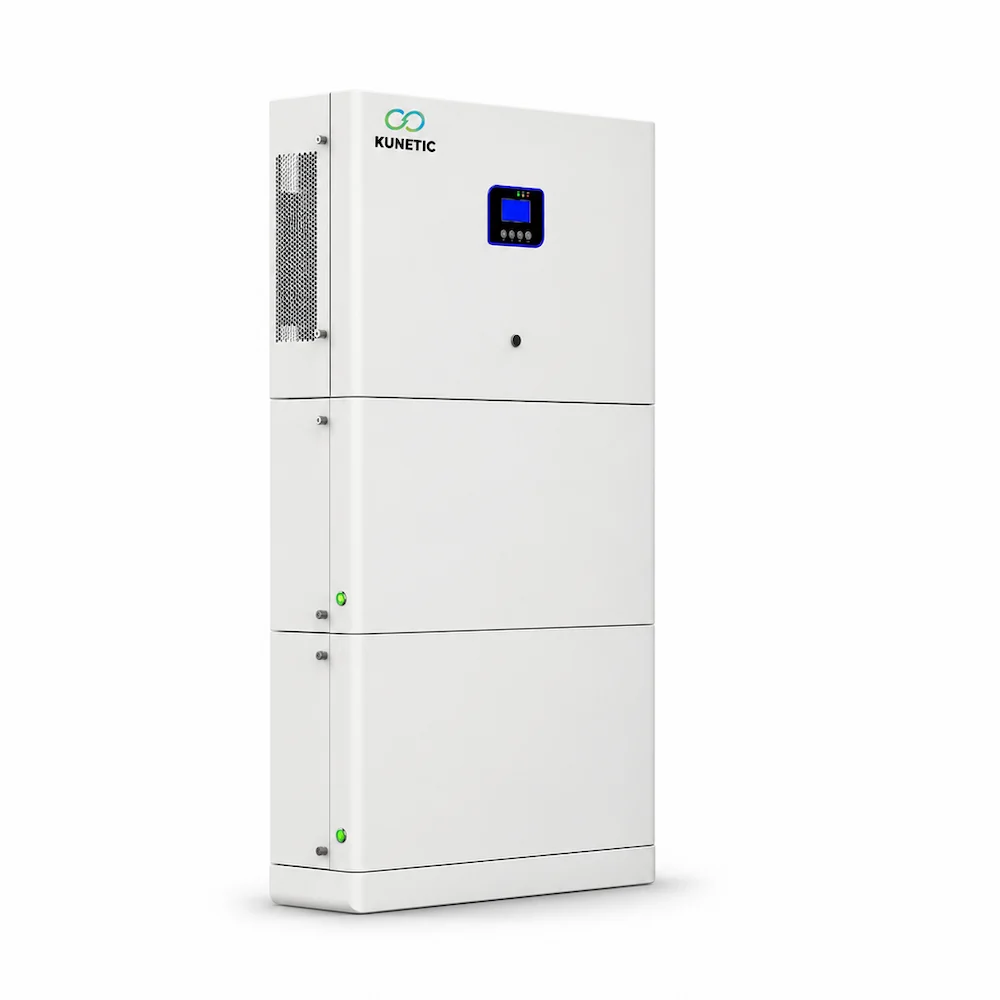
230V single-phase inverter with 5.12–20.48kWh of LFP storage
Run selected 230V circuits in a home or cabin with a 6.2kW off-grid solar inverter with battery storage built into the same stack. The inverter includes an MPPT solar charger. Each LFP battery module adds 5.12kWh of nominal storage, so you can choose from 5.12 to 20.48kWh based on how much energy you use after sunset.
 6.2 kW Rated Inverter Output
 5.12–20.48 kWh Nominal LFP Storage
 230 V Single-Phase AC
 1–4 modules Stackable Battery
The inverter, solar charger and battery modules fit in one floor-standing stack. The same design works for everyday off-grid solar and for selected home backup circuits on a separate 230V supply.
Choose one to four 51.2V LiFePO4 modules. Each module adds 5.12kWh of nominal energy. Larger stacks provide more energy for the hours when solar output falls.
The inverter is rated at 6.2kW and delivers a pure sine wave. Check which loads will run together, their starting demand and the discharge limits of the selected battery stack.
The built-in MPPT charger accepts a solar array rated up to 6.5kW. Match the array voltage and current to the inverter before selecting the panels and string arrangement.
A suitable AC input can recharge the battery when solar generation is low. Choose the charging settings and supply arrangement with your installer.
Choose one to four modules for the stackable solar battery. All four options use the same 6.2kW inverter. Before choosing a stack, list what you use after sunset and for how long. Compare that demand with the battery energy available after reserve and conversion losses.

| Battery modules | Nominal energy | Stack height | Net weight |
|---|---|---|---|
| 1 | 5.12kWh | 840mm | 60kg |
| 2 | 10.24kWh | 1,180mm | 110kg |
| 3 | 15.36kWh | 1,520mm | 160kg |
| 4 | 20.48kWh | 1,860mm | 210kg |
Adding modules increases stored energy. The inverter retains its 6.2kW rating. Ask us to check battery discharge limits for the selected stack and confirm the floor support, equipment access and service clearances.
PV panels feed the integrated MPPT charger. The battery stores available energy, and the inverter supplies selected 230V circuits. A compatible AC source can provide charging when available.

Solar energy can supply connected loads and charge the stack. Available charging power depends on PV output and the loads already running.
The battery supplies the inverter. Overnight use depends on usable energy and which appliances run. Include refrigeration and pump starting demand in your load list.
An installer can plan the AC input around the source and the site's load priorities. This product is specified for off-grid operation.
Use this solar battery system where a fixed equipment area makes sense and selected 230V circuits can be planned in advance.

Store daytime solar for evening lighting, refrigeration and internet equipment. List essential circuits first to estimate the energy you need.
Plan for the hours between daytime solar production and the next charging window. Include winter solar conditions, pump starts and any loads you expect to use overnight.
Compare running power and startup demand before selecting a stack. A larger battery can extend operating time within the system's power limits.
Technical Specifications
Engineering data from the product sheet.
| Rated inverter output | 6.2kW / 6.2kVA |
| Nominal AC output | 230V single-phase |
| Frequency | 50/60Hz |
| Output waveform | Pure sine wave |
| Listed surge power | 12.4kVA |
| AC transfer time | 10ms UPS mode / 20ms appliance mode |
| Peak conversion efficiency | 96% PV to inverter / 93% battery to inverter |
| Battery chemistry | Lithium iron phosphate (LFP) |
| Nominal battery voltage | 51.2V DC |
| Nominal battery energy | 5.12 / 10.24 / 15.36 / 20.48kWh |
| Nominal battery capacity | 100 / 200 / 300 / 400Ah |
| Battery voltage range | 42.0–58.4V DC |
| Maximum PV array power | 6.5kW |
| MPPT operating window | 60–450V DC |
| Maximum PV open-circuit voltage | 500V DC |
| Maximum PV input current | 27A |
| Maximum solar charge current | 120A |
| Maximum AC charge current | 100A |
| Maximum combined charge current | 120A |
| Configuration | Floor-standing stack, one to four battery modules |
| Stack height | 840 / 1,180 / 1,520 / 1,860mm |
| Net weight | 60 / 110 / 160 / 210kg |
| Charge temperature | 0 to 50°C |
| Discharge temperature | −10 to 50°C |
| Operating humidity | 5–95% RH, non-condensing |
 Technical Data
Downloads
Get the technical data for your preferred battery stack. Share your installation country, supply voltage and main loads so we can point you to the relevant configuration.
Estimate how much energy your selected loads need between charging windows. One module stores 5.12kWh nominal and four store 20.48kWh nominal. Allow for your reserve, usable battery energy and inverter losses.
The inverter is rated at 6.2kW across the four configurations. Additional modules increase stored energy. Confirm the selected stack's battery-side current limit and your loads' starting demand when sizing the system.
Send the panel model, number of panels and string layout. Your installer can check the array against the inverter's 6.5kW maximum PV rating, 60–450V MPPT window, 500V open-circuit voltage limit and 27A PV input limit.
This version supplies nominal 230V single-phase AC for off-grid operation. Share your country and local supply details so we can check the appropriate configuration.
The configured stack combines the inverter, integrated MPPT solar charger and selected battery modules. Ask us about PV panels, external protection, cabling and other site equipment needed for the installation.
The listed stack height ranges from 840 to 1,860mm and net weight from 60 to 210kg. Confirm the equipment drawing, floor support and clearances for the configuration you select.
Tell us the supply standard, capacity mix, finish and quantity you need. We can discuss a configuration for your distribution range or repeat installations.
Discuss your requirements
Share your country, 230V supply details, essential loads, expected hours of use and installation space. We will help you compare the battery stacks and identify the PV and AC inputs to plan around.
KUNETIC 6.2kW All-in-One Off-Grid Solar Inverter
Datasheet request
Request received. We will send the datasheet shortly.
KUNETIC 6.2kW All-in-One Off-Grid Solar Inverter
Product inquiry
Tell us about your site load, PV capacity, backup requirements, or target project size. Our engineers will help configure the right system for your needs.
Inquiry received. Our team will respond shortly.