Reliable Energy Storage — Download Free Catalog Download Now
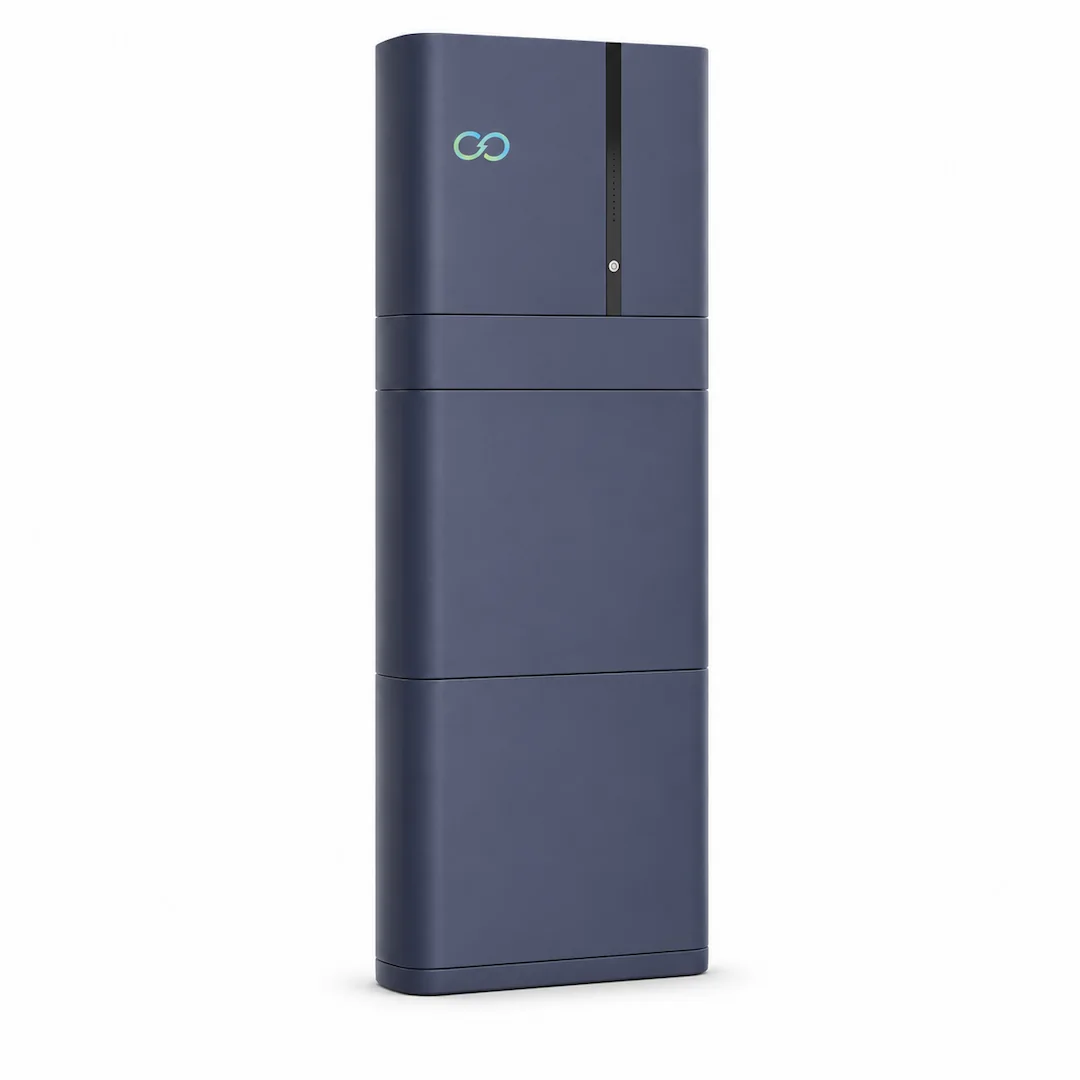
Assembled 19.2kWh two-box three-phase battery system on a white background

Stackable home energy storage

10kW All-in-One Three-Phase Solar Battery Storage System 9.6 or 19.2kWh Stackable LFP Storage

The KUNETIC all-in-one system combines a 10kW three-phase hybrid inverter and high-voltage LFP batteries in a single vertical stack. Choose one 9.6kWh battery box or two for 19.2kWh, based on how much solar energy you want to store for the evening and which circuits you want to back up.

10 kW Rated AC Output
9.6 / 19.2 kWh Nominal LFP Energy
400 V Three-Phase Class
2 MPPTs Solar PV Input
Built for three-phase homes

Features

  • All-in-One Stack Design

    The matching inverter sits above the battery boxes in one vertical assembly. Plan a single equipment footprint for the inverter and battery.

  • 9.6kWh per Battery Box

    Choose one box for 9.6kWh or two for 19.2kWh of nominal storage. The two-box configuration stores more daytime solar for evening use or backup.

  • 10kW Three-Phase Hybrid Output

    The inverter is rated for 10kW AC output and suits 380, 400 or 415V three-phase supplies with neutral and protective earth.

  • Up to 15kW PV Input with Dual MPPT

    Two independent trackers give your installer flexibility to plan separate strings, for example on roof surfaces that face different directions.

  • IP65 Enclosure

    The enclosure gives you more placement options, from a garage equipment area to a sheltered courtyard, subject to the installation requirements.

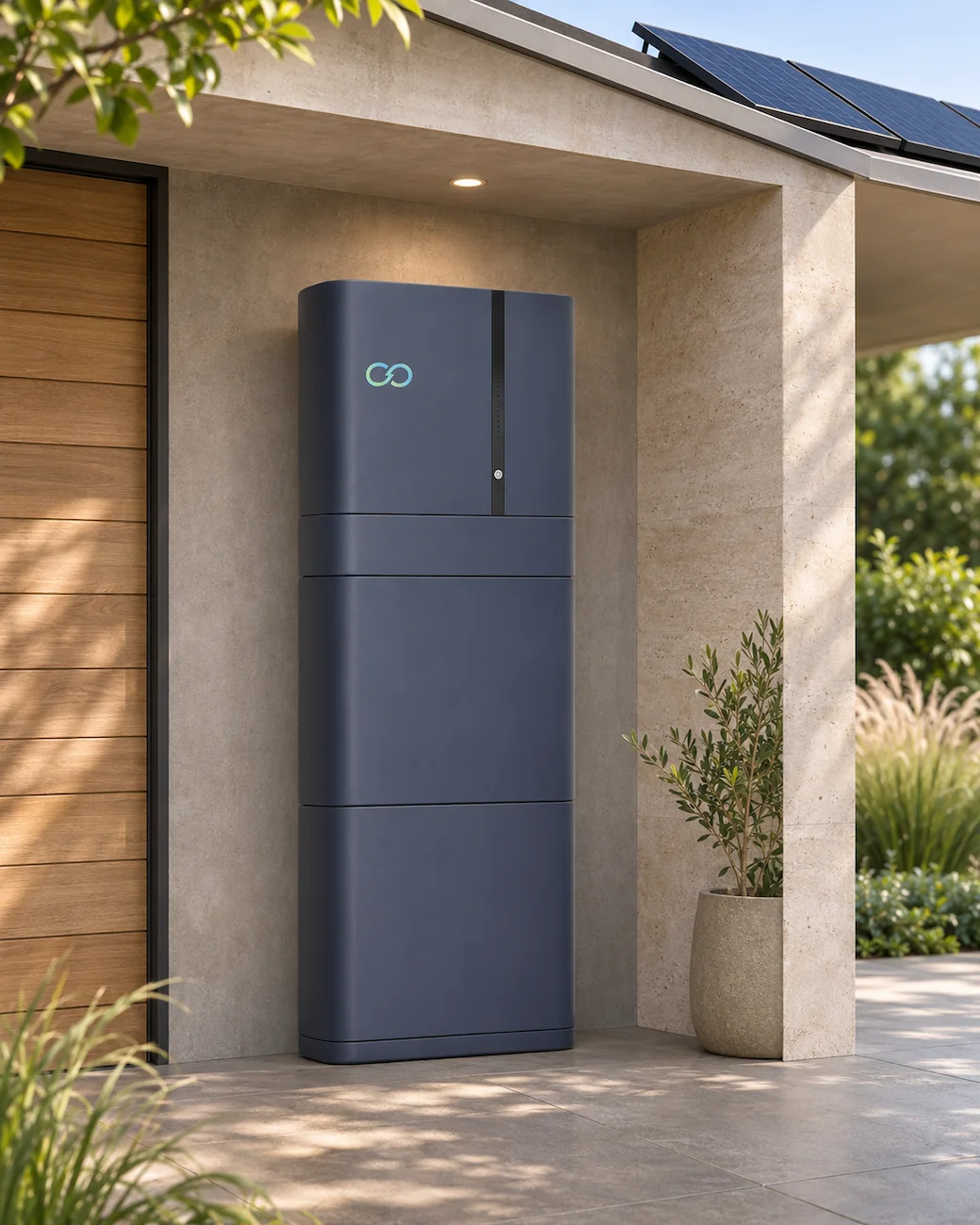
Assembled three-phase battery stack in a sheltered residential equipment recess beneath rooftop solar panels
All-in-one stack in a sheltered home solar setting
One inverter · two battery sizes

Choose the stack that fits your day

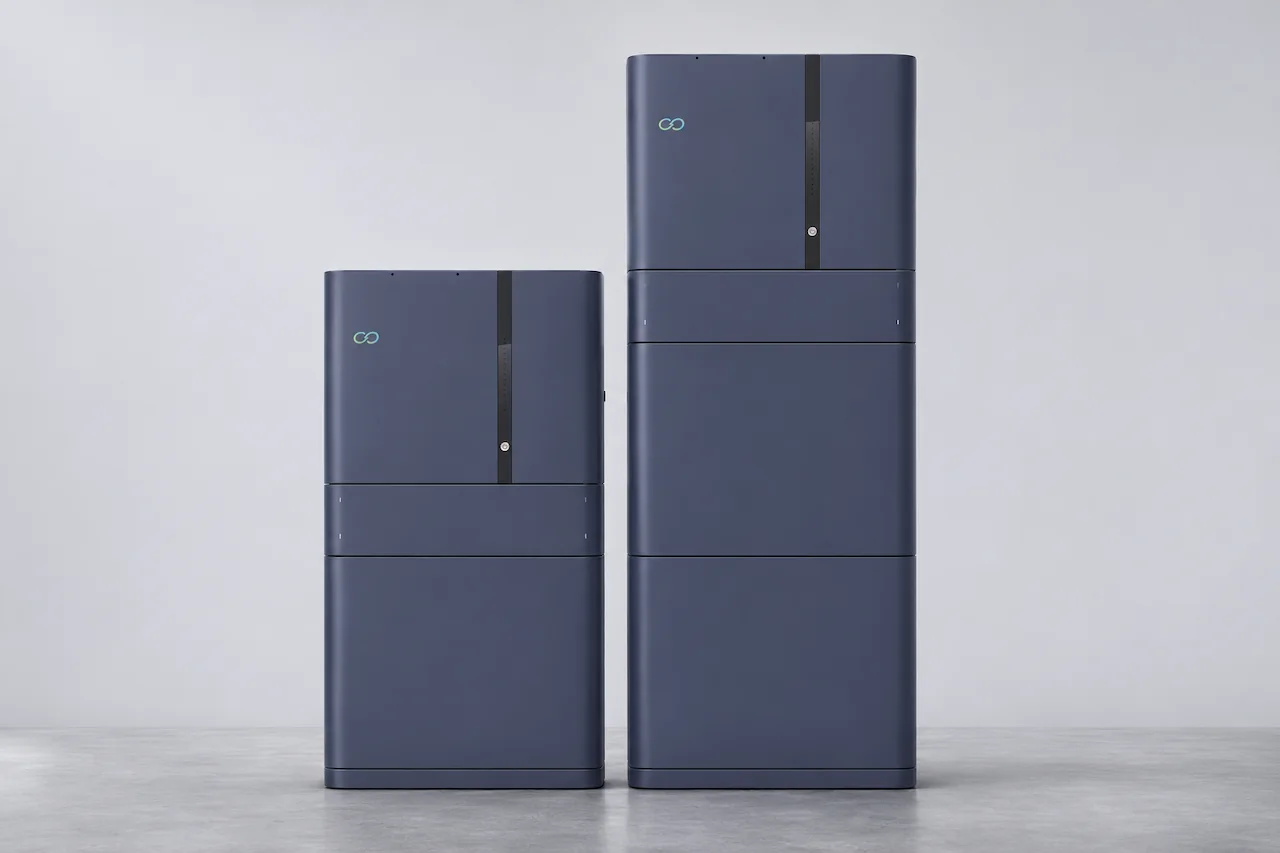
Both configurations use the same 10kW hybrid inverter. The second battery box doubles nominal storage and raises the nominal battery voltage from 192 to 384V. Compare how much solar energy you usually have left after daytime use, then check the loads you need to supply in the evening or during an outage.

Same-scale comparison of the short 9.6kWh and tall 19.2kWh stacks

9.6kWh · One battery box

Start here if your daily surplus and planned evening use are modest. The shorter stack gives you 9.6kWh of nominal energy and a 192V battery. Ask your installer to check the combined demand of your selected circuits against the battery-side limits.

19.2kWh · Two battery boxes

Choose the taller stack when you need to shift more daytime generation into the evening or reserve more energy for outages. Two battery boxes provide 19.2kWh of nominal energy at 384V. Confirm your charging window and expected loads to make use of the extra capacity.

Placement and access

Plan the battery around your home

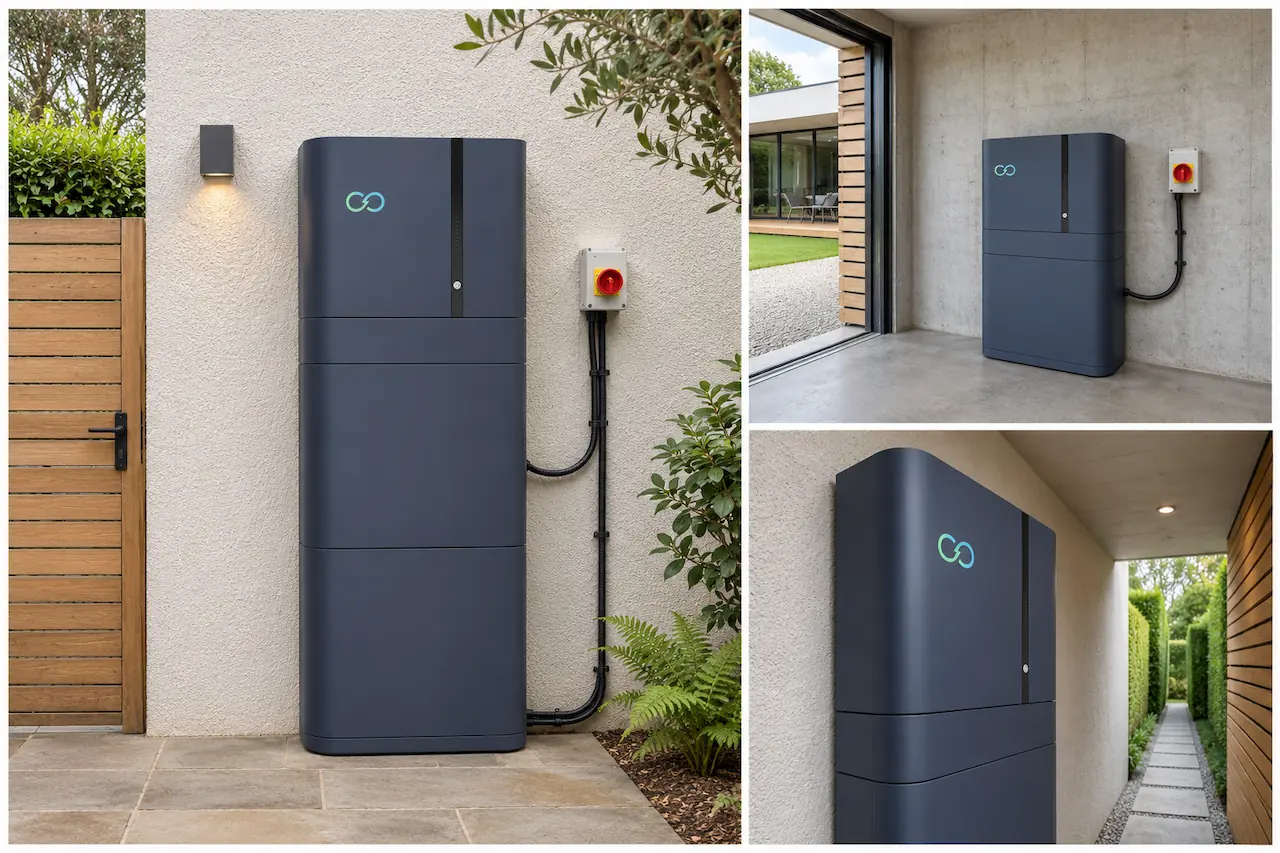
A sheltered side courtyard, garage equipment zone or dedicated service area can keep the stack close to the home's electrical distribution and away from everyday foot traffic. Walk the cable route and check service access with your installer before choosing a location.

Modern villa courtyard with a three-phase battery stack in a sheltered service niche
Courtyard equipment placement concept
Residential placement concepts showing a courtyard, garage and side passage
Residential equipment placement concepts

Before choosing a location

The manufacturer lists an IP65 enclosure. Check the mounting surface, required clearances, ambient conditions and service access for the supplied model. The battery boxes are substantial pieces of equipment, so plan the delivery route and handling space as well as the final footprint.

System connection

Plan around your solar array and three-phase supply

The hybrid inverter connects the PV array, the battery and the site's AC distribution. It is rated for three-phase 380/400/415V service with neutral and protective earth. Start with your actual service voltage, existing inverter if there is one, and the loads you plan to run together.

Solar PVTwo MPPT inputs
High-voltage LFP9.6 or 19.2kWh
Hybrid inverter10kW rated AC output
Three-phase distributionUtility and selected circuits
Conceptual connections. Your installer specifies the circuit protection and backup wiring.

Solar charging

The inverter accepts up to 15kW of PV input and has two MPPTs. Your installer can use the two trackers to plan separate strings, for example on roof surfaces with different orientations. Provide the module model, module count and proposed string layout when you request sizing help.

Backup circuit planning

The 10kW rating describes the inverter's AC output. Available output from the battery alone depends on the battery configuration and operating voltage. Agree on the circuits to back up, including their starting demand and how loads are spread across the phases. If a circuit needs uninterrupted power, include that requirement in the design brief.

Technical data

Three-phase system specifications

Compare the inverter shared by both configurations and the battery values for each stack.

Technical comparison of the 9.6 and 19.2kWh configurations
Configuration9.6kWh19.2kWh
Battery system
Nominal energy9.6kWh19.2kWh
Number of battery boxes12
Nominal battery voltage192V DC384V DC
Nominal capacity50Ah50Ah
Battery chemistryLFPLFP
Maximum battery charge/discharge current30A30A
Inverter and solar input
Rated AC inverter output10kW
Rated AC connection220/380, 230/400 or 240/415V, 3/N/PE
Rated grid frequency50/60Hz
Maximum PV input power15kW
MPPT operating range150–950V DC
MPPTs / strings2 / 1+2
Maximum total PV input current48A (16A + 32A)
Enclosure and placement
Enclosure ratingIP65
Inverter / high-voltage box (W × D × H)800 × 210 × 775mm
Single battery box (W × D × H)800 × 188 × 512mm
Net mass per battery box95kg
Charging temperature0 to 55°C
Discharging temperature−20 to 55°C
Technical data cover Technical Data

Downloads

Request the three-phase system datasheet

Get the technical data for your selected stack. Include your installation country and AC supply so we can send the relevant product information and review the connection requirements with you.

FAQ

The stack combines a 10kW three-phase hybrid inverter and either one or two high-voltage LFP battery boxes. PV modules, site protection equipment and installation hardware are selected for your project.

Compare the energy you want to shift into the evening with the surplus your PV system can produce on a typical day. For backup, list the circuits you want to keep running and the reserve you want to hold. That gives your installer a basis for comparing the two capacities.

The inverter has a 10kW AC rating. The battery's voltage and current limits affect how much it can supply on its own, especially in the 192V single-box version. Share your backup load list and any motor starting demand so the proposed configuration can be checked.

Share the panel model, the number of modules per string and details of any existing inverter. Your installer can check whether the strings suit the two MPPT inputs or whether the system needs a different connection approach.

The listed configurations use 380, 400 or 415V three-phase AC with neutral and protective earth. Provide the site's measured supply details and installation country so your installer can review the connection and local approval requirements.

The listed enclosure rating is IP65. Choose a position with the mounting, access and environmental conditions specified for the model. Leave room for cable routing and future service.

OEM / ODM support

Plan a repeatable system for your market

For installers and distributors, share your target market, connection voltage, preferred battery configuration and estimated volume. KUNETIC can review product presentation, documentation and delivery options for your programme.

KUNETIC OEM and ODM customization workflow

Find the right stack for your three-phase site

Send your site voltage, approximate daily electricity use, existing or planned PV capacity and any circuits that need backup. We can help you compare the two stack sizes and identify the information your installer needs.