
 English
 Deutsch
 Español
 Français
 Italiano
 Polski
 Română
 العربية

Table of Contents
Two inverter quotes can both say 100 kW. If one specifies 400 V and the other 480 V, check which connection your site actually has before comparing prices. For a 3-phase solar inverter, I’d check the site voltage and the proposed solar strings first. If you’re adding a battery, ask what the system is designed to do when the grid goes down.
Check the Site Voltage Before Comparing Inverter Sizes
Ask your electrician for the voltage at the panel where the inverter will connect. A U.S. commercial drawing might show 120/208 V or 277/480 V. The second number is the voltage between phases. Have your supplier check the voltage, service type and frequency against the exact inverter model. If the design calls for a transformer, find out who’s supplying it.
Quotes usually show two power figures. A 125 kW DC array describes the rated power of the solar panels. A 100 kW AC inverter describes the unit’s rated AC output. Ask what the proposed ratio means for your roof and how often the inverter is expected to limit production on sunny days. PVWatts can help estimate that tradeoff.
Match the Solar Strings to the Inverter
Think of a warehouse with panels facing east and west. Each side peaks at a different time. Ask the installer to show which strings, or groups of connected panels, go to which inputs. With separate maximum power point tracking (MPPT) inputs, the inverter can adjust each group independently as sunlight changes.
Ask for the module datasheet and a string schedule that shows how the panels are grouped. The designer should check the highest open-circuit voltage at the site’s cold design temperature, the operating voltage range and the current on each input. Those checks can change the layout even if two quotes specify the same number of panels.
Decide What You Need the Inverter to Do
Your project | Equipment to consider | What to confirm in the quote |
New solar for daytime use | A grid-tied solar inverter | Site voltage, PV string limits and utility export requirements |
New solar with battery storage | A hybrid inverter with a compatible battery | Battery voltage and communications, charge and discharge power, and any backup equipment |
Add storage to an existing solar array | Keep a compatible PV inverter and add a separate battery inverter or power conversion system (PCS) | Which equipment stays, how the two systems work together and what runs during an outage |
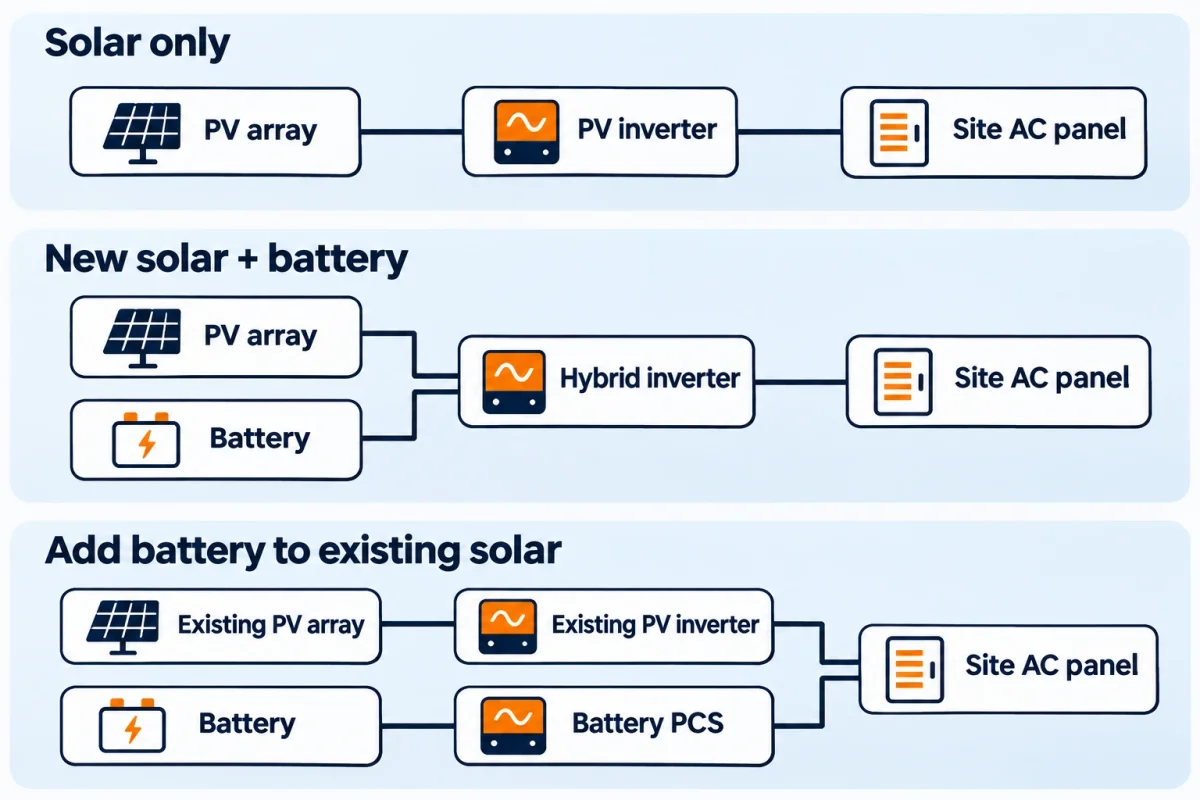
Three commercial solar configurations and the equipment each one uses.
Suppose a warehouse wants to keep its refrigeration and controls running for two hours. If those loads draw a steady 25 kW, they need 50 kWh delivered to the equipment. The battery design also needs to account for losses and reserve. Ask the supplier to confirm that the system can start the largest compressor, how long the power transfer takes and whether the solar array can contribute during the outage. The U.S. Department of Energy’s explanation of islanding shows how a site can separate from the grid and serve selected loads.
Compare Quotes With the Same Equipment and Work in Scope
Get the exact inverter and battery models in writing, along with the operating modes included. Ask who supplies the meters, controls, protection and any separate transfer or transformer equipment. Check who handles the utility application and who tests backup operation on site.
For a 400 V three-phase project, the KUNETIC K-HPS-100-120 is an example of what can go into one cabinet. Its 100 kW and 120 kW versions integrate solar input control, power conversion, static transfer switching and an isolation transformer. The compatible battery and solar panels are separate. For a 208 V or 480 V site, have the supplier confirm the connection design and the utility requirements for the equipment quoted.
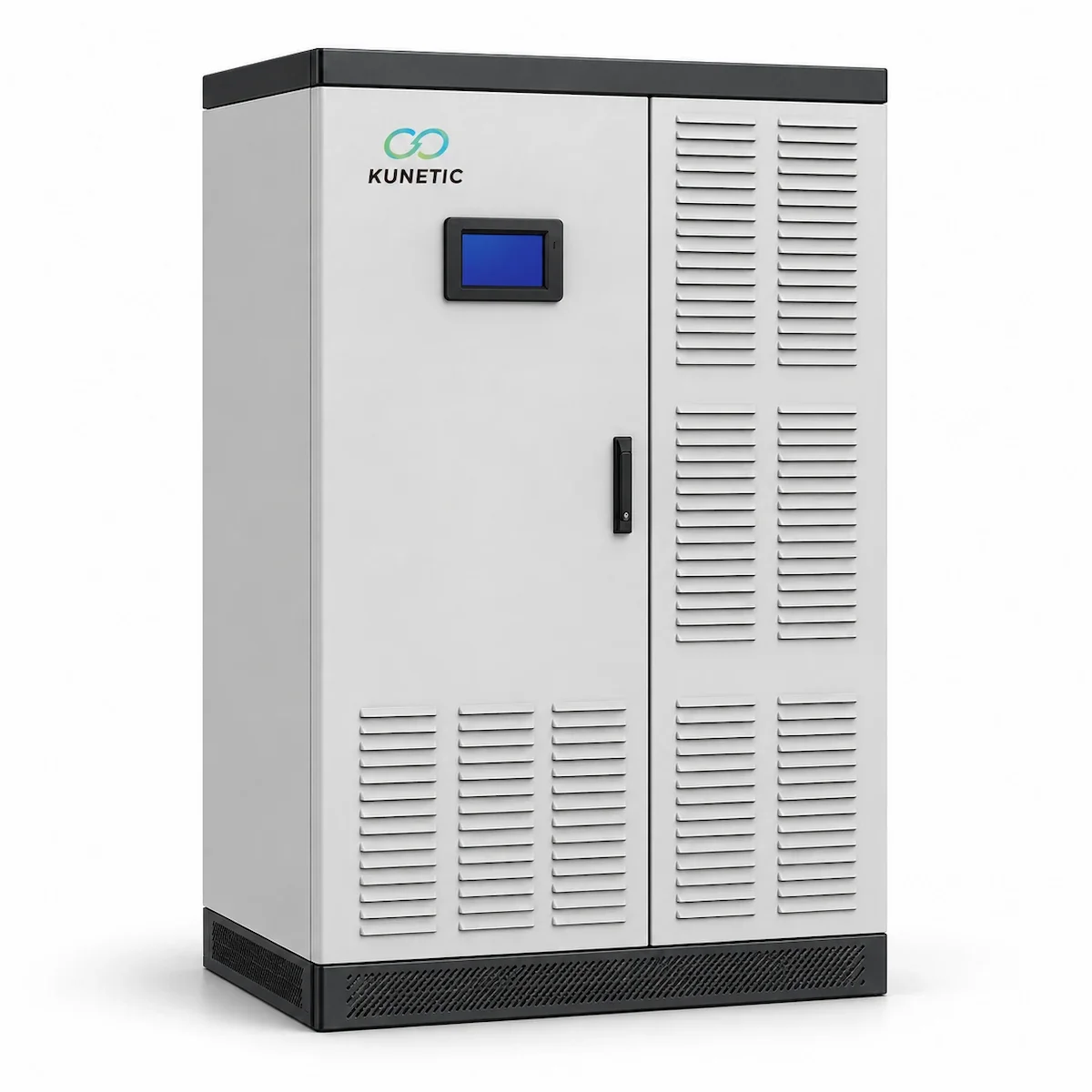
KUNETIC K-HPS-100-120 commercial hybrid inverter.
Our Philippines commercial solar and battery proposal gives another example of how a quote can specify the equipment. It lists 50 kWp of solar, a 50 kW hybrid inverter and 120 kWh of nominal battery energy. If your panels are already in place, see our guide to adding commercial battery storage.
For a project review, send KUNETIC your site location, connection voltage and any available electrical drawing. Include the proposed PV size or your existing inverter model. For backup, tell us which equipment needs to stay on and for how long. We can use that information to check which equipment fits and what to include in the quote.
