
 English
 Deutsch
 Español
 Français
 Italiano
 Polski
 Română
 العربية

Table of Contents
A commercial battery storage system can arrive as a single outdoor cabinet or as a container with a separate switching cabinet. That affects what goes in the quote, how much space you set aside and what your site team needs to connect. KUNETIC’s 241 kWh cabinet and 750 kW / 1.446 MWh container show how those supply packages differ.
What We Supply for Commercial Battery Storage Projects
An outdoor cabinet can store energy from rooftop solar and discharge it at peak times. That can reduce peak demand, a use known as peak shaving. A separate operating plan sets aside energy for backup power. A prefabricated container gives larger sites a single package for storage and power conversion, with room in the project design for separate equipment such as the generator and switchgear.
Both are battery energy storage systems (BESS). We start with how you want the battery to operate. A solar retrofit might use the same cabinet as a backup project, with a different connection, set of controls and equipment list.
What Comes with a Cabinet or Container
The power conversion system (PCS) moves electricity between the battery and the site's AC system. Maximum power point tracking (MPPT) manages the solar PV input. The energy management system (EMS) handles monitoring and control, including when to charge and discharge. A static transfer switch (STS) provides a switching interface. An automatic transfer switch (ATS) can be specified where the project calls for automatic transfer between power sources.
KUNETIC system | What comes in the main enclosure | What to confirm in the quote |
241 kWh nominal lithium iron phosphate storage, 100 kW PCS, 120 kW MPPT and 200 kW STS. | ATS if required. Check whether the site needs an external isolation transformer. | |
Liquid-cooled storage, 750 kW PCS and up to 720 kW PV input. | Optional 1,000 kW STS in a separate outdoor cabinet. Agree how the generator and site switchgear will connect. |
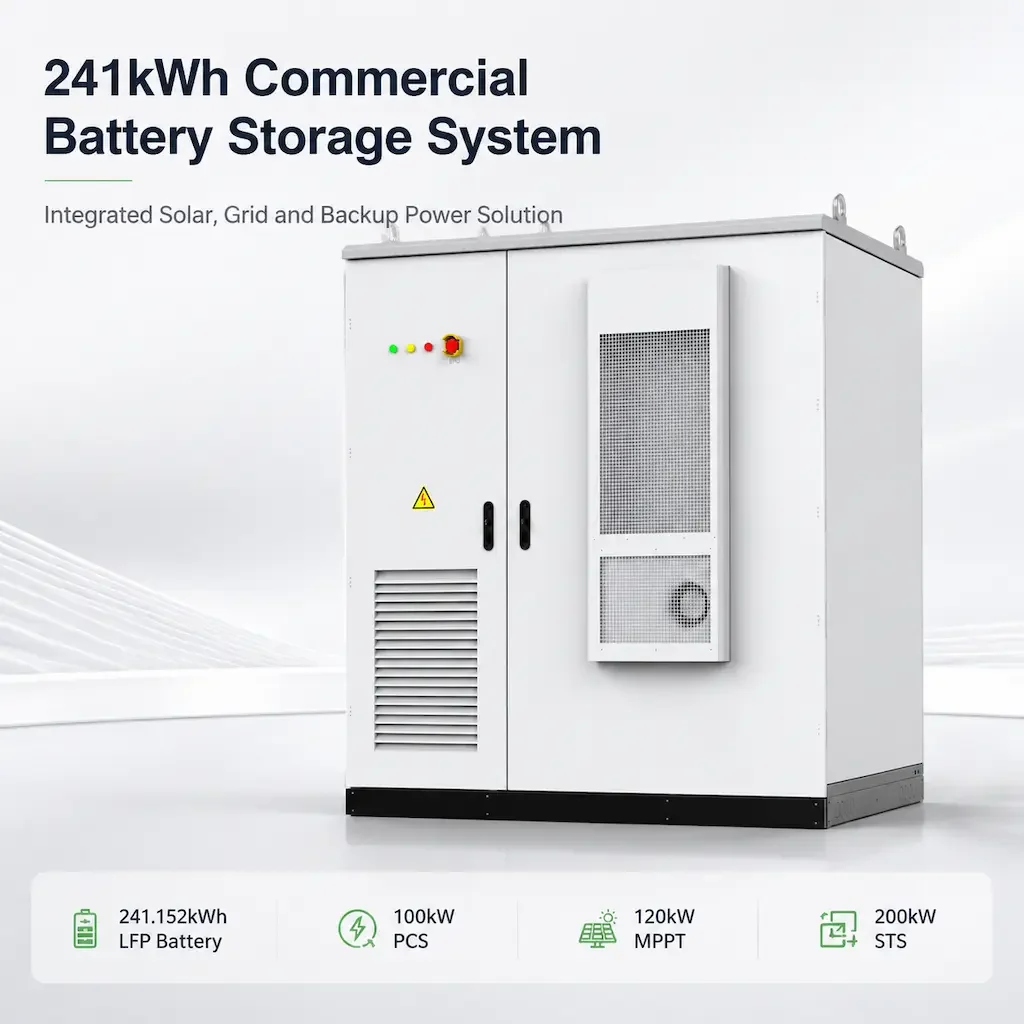
KUNETIC K-eBank-241FHYB2, a 241 kWh outdoor commercial battery storage cabinet.
How We Turn a Site Brief into a Factory Configuration
A factory with rooftop solar. Send us the solar inverter models and the site's single-line diagram. They show where the battery could connect and whether the cabinet's solar input is useful for the project. If you want backup, list the equipment that must stay on and how long it needs to run. We use that list to check switching, battery reserve and output power. Our commercial battery storage sizing guide walks through those calculations.
A larger site with solar and a diesel generator. A container can bring the batteries, power conversion and solar input together. The project team still needs to define when the generator should start, how the sources will share the load, and which equipment will switch between operating modes. For our 750 kW container, that review determines whether the separate STS cabinet belongs in the quotation. It also gives the site team the connection points to plan around.
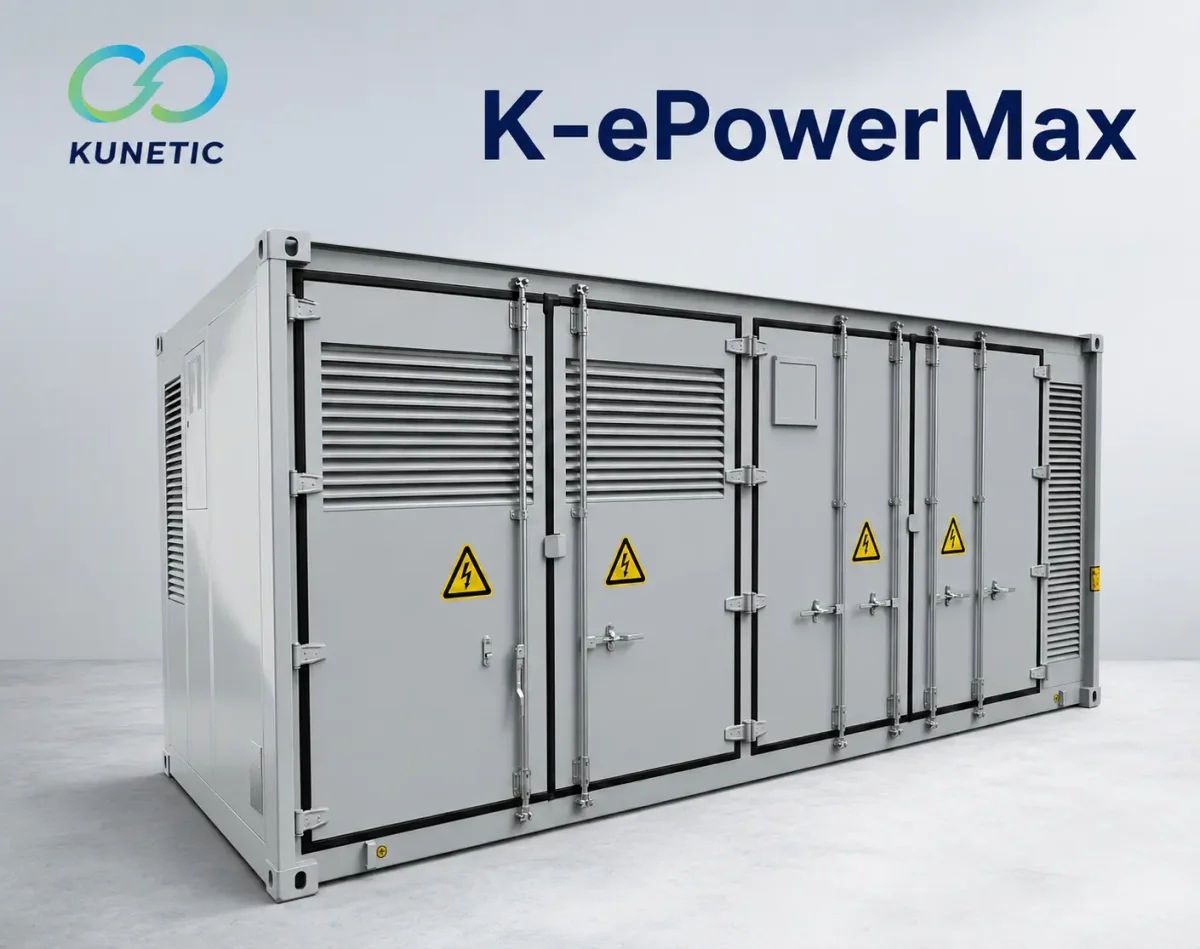
KUNETIC 750 kW / 1.446 MWh solar-diesel BESS container.
Once we agree on the configuration, the equipment list and drawings give both teams a reference for the build. Check that they show the same model, voltage and options. If you need factory acceptance testing, agree on which tests to run, who will witness them and which reports you will receive. The U.S. Department of Energy's BESS procurement checklist can help you prepare the technical requirements.
Where Factory Supply Ends and Site Work Begins
Before comparing prices from BESS suppliers, put the equipment and services side by side. The factory can supply a container with the main equipment assembled inside. Your project still needs a foundation, cable routes and protection settings. Agree who handles each item before you place the order.
Item | What to confirm in writing |
Equipment and documents | Exact model, included options, connection drawings and any documentation required in the destination market. |
Site works and connection | Who provides the foundation, switchgear and cabling, and who handles the local grid connection. |
Commissioning | Who leads start-up and checks the system with the site's solar, grid supply or generator. |
Service and spares | Who handles warranty claims, what spare parts are available and how to request support. |
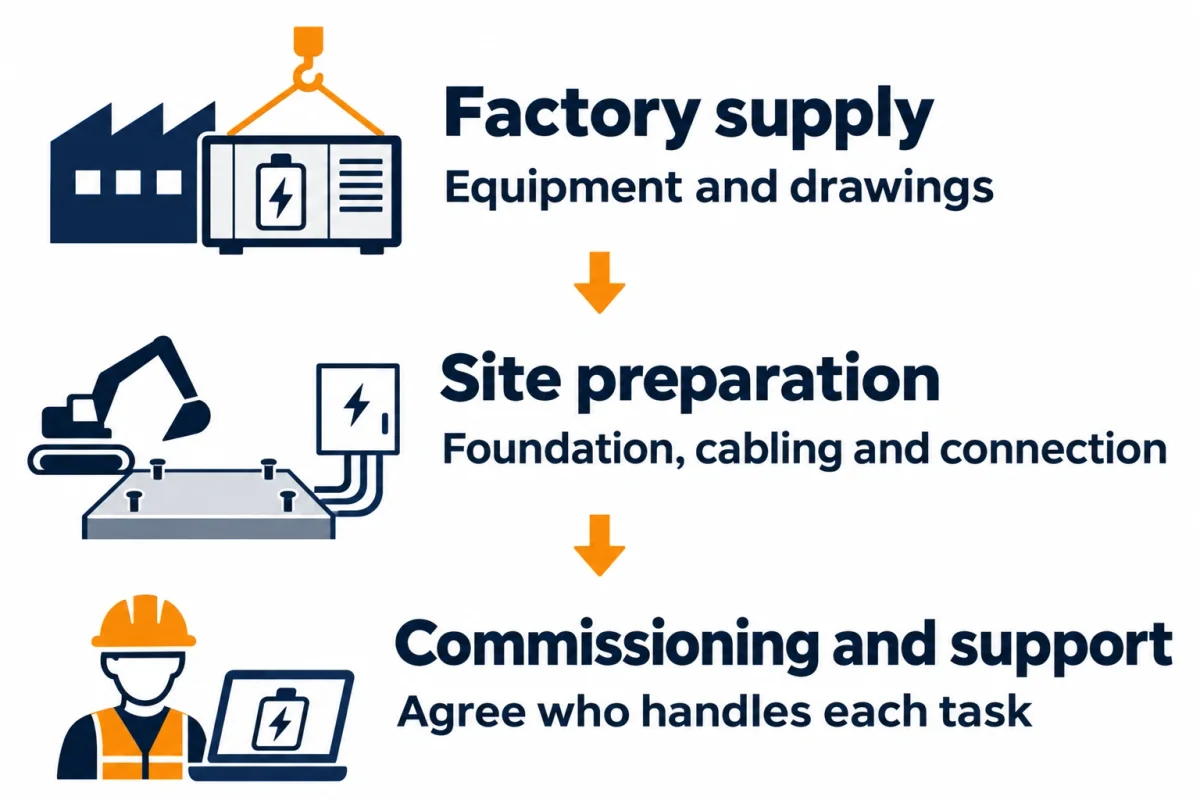
Typical items to agree between the equipment supplier and the site team before delivery.
Our Nigeria solar EV charging project design shows what that division can look like. The proposal places the battery equipment in a service area and the charging terminals near the parking bays. Cable routes and access need to be planned around both locations.
Send Us Your Project Requirements
If you're looking for a commercial battery storage manufacturer, send us the project country and what you want the system to do. Include the site voltage and frequency and any solar or generator details you have. Interval load data helps us check the power and energy requirements. For backup, tell us which equipment needs to stay on and for how long. Ask KUNETIC for a project quotation.
