
 English
 Deutsch
 Español
 Français
 Italiano
 Polski
 Română
 العربية

Table of Contents
Battery-Only Cabinet vs All-in-One BESS
An energy storage cabinet may house batteries and controls only. An all-in-one model also includes power conversion. This forms a battery energy storage system (BESS). Before you compare prices, check which equipment the cabinet includes and what your site needs around it.
Two cabinets can have similar kWh ratings but different equipment inside. A battery-only unit needs an external inverter. An integrated model may include the inverter and controls. Your site team still needs to plan the wiring and switching. For commercial and industrial buyers, those differences affect the whole project budget.
A battery-only cabinet stores DC energy. It may include a battery management system (BMS), cooling and protection. To exchange power with the site's AC network, it needs a compatible power conversion system (PCS).
An all-in-one BESS has batteries and power conversion in the same cabinet. Solar input and energy management vary by model. Ask for an equipment list, including anything supplied separately.
Item | Battery-only cabinet | All-in-one BESS |
Battery and BMS | Typically included | Typically included |
PCS / inverter | External | Integrated |
Site controls / EMS | Project integration required | Check included functions |
Solar connection | Depends on external equipment | PV interface is model-specific |
Backup switching | Confirm external equipment | Confirm included and external equipment |
Installation and commissioning | Cabinet plus external system | Integrated unit plus site works |
The energy rating also needs context. kWh measures battery energy; kW measures power. Ask for the AC output rating and usable energy. Rated or installed capacity alone does not show how much energy reaches the loads.
Which Configuration Fits Your Project?
The choice often starts with your existing equipment. Who will select the PCS, connect the controls and test the finished system?
Battery-Only Cabinet for an Existing PCS or Custom System
A battery-only cabinet can suit a project where an integrator selects the PCS and site controls. If you already have a PCS, have the supplier confirm that it can work with the proposed battery.
The KUNETIC eBlock 120 kWh battery-only cabinet includes LFP batteries, BMS, HVAC, detection and automatic fire suppression. Its published DC voltage range is 336–432 V. The PCS, switching and site controls are external.
Compare that voltage range with the proposed PCS, then check the battery limits and communication requirements. A suitable-looking power rating alone is not enough. The quote should name who sets the controls and tests the whole system. This matters when separate suppliers provide the battery and PCS.
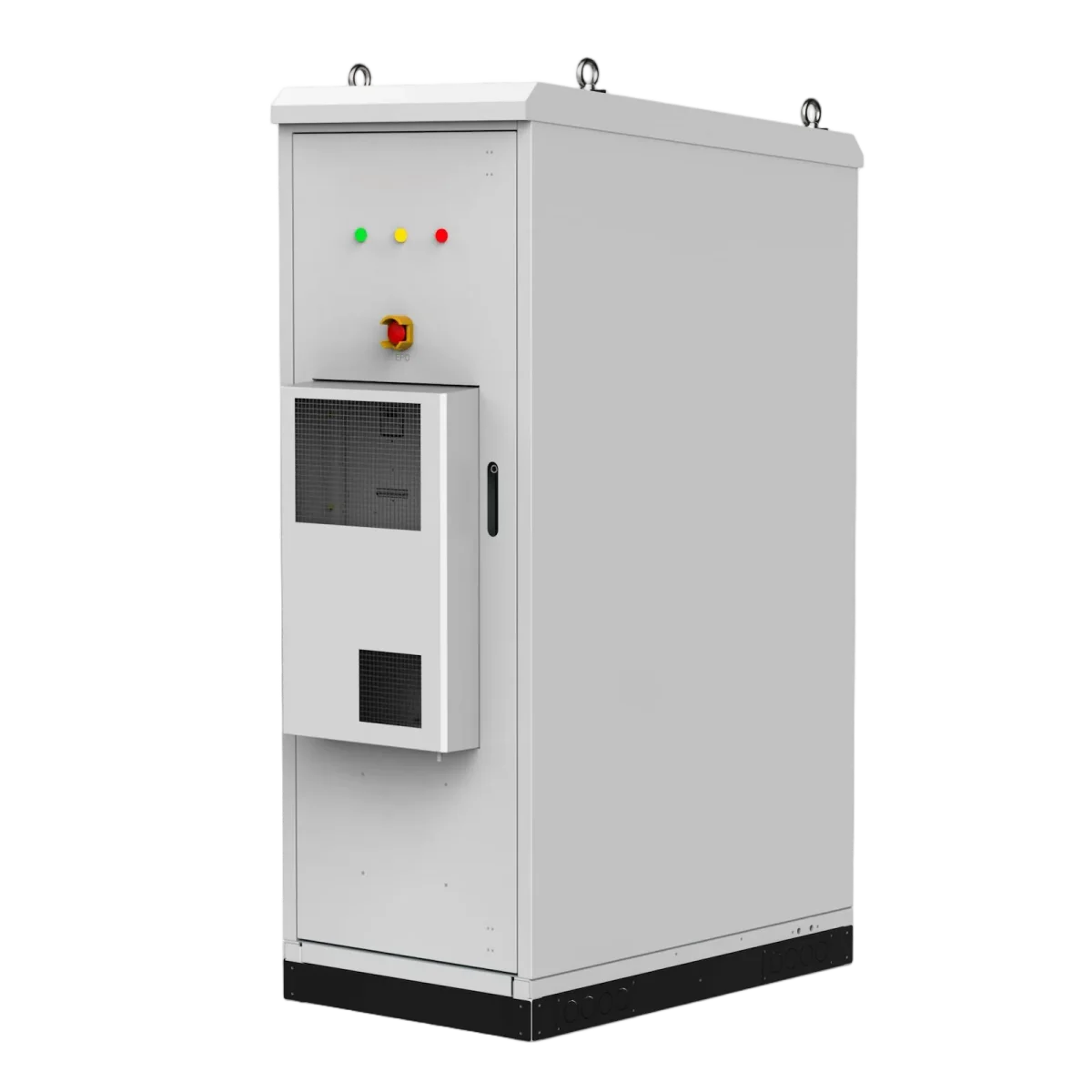
KUNETIC eBlock 120 kWh outdoor DC battery cabinet — requires an external PCS.
All-in-One BESS for an Integrated Package
An integrated cabinet supplies the battery and PCS together. That can leave fewer separate equipment interfaces to coordinate, but the site design and commissioning scope still need agreement.
The KUNETIC K-eBank 50 kW / 120.5 kWh integrated cabinet includes LFP batteries and a BMS. It also has a hybrid PCS and PV input. Its published AC connection is 230/400 V, three phase. Check that configuration against the site's electrical supply before ordering.
For a solar project, confirm how the PV will connect. For backup, confirm the operating mode and any external switching or protection. The quote should list the monitoring and control functions supplied with the cabinet, along with who connects them to the site.
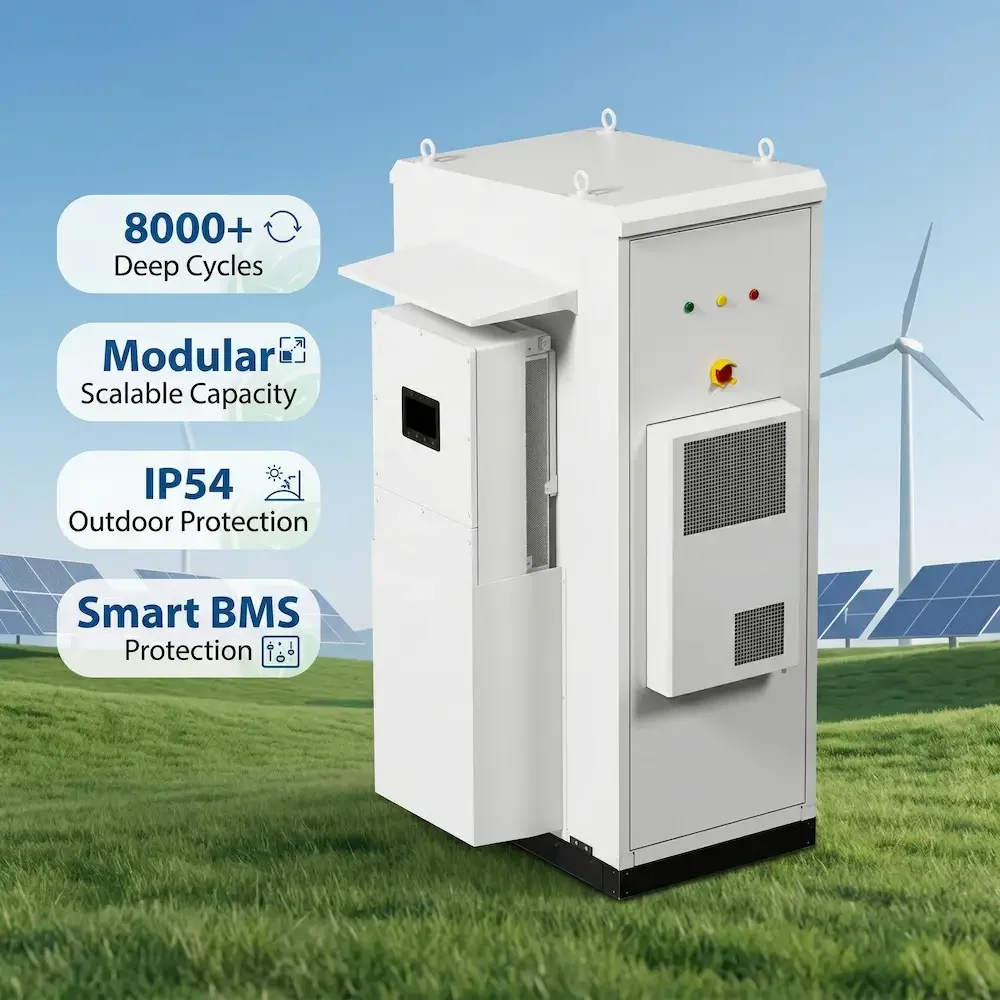
KUNETIC K-eBank 50 kW / 120.5 kWh all-in-one energy storage cabinet.
What to Check Before Comparing Quotes
Give each energy storage cabinet supplier the same project information and ask for these six details:
- Energy and power: Ask for rated or installed kWh, usable energy, AC output and operating limits. Use the same basis for each quote. Use our commercial battery storage sizing guide for load calculations.
- PCS compatibility: For a battery-only cabinet, identify the PCS. Check battery voltage, charge/discharge limits and communications. Assign responsibility for making the equipment work together.
- Site voltage and solar: Provide the AC voltage, frequency and existing PV equipment. Ask whether the solar battery cabinet uses a built-in PV input or connects through external equipment.
- Grid and backup operation: List the loads that need backup, their starting power and the interruption they can accept. Confirm the switching and controls needed during an outage.
- Outdoor conditions: Check temperature limits, the enclosure rating, cooling, airflow and service access. Tell the supplier about the site conditions so they can assess the outdoor battery cabinet's suitability.
- Delivery and commissioning: Request an equipment list, drawings and a clear division of installation, testing and support work. Identify anything you or your contractor must supply separately.
With those details in place, compare the prices. A lower cabinet price may leave out equipment or work included in another offer. Put those costs alongside the cabinet cost before making the decision.
Energy Storage Cabinet FAQ
Does a DC battery cabinet mean a DC-coupled solar system?
No. The term describes the battery-side interface. AC or DC coupling describes how the wider solar-storage system connects. A DC cabinet can connect through an external PCS in an AC-coupled layout. Our integrated solar-storage system explanation shows a DC-coupled example.
Can a battery cabinet provide backup power on its own?
A battery-only cabinet needs power conversion to supply AC loads, plus switching and controls for backup. With an all-in-one BESS, ask for the complete backup arrangement and its limits. The built-in PCS does not establish what every site needs.
Is IP54 enough for every outdoor installation?
No. Check temperature, moisture and corrosion exposure as well as cooling and installation requirements. IP54 is an enclosure rating, not an ESS fire-safety certification. UL's ESS testing and certification guidance distinguishes system certification from thermal-runaway testing. Request documents for the system configuration you will buy.
Need an energy storage cabinet for your site? Send your location, AC voltage, and target power and energy. Include details of any existing PV or PCS, plus your backup needs. Contact KUNETIC for a configuration review and a clear breakdown of cabinet equipment and site requirements.
