English
 Deutsch
 Español
 Français
 Italiano
 Polski
 Română
 العربية

Table of Contents
When Electricity Costs Start Eating Into Factory Margins
Your electricity bill leaves less profit on each order. Work still has to run on time. Cooling needs to keep working. You may also need an evening shift to fill orders. Switching everything off during expensive hours is rarely an option.
You need to cut energy use while keeping the factory working. Some costs come from waste. Power can cost more at certain hours. Running several large loads at once can add to the bill. Some sites buy grid power for every shift.
Focus on the costs you can change while work stays on schedule.
What Your Electricity Bill Can Tell You
Look for these entries on a recent electricity bill:
- Energy use, measured in kWh: how much electricity you bought during the billing period.
- Electricity rates: what you paid for that electricity, including any prices that change by time of day.
- Demand charges, if applicable: charges linked to measured peak power demand.
The US Department of Energy’s utility-rate guidance explains these cost components. Your contract sets the rules for these charges.
The same energy usage can cost more when rates rise. It can also cost more if work shifts into peak-rate hours.
Air leaks, equipment left running and poor upkeep can waste energy. Fixing these problems can help save energy. ENERGY STAR’s manufacturing guidance identifies practical opportunities in these areas.
After you cut waste, look at the power the factory still needs. Its source and price may offer more ways to reduce business energy costs.
Match the Solution to the Way Your Factory Operates
Two factories with similar energy bills may need different systems. Their shifts, equipment and backup needs may differ. Which of these situations sounds closest to yours?
Your Factory Mainly Runs During the Day
If your factory runs mainly by day, solar power from the roof can meet part of its demand. Work continues as solar energy replaces some grid power.
Compare solar generation with the factory’s daytime load. Our commercial solar systems guide explains the wider planning considerations.
For a day-shift factory, I would first see how much solar power it can use directly. Then I would check what costs a battery could help reduce.
Your Factory Keeps Working Into the Evening
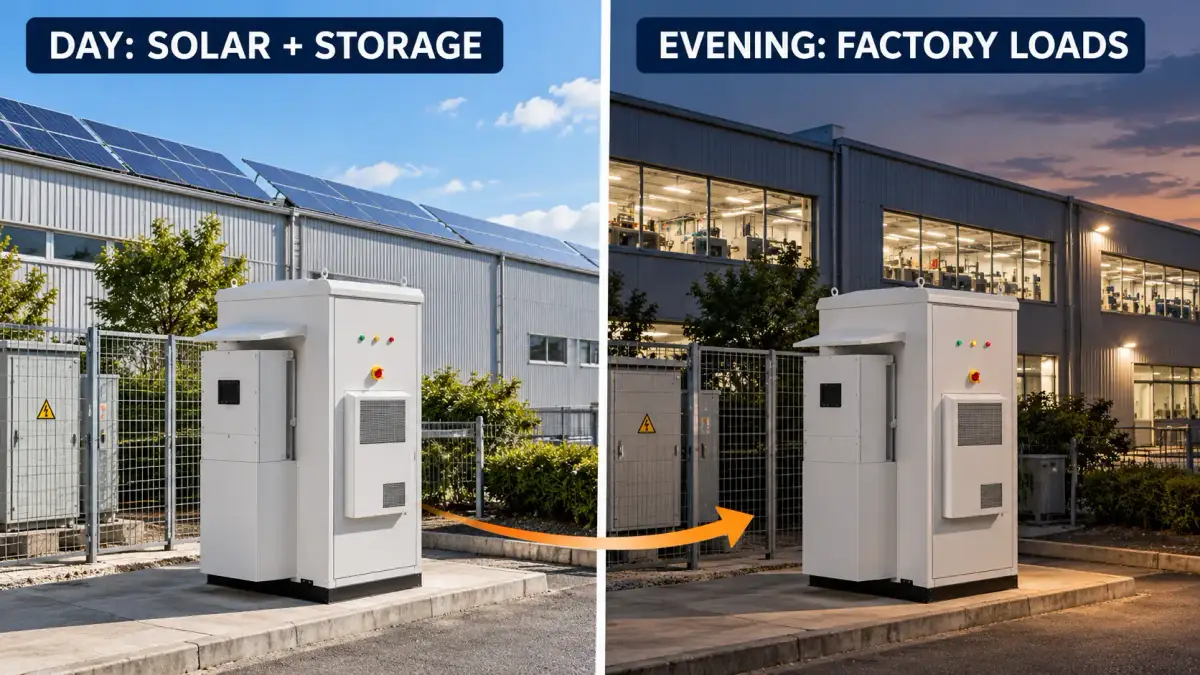
With an evening shift, work goes on as solar output falls.
If you have spare solar power by day, a battery can store some of it for the next shift. With the right tariff, it can also help you buy less grid power during costly hours. The Australian Government’s solar and battery guidance explains these mechanisms.
Check how much low-cost power can charge the battery. Then compare it with the load you need to supply later.
Your Bill Includes Costly Demand Peaks
A busy period can set a high peak demand. Lines, air compressors and cooling may all draw power at once. The rest of the day may be much less demanding.
If your tariff charges for that peak, a battery may supply part of the load. This reduces the power drawn from the grid at that time.
This is commonly called peak shaving. It needs to match your billing rules and the length of the peak. A brief surge when a motor starts is not always the peak used for billing. See our peak-shaving guide for the engineering details.
A Power Interruption Costs More Than the Lost Electricity
Power outages can leave batches unfinished. You may need to restart equipment and make up lost working time. That gives backup power a different purpose from daily bill savings.
A system can support the loads you need most. Planning can include solar, batteries, grid power and your existing generator.
Decide what must keep running and for how long. Check whether those loads can cope with a break in power. Those needs define the backup system more clearly than the bill total.
KUNETIC’s factory and industrial-park solutions bring these operating priorities into the system discussion.
Your factory’s situation | Solution worth assessing | Intended role |
Steady daytime production | Solar matched to daytime demand | Reduce electricity bought while solar is generating |
Production continues after sunset | Solar plus battery storage, where charging energy is available | Move useful energy into later operating hours |
Tariff-relevant demand peaks | Battery storage with suitable controls | Support selected peaks in grid demand |
Essential equipment needs outage support | A coordinated backup configuration | Supply defined loads during an interruption |
These are application examples. The appropriate configuration depends on the factory and its electricity contract.
How a KUNETIC System Could Fit Your Factory
You may be starting with no solar. You may want to use more of your rooftop power. Or you may need a steadier power supply because outages stop work.
A project discussion with KUNETIC can consider:
- Commercial solar battery storage, with charging and use planned around your working hours.
- Storage added to an existing site, after checking how it will work with your solar, supply and controls.
- Backup for selected loads, with a clear plan for run time and any generator you use.
The KUNETIC K-eBank is one option for industrial battery storage: 50 kW power and 120.5 kWh rated battery energy. Power tells you how much load it can supply at once. The energy rating describes the amount stored. Usable energy depends on system limits and losses.
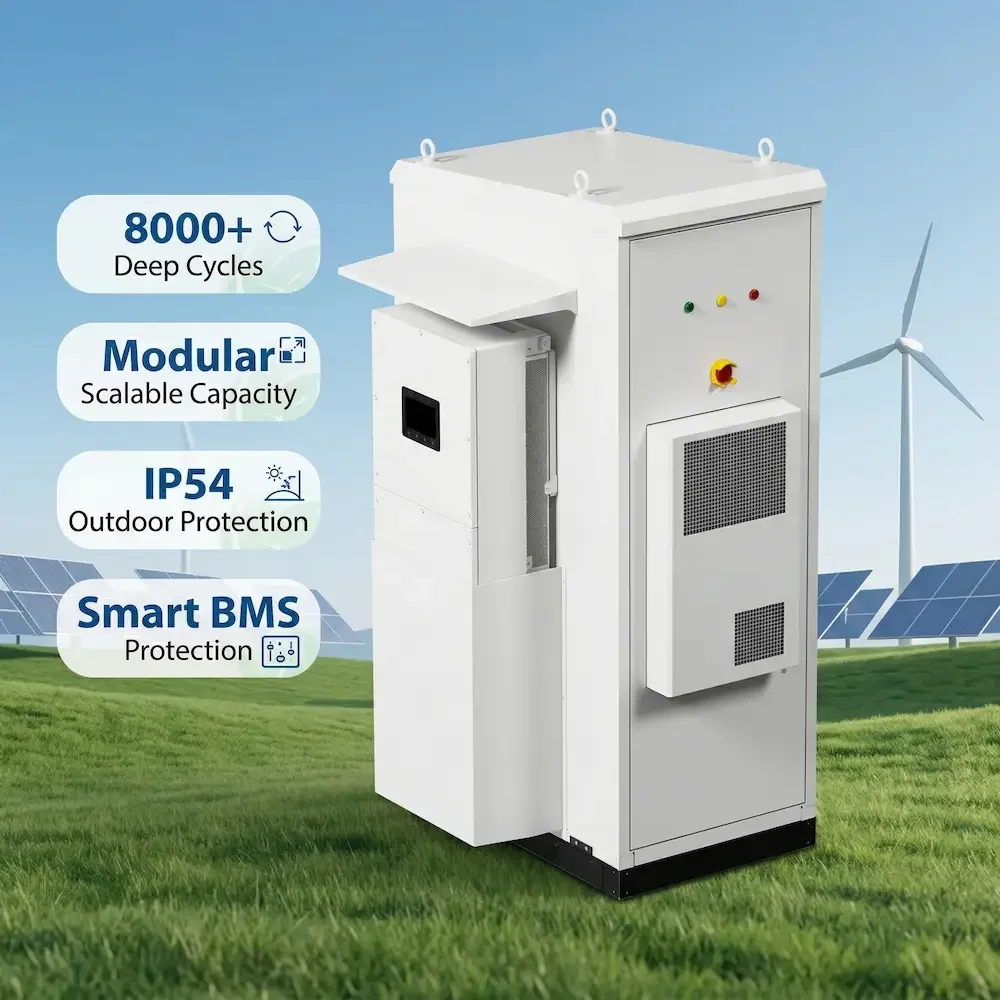
KUNETIC K-eBank: a 50 kW / 120.5 kWh outdoor commercial and industrial energy-storage cabinet.
A design may use one cabinet, several linked units or a larger storage system. The choice depends on the job, supply voltage, site conditions and local rules.
Ask which loads the system will support and when it will charge and discharge. The proposal should also show the data behind the expected benefit.
What Would Make the Investment Worthwhile?
The proposal should address a cost or work problem you recognise.
For one factory, that may be expensive evening electricity. For another, it may be a billed demand peak. A third may place more value on keeping selected equipment supplied during an outage.
Count those benefits separately. Battery storage systems also lose some energy as they charge and discharge. Include their running limits and full ownership costs. A sound savings estimate allows for these factors. One savings percentage will not fit every factory.
Compare each proposal with your main need. Check what the system would do for the money.
Start With Your Bill and a Short Description of Your Factory
To start a conversation with us, share:
- A recent electricity bill, with account and payment details removed.
- Your working hours and the main equipment or production lines.
- Any existing solar, battery or generator equipment.
- Your main priority: lower electricity costs, better solar use, backup support or a combination.
More past bills and detailed meter readings can help improve the plan later.
If electricity costs are putting pressure on your factory’s margins, contact KUNETIC with that starting information. We can discuss solar, storage and backup options for your site. We can also explain what else is needed to prepare a proposal.
Explore our factory and industrial-park solutions to start the conversation.
Frequently Asked Questions
Can a Factory Reduce Electricity Costs Without Solar?
Yes. You may cut waste, improve how equipment runs or move some work to a less costly time. A battery may also be worth a look under the right tariff. Include its costs and charging needs.
Why Is My Electricity Bill Still High After Installing Solar?
Your factory may use a lot of power when the sun is down. Other charges can remain too. Compare solar output with your working hours to see whether storage could help.
Does Battery Storage Make Production Equipment Consume Less Electricity?
No. Storage changes when power is available and how your site gets it. It can help with certain power costs or backup needs. To make machines use less energy, improve how the equipment and process work.
How Much Could My Factory Save?
It depends on your tariff, work pattern, equipment and planned system. A useful estimate shows its assumptions. It includes losses and full ownership costs. The bill total alone cannot tell you the saving.