English
 Deutsch
 Español
 Français
 Italiano
 Polski
 Română
 العربية

Table of Contents
What your electric bill is really charging you for
A high electric bill doesn’t always mean you’re being careless with power. In a home with air conditioning, electric hot water or a pool, much of that electricity is doing a job you still need done.
To save on your electric bill, start with power you can avoid using. Move flexible loads to cheaper hours if your rate plan offers them. Then weigh solar and battery storage against your home’s daily use.
You only need a few details from the bill to get started:
- Electricity used, in kWh: how much energy your home bought during the billing period.
- The rate you pay: a flat price, tiered rates or different prices at different times.
- Fixed charges and solar credits: some fees stay on your utility bill even when you buy less power. Check what you receive for solar sent to the grid, too.
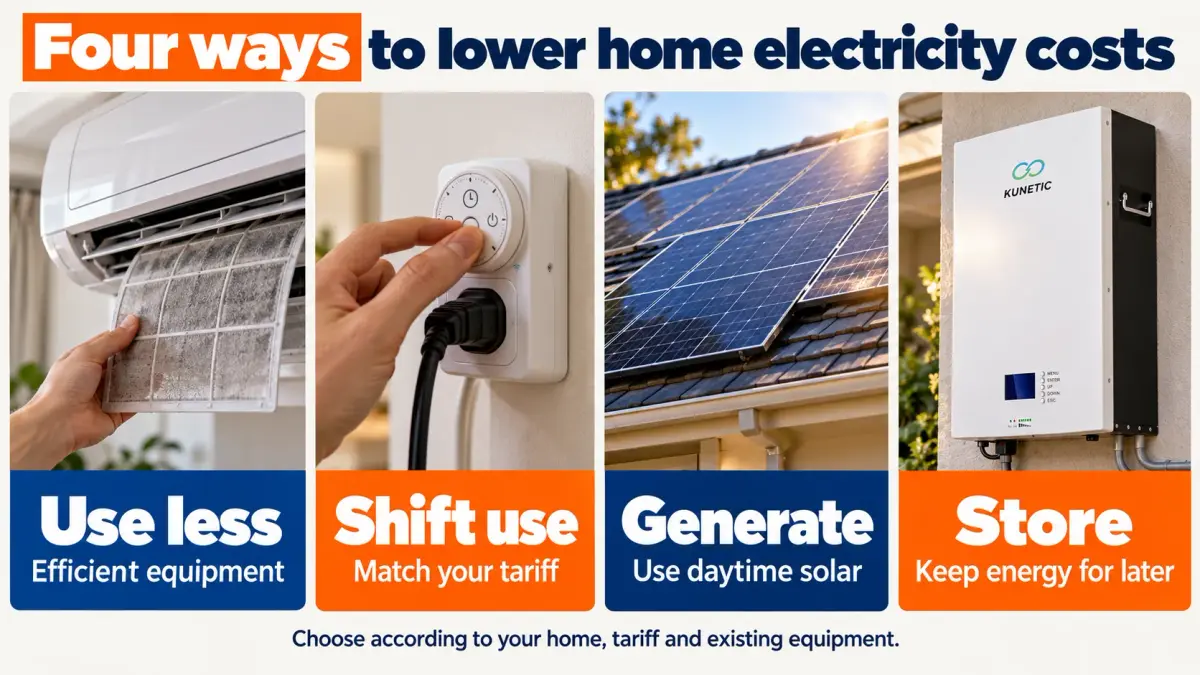
You can lower costs by using less electricity or by changing how you supply it. Efficient equipment reduces demand. Solar generates power on site, while storage moves available energy to the hours you need it.
Practical savings for a home that uses a lot of power
Start with the equipment that runs for long periods. A few useful changes are easier to keep up than a house full of rules. These energy saving tips focus on the loads that matter most.
- Air conditioning: keep your air conditioner filters clean. Shade sunny windows and avoid cooling rooms you do not use.
- Hot water and laundry: fix hot-water leaks and wash suitable loads in cold water. When your water heater needs replacing, compare energy efficient options.
- Pool equipment: ask your pool professional to check pump speed and run times. Keep the water properly filtered without running the pump longer than needed.
- Flexible appliances and EV charging: use timers to shift these loads. Aim for cheaper hours or spare daytime solar when either is available.
NYSERDA’s home energy-saving guidance offers further practical measures.
Even after those changes, heating and cooling, hot water and other daily loads can leave you with a large energy bill. Solar may help cover some of that power.
When rooftop solar is the right next step
If your home has suitable space and regular daytime demand, solar can supply some of that power directly. Air conditioning, refrigeration and a pool pump running during sunny hours could use the generation as it becomes available.
Compare your daytime energy usage with the solar output your installer expects. More panels may leave more spare power to send to the grid. Check what you would earn for it.
The U.S. Department of Energy’s homeowner solar guide explains that savings depend on consumption, generation, electricity rates and compensation for exported power.
Ask for solar-only and solar-plus-storage options using the same household consumption data. That makes it easier to see what the battery adds to the project.
When adding a battery is worth considering
Use more of your own solar after sunset
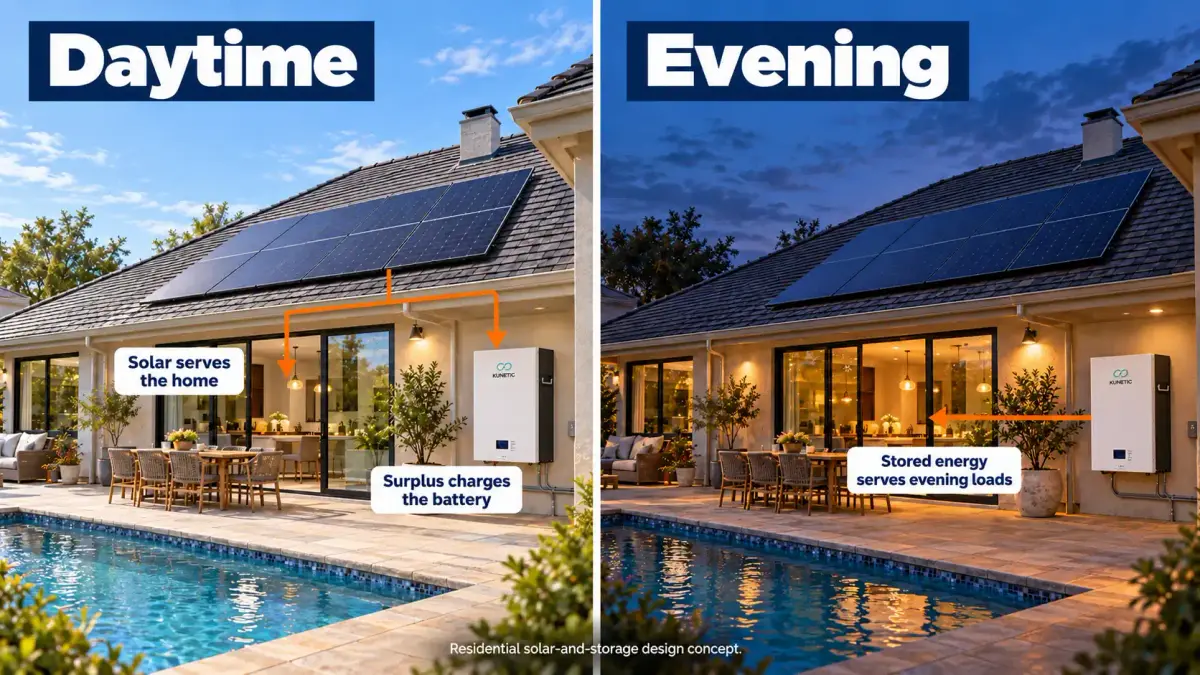
Your roof may produce well during the day while your home uses more electricity after everyone returns.
A battery can store available surplus for dinner, lighting and evening cooling. Before choosing capacity, check how much solar remains after daytime use and how much electricity you buy later.
If daytime loads already use nearly all your solar production, there may be little surplus left to store.
Reduce purchases during expensive hours
With a time-of-use rate plan, storage can supply power when grid prices are high. Some systems can also charge from the grid in cheaper hours. Your equipment settings and local rate rules must allow this.
The saving must account for charging costs, any solar export credit you give up and storage losses. The Department of Energy’s storage guide explains why energy storage is never completely efficient.
Take a simple example. You have 10 kWh of spare solar to sell at $0.08 per kWh. Selling it would earn $0.80. Instead, you store it and get 9 kWh back, assuming 90% round-trip efficiency. At a grid price of $0.40 per kWh, those 9 kWh avoid $3.60 in purchases. Subtract the $0.80 you gave up: the operating benefit is $2.80 for that cycle.
This example uses assumed figures. It leaves out equipment costs, battery wear and other charges. Saving money over the system’s life depends on your own rates and spare solar.
Plan backup around the loads you need
If outages worry you too, choose the loads you want to keep running. That could mean the fridge, lights, internet and a few sockets.
Your installer must plan those circuits with an inverter that works with the battery. The system also needs protection and a safe way to separate from the grid. Battery size alone does not tell you what the home can run.
Power kept in reserve for outages is not available for daily bill savings. Set that balance with your installer.
Which setup fits your home?
Your situation | Option to assess | What it can improve | What determines the fit |
Equipment runs unnecessarily or flexible loads fall in expensive periods | Efficiency upgrades and scheduling | Electricity use or the price paid for flexible loads | Equipment condition, comfort needs and tariff |
Your home uses substantial power during sunny hours | Rooftop solar | Daytime grid purchases | Generation, usable space and daytime demand |
You export solar during the day and buy electricity in the evening | Add a compatible battery | Use of your own solar after sunset | Available surplus, export credits, evening demand and losses |
You are planning solar and also need selected-load backup | Design solar, storage and backup together | Energy supply, operating schedules and outage support | Daily usage, simultaneous loads, reserve settings and electrical design |
For a villa with daytime pool and cooling loads, direct solar use may carry much of the value. A home with existing solar and a busy evening schedule has a different reason to consider storage.
For a KUNETIC home storage plan, we can review battery capacity alongside inverter compatibility and the circuits you want backed up. Your existing equipment, site voltage and local requirements guide the configuration.
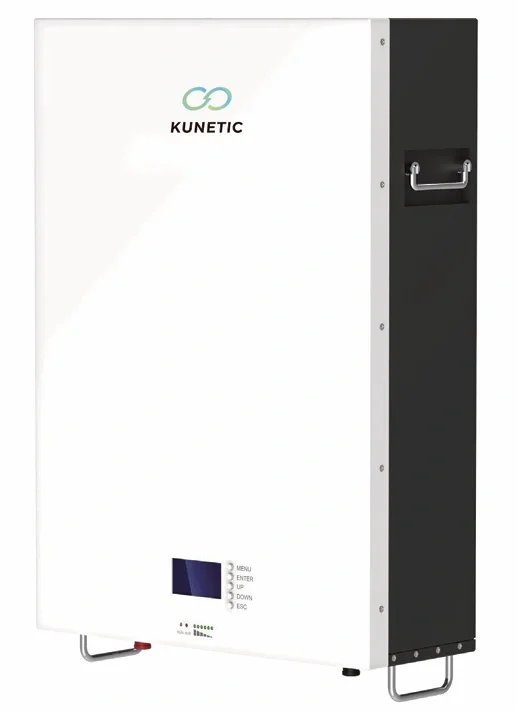
KUNETIC wall-mounted battery. A complete home storage system also requires compatible power-conversion equipment, protection and controls.
Common questions about lowering your electric bill
Can a battery lower my bill without solar?
It can, if grid charging is allowed and the price gap is large enough. The savings must cover energy losses and the cost of owning the battery. With a flat rate and no extra payments, grid charging will not normally cut your energy costs. You buy power to charge and lose some of it along the way.
Why is my electric bill still high after installing solar?
You may need grid power at night, use more than your panels produce or earn little for spare solar. Fixed fees can remain too. Compare the power you send out by day with what you buy in the evening. That helps show whether more panels, a battery or a change in timing could help.
Can one system help with bills and power outages?
Yes, when it is designed for both purposes. The inverter’s output, usable battery energy, selected circuits and backup reserve need to match your priorities. Our hybrid solar system guide explains how those parts work together.
Plan a KUNETIC system around your home’s electricity use
A recent electricity bill is enough to start. To work out a home energy plan, we would also like to know:
- Your location and electricity rate plan.
- Recent bills, ideally covering seasonal changes.
- Existing solar and inverter details, if applicable.
- Major loads, their operating times and what you want backed up.
You don't need to choose a battery size first. Send the bill and tell us what you want to change. Are evening rates too high? Does spare solar go unused? Do you need backup when the power goes out? We can use those details to discuss solar, storage or a combined system for your home.
Share your electricity bill and discuss your home energy project with KUNETIC.