English
 Deutsch
 Español
 Français
 Italiano
 Polski
 Română
 العربية

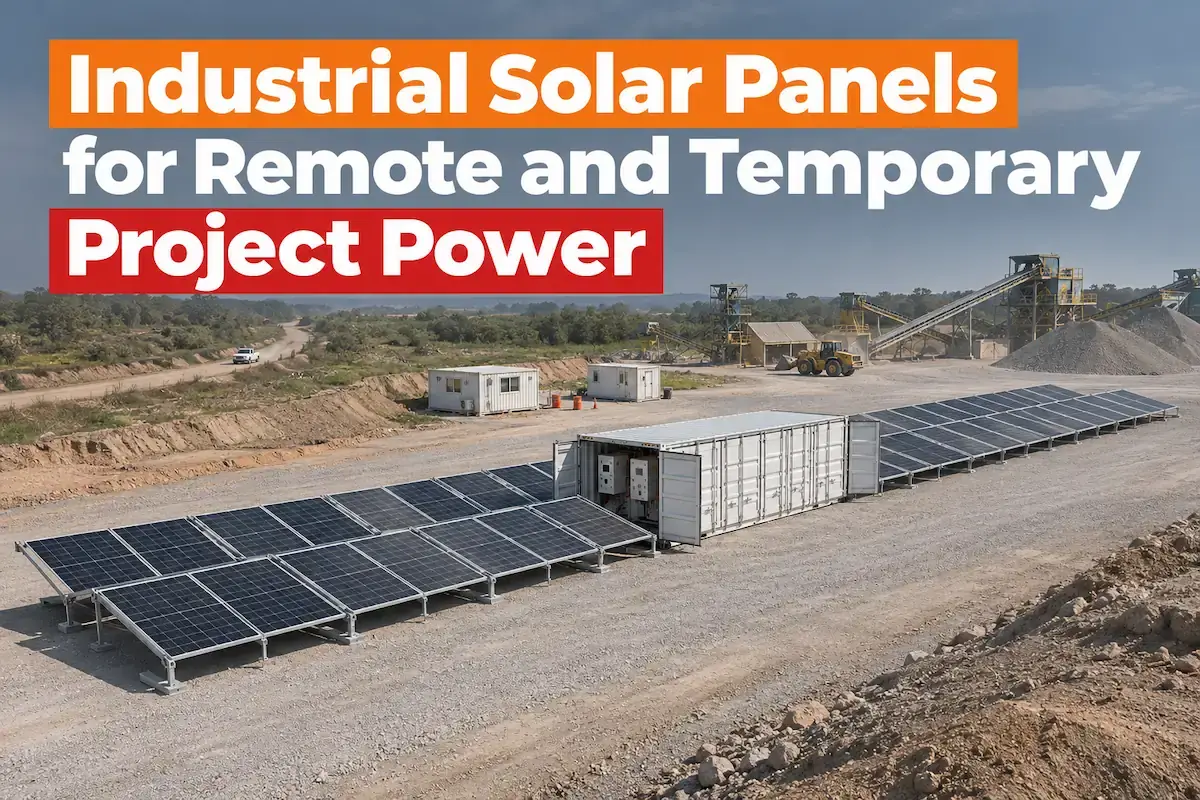
Table of Contents
A remote project can have plenty of sunshine and still struggle with power. The grid may be too far away. Diesel deliveries may be difficult, or the work may move before a fixed solar installation makes sense.
Industrial solar panels can be part of the answer. On a temporary site, a mobile solar power system brings the array, inverter and battery together. You can prepare the equipment for transport and use it at another location.
Before choosing one, check it against the machines you need to run, their working hours and the ground available for the array.
When Industrial Sites Need Solar Power That Can Move
Fixed commercial solar installations often suit factories that will stay at one site for the long term. Mines and construction projects may move through several work areas. Owners need power equipment they can use for today's job and move when it ends.
Consider a mobile system if your site has no suitable roof or has limited grid access. It can also suit work that will move elsewhere when the current job ends. You can then reuse the solar equipment across project stages.
Fuel deliveries can be a burden at a remote site. Solar may reduce generator running hours when it supplies suitable daytime loads. That may also cut the fuel you need to deliver. Check any savings estimate against the site's demand, sunshine and work schedule.
How a Mobile Solar System Supplies Project Power
Foldable Solar Generation, Battery Storage and AC Output
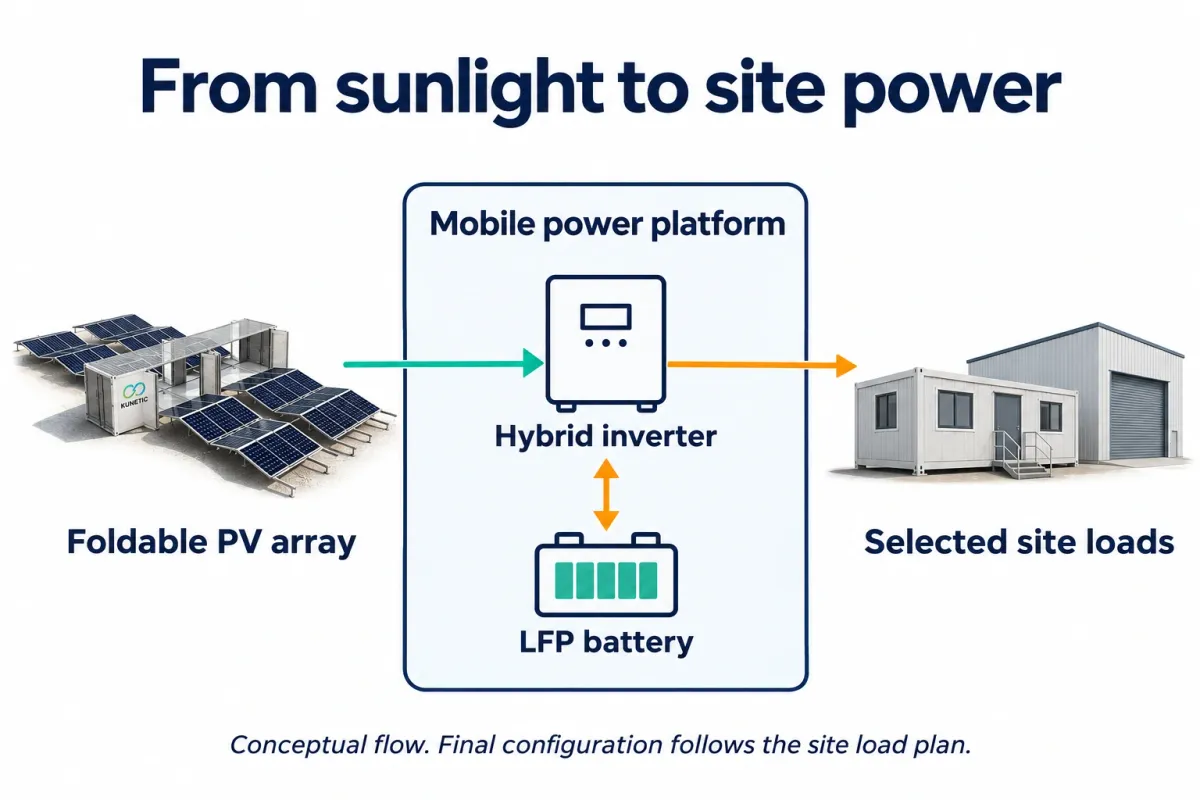
In a mobile solar container, the solar array folds for transport and opens at the prepared site. The panels generate electricity. The inverter and battery system work together to supply the connected loads.
Solar generation can serve daytime demand and charge the battery when energy is available. Stored energy can then support selected loads when solar production falls. The system needs enough generation and charging time to replenish what those loads use.
You can assess the solar array, battery and electrical output as one package. That gives you a clearer view of how it would supply your site.
A Practical Example: KUNETIC K-M-150K
The KUNETIC K-M-150K mobile off-grid solar system has a foldable PV array that opens on both sides. A hybrid inverter and LFP battery storage form part of the same container platform.
The K-M-150K specification lists 152.88 kWp of PV capacity and 150 kW rated AC output. Standard battery capacity is 261 kWh. Other PV configurations are available within the same platform.
These ratings answer different questions. PV capacity describes the array under rated conditions. AC output is the inverter's power rating. Battery capacity is stored energy.
Solar output will vary at the site. Ask for the usable battery energy and the reserve kept for your operating plan.
After the container is in place and the rails are ready, the array opens on both sides. Electric drive handles opening and closing, with manual locking. To move to the next project, retract the array and prepare the equipment for transport.
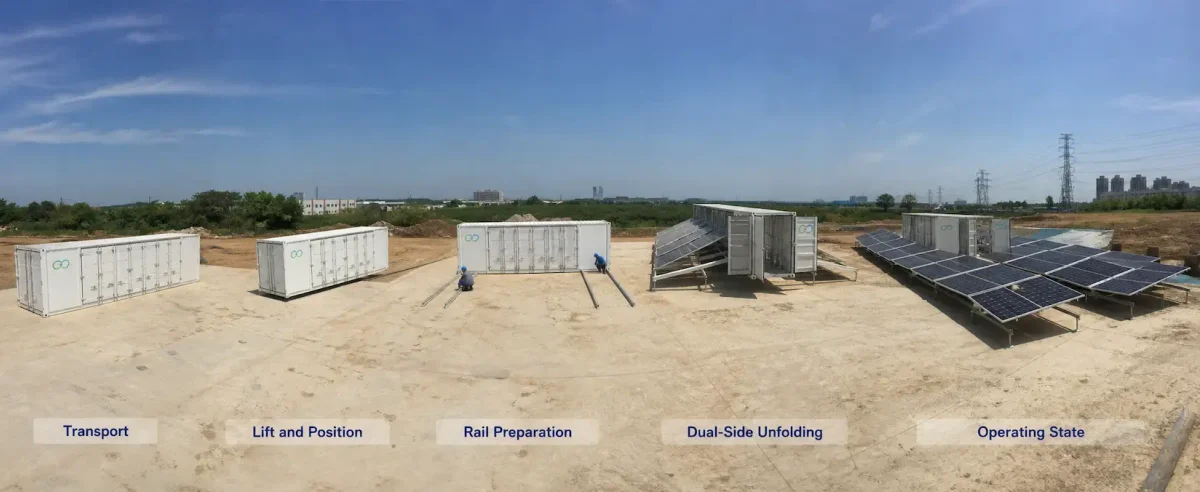
KUNETIC K-M-150K mobile solar container in its transport and deployed configurations.
Where Mobile Industrial Solar Makes Sense
Mining and Remote Industrial Operations
At a remote mine, the next work area may be far from the existing supply. A mobile solar container can supply suitable site facilities or selected industrial loads. You can prepare it for transport when operations move.
For example, a daytime workshop and its supporting facilities present a different demand pattern from continuous processing equipment. List the actual loads, including motor starts, before assigning them to the system. Whole-mine power needs its own assessment; the container should serve the loads agreed in the proposal.
Construction Sites and Temporary Camps
Construction projects often need power before permanent services are ready. Offices, camp rooms, lights and workshop equipment may need it for months or years. The power system can move to the next contract once the work ends.
A mobile solar and battery system lets you plan supply around the contract period. Solar can serve daytime site loads. Choose and operate the battery for the agreed evening or overnight demand.
Reserve the array area in the site plan before the equipment arrives. It needs to stay clear of vehicle routes, lifting operations and changing material storage.
Temporary Facilities and Weak-Grid Projects
A temporary facility may need more dependable supply than the available grid can provide. A mobile system may also suit a project where the land-use arrangement makes permanent construction unattractive.
Decide which loads need support and how long they must run. Where the project retains another supply source, include its connection and controls in the electrical design.
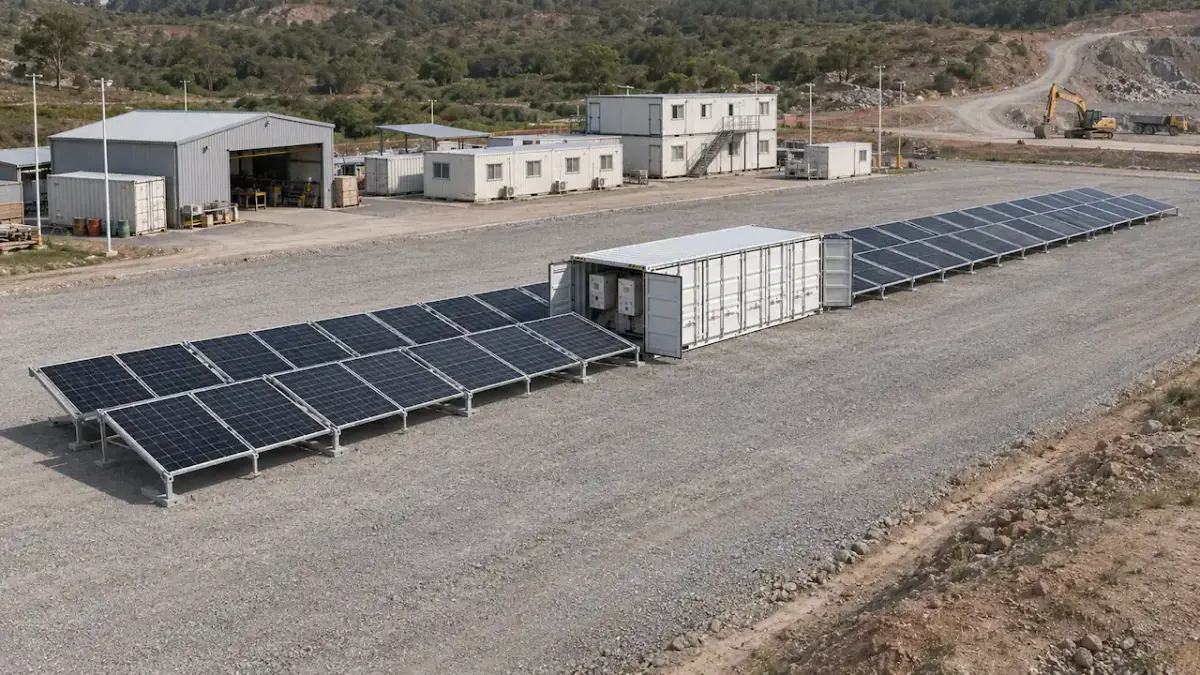
Concept layout showing a mobile solar and storage system serving a temporary construction facility.
Mobile Solar vs Fixed Solar: A Short Project-Fit Comparison
Mobile solar has a practical advantage when the location or project duration changes. Fixed solar can be the better fit for a stable site with a long operating life.
Project consideration | Conventional fixed PV | KUNETIC mobile solar platform |
Site use | A roof or ground area used over the long term | Temporary sites or work that moves in phases |
Relocation | Plan how to dismantle, transport and reinstall the equipment | Retract the array and prepare the platform for its next site |
Deployment | Plan the mounting and electrical work for the site | Position the container, prepare rails and unfold the array |
Supply package | Scope varies; storage can be included | Foldable PV, hybrid inverter and battery storage in one platform |
Compare quotations for the same scope, including transport, ground preparation, electrical works, storage, commissioning and any later move. The panel price is only one part of the project's cost.
What to Confirm Before Choosing Your System
You can start with a description of the site and the work you need to do. A finished electrical design can come later.
Share the main machines, their running demand and any large starting loads. Tell us which equipment must stay on when other loads are reduced.
Include the working hours. A daytime workshop needs a different solar and storage plan from equipment that runs through the night. Describe the supply you need overnight and during poor weather so the battery choice reflects those demands.
For an early solar yield estimate, PVWatts uses solar resource data for the location. The calculator models grid-connected PV output. An off-grid plan also needs your load schedule and a battery operating plan.
Check the available ground before choosing the configuration. The published K-M-150K deployed footprint is 96 m × 12 m. Allow for delivery access, lifting and working clearances as well as the array itself.
The electrical output must fit the site, too. The published platform offers 380 V or 400 V three-phase output, with 50 Hz or 60 Hz configuration. Confirm the supply voltage, protection and destination-market requirements for the project.
If the equipment will move, budget time and cost for the move. Include disconnection, lifting, transport and work at the next site. The array folds for transport, but the move still needs planning.
Plan Your Industrial Solar Project with KUNETIC
If fixed solar is difficult at your site, send us the location and main equipment list. Add the working hours and available ground area. Tell us how long the project will last and whether you expect to move. Include any grid or generator supply already on site.
We can use that information to assess a mobile solar configuration and define the equipment and installation scope. You should be able to see which loads the proposal serves, how it uses the battery and what work your site needs.
Tell Us About Your Site Power Requirements
For a broader explanation of generation, storage and load matching, see our off-grid solar power systems guide.
Frequently Asked Questions
Can industrial solar panels be used without a grid connection?
Yes, as part of a complete off-grid system with suitable power conversion, controls and an energy-supply plan. Panels alone do not provide continuous site power. The array, storage and any additional supply need to be matched to the loads and operating hours.
Can the mobile solar system be moved to another project?
Yes. The KUNETIC array can be retracted and the container prepared for transport. Relocation includes safe disconnection, loading, transport, site preparation and commissioning at the next location.
How are loads supplied after sunset?
A charged battery can supply the loads assigned to it. Runtime depends on usable energy, operating reserve, conversion losses and demand. Long overnight use or extended poor weather may call for more stored energy. Agree on another supply source where the design needs one.
What information does KUNETIC need to prepare a proposal?
Start with the country and site location, equipment list, operating schedule, overnight requirements, available ground area and project duration. Details of existing power sources and planned relocations help define a suitable configuration and quotation scope.