
 English
 Deutsch
 Español
 Français
 Italiano
 Polski
 Română
 العربية

Table of Contents
Two backup offers can look similar while covering different equipment. One price may be for the inverter alone. Another may include the battery, charging equipment and controls.
An inverter with battery storage can power selected electrical devices during a power outage. The inverter, battery and switching must support backup operation. The system also needs a way to recharge and a suitable connection to the circuits you want to support.
Before comparing prices, decide what you want to keep running, for how long, and what the quotation needs to include.
What comes with the inverter and battery?
The inverter converts DC power from the battery into alternating current (AC) for your equipment. The battery stores the energy. Charging, monitoring and switching functions vary between products.
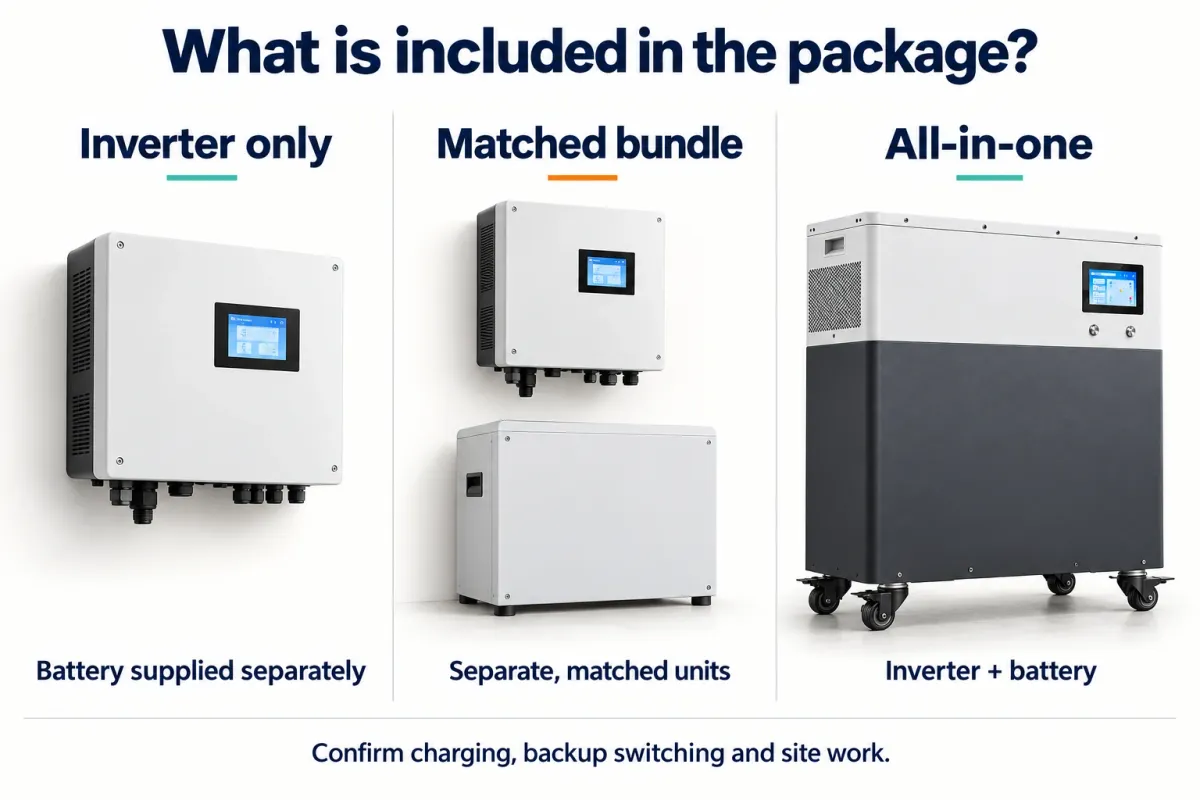
Offer | What the package contains | What to confirm |
Inverter only | Inverter; some models also include a charger | Battery match and equipment needed for backup |
Matched inverter and battery bundle | Separate units supplied as a combination | Model compatibility, communications and installation scope |
All-in-one system | Battery and inverter in one assembly | Included charging and controls; external equipment and site work |
A single cabinet can reduce the number of separate units to arrange. An inverter battery backup system needs a suitable connection to the loads it will supply.
An equipment list with model numbers makes the offers easier to compare. You can see what is included and which items need a separate quotation.
Which setup fits your backup needs?
Keeping a refrigerator and internet connection running is a different job from supplying workshop machinery. The equipment needs to match the application.
KUNETIC configuration | Inverter or rated AC power | Nominal battery energy | AC arrangement |
Integrated inverter and battery unit | 6 / 8 / 10 / 12kW inverter options | 16kWh LFP | 230V single phase |
PowerStone | 33kW rated AC power | 64.3kWh LFP | 400/230V three phase |
Home backup: an integrated 16kWh option
For home backup, start with the household appliances and circuits you want available during a power cut. Refrigeration, lighting, communications and selected sockets may be the priority. Electric cooking, water heating and air conditioning can substantially increase the requirement.
KUNETIC's 16kWh unit combines an off-grid inverter, LFP battery and MPPT solar charger in a wheeled cabinet. It supports mains charging as well as charging from a connected solar array.
The inverter options give you a choice of power ratings. Check each option against the battery's discharge limits and your equipment's starting demand. Our 16kWh home battery guide explains the runtime side of that decision.
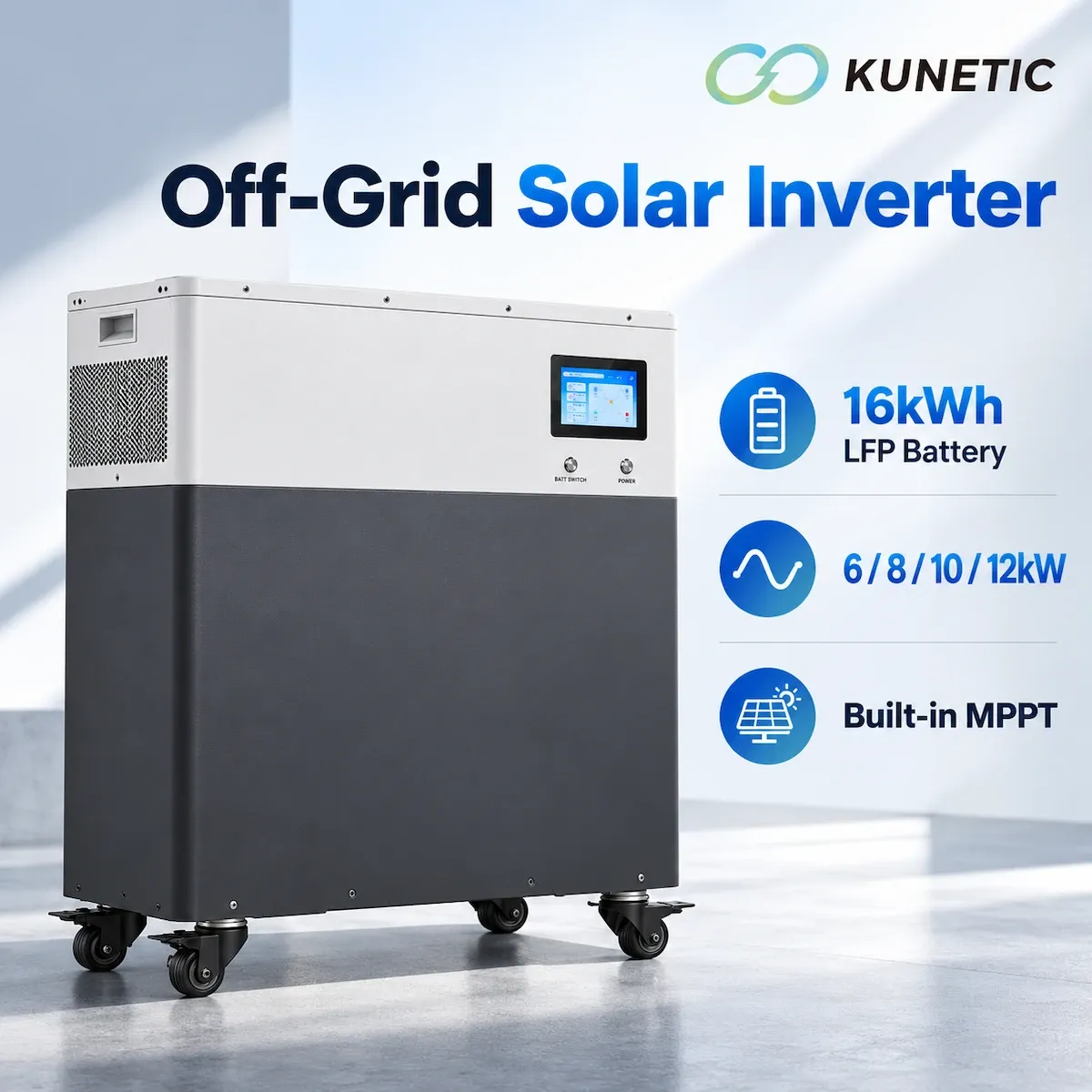
KUNETIC all-in-one off-grid inverter with a 16kWh LFP battery.
Small-business backup: a 33kW / 64.3kWh system
A workshop or retail premises may need selected equipment to stay on while the main supply is unavailable. The load list might include lighting, communications, controls and particular machines.
PowerStone combines battery storage with modular inverter equipment. It also includes solar charging, an automatic transfer switch and energy management. It has a three-phase AC output, while the home unit is single phase.
Check the load on each phase. The total 33kW rating does not mean 33kW is available on any one phase.
PowerStone can accept a solar array within its published limits. Its 39kW maximum PV figure describes the permitted array size; panels and mounting are separate quotation items.
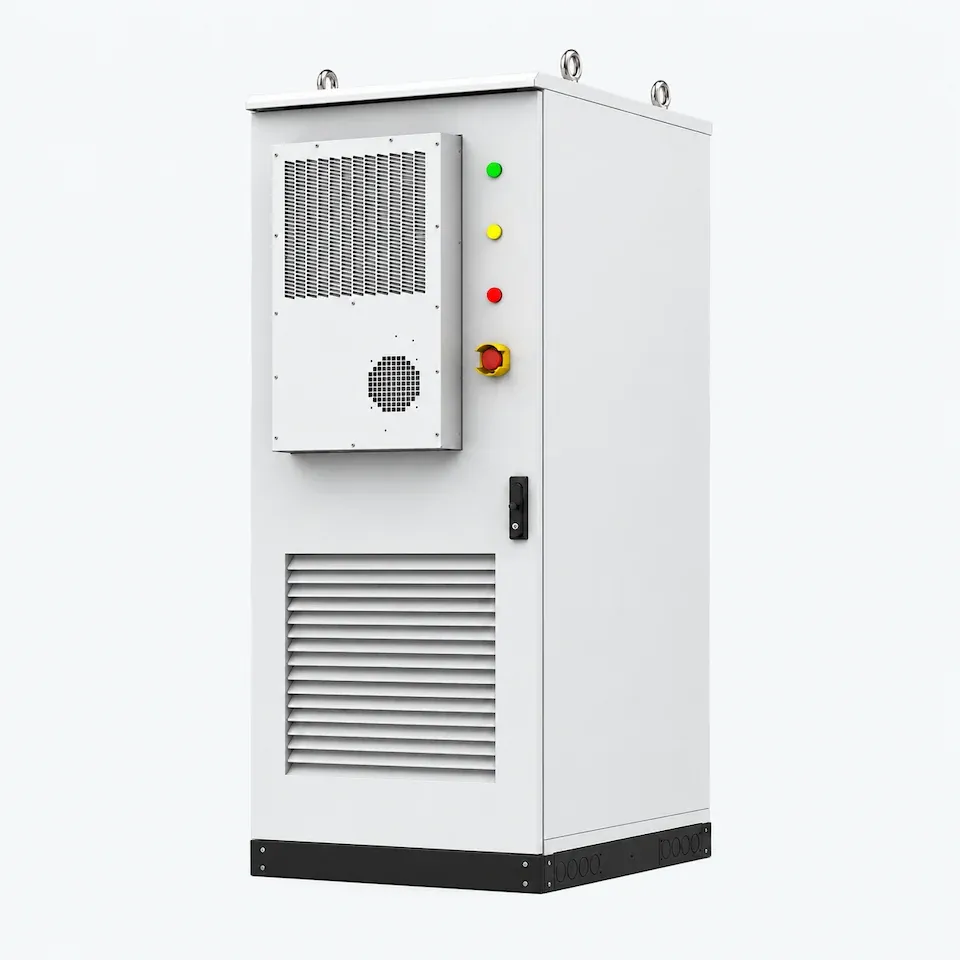
KUNETIC PowerStone 33kW / 64.3kWh commercial energy storage system.
Five details to check in the quote
Power and battery limits
The inverter's kW rating helps determine how much equipment it can supply at once. Battery energy in kWh helps determine how long that supply can last. The U.S. Department of Energy's storage guide explains this distinction between power and energy capacity.
The quotation should give the battery's available output power and usable energy alongside the inverter rating. Include any pumps, compressors or other equipment with a high starting demand. Reserve settings and conversion losses also affect backup time.
Voltage and phase
The AC output must match your property's electrical supply and loads.
A 230V single-phase system, a 400/230V three-phase system and a 120/240V split-phase system are different configurations. Include your required voltage, frequency and phase arrangement in the enquiry so suppliers can quote suitable equipment.
Charging options
A system with mains charging can recharge when utility power is available, ready for the next interruption. A solar inverter with battery storage may also accept PV input, within the selected model's limits. Check whether the required charging equipment is included.
If you already have solar, share the inverter model. Our AC- and DC-coupled storage guide explains why existing equipment affects the proposed arrangement.
Backup circuits and switching
The proposal should identify which circuits receive backup power and how they separate from the utility supply during an outage.
DOE's inverter guidance explains that solar-plus-storage systems need inverter capability designed for operation without grid support.
Ask about transfer time if sensitive equipment needs to stay on. The installer may need to include additional switching equipment or a separate UPS for particular loads.
Complete supply and support
I'd want a clear equipment list: battery and inverter, charger, protection, distribution and cabling. The quote should also state who covers delivery, installation and commissioning.
Ask who handles the system settings and who you contact if the battery and inverter stop communicating. Check the warranty terms for the supplied combination.
For the physical work and handover, our solar battery installation guide covers the wider planning questions.
Tell us what you need to keep running
A short equipment list is a useful starting point for a KUNETIC proposal. Include:
- Project country and supply voltage, frequency and phase.
- Equipment that needs backup, with model or nameplate details where available.
- Which loads run together and the backup time you want.
- Existing solar, inverter or generator information.
- Available installation space and any access restrictions.
Send KUNETIC your requirements to discuss an inverter and battery configuration. We can propose suitable equipment and explain what it can supply, with included and optional items clearly listed in the quotation.
FAQs
Can I use an inverter with battery without solar panels?
Yes, if the selected system supports mains charging. KUNETIC's 16kWh integrated unit supports both mains and solar charging. The equipment and connection arrangement should suit the charging source you plan to use.
Can I keep my existing battery?
Possibly. Check voltage, charging settings, current limits and any required battery communications with the supplier. Share both model numbers so the combination can be checked before ordering.
Will an all-in-one system back up the whole property?
That depends on the loads, starting demand, available battery energy and backup arrangement. The proposal should identify the circuits covered and the backup period it is designed to support.
