English
 Deutsch
 Español
 Français
 Italiano
 Polski
 Română
 العربية

Table of Contents
A server rack battery stores solar energy for later use. It can also support backup power with the right inverter. Before you buy, check usable energy, inverter fit and the full system cost.
Is a server rack battery right for your project?
Rack batteries can serve homes, shops and small business sites. They need a suitable indoor space, a rack that supports their weight and an inverter that works with them.
A rack mount battery may suit an existing low-voltage inverter. It also lets you store daytime solar for use at night and plan for more storage later. Size the bank around the loads and hours you need.
Check the space before ordering. Some models are for indoor use only. Allow floor space, strong rack support and room for service. For outdoor use or a high-voltage system, choose equipment built for that purpose.
How much battery capacity should you buy?
Start with the energy you need to use
Work out how much energy you need over the hours you want to cover. Include evening use and the loads you need during a power cut.
For example, a shop that uses an average of 2kW for four hours needs 8kWh. Allow for energy lost in the inverter and any backup reserve you want to keep.
Nominal capacity is the stated energy rating. Usable energy is the portion available within the battery's operating limits. Less energy reaches your appliances after inverter losses. The U.S. Department of Energy's storage guide explains energy capacity, power and conversion losses.
Compare one module with a larger bank
KUNETIC's 10.5kWh LiFePO4 battery uses lithium iron phosphate cells. Each added module brings more stored energy. Choose the number of modules to suit your loads and inverter.
Configuration | Approximate nominal energy | Buying decision |
One module | 10.5kWh | Check whether usable energy covers the selected evening or backup loads. |
Two modules | 21kWh | Consider a longer operating window or a larger energy requirement. |
Four modules | 42kWh | Assess a larger home or commercial load profile, with suitable rack and distribution equipment. |
Check both running power and the surge needed to start motors. A bank may store enough energy for hours, yet its inverter may be too small for the loads. Adding kWh alone does not raise AC output.
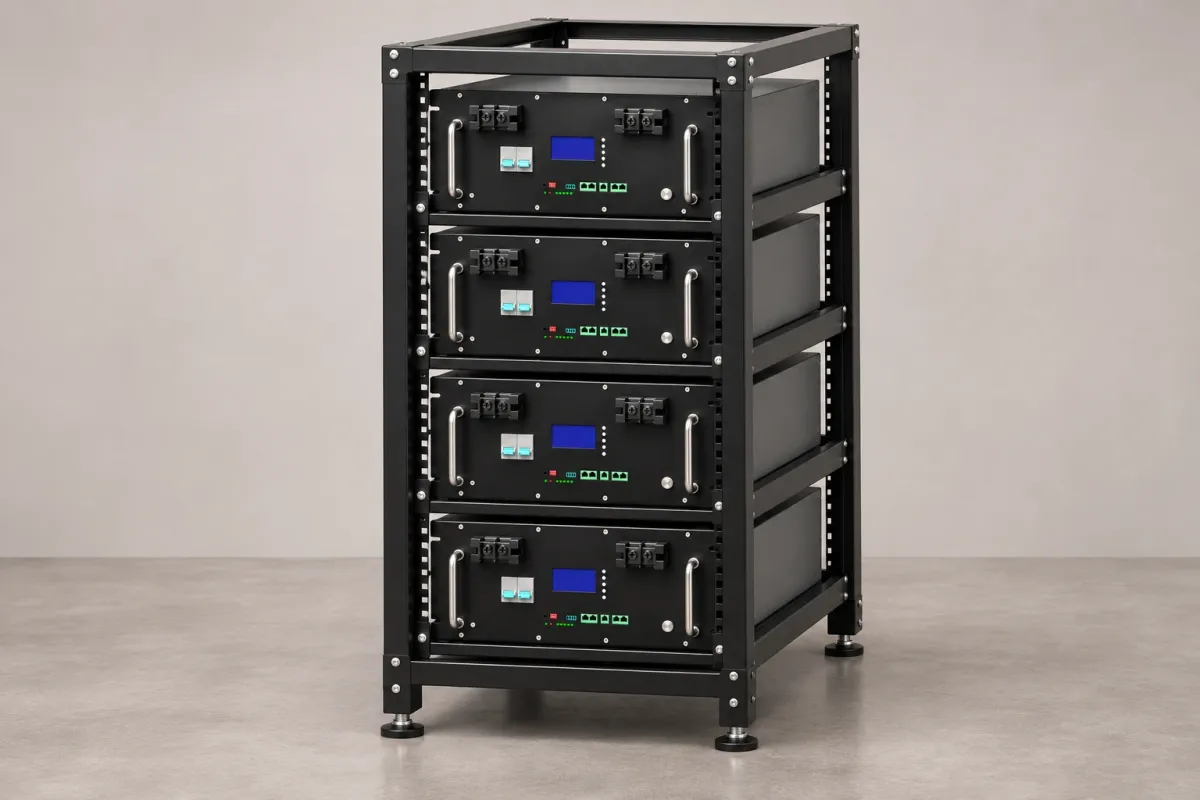
KUNETIC 10.5kWh rack battery modules in an illustrative 42kWh nominal configuration.
Will the battery work with your inverter?
Check voltage and current limits
For a 48V-class battery, check the exact operating range and charging settings. KUNETIC's rack module has a nominal voltage of 51.2V.
Ask the supplier to match your inverter model to the battery's charge and discharge limits. The inverter's AC rating alone does not tell you how much power the battery bank can supply.
Our inverter-with-battery guide explains how these components work together.
Confirm communication and backup operation
Check that the battery and inverter can exchange data. Confirm the protocol, settings and firmware for both. CAN or RS485 ports alone do not prove they will work together.
For backup power, ask which loads will run in a power cut. Check how the system switches to backup mode. Adding a battery alone will not make an on-grid solar system work in an outage. It needs the right inverter and backup design. The Department of Energy's inverter guide explains this requirement.
Send the inverter's full model number and the country where you will use it. We can then check the proposed match.
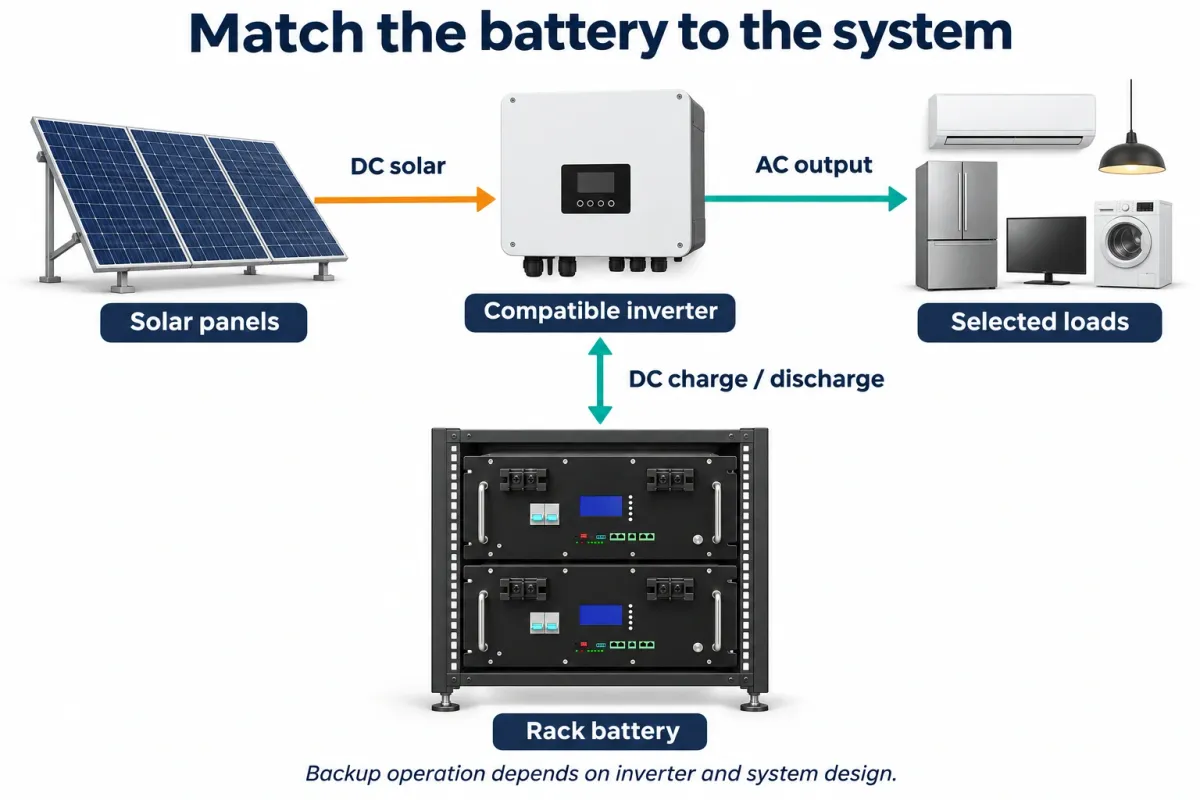
A simplified rack-battery storage arrangement with a compatible inverter.
What does a complete server rack battery system cost?
Separate the battery price from the system price
Ask what the quoted price includes. You may need a rack, a new inverter, cables and protection equipment as well as the battery modules.
Request a quotation that lists the supply and installation scope:
Cost item | What to confirm |
Battery modules | Quantity, nominal and usable energy, operating limits and included accessories |
Inverter or charger | Whether the existing equipment is suitable, or a new unit is included |
Rack and support | Rack depth, shelf loading, module support and space for expansion |
Distribution and protection | Distribution equipment, cables, disconnects and protection included in the design |
Delivery and installation | Freight, taxes or duties, installation and commissioning responsibilities |
Documents and after-sales support | Project documents, applicable certification evidence, written warranty terms and service arrangements |
KUNETIC's 10.5kWh product is a battery module. Choose the inverter, rack and power distribution equipment separately. Ask for the module price and the full system quote. Confirm who will install, test and start up the system.
Compare quotations on the same basis
Compare systems with similar usable energy and enough power for the same loads. A cheaper module may cost more overall once you add other equipment, shipping and installation.
Divide the quoted total by usable battery capacity to find the cost per usable kWh. First check that both quotes cover the same equipment and services. Also compare output power, inverter fit and support.
For bill savings, check your electricity rates and how much spare solar you have. Then check when you can use that stored energy. A larger bank only helps if you can charge and use it.
Can you expand the battery bank later?
Before buying the first module, ask which packs you can add later and how they connect. Check that the inverter and power distribution equipment can handle the larger bank. Rack cabinets also need space and support for the added weight.
The KUNETIC K-RACK-51205 supports up to 15 packs with matching SmartR distribution equipment. That gives about 157.5kWh of nominal storage. Adding packs keeps the bank at 51.2V nominal. It remains a low-voltage system.
Each 5U module measures 600 × 442 × 222mm and weighs about 92kg. Check rack depth, shelf support and total weight limits. Leave room for service and follow the installation instructions.
This IP20 model needs a dry indoor space. Tell the supplier about the space, room conditions and number of modules you plan to add.
A KUNETIC rack battery configuration for your site
Consider a proposed setup for a shop with rooftop solar and an indoor equipment room. It needs a low-voltage inverter that works with the battery. The aim is to use daytime solar after closing and power selected loads during outages.
Use the shop's evening energy use to compare one module with a larger bank. Check that the inverter supports backup. Match its battery-current limits to the loads that must run at once. More storage may extend the hours of use.
The KUNETIC 10.5kWh 48V server rack battery is one modular option for this indoor arrangement. Select the final equipment around the site's requirements.
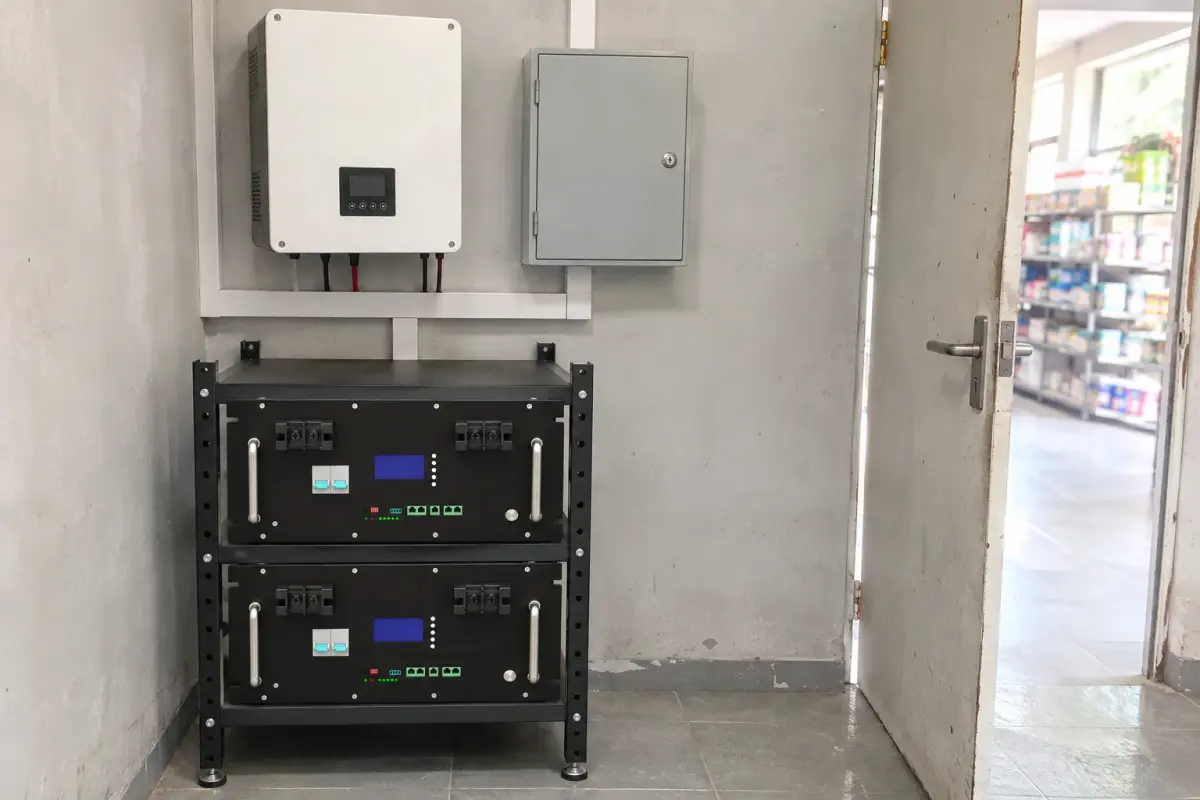
Indoor rack-storage configuration concept for a small commercial site.
To request a rack battery configuration for your home or business, send KUNETIC your:
- Installation country and inverter model.
- Evening energy use and the circuits you want to support.
- Required operating hours, including any pumps, compressors or other starting loads.
- Available indoor space and future expansion plans.
Request a matched battery-bank proposal and quotation.
Server rack battery FAQs
Does a server rack battery include an inverter?
A standalone rack battery usually needs a separate inverter. A module price may cover less equipment than a rack bundle or a full system. Check what the quote includes.
Can I use it with my existing solar system?
Share the inverter model and system details. The supplier can check how to add a battery or suggest another storage setup.
Can I add more rack batteries later?
Check the supported modules, distribution equipment, rack capacity and inverter limits before planning an expansion.
Can I install a rack battery outdoors?
Follow the exact model's enclosure rating and installation requirements. KUNETIC's IP20 K-RACK-51205 is intended for dry indoor installation.