English
 Deutsch
 Español
 Français
 Italiano
 Polski
 Română
 العربية

Table of Contents
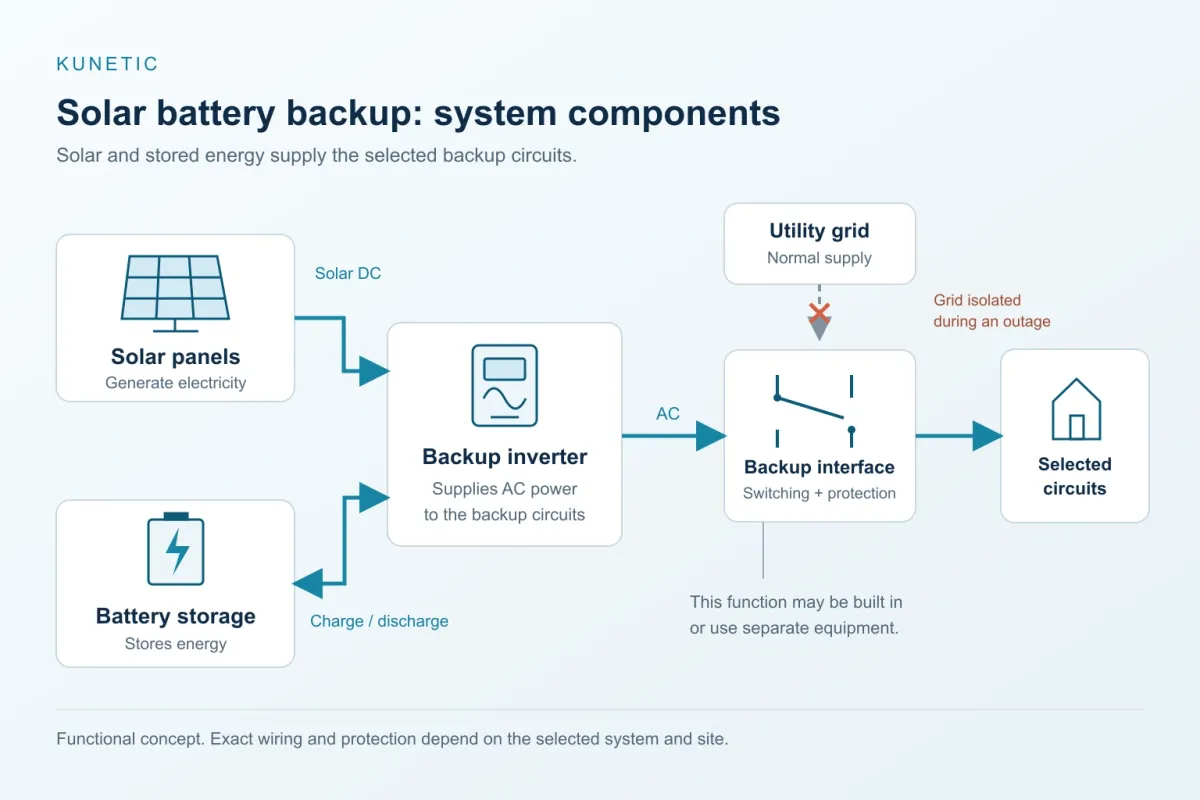
Solar battery backup uses stored solar energy to keep essential appliances running during a power outage. A complete system pairs a battery with a suitable inverter. It also needs backup connections matched to your property and loads.
What belongs in a complete solar battery backup system?
Equipment | Purpose | What the offer should specify |
Solar panels | Generate power for use and charging. | New panels included, or existing array retained. |
Battery | Store energy for evening use and outages. | Model, usable energy and discharge limits. |
Backup-capable inverter | Supply AC power to the backup circuits. | Voltage, phase, battery match and power output. |
Switching and protection | Isolate backup circuits from the grid and protect the equipment. | Built-in functions and external devices needed. |
Installation materials and work | Connect the equipment to the property. | Cables, mounting, wiring changes and who installs it. |
Conventional grid-connected solar generally shuts down when the grid fails. Backup requires an appropriate inverter, storage and electrical arrangement, as the U.S. Department of Energy explains.
A battery-and-inverter package may cover only the main equipment. The quote should state whether it includes solar panels, site protection and electrical work.
Adding backup to existing solar or starting fresh?
Battery backup for solar panels you already own
You may be able to keep the existing solar inverter and add a compatible battery-inverter system. Another option replaces it with an inverter that manages both solar and storage. The existing inverter determines which routes are practical.
Provide the inverter model, panel model and array configuration. The proposal should identify the backup circuits and state whether solar charging remains available during an outage.
See our AC-coupled and DC-coupled battery storage guide for the connection differences.
Buying solar and storage together
Choose the panels, battery, inverter and backup circuits as a matched system. Base the configuration on the appliances you need, the hours they will run and the available solar generation.
A system for refrigeration, lights and internet access can differ substantially from one supporting pumps or several air conditioners. Include those larger loads in the initial equipment selection.
Which home battery backup system suits your property?
Integrated equipment for single-phase loads
The KUNETIC 16kWh inverter-and-battery unit has an off-grid inverter and an LFP battery in one cabinet. Its MPPT charger handles solar charging. The panels connect externally.
The available options are:
- 16kWh nominal battery energy.
- 6, 8, 10 or 12kW inverter options.
- 230V single-phase AC output.
This format can supply selected home or small-property circuits when the electrical supply and loads match. It keeps the main equipment in one cabinet. Your installer plans the cable connections, protection and service access.
A larger inverter option does not increase battery capacity. Its output must also remain within the battery's discharge limits.
A stack system for a three-phase property
The KUNETIC three-phase solar battery storage system has a 10kW hybrid inverter. One battery box provides 9.6kWh of nominal storage; two provide 19.2kWh.
It supports the listed 380, 400 or 415V three-phase configurations with neutral and protective earth. Choose the battery configuration around the loads you need to support across all three phases.
Both versions use the same inverter, but they have different battery voltages. A 10kW inverter rating does not guarantee 10kW of battery-only output from either configuration.
These published models differ from the equipment needed for a 120/240V split-phase home. Match the configuration to the property's supply before selecting capacity.
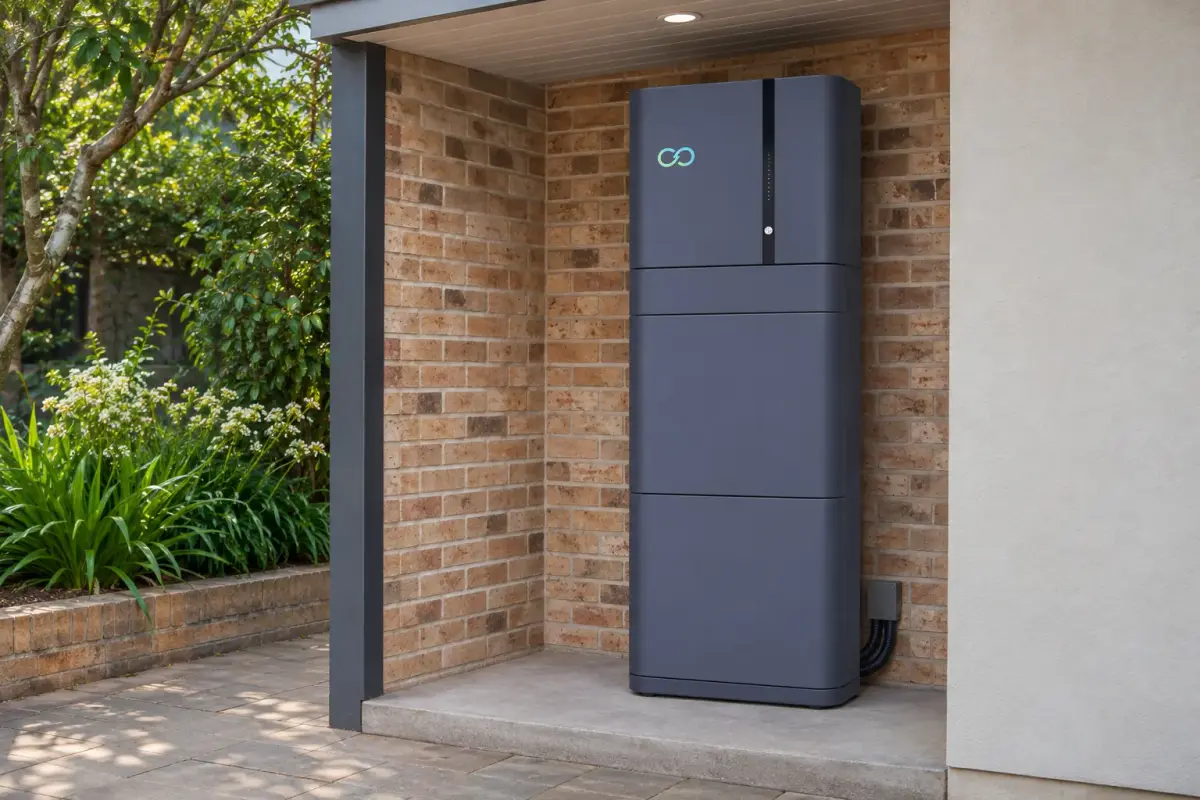
KUNETIC three-phase solar battery storage in a proposed utility-area layout.
Separate batteries and inverter
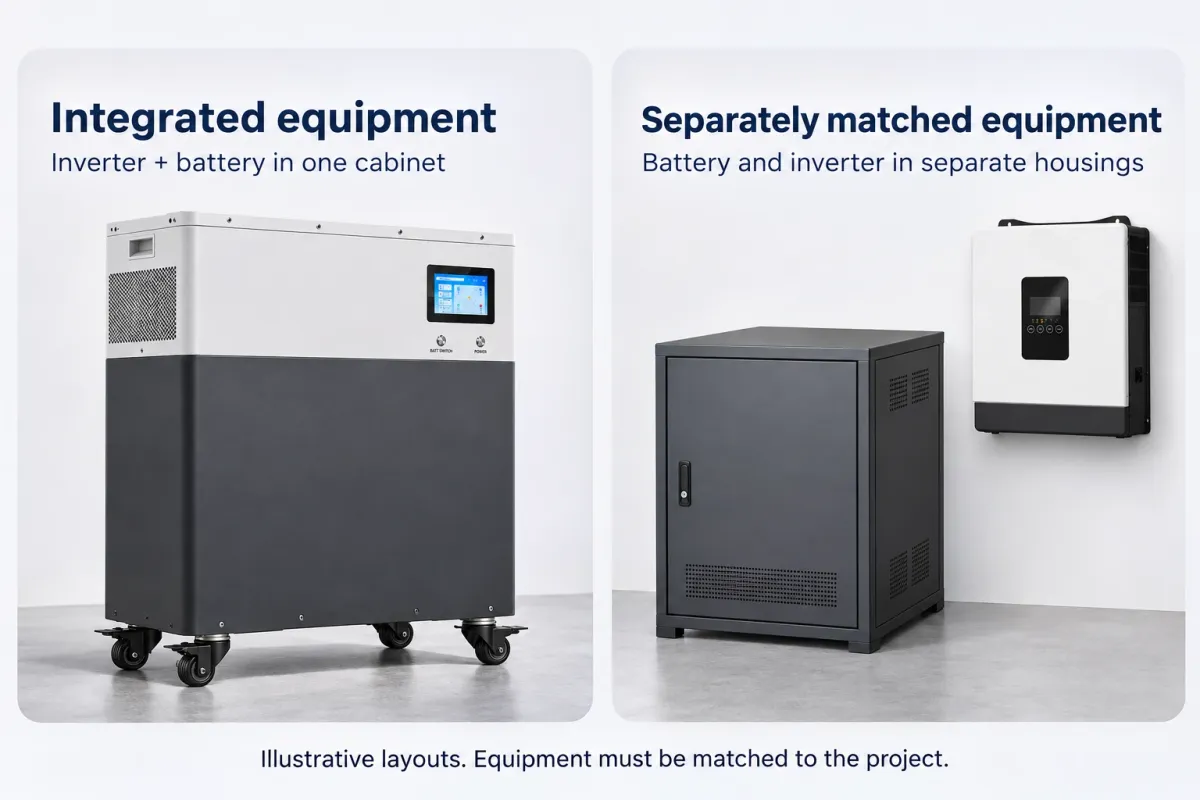
Separate equipment gives you more freedom to position the inverter and batteries. It can suit an existing solar installation, an awkward equipment space or a project with specific expansion needs.
The proposal should identify compatible battery and inverter models. Include the supported battery quantity, installation space and expansion limits if you plan to add storage later.
What will your backup system actually keep running?
Define the supported circuits before choosing equipment. Common priorities include refrigeration, lighting, internet equipment and selected sockets. Water pumps, gates and cooling may add significant running or starting demand.
Check the available power, usable energy and charging options:
- Power output: the inverter and battery must support the appliances running together, including motor starts.
- Usable battery energy determines how long those loads can operate.
- Solar generation, weather and supported charging modes affect operation during a longer outage.
Usable battery energy is lower than the nominal rating. Reserve settings and charge limits affect the energy available. The inverter also uses some energy as it converts power for the appliances. Estimate runtime from the usable energy in your chosen setup.
Our 16kWh home battery guide gives examples for that storage size.
What should your supplier's proposal include?
Compare these items alongside the quoted price:
- Equipment: inverter model, battery configuration and solar array, where supplied.
- Backup performance: supported circuits, available output, switching time and solar charging during outages.
- Supply scope: switching, protection, cables, mounting and monitoring equipment included.
- Site work: delivery, installation, commissioning and responsibility for local approvals.
- Ongoing support: warranty terms, service arrangements and supported expansion.
A cabinet-only offer covers different costs from a package with panels and installation. Compare their item lists alongside the prices.
Use our solar battery installation guide for the site preparation and installation stages.
Frequently asked questions
Can I add backup to my existing solar panels?
Often, yes. The existing inverter and proposed storage equipment determine what can stay and what needs changing.
Do I need whole-property backup?
No. Selected circuits can receive backup power. Whole-property coverage requires equipment and an electrical arrangement sized for the intended loads.
Can I add more batteries later?
Only within the system's supported configurations. Confirm compatible battery models, quantity limits and space before buying.
For a matched solar battery backup proposal, send KUNETIC your project details. Include your country, supply voltage and phase, and any existing or planned solar equipment. List the loads you want to run and the backup hours you need. We can review a matched setup and its supply scope.