
 English
 Deutsch
 Español
 Français
 Italiano
 Polski
 Română
 العربية
PROJECT DESIGN · CÔTE D’IVOIRE
Home Solar Battery Backup in Côte d’Ivoire
Start with the circuits the household wants to keep on
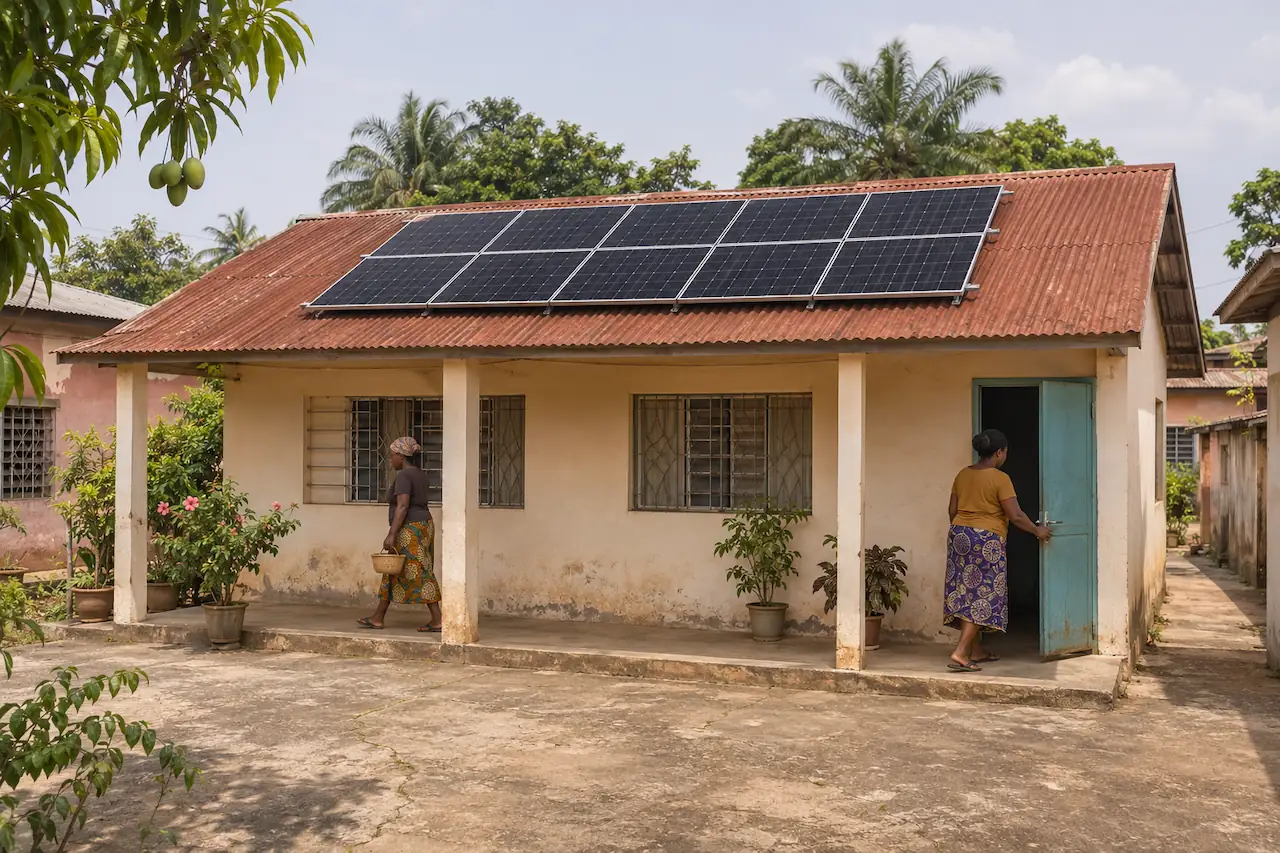
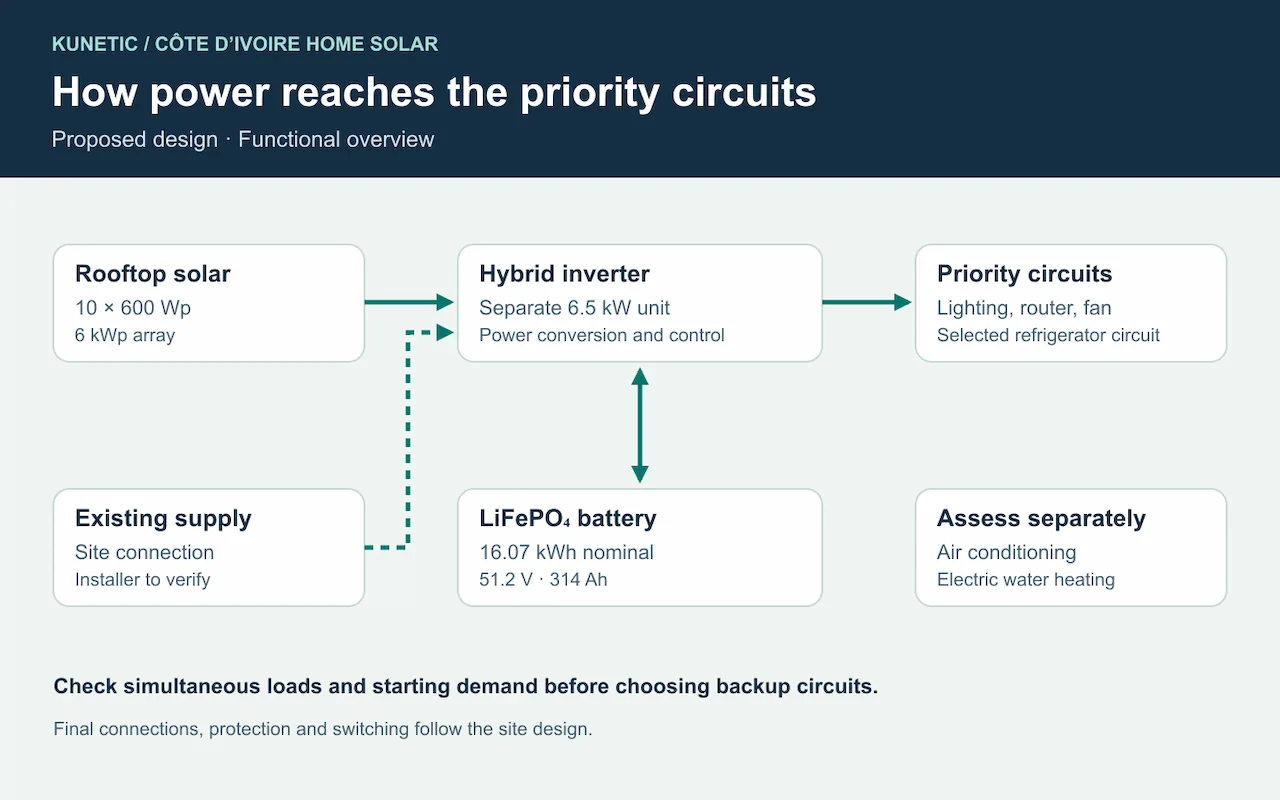
A proposed home solar battery backup design for Côte d’Ivoire pairs ten rooftop panels (6 kWp) with a 16.07 kWh LiFePO₄ battery and a separate 6.5 kW hybrid inverter. The battery and inverter share a dry service room, and the backup plan starts with the circuits the household wants to keep on.
Think through an evening outage. Which rooms need light? Would a fan, the router or the refrigerator stay on? Make a short list for the installer. It helps to note whether those appliances share circuits with sockets or equipment you would rather leave off during an outage.
Fit ten solar modules to the usable roof
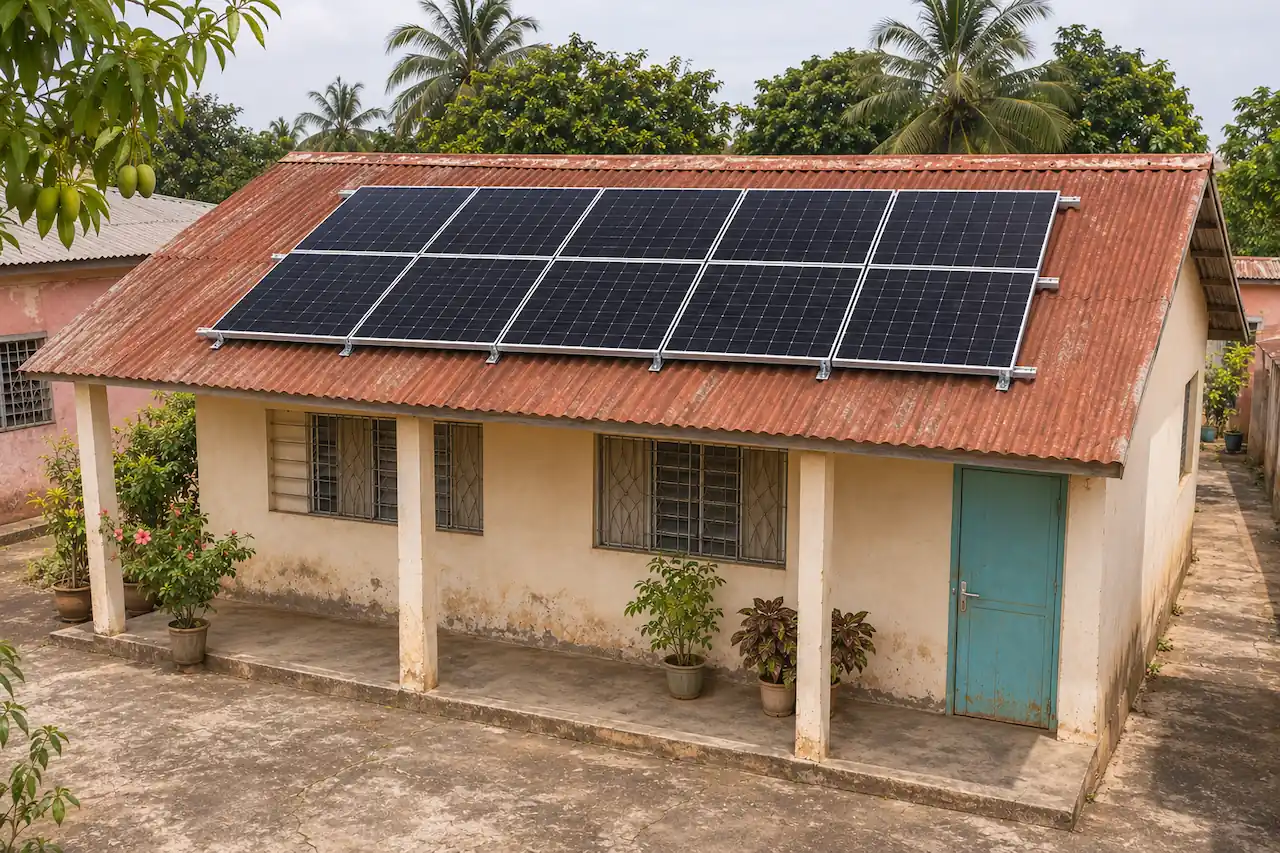
The proposal specifies ten 600 Wp modules. Before fixing the layout, the installer checks where shade falls, whether the roof can take the mounting system and how someone would reach the panels for service. A roof photo or sketch helps you flag vents, trees and awkward corners before the survey.
The survey also helps identify a cable route from the roof to the service room. Tell the installer when the home normally uses electricity. The time of day matters when you plan to use solar generation directly and leave some battery charge in reserve.
Make room for the battery and inverter
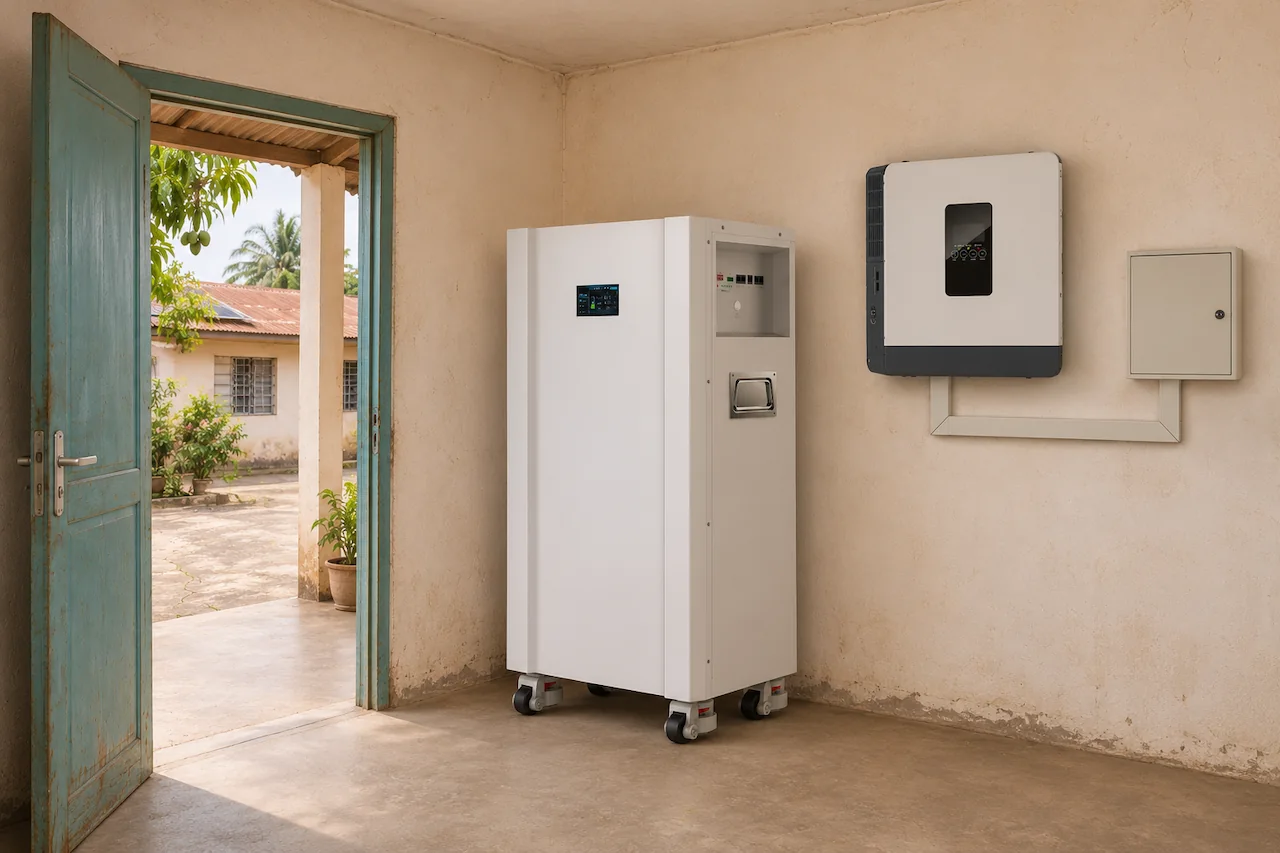
The proposed battery is a single cabinet rated at 16.07 kWh, 51.2 V and 314 Ah. The equipment reference shows it on casters, so the illustration places the cabinet on the floor of the service room. The 6.5 kW inverter is a separate unit on the adjacent wall.
Walk the route from the courtyard to the room before settling on a position. A narrow doorway or raised threshold can make it difficult to move the cabinet into place. Once inside, the installer needs enough room to reach the equipment and inspect its connections without moving household storage out of the way.
Check floor support and the manufacturer’s instructions for securing the exact cabinet. The installer also needs to check the inverter’s wall support, the room conditions and the clearances around both units.
Match backup circuits to power and energy limits
Check the appliance labels or measure the demand on each proposed backup circuit. Note what runs at the same time. A refrigerator can draw extra power as its compressor starts, while an electric water heater can keep drawing a large load for a longer stretch. Review those demands before deciding which circuits to include.
Ask which sockets are on each circuit. A socket that usually serves a router may also be used for a kettle. Knowing what else can be plugged in helps the installer plan backup power for everyday use.
The inverter is rated at 6.5 kW. The battery’s 16.07 kWh figure is its nominal stored energy. During an outage, the battery’s discharge current limit can also constrain the power available to appliances. Ask the installer to check voltage, communication settings and current limits for the exact pair. See our guide to pairing an inverter with a battery.
For an estimate of energy demand, multiply the average load by the time it needs to run. For example, 400 W over five hours uses 2 kWh at the appliances. Allow for the starting charge, battery reserve and conversion losses when comparing that demand with the energy available.
Equipment supply and planning budget
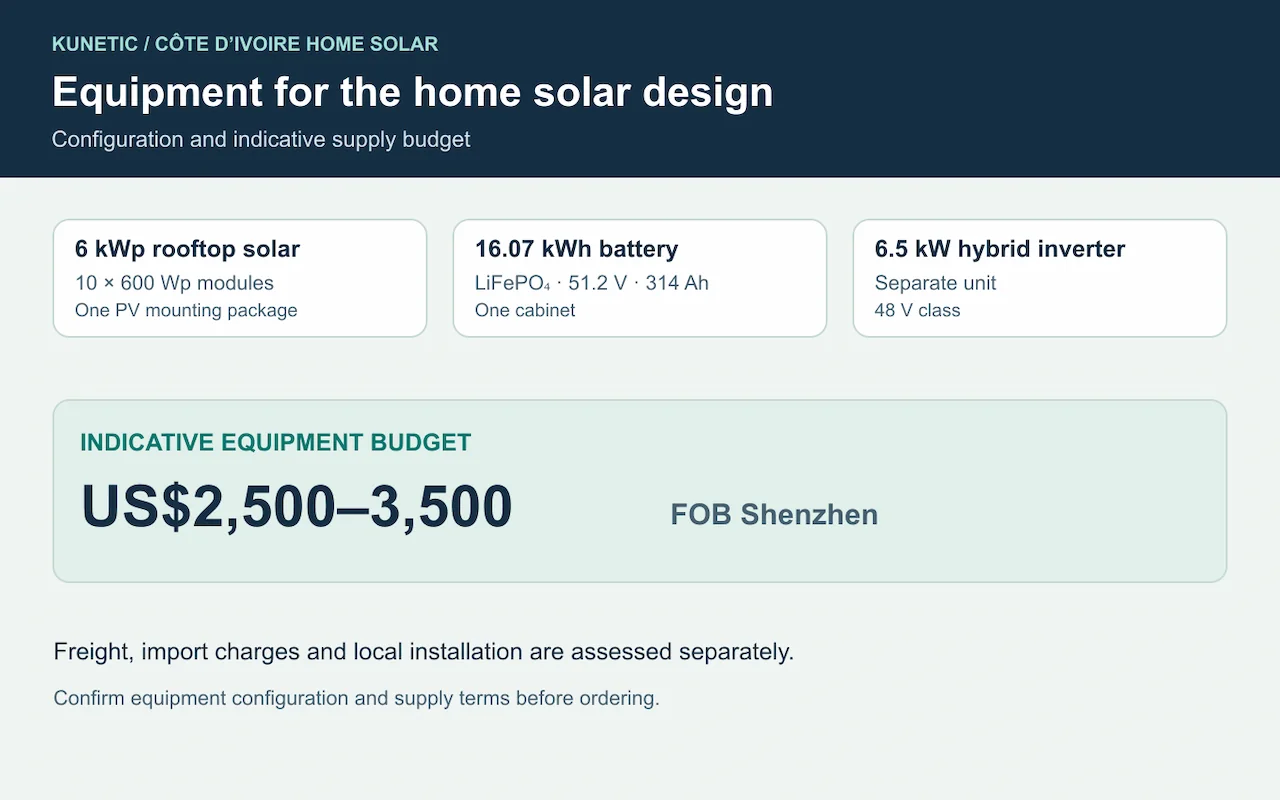
An indicative budget for the four equipment items below is US$2,500–3,500, FOB Shenzhen. The range helps the owner compare equipment scope early in the project. A formal quotation can be prepared once the configuration and supply terms are agreed.
| Equipment | Proposed specification | Quantity |
|---|---|---|
| Rooftop solar modules | 600 Wp monocrystalline modules, 6 kWp total | 10 |
| LiFePO₄ battery | 16.07 kWh, 51.2 V, 314 Ah | 1 |
| Separate hybrid inverter | 6.5 kW, 48 V class | 1 |
| PV mounting package | For the 6 kWp array, subject to roof assessment | 1 set |
Freight, import charges, site electrical materials and local installation are assessed separately. Ask the installer to price the site work after inspecting the roof and the equipment room. The quote should account for the cable route, the work at the distribution board and any changes needed to put the selected circuits on backup.
Share the roof, equipment room and loads for a design review
Send photos and approximate dimensions of the roof and proposed service room, including its doorway. Add details of the existing electrical supply and list the circuits you want to keep running. If you know how long the typical interruption lasts or have measured the load, share that information too.
KUNETIC can use that information to review the equipment configuration with you and your installer. Explore our residential energy storage solutions or select Plan Your Home Solar Backup to discuss your project.
Questions about this home solar backup design
What should I check before choosing the battery location?
Show the installer the proposed spot and the path from the entrance. They can check floor support, access and room conditions against the cabinet’s instructions. The inverter has its own mounting and clearance requirements.
Can the inverter back up the whole home?
That depends on the home’s simultaneous demand, appliance starting loads and the battery’s discharge capability. This design starts with selected circuits. Your installer can assess whether larger loads such as air conditioning should be included.
How long will the 16.07 kWh battery last during an outage?
Runtime depends on the combined load and the energy available when the outage begins. The installer can estimate a range using measured demand, the chosen battery reserve, conversion losses and any solar generation available during the outage.
Does the budget include installation in Côte d’Ivoire?
The US$2,500–3,500 range is for the listed equipment on an FOB Shenzhen basis. Request separate prices for freight, import charges and local installation, including any electrical materials and work required at your property.