English
 Deutsch
 Español
 Français
 Italiano
 Polski
 Română
 العربية
PROJECT DESIGN · PHILIPPINES
Solar Power for a Laundry Shop in the Philippines
A solar plan built around the laundry’s working day
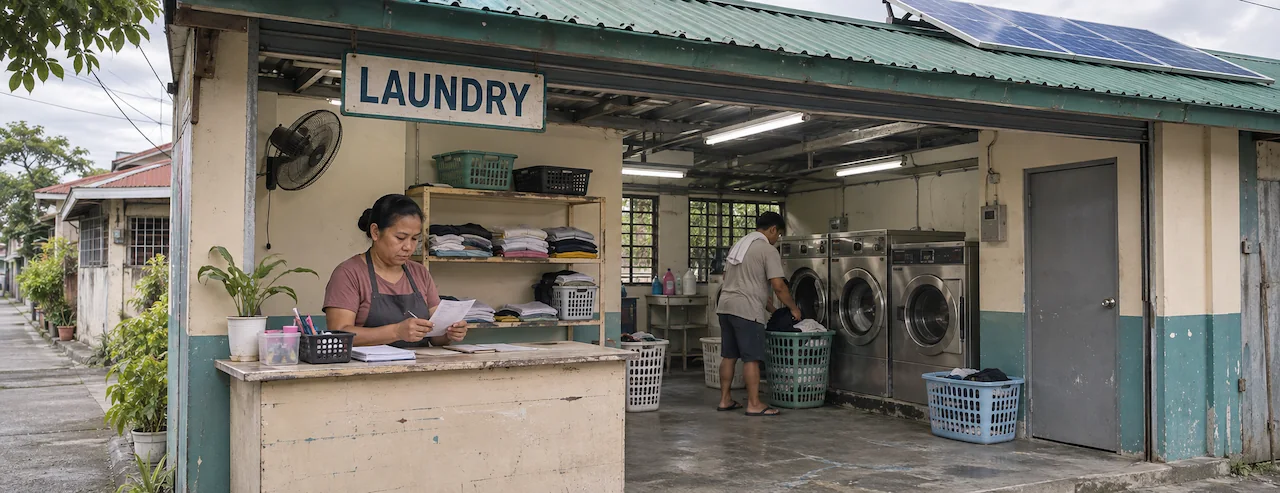
The proposed Philippines laundry shop has a customer counter at the front, with the washing area behind it. A separate dry room houses the electrical equipment. The design uses roof space for daytime generation while the shop is open.
The design combines 15kWp of rooftop solar, a 35.84kWh high-voltage battery and a separate 30kW three-phase hybrid inverter. The owner can review this configuration with KUNETIC and the local installer alongside the shop’s operating schedule.
Planning solar power for a laundry shop starts with the cycle timetable. Check when washing cycles overlap and how the dryers are heated. Then decide what receives power when the normal supply stops.
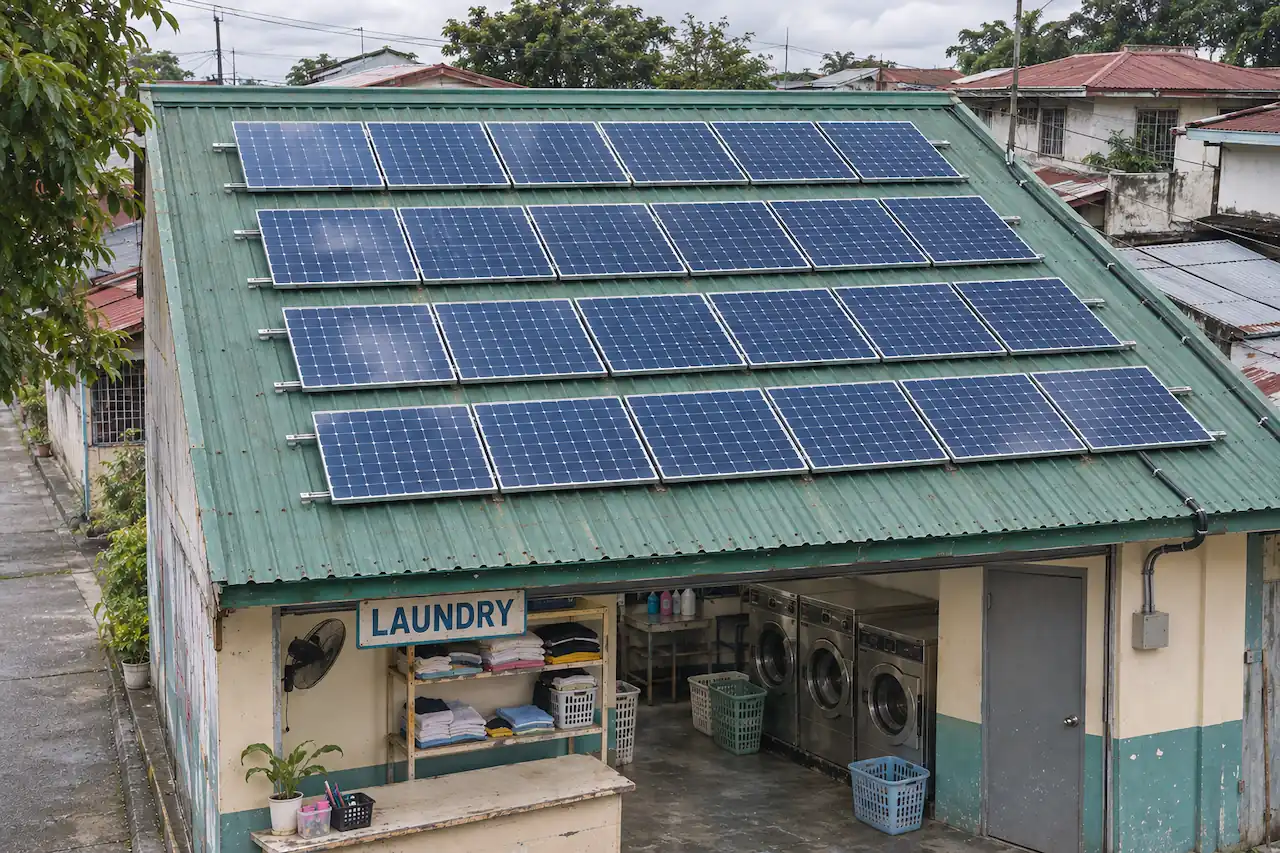
Put the 15kWp array over usable roof space
The proposed roof layout uses 24 modules rated at 625Wp each. Together, they provide 15kWp of nameplate solar capacity. For this 15kW solar system, the array layout leaves access space for inspection and maintenance.
A roof survey establishes the available surfaces, shade over the solar panels and suitable mounting arrangement. It also identifies a cable route toward the dry equipment room, away from daily laundry handling.
Compare the washing timetable with expected daytime solar production. Moving suitable work into those hours can increase direct use of solar energy. Weather and roof conditions affect production, while the workload determines which cycles can be moved.
Keep the battery and inverter in a dry service room
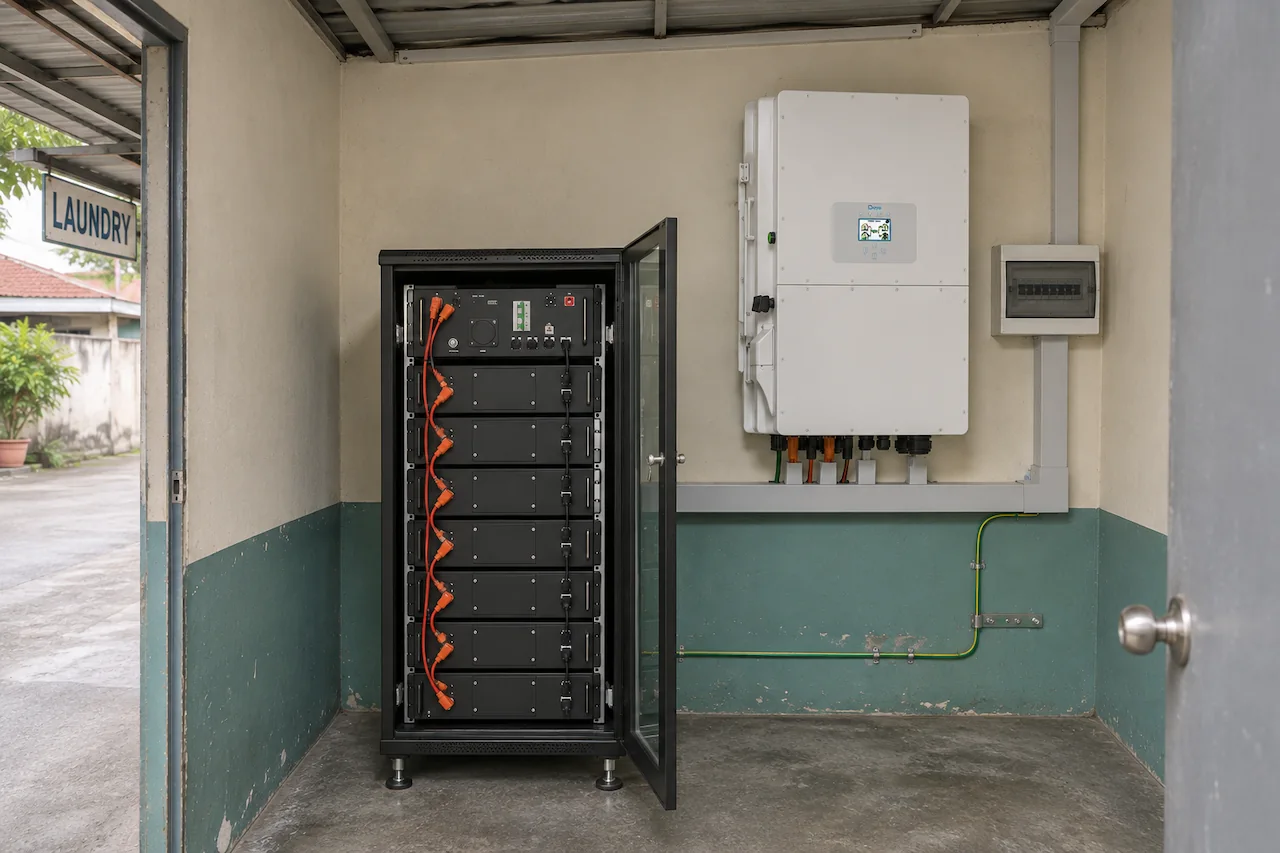
The service room houses the battery, inverter and their connections, with a clear route for installation and maintenance. Detergent containers, wet baskets and routine washing tasks stay in the working area.
The proposed battery system comprises seven 5.12kWh modules and a high-voltage controller, giving 35.84kWh of nominal storage. A separate 30kW hybrid inverter handles power conversion for the proposed three-phase arrangement.
The installer checks room conditions and equipment positions against each manufacturer’s installation manual and the local electrical design. Before fixing the layout, review moisture exposure, ventilation, equipment access and protection with the installer. Our inverter and battery planning guide explains the equipment details to bring to that discussion.
Agree which cycles and circuits use stored energy
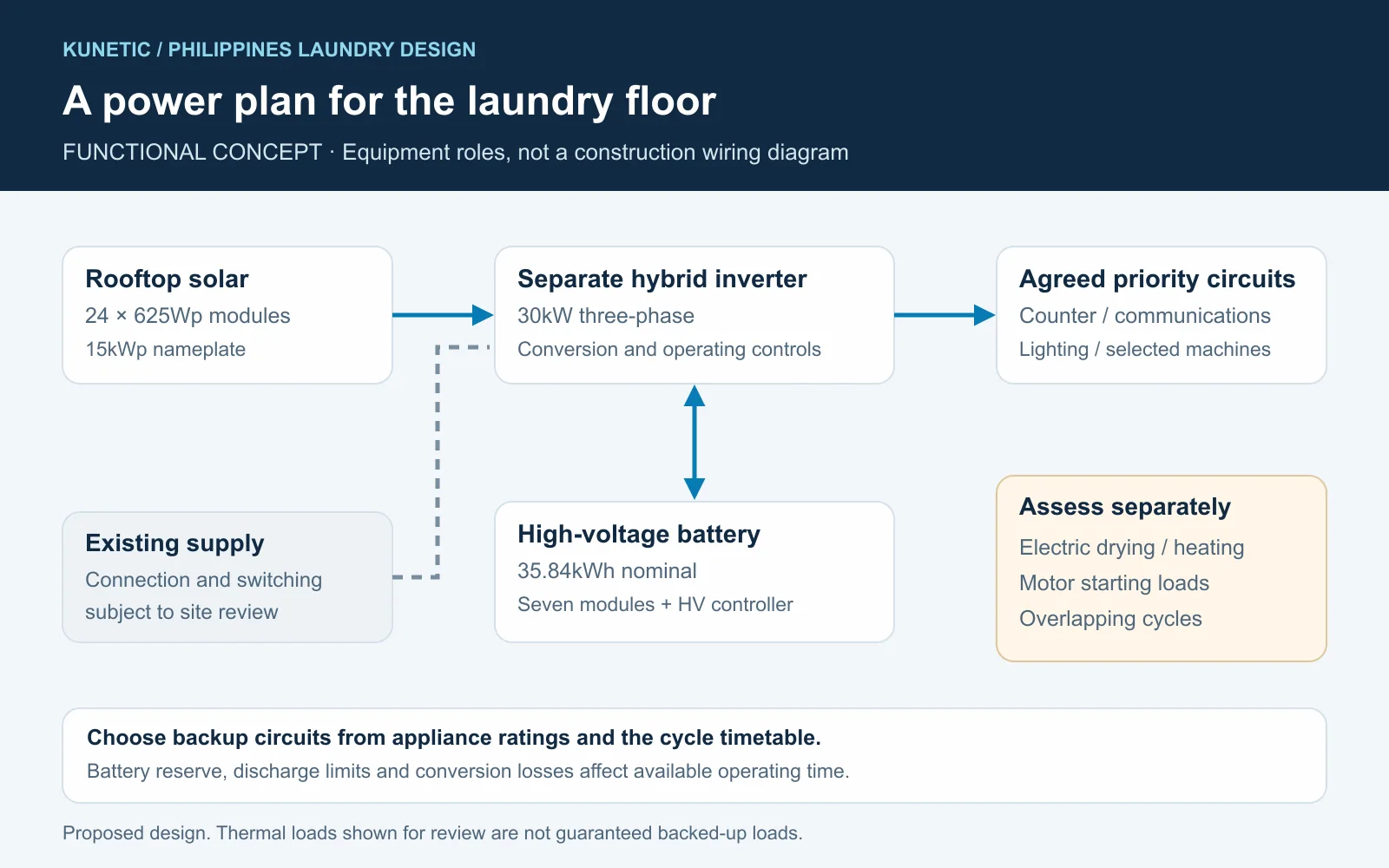
At the counter, payment equipment, communications and lighting may be priorities. On the washing floor, the owner needs to identify which machines should receive backup and which cycles can be rescheduled.
Start with each appliance’s nameplate, heating method and normal cycle. Record when machines start together and how their loads overlap. Electric dryers and water heaters deserve particular attention because heating demand can change the power plan substantially.
The installer then reviews the selected circuits, phase balance, starting loads and switching arrangement. For the power review, the installer considers the inverter’s rated 30kW power output alongside the battery’s discharge limits. Estimating operating time also requires the selected loads, the battery’s 35.84kWh nominal energy, reserve settings and conversion losses.
With those priorities agreed, the owner can plan how to use stored energy during an interruption. Load measurements and the cycle schedule help establish whether the proposed configuration needs adjustment before ordering.
Equipment scope and planning budget
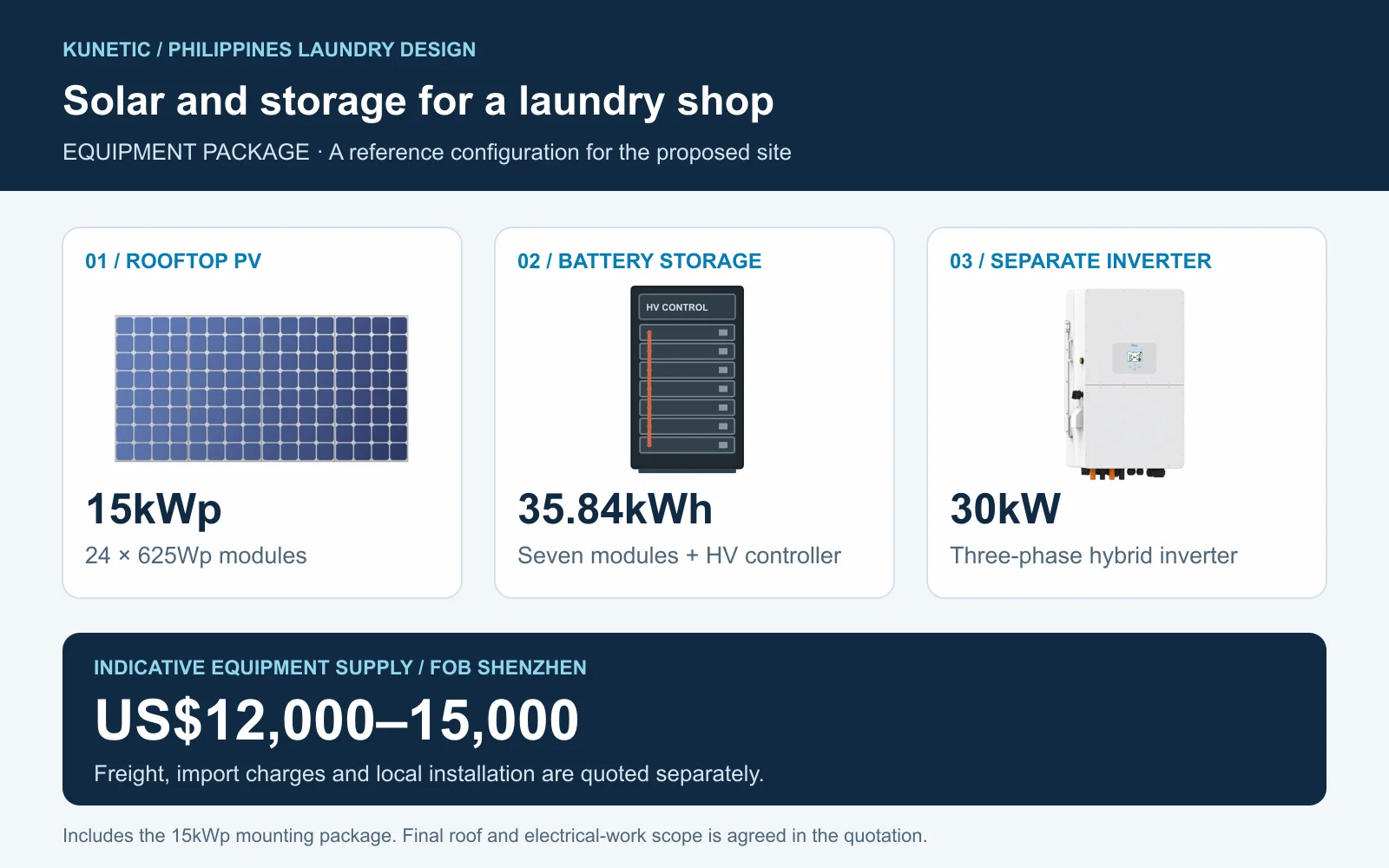
The indicative equipment planning range is US$12,000–15,000, FOB Shenzhen. It covers the proposed solar modules, battery system, separate inverter and mounting package. The final quotation follows the agreed configuration and supply scope.
| Equipment | Proposed supply | Purpose |
|---|---|---|
| Solar modules | 24 × 625Wp; 15kWp total | Rooftop generation |
| High-voltage battery system | 35.84kWh; seven modules and an HV controller | Nominal stored energy |
| Separate hybrid inverter | One 30kW three-phase unit | Power conversion |
| PV mounting package | One package for the 15kWp array | Module support, adapted to the roof |
Freight, import charges and local installation are quoted separately. Site distribution, protection, cabling, roof works and any utility requirements need their own scope review. Laundry machines are part of the shop’s load assessment.
When requesting a quotation, agree on both the equipment list and the work needed at the shop. Roof conditions, electrical connections and the selected backup loads determine those details.
Plan the roof, room and machine schedule together
Send KUNETIC photographs and dimensions of the roof and proposed service room, including the route for moving equipment inside. Add machine nameplates, heating details and a typical day’s cycle timetable.
Include the existing electrical supply details and the circuits you want to prioritize. The local EPC can then review voltage, frequency, protection and connections alongside the equipment proposal.
For a different commercial setting, explore our Philippines warehouse-and-office solar design. Its configuration follows a larger site and a different operating brief.
Plan your laundry power system with KUNETIC. Share your site and operating details to discuss a suitable equipment package.
Questions about this laundry power design
Can the system keep every washer and dryer running?
That depends on the machines, their heating methods and simultaneous demand. Review running and starting loads before choosing the backup circuits. The owner and installer can then agree which equipment receives priority and whether the proposed configuration needs to change.
How long can a 35.84kWh battery support the shop?
Operating time depends on the selected loads and how they run. Battery reserve, discharge limits and conversion losses also affect the available energy. A cycle timetable and load measurements provide the basis for a useful duration estimate.
Can the battery sit beside the washing machines?
The proposed layout uses a separate dry service room. Choose the room by checking moisture exposure, access and the selected equipment’s installation requirements. Share room photographs with KUNETIC and the local installer before deciding where the battery and inverter will go.
Does the equipment range include installation in the Philippines?
The US$12,000–15,000 range is for the proposed equipment supply, FOB Shenzhen. Freight, import charges, local installation and site electrical works are assessed separately. Ask for the agreed equipment list and local-work scope together when planning the project budget.