
 English
 Deutsch
 Español
 Français
 Italiano
 Polski
 Română
 العربية
PROJECT DESIGN · VILLA ELEVATOR
Villa Elevator Battery Backup: A 19.2kWh Three-Phase Design
A backup plan built around a home elevator
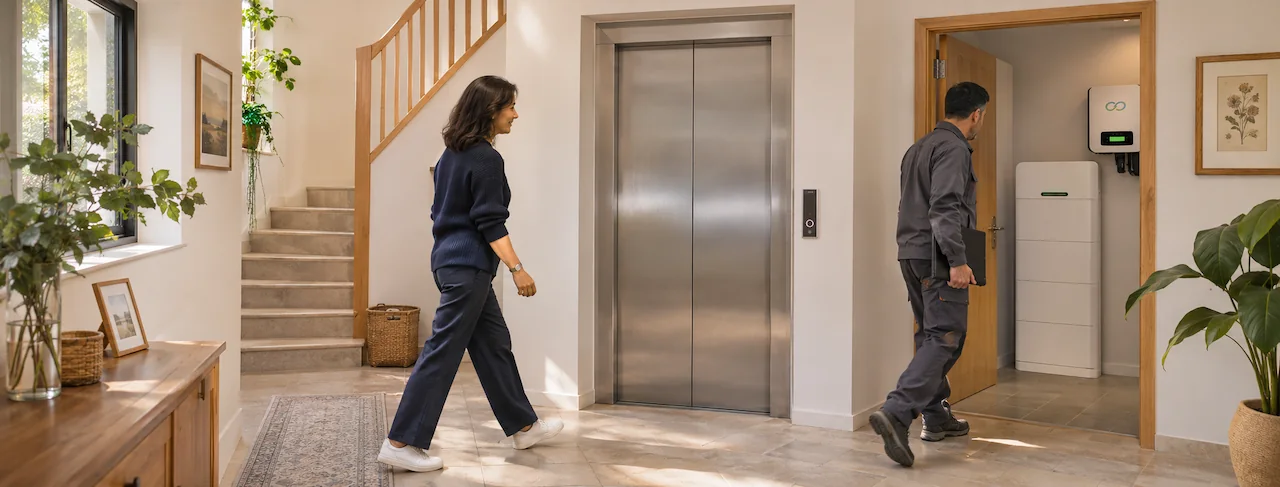
In this proposed villa, the elevator connects the entrance level with the rooms above. The backup plan starts with daily use. When does the household need the lift, and how often? What should it do during a power interruption?
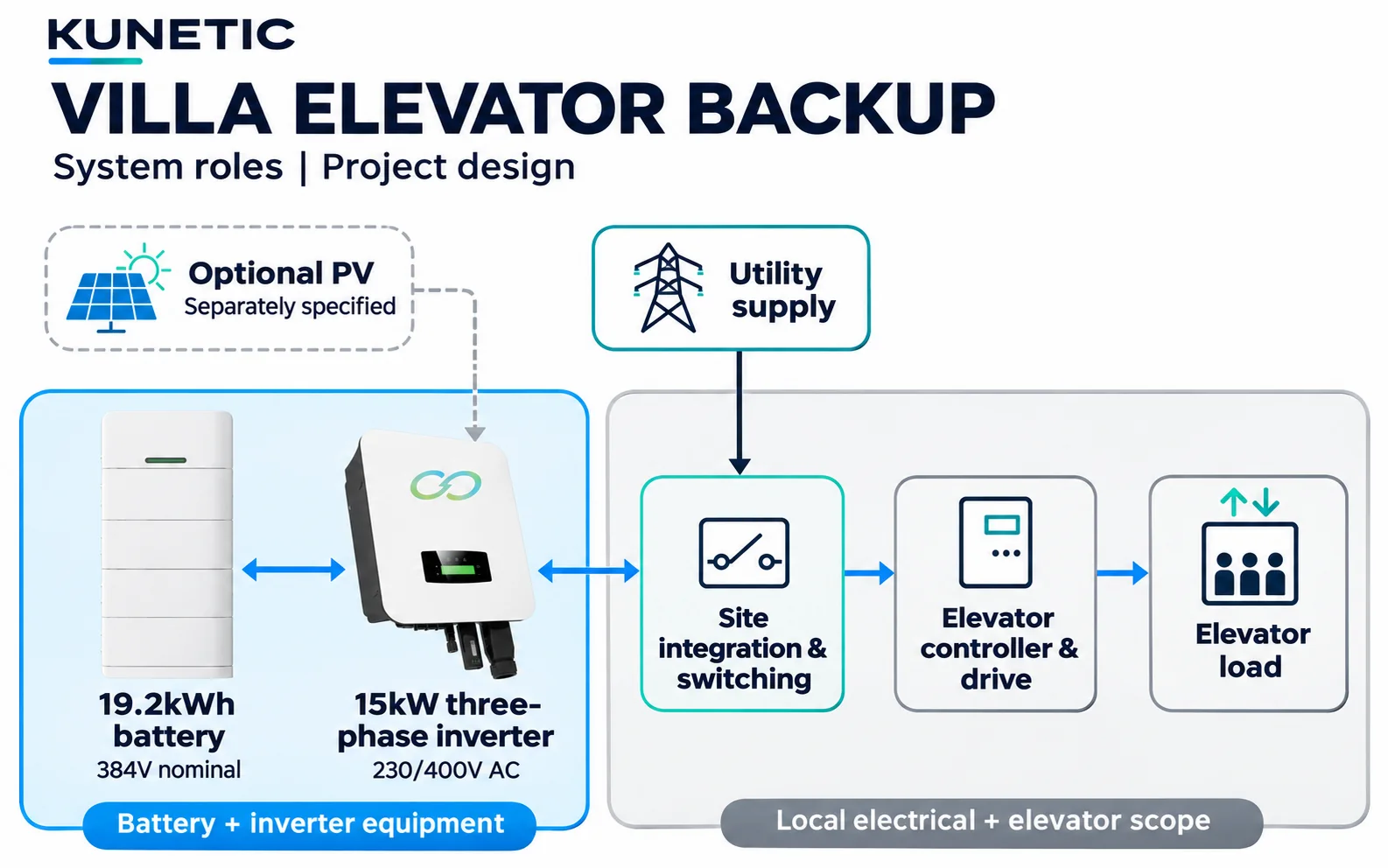
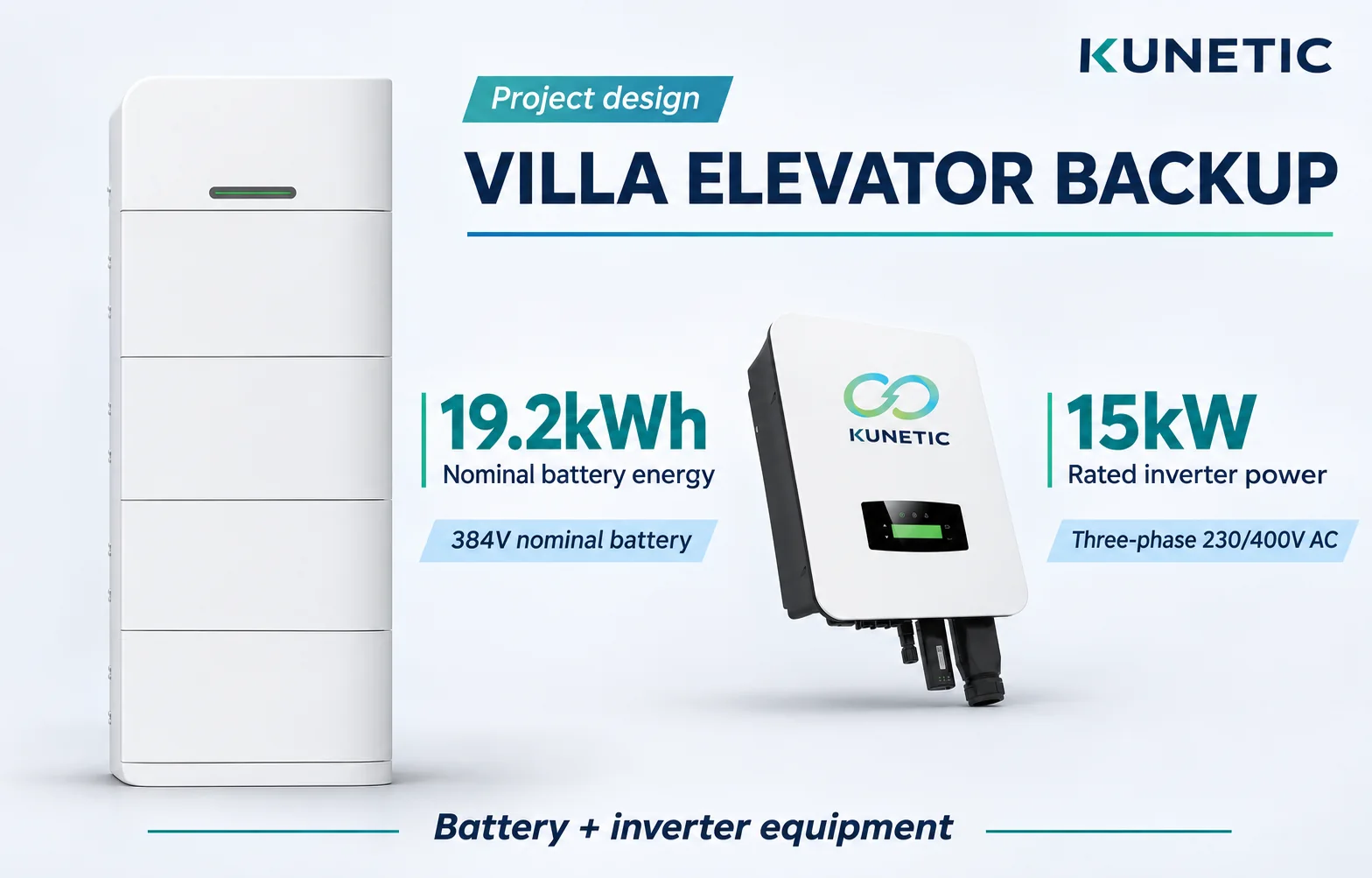
This home elevator battery backup proposal pairs a 19.2kWh high-voltage LFP battery with a separate 15kW three-phase inverter. The equipment has a dedicated service space, away from the elevator entrance and the home's everyday walking routes.
The homeowner needs a supply arrangement that fits the lift and the house. KUNETIC and the elevator installer review the equipment proposal together, with the lift's requirements guiding the specification.
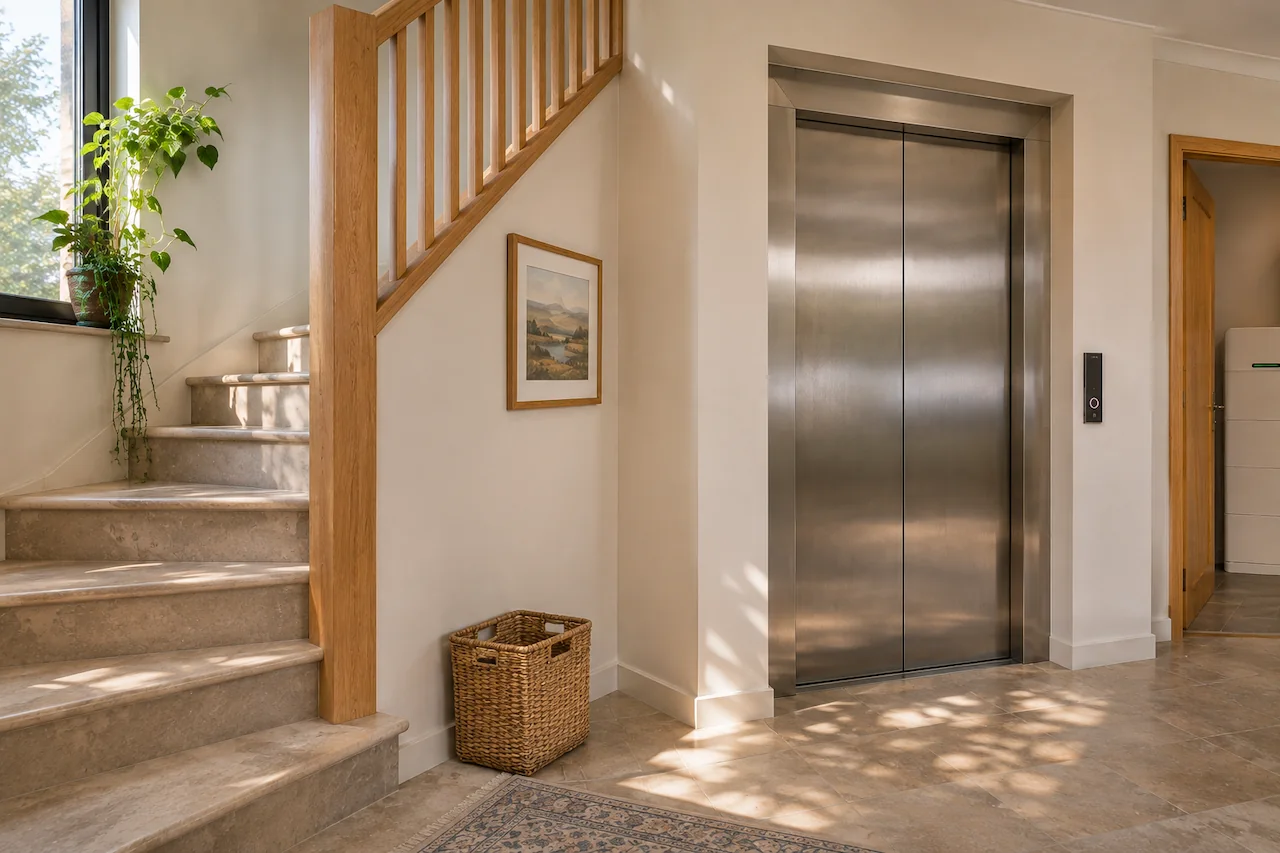
Give the battery and inverter a separate service space
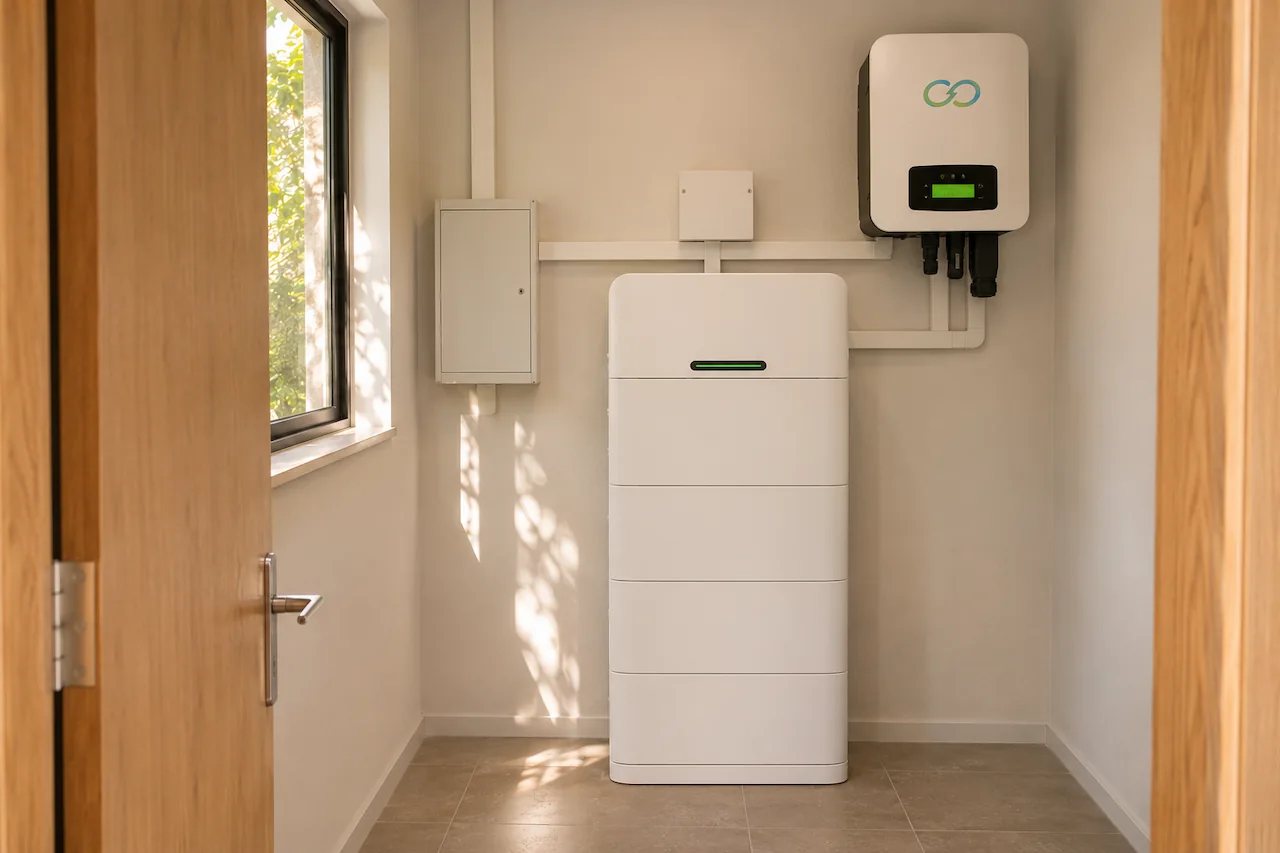
The design places the battery stack beside a wall-mounted inverter in a protected service room. The elevator lobby remains a space for people entering the lift or moving between rooms.
Inside the service area, the displays and nearby distribution equipment remain within reach. The layout also leaves room to inspect connections. The installer plans cable routes alongside equipment positions. Both follow the electrical design and keep access clear.
Photographs and room dimensions help KUNETIC develop the layout for the property. Our inverter and battery buying guide explains which equipment and connection details to include when comparing supply packages.
Match the three-phase supply to the elevator
The proposed three-phase battery backup system uses a separate 15kW inverter with a 230/400V AC arrangement. Selecting the equipment also requires the elevator's motor, controller and drive information.
Ask the elevator installer to identify the starting demand, running load and braking arrangement. Agree how the lift should respond when utility power fails or returns. If the drive returns energy during braking, include that behavior in the equipment-matching review.
KUNETIC also reviews battery-to-inverter communications and operating settings. KUNETIC and the elevator installer can then review the supply arrangement, including switching and protection. The final specification should state the intended outage operation. It should also define each supplier’s scope.
Plan outage use around the household's needs
Record the trips the household expects to need during an interruption. Occasional use needs less energy than repeated journeys between floors. Include the expected frequency in the backup plan.
Include the elevator's standby demand and supporting controls in that assessment. List any other household circuits that should share the backup supply and agree their priorities alongside the lift's needs. The battery holds a nominal 19.2kWh; the reserve setting and system losses affect the energy available for that plan.
Our home backup planning guide covers the broader household discussion. The elevator's actual use and intended outage mode guide the equipment choice for this home.
What the equipment package and budget cover
The proposed package contains one battery stack and one separate inverter:
| Equipment | Proposed configuration | Role in the design |
|---|---|---|
| High-voltage battery | One 19.2kWh LFP stack; 384V nominal | Stored energy for the agreed operating plan |
| Three-phase inverter | One 15kW / 15kVA unit; 230/400V AC | Power conversion for the planned three-phase supply |
Allow an indicative equipment budget of US$5,500–7,000, FOB Shenzhen, for the battery and inverter. The equipment versions, communications requirements and selected accessories determine the final quotation.
Freight and import charges are separate, as are local installation and the elevator contractor's work. Agree who supplies the distribution, switching, protection and other site equipment. The elevator itself is outside this equipment package; discuss any dedicated rescue or safety provision with the elevator supplier.
If the homeowner wants rooftop solar, it can be assessed as a separate option. The equipment budget covers the battery and inverter. Solar modules, mounting and related work need their own configuration and quotation.
Bring your elevator and site brief to KUNETIC
Send the elevator model, nameplate photographs and controller or drive details. Say how often you expect to use the lift and what you want it to do during an outage. List any other household circuits that need backup.
Add photographs and dimensions of the proposed service room, plus the property's supply and distribution information. These help define equipment positions and installation scope. Bring your elevator installer into the discussion so the lift's requirements and battery supply can be assessed together.
Questions about the villa elevator backup design
How long can a 19.2kWh battery support a home elevator?
Assess energy used per journey, standby consumption and expected trips during the outage. Allow for battery reserve and conversion losses. The elevator's measured use is more useful for this estimate than dividing battery capacity by the inverter's rating.
Is a 15kW three-phase inverter suitable for every elevator?
The elevator's voltage, drive, starting demand and braking behavior determine the match. Switching and control requirements matter too. Share the equipment details so KUNETIC and the elevator installer can review the proposed combination before it is specified.
Does this equipment budget include rooftop solar?
The range covers the battery and separate inverter. Solar modules, mounting and local solar installation are separate items. If solar is required, share roof photographs, available space and existing equipment details for a coordinated proposal.
What should the elevator installer confirm before the equipment is specified?
Confirm the motor and drive requirements, braking or energy-return behavior, intended outage operation and local electrical interface. The agreed design should cover switching, protection and controls. It should also list the checks needed before the system enters use.