English
Project Design
Solar and Battery Storage for an EV Battery Swap Station in Zimbabwe
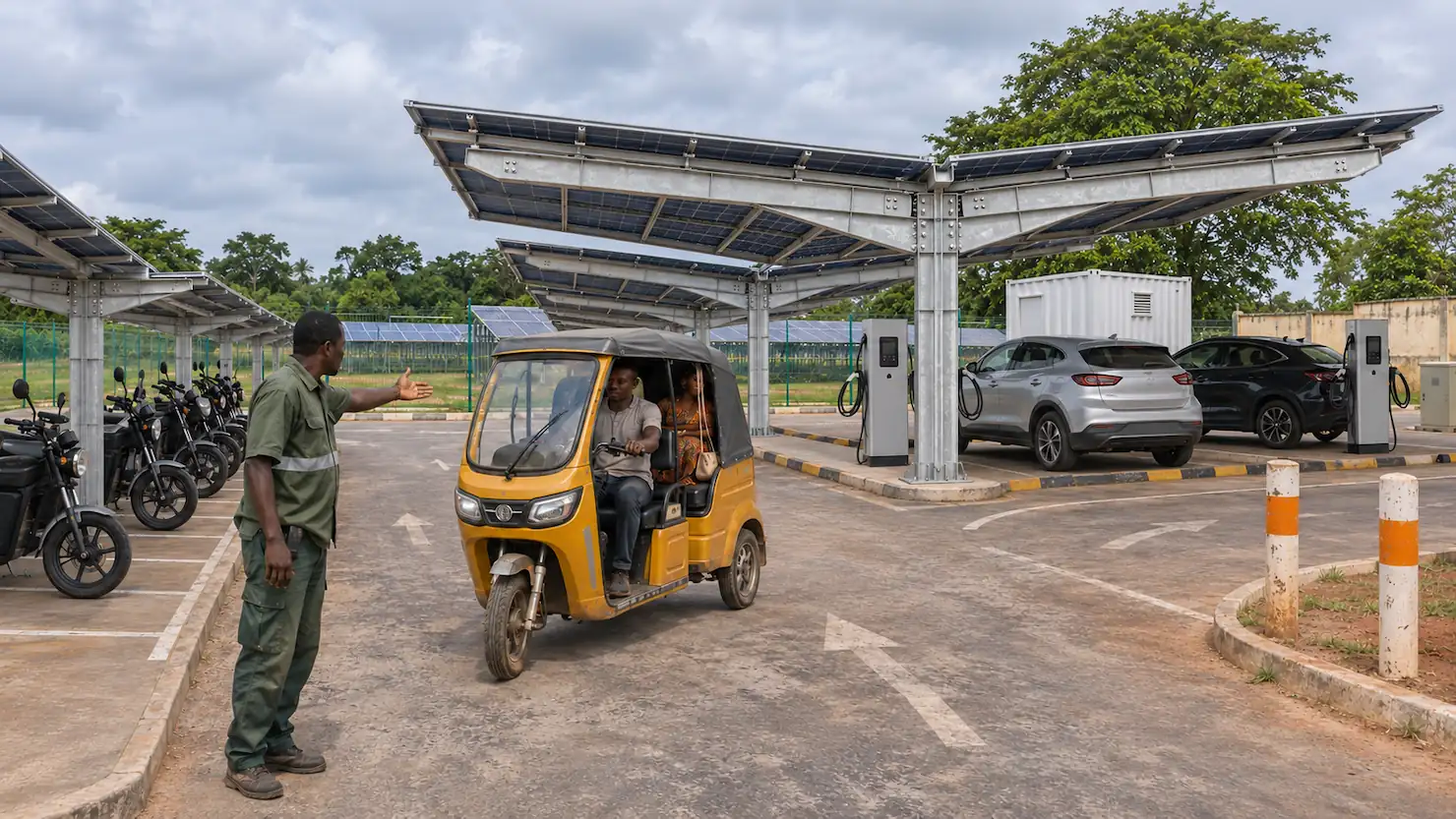
When a fleet vehicle leaves the swap bay with a charged battery, the pack it brought in stays behind. It has to be ready for another vehicle. If several drivers return at the end of a shift, the station may have to charge several packs at once.
KUNETIC planned solar carports and three stationary battery cabinets for a proposed first-phase battery swapping station in Zimbabwe. The design starts with the fleet’s schedule. When do drivers return, how much charge is left in their packs and when do those packs need to go out again?
What Happens After a Battery Swap
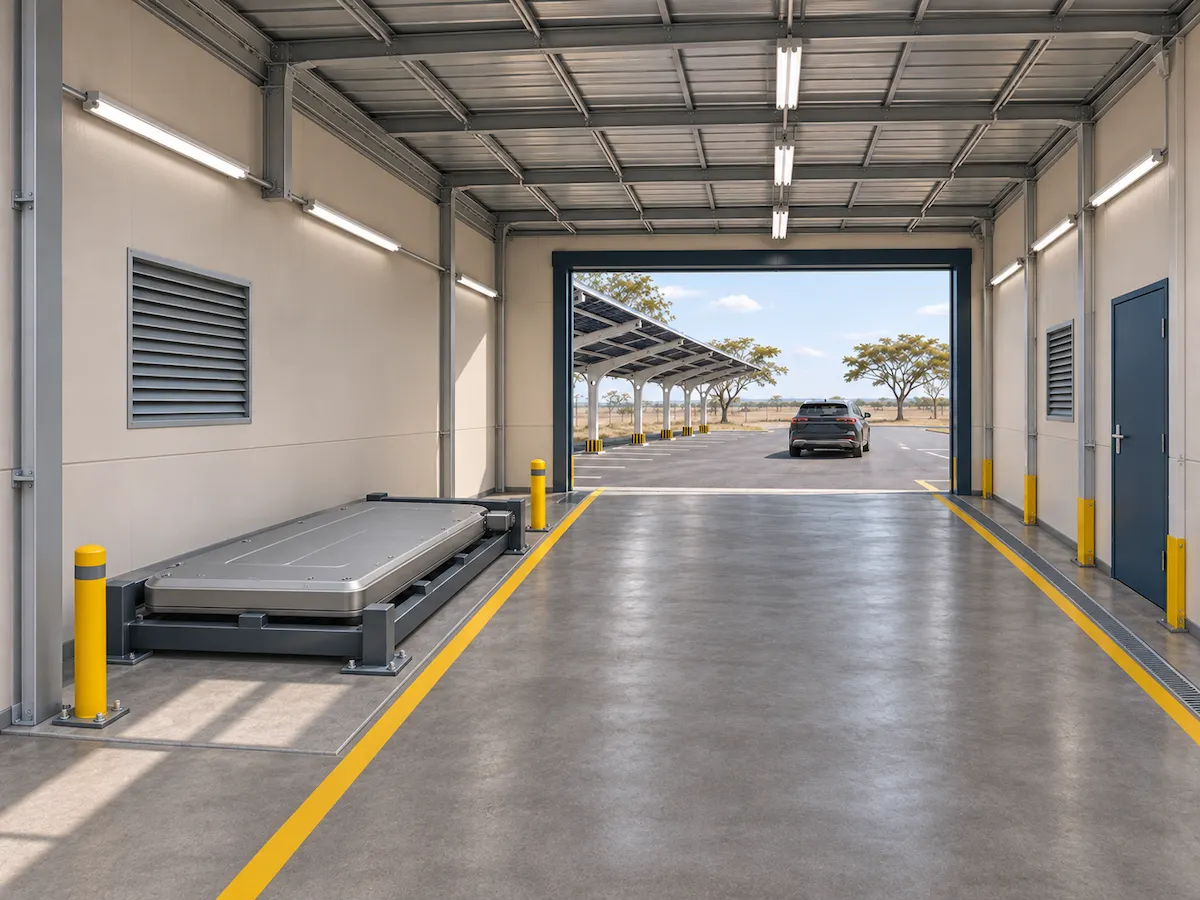
The station’s charging equipment would take the returned pack. A nearly empty pack needs more energy than one that comes back half full. If the next shift needs several packs ready at once, the operator may have to run several chargers together. Vehicles can still pass through the bay one at a time.
The first-phase design used about 20 vehicles and 20–40 swaps per day as planning inputs. If enough charged packs are already on hand, the operator could start some chargers later to spread the load.
A Carport Array and Three Storage Cabinets
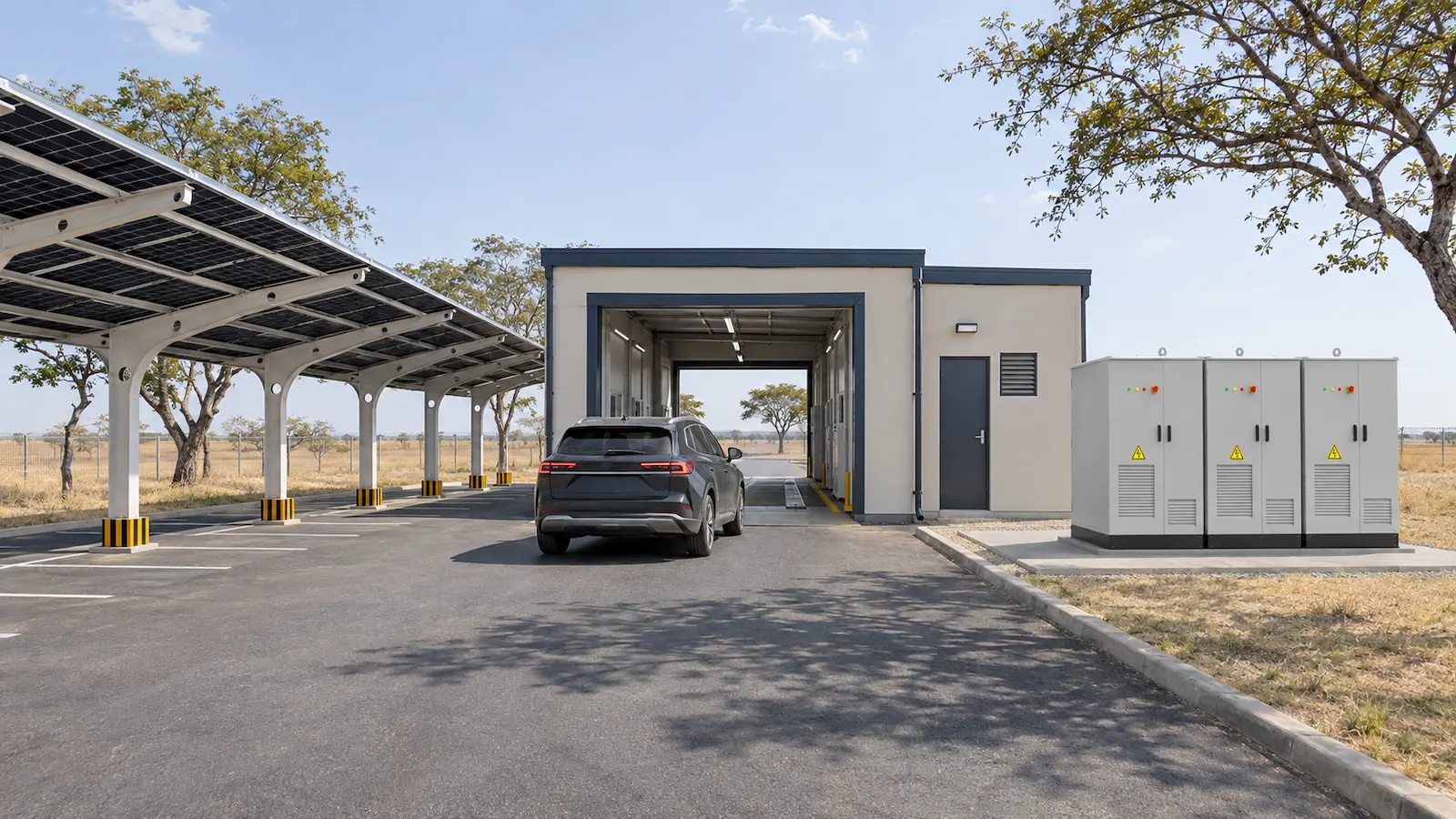
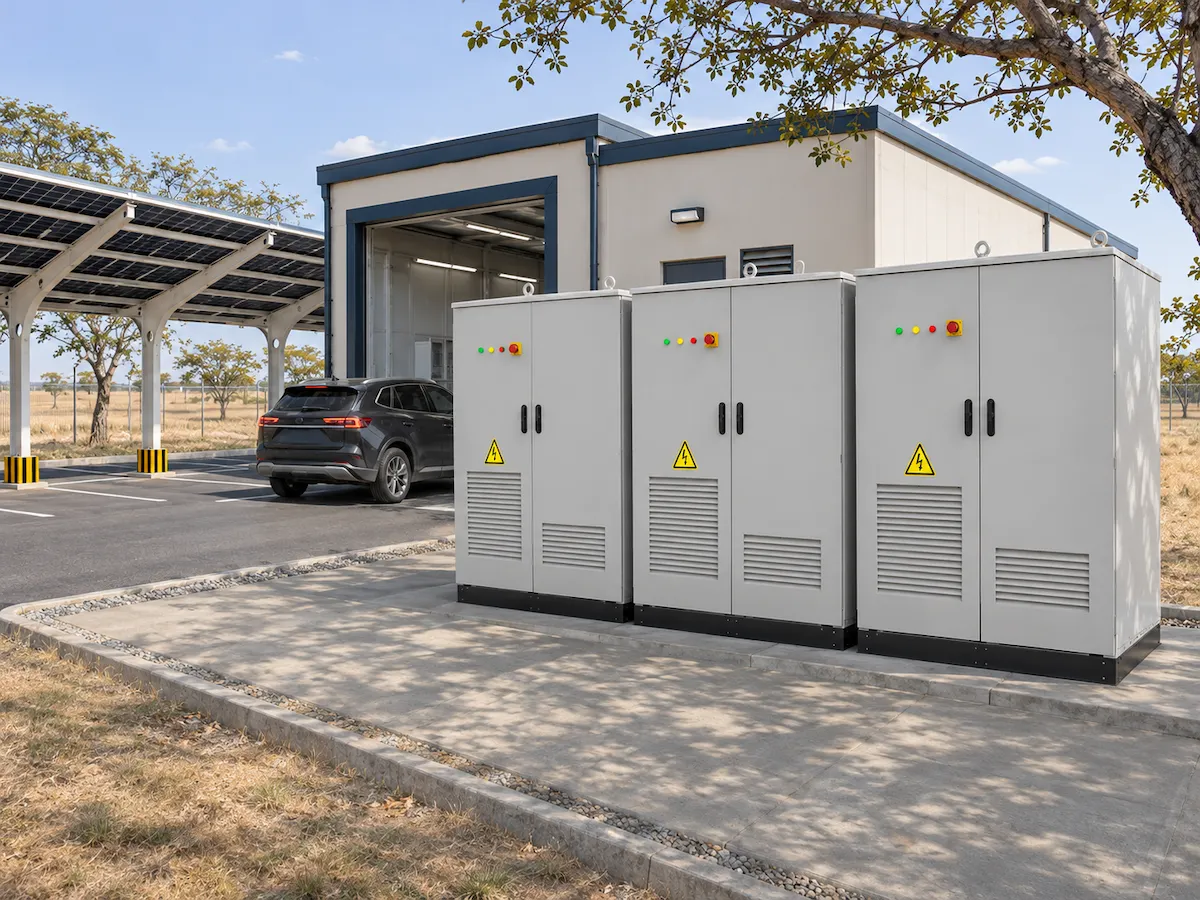
The carports would cover the parking area. The three stationary cabinets would sit on a separate pad so technicians could reach them while drivers use the swap lane.
| Equipment | Phase-one configuration | Role at the station |
|---|---|---|
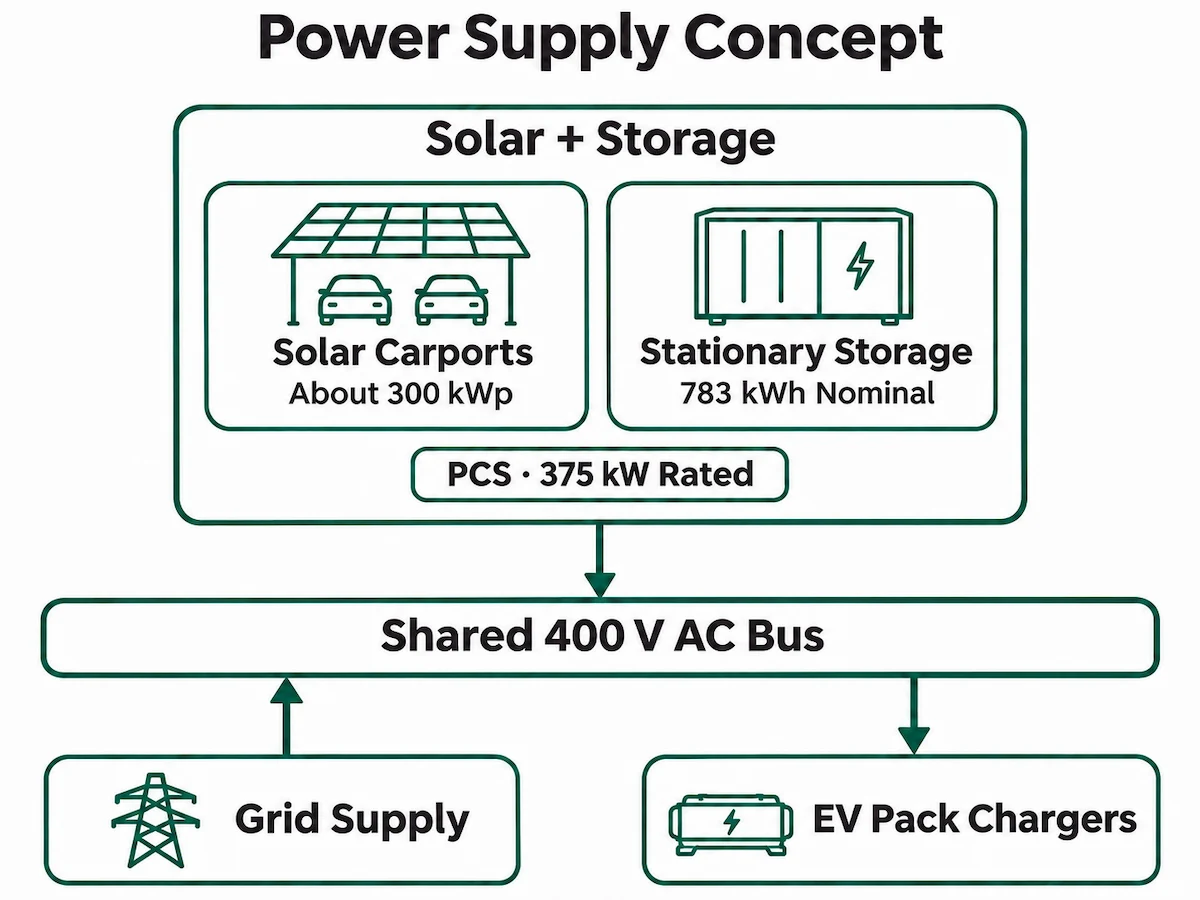
| Solar carports | 462 modules at 650 Wp each, or 300.3 kWp of DC nameplate capacity | Produce electricity over the parking areas. |
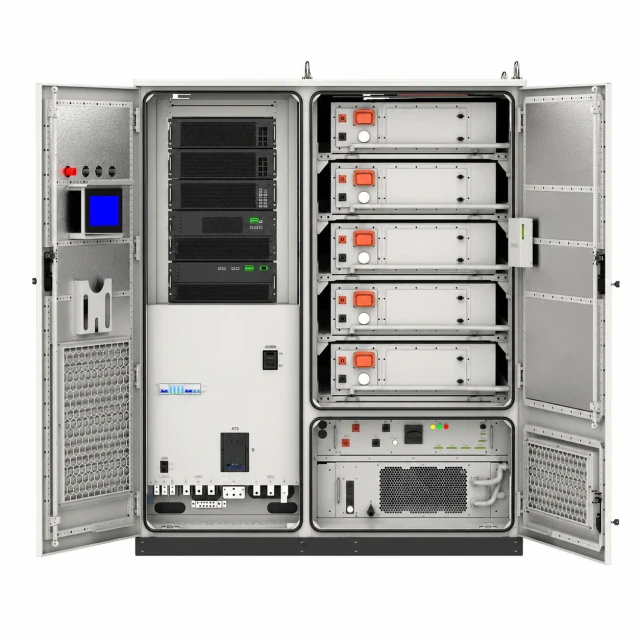
| K-eBank-261L liquid-cooled storage | Three 261 kWh cabinets | Store energy on site for use when charging demand rises or solar output falls. |
| Power conversion system (PCS) | 125 kW rated per cabinet | Convert power between the stationary batteries and the site’s AC supply. |
| Pack chargers and swap equipment | Third-party equipment | Handle and recharge the vehicle packs. |
When the Station Needs Grid Support
The solar and storage system, the grid supply and the pack chargers would connect to a shared 400 V AC bus. In daylight, the carports could power the chargers and send surplus energy to the stationary batteries. As sunlight fades, those batteries could pick up part of the load.
The station could still need grid power after several cloudy days or when several packs need a quick recharge. How many chargers could run together depends on the charging load, the usable energy in the cabinets and the power available from the grid. Those checks also apply to battery storage for EV charging at plug-in stations.
What Changes as the Fleet Grows
Twenty extra swaps spread across a day put a different load on the station than twenty at shift change. Before adding vehicles, plot when packs come back and when they need to be ready again. Check how much charge each pack needs and how many the chargers must handle together. Use that schedule to see which charging can move to a quieter hour and when the site might need more storage or grid capacity.
Indicative Equipment Budget
The reference budget is about US$240,000, FOB Shenzhen, for the solar modules, carport mounting structures and stationary storage equipment. The swap equipment, pack chargers and grid-side equipment are priced separately. Freight beyond FOB delivery, civil works and installation are separate. The final quote depends on the carport layout, the grid connection and the equipment scope.
Frequently Asked Questions
How are the vehicle batteries recharged after a swap?
The returned packs recharge in the station’s charging equipment. The stationary cabinets can supply part of that electrical load when the chargers draw more power than the carports are producing.
Can the station run on solar and batteries alone?
That depends on local solar generation, usable energy in the stationary batteries and the time available to recharge the packs. Check the schedule against periods of low solar output to see when grid support would be required.
What does KUNETIC need to size the power supply?
Start with expected swaps per shift, pack capacity, typical charge on return and the time each pack has to recharge. Share how many chargers may run together and how much power the site can draw from the grid. A rough layout and the swap equipment supplier’s electrical requirements would help us check the scope.