
 English
 Deutsch
 Español
 Français
 Italiano
 Polski
 Română
 العربية
LFP battery modules
Lithium iron phosphate storage provides the battery platform for daily commercial energy use. The family uses a 200 Ah system configuration, with nominal voltage from 512 V to 716.8 V.
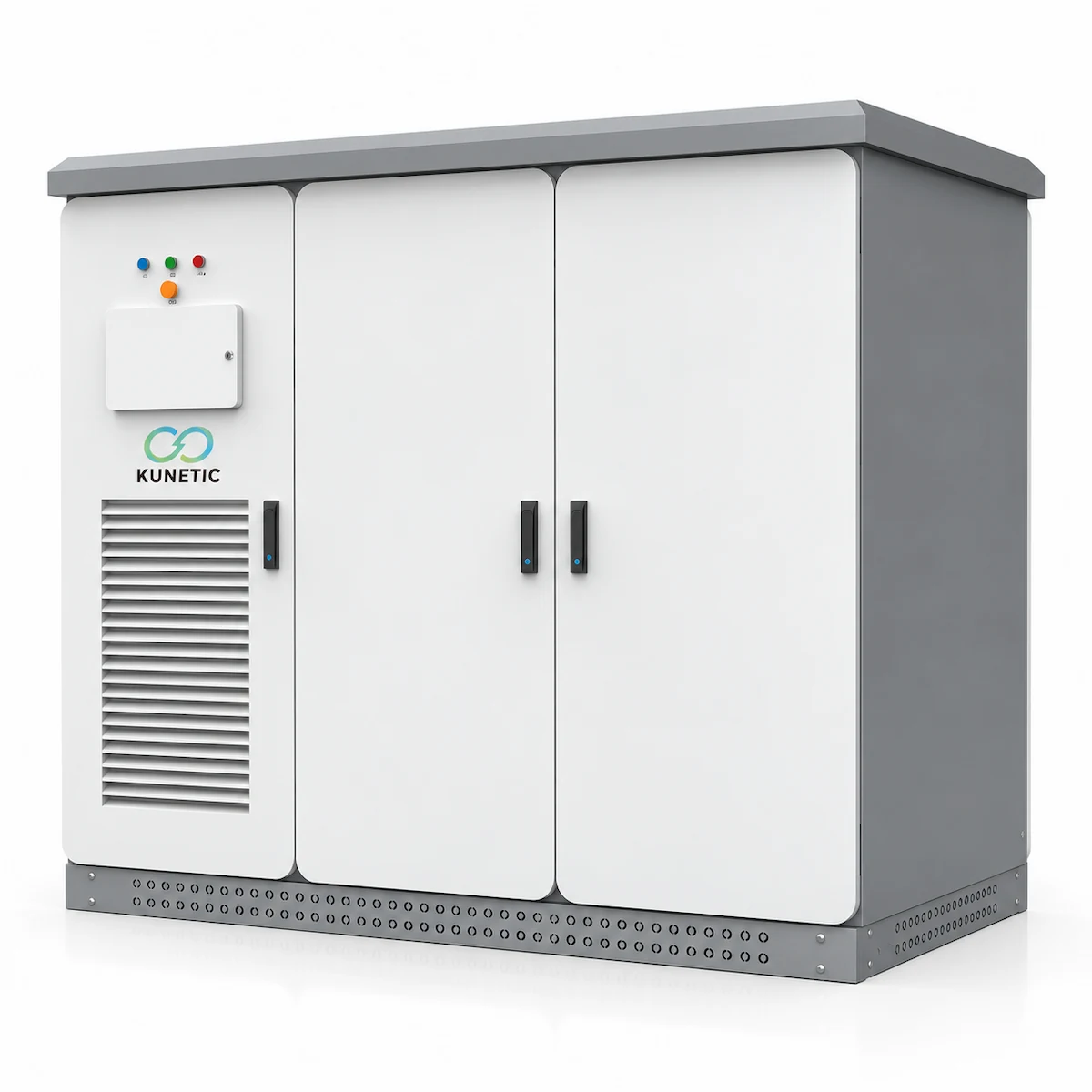
OUTDOOR COMMERCIAL ESS
Put stored energy to work at your business. This outdoor LFP cabinet suits 100kWh battery storage projects at factories, workshops and commercial solar sites. Choose approximately 102 kWh, 122.88 kWh or 143.36 kWh of nominal storage. Use more of your solar energy later in the working day, or plan charging around your electricity tariff. The high-voltage battery, BMS and thermal management share one cabinet, with PCS options matched to the site.
 100–143 kWh Nominal Energy Class
 512–716.8 V Nominal DC Voltage LFP Battery Chemistry
 IP55 Outdoor Enclosure
ENERGY FOR YOUR WORKING DAY
Solar output may peak before your business needs the energy. Commercial battery storage holds energy for later loads, helping you make better use of on-site generation. With suitable metering and controls, stored energy can also help manage peak demand during busy operating periods.
The outdoor format keeps battery equipment out of productive indoor space. A wide, multi-door enclosure groups the LFP battery modules, BMS and thermal management in one serviceable assembly. Choose the capacity first, then match power conversion and controls to your site.
THE CABINET, INSIDE AND OUT
Front-access battery modules keep routine inspection and service within reach. Two battery strings provide the basis for three capacity and voltage configurations.
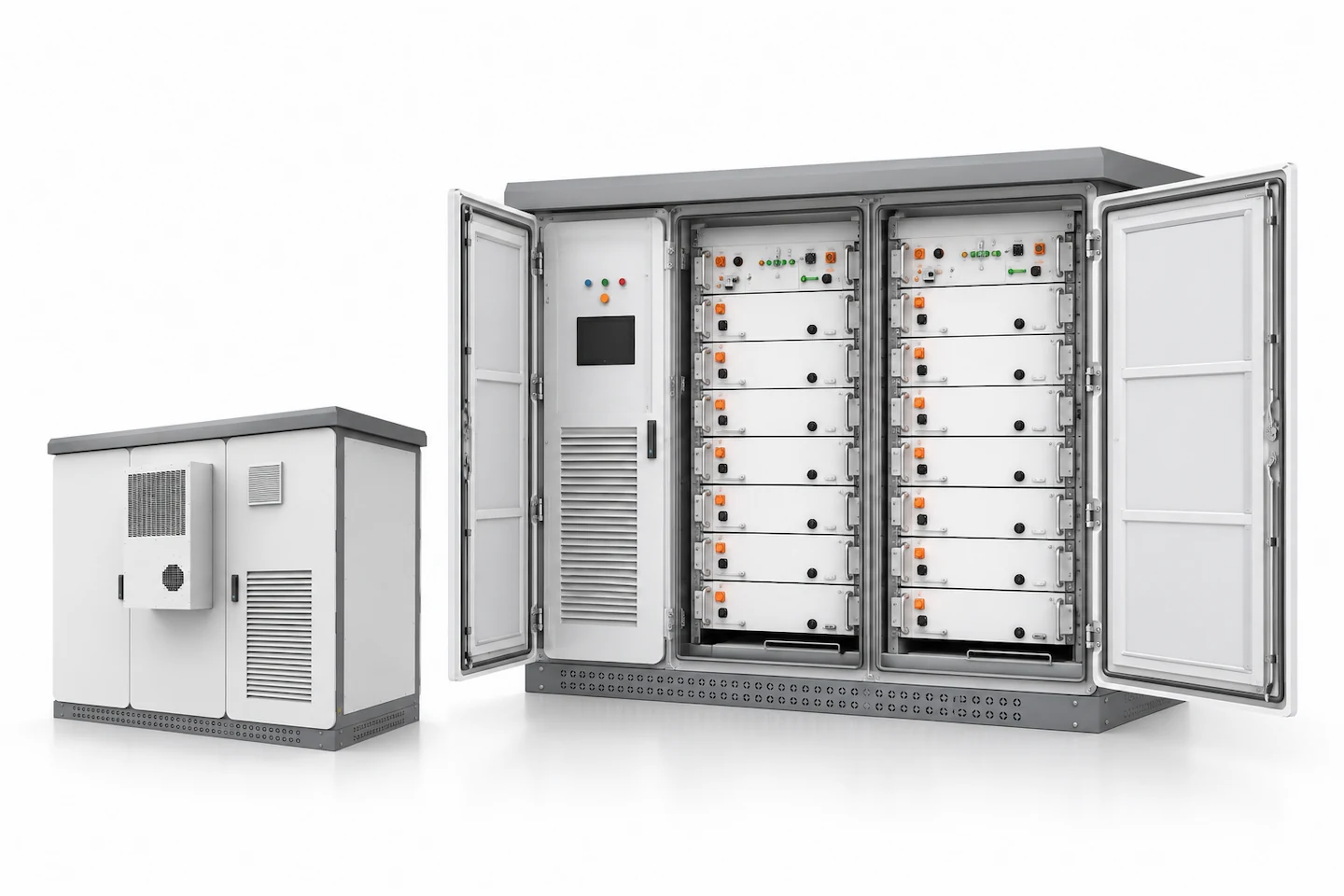
Lithium iron phosphate storage provides the battery platform for daily commercial energy use. The family uses a 200 Ah system configuration, with nominal voltage from 512 V to 716.8 V.
The BMS monitors battery operating conditions and communicates with the selected power conversion equipment through CAN 2.0. Matching the communication protocol as well as the voltage window helps the battery and PCS work together.
The IP55 cabinet combines outdoor protection, air cooling and service access. Place it on a prepared base with drainage, ventilation and the working space required by the installation design. Hot aerosol fire suppression is available as an option.
CAPACITY THAT FITS
Start with the energy you want to shift, your available solar surplus and the loads you want the battery to serve. The approximately 102 kWh configuration is the 100 kWh-class starting point. Choose 122.88 kWh or 143.36 kWh when you need more stored energy. Each option has its own DC voltage window.
100 kWh class
512 V nominal DC
448–576 V operating range
122 kWh class
614.4 V nominal DC
537.6–691.2 V operating range
143 kWh class
716.8 V nominal DC
627.2–806.4 V operating range
Capacity and output power answer different questions. kWh describes stored energy; kW describes the rate of charging or discharging. The series lists 50 kW and 100 kW PCS matching options. We help match the battery and PCS to your load profile, DC voltage window and required operating mode.
Get a configuration recommendationSOLAR · STORAGE · BUSINESS LOADS
A commercial solar installation needs a compatible PCS or hybrid inverter to charge and discharge the battery. Site metering and controls manage when energy moves. During a charging period, energy flows into the battery. During a discharge period, the PCS converts stored DC energy into AC power for site loads.

On a site with existing solar, review the current inverter and electrical distribution before choosing the coupling arrangement. Remote monitoring and scheduling options can support day-to-day operation. For outage support, we help review the critical loads, PCS operating mode and switching arrangement needed to supply them.
OUTDOOR SPACE. USEFUL ENERGY.
An outdoor cabinet can suit a workshop with limited indoor space, a retail site with daytime solar surplus, or an agricultural business with changing daytime loads. The best configuration depends on when energy is available and when the equipment actually needs it.
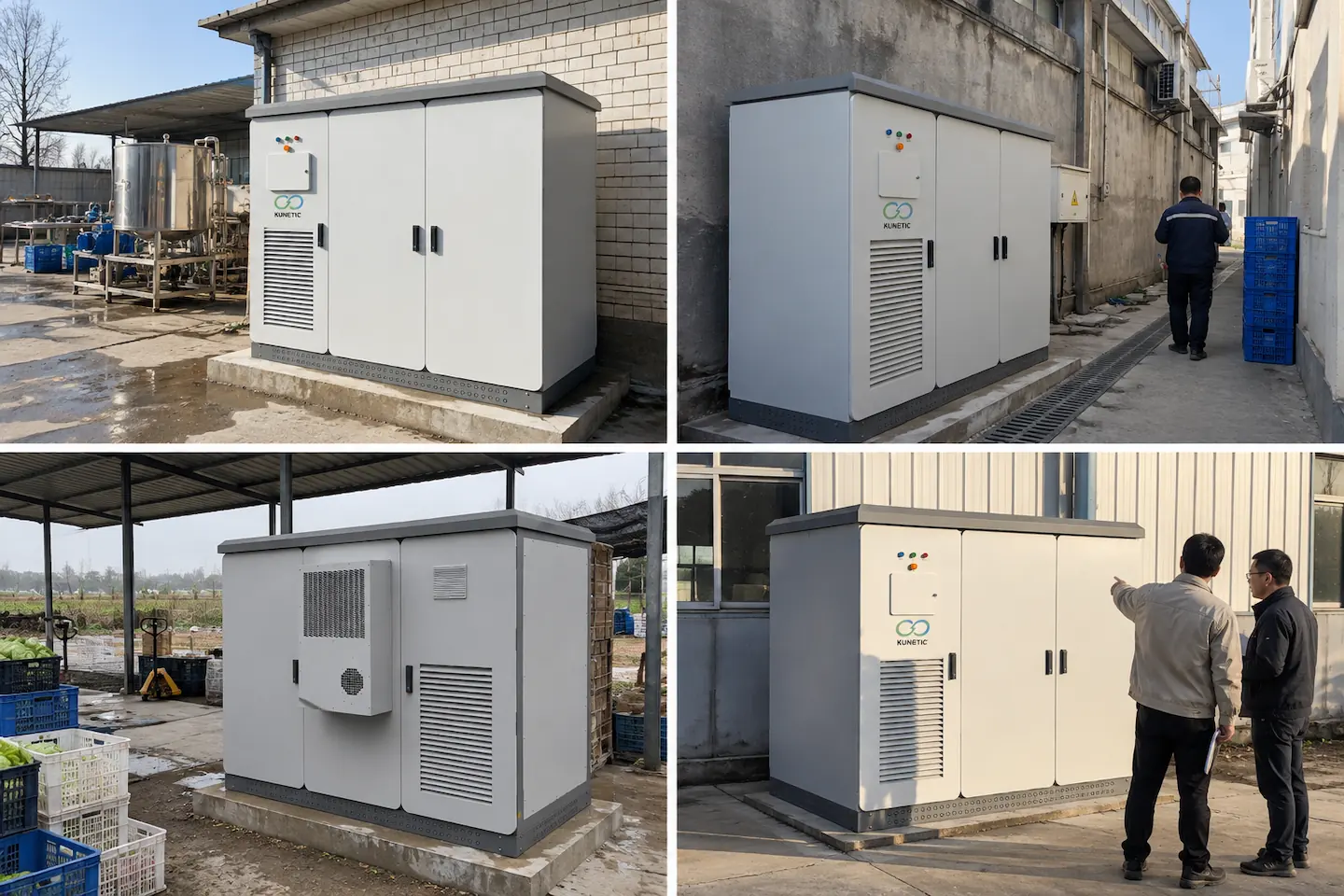
For a factory, share interval electricity data and the working-shift schedule. For a shop or commercial building, include opening hours, air-conditioning loads and any essential equipment. For a farm or processing site, include seasonal operation and motor starting requirements. These details help turn a capacity figure into a useful storage proposal.
Prepare a stable equipment base and clear routes for delivery, cable entry, service and ventilation. The listed maximum cabinet envelope is approximately 2000×1274×1680 mm; configuration weight is approximately 1100–1400 kg, so lifting and foundation planning matter.
TECHNICAL DATA
Compare the three high-voltage LFP configurations below. We can match the PCS, monitoring features and optional fire suppression to your project.
| Parameter | 100 kWh class | 122 kWh class | 143 kWh class |
|---|---|---|---|
| Battery configurations | |||
| Nominal battery energy | Approx. 102 kWh | 122.88 kWh | 143.36 kWh |
| Battery chemistry | LFP | ||
| System capacity | 200 Ah | ||
| Battery arrangement | 5S2P | 6S2P | 7S2P |
| Nominal DC voltage | 512 V | 614.4 V | 716.8 V |
| Operating DC voltage | 448–576 V | 537.6–691.2 V | 627.2–806.4 V |
| Approximate weight | 1100 kg | 1250 kg | 1400 kg |
| Power conversion and communication | |||
| PCS matching options | 50/100 kW, configuration-dependent | ||
| Listed AC connection | 400 V AC | ||
| Communication | CAN 2.0 | ||
| Cabinet and operating conditions | |||
| Enclosure protection | IP55 | ||
| Thermal management | Air cooling | ||
| Operating temperature | −10 to 50 °C | ||
| Operating humidity | ≤95%, noncondensing | ||
| Altitude | ≤2000 m | ||
| Maximum listed envelope | 2000×1274×1680 mm | ||
| Recommended depth of discharge | 90% | ||
| Cycle-life reference | ≥8000 cycles* | ||
| Fire suppression | Hot aerosol, optional | ||
*Supplier cycle reference: 25±2 °C, 0.5C, 80% depth of discharge, to 65% end-of-life capacity. Actual service life depends on operating conditions. The 100 kWh-class energy is rounded to reflect the nominal specification; compare the final configuration data when selecting a PCS.
Downloads
Request the configuration data for your planned capacity and installation country. We can help review the DC voltage range, PCS selection, cabinet placement and monitoring options alongside your commercial solar or load information.
FAQ
This is a 100 kWh-class battery storage family, starting at approximately 102 kWh of nominal energy. kWh measures energy capacity. kW measures power. The PCS determines the AC power available within the limits of the selected battery configuration.
At a steady 20 kW load, approximately 102 kWh divided by 20 kW gives about 5.1 hours before battery reserves and conversion losses. Actual runtime will be shorter. Share your essential equipment and target hours so we can assess the usable energy and reserve you need.
It can form part of a commercial solar battery storage design using compatible power conversion and controls. The review includes your existing solar inverter, battery voltage window, BMS communication and site distribution. Send the inverter model and a single-line diagram if available.
The price depends on battery capacity, the selected PCS, monitoring, protection options and delivery requirements. Send the installation country, operating purpose and preferred capacity for a proposal with a clear equipment scope. A battery-only figure and a complete installed-system figure cover different equipment and work.
The enclosure is rated IP55 for outdoor use. The location still needs a suitable foundation, drainage, ventilation and service clearance. Site temperature and local installation requirements should be reviewed before placing an order.
Backup operation requires a suitable PCS operating mode, protection and switching arrangement. Include critical loads and the required interruption time in your enquiry so the system can be configured for that purpose.
Tell us your installation country, electricity use, solar capacity and the operating hours you want to support. Add an electricity bill or load profile if available. KUNETIC will help compare the 100–143 kWh options and match the battery, power conversion and controls to your site.
KUNETIC 100–143kWh Outdoor Commercial Battery Energy Storage System
Datasheet request
Request received. We will send the datasheet shortly.
KUNETIC 100–143kWh Outdoor Commercial Battery Energy Storage System
Product inquiry
Tell us about your site load, PV capacity, backup requirements, or target project size. Our engineers will help configure the right system for your needs.
Inquiry received. Our team will respond shortly.