
 English
 Deutsch
 Español
 Français
 Italiano
 Polski
 Română
 العربية

Use solar beyond daylight hours
Store available daytime solar through the project's power-conversion system, then use that energy during evening operations or a later production shift.
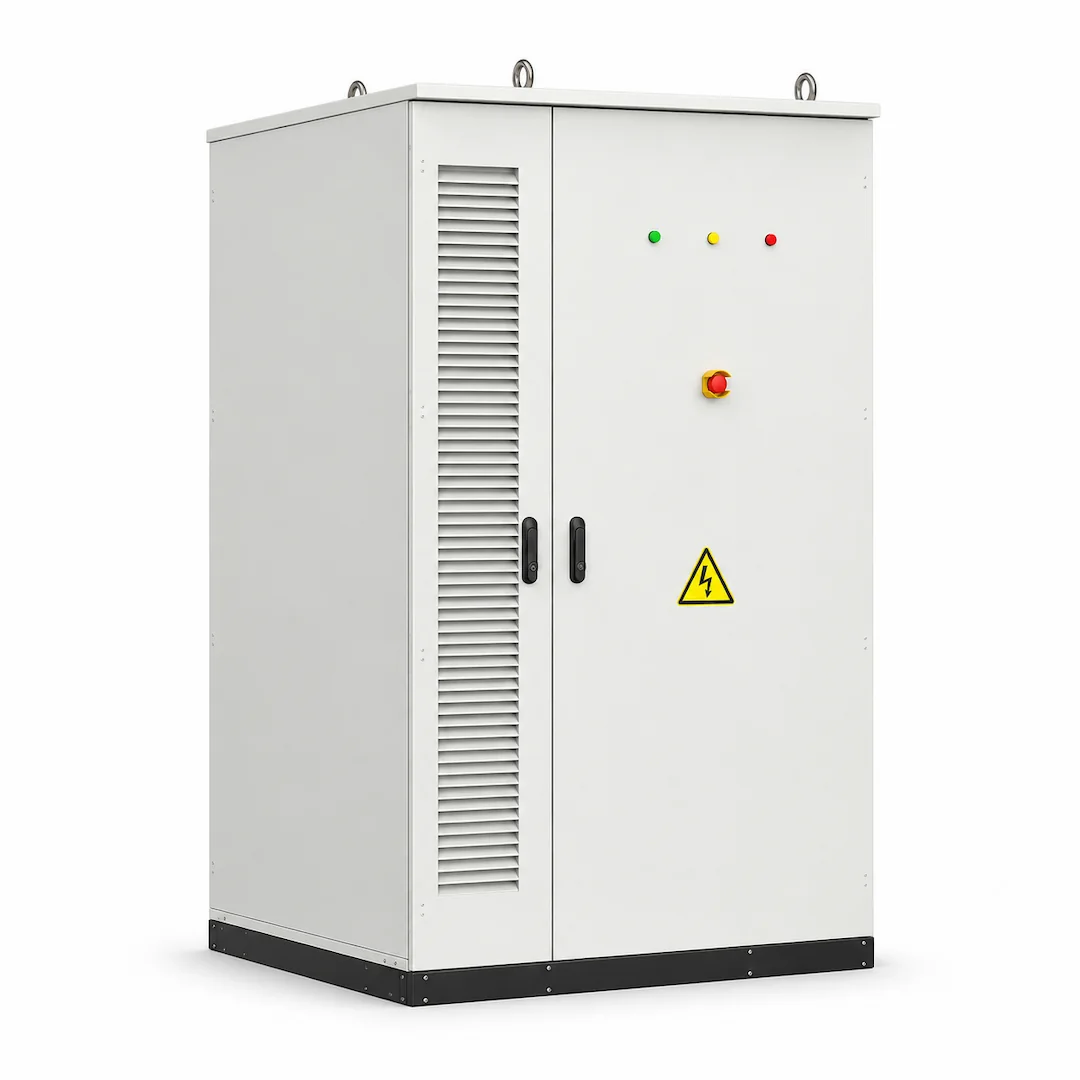
eBlock liquid-cooled DC battery cabinet
Store commercial solar energy outside your facility for use when demand rises. The KUNETIC eBlock liquid-cooled battery cabinet combines 417.9kWh of nominal LFP battery energy, liquid cooling, battery management and protection in an IP55 outdoor enclosure. Built with 314Ah cells and a 1331.2V DC platform, it stores energy for factories and commercial solar projects without occupying indoor battery-room space. Pair it with a matched external PCS for peak shaving, solar self-consumption or selected-load backup with the appropriate switching and controls.
 417.9 kWh Nominal Battery Energy
 Liquid Cooling Battery Thermal Management
 314 Ah LFP Battery Cells
 IP55 Outdoor Enclosure
Commercial energy, stored for later
A factory's energy needs change throughout the working day. This 418kWh-class outdoor battery cabinet provides a larger energy reserve for moving solar generation into a later shift, supporting demand peaks and planning essential-load supply.
Store available daytime solar through the project's power-conversion system, then use that energy during evening operations or a later production shift.

Coordinate the battery, PCS and site controls around your load profile. Stored energy can support short demand peaks or scheduled discharge periods where the tariff makes it useful.

Select battery energy and AC power together. The separate PCS arrangement gives your project a defined high-voltage battery platform to integrate with the required grid connection and operating strategy.
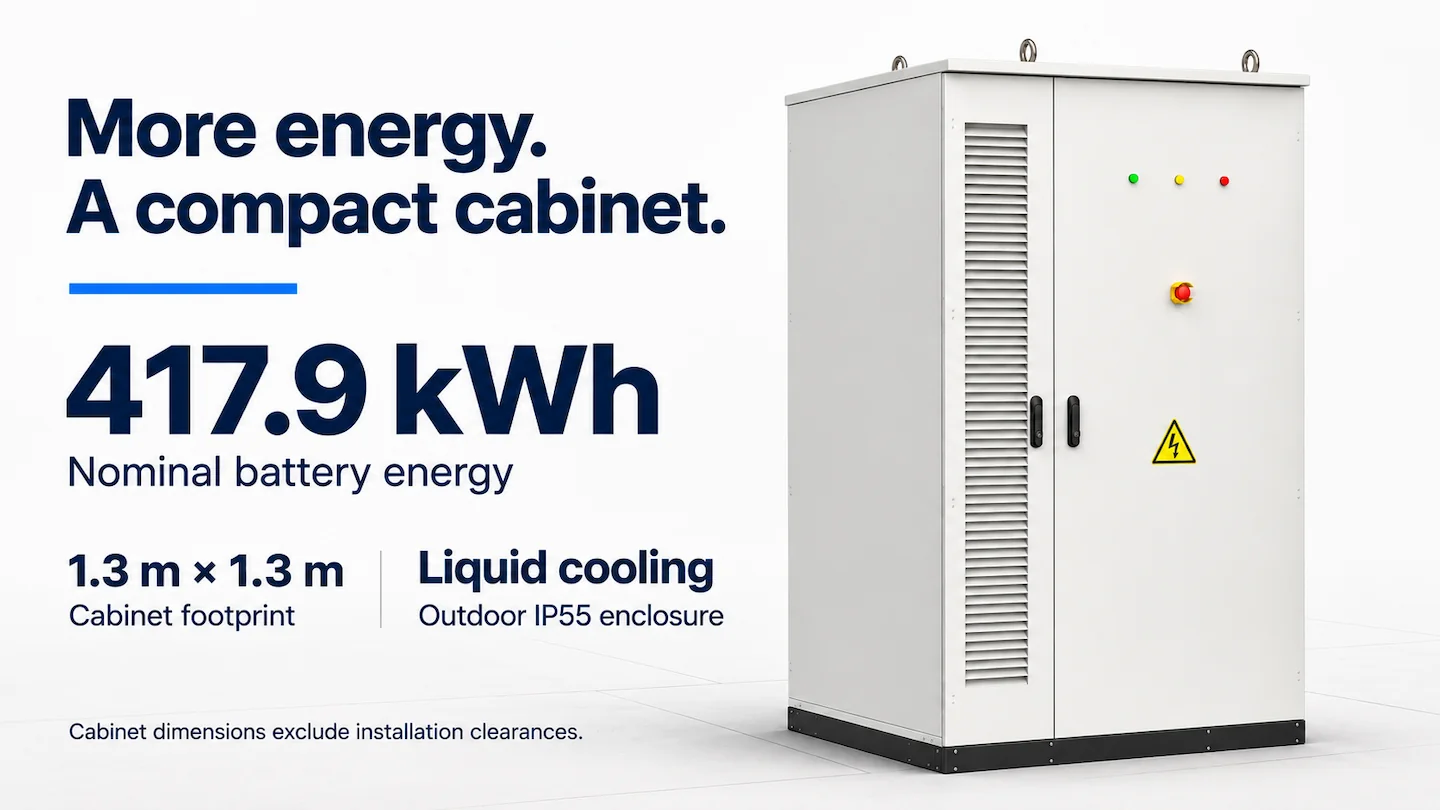
The cabinet holds 417.9kWh of nominal battery energy within a 1.3m by 1.3m cabinet footprint. At 2.896m high, it uses vertical space to bring more stored energy into an outdoor equipment area.
That footprint describes the cabinet itself. Plan the foundation, service aisle, ventilation, delivery access and separate PCS location around the full site layout. The approximately 3,800kg equipment weight is an early input for handling and foundation design.
Thermal management + battery protection
Liquid cooling manages heat in the battery packs during charging and discharging. The BMS monitors battery conditions and supports balancing, with electrical protection and gas detection built into the cabinet.
Explore the complete technical data →The thermal-management system serves the LFP battery packs within the cabinet. Review the site's climate and daily charge-discharge schedule together to select suitable operating settings.

The complete cabinet is rated IP55. Its battery packs are rated IP67, giving protection at a separate equipment level. The two ratings describe different parts of the system.
Battery management, DC circuit-breaker and fuse protection, gas detection and ventilation form part of the cabinet architecture. Pack-level fire protection is included; system-level fire-protection options can be tailored to the project.
A DC battery platform
The battery cabinet stores DC energy. A compatible external PCS converts that energy for the site's AC system and controls power flow with the wider installation.
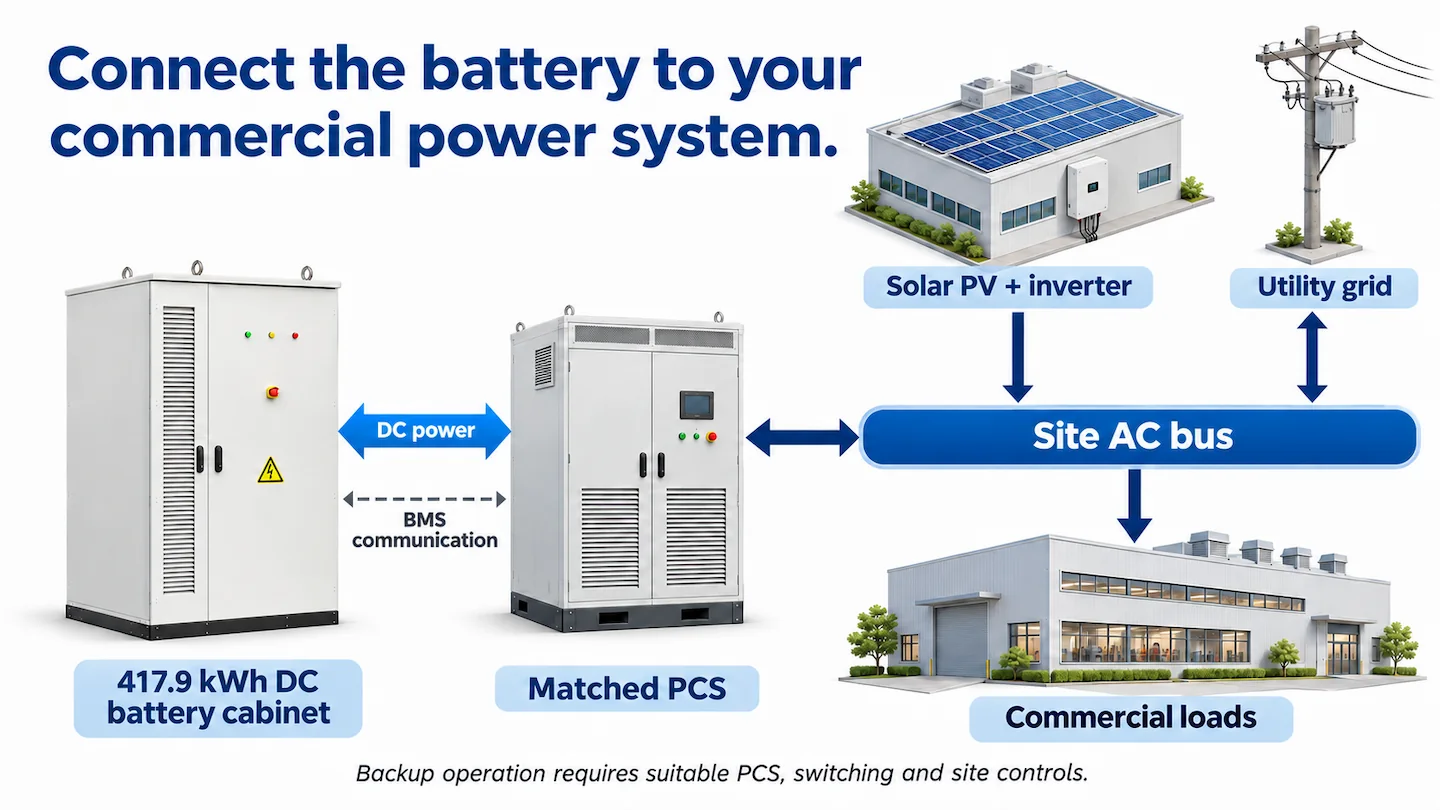
Start with the full 1164.8–1497.6V operating window, battery current limits and communication requirements. Ethernet and RS485 interfaces provide connection options for site integration.
Combine the cabinet with a suitable PCS and solar connection to shift available generation into the operating hours when your business needs it.
Select a PCS capable of the required backup operation, together with suitable switching and controls. Running loads, starting demand and required operating hours guide the complete system configuration.
Space for storage, outside your facility
A factory service area, a commercial utility bay or a dedicated outdoor battery zone can provide space for storage without placing an open rack inside the main electrical room.
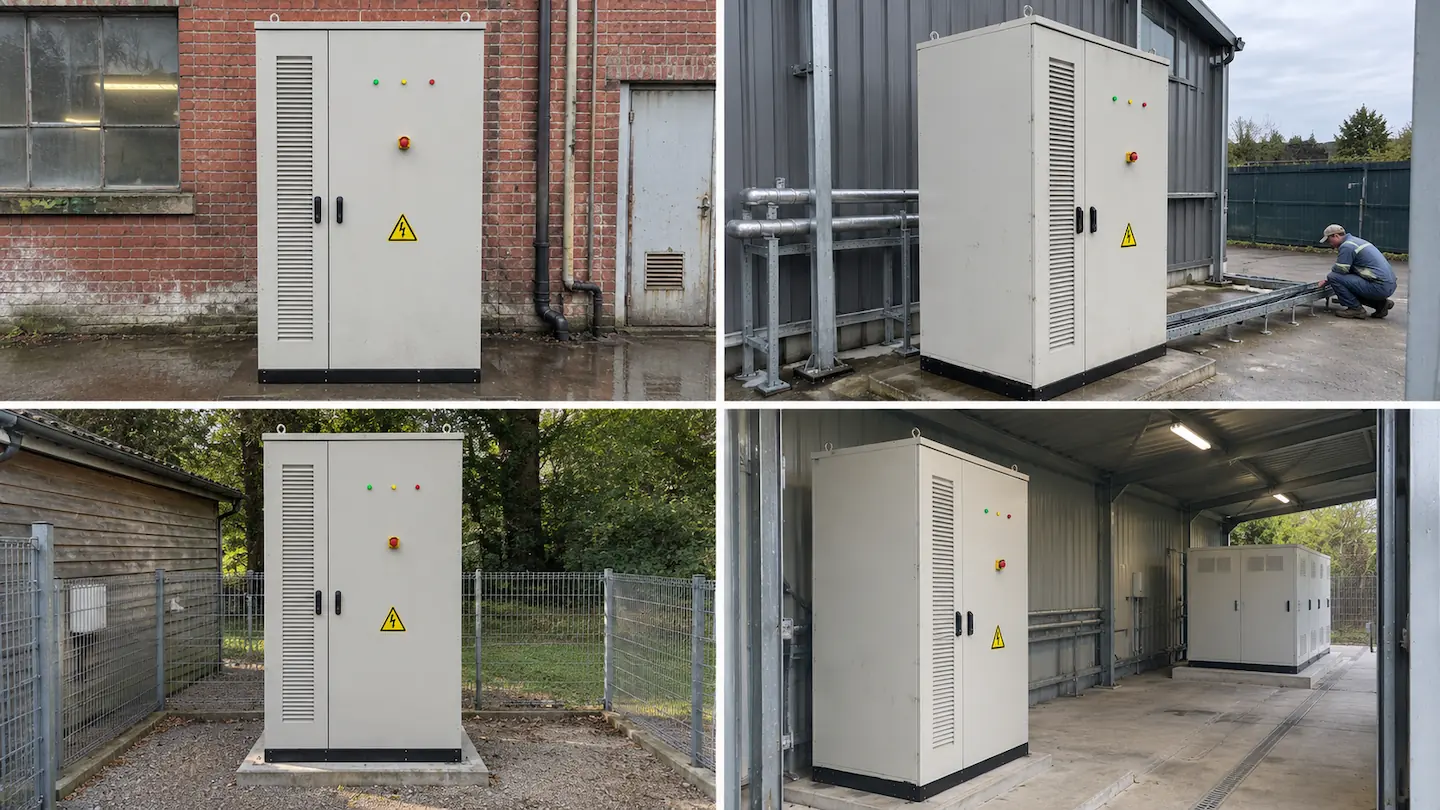
Use the installation layout to keep equipment access practical. A level foundation, protected cable routes and room for servicing matter alongside the battery's energy rating. Share site photos and the intended PCS location so we can help compare a suitable arrangement.
Technical data
The 418kWh capacity class has a stated nominal battery energy of 417.9kWh. The 208.9kW value below describes DC-side power; AC output is determined by the separately selected PCS.
| Battery system | |
|---|---|
| Battery chemistry | Lithium iron phosphate (LFP) |
| Cell capacity | 314Ah |
| Nominal battery energy | 417.9kWh |
| Nominal DC voltage | 1331.2V |
| Operating DC voltage | 1164.8–1497.6V |
| DC-side power | 208.9kW |
| Rated current | 157A |
| Maximum continuous current | 200A |
| Battery pack energy / voltage | 52.25kWh / 166.4V |
| Stated depth of discharge | 98% |
| Enclosure and installation | |
| Cooling method | Liquid cooling |
| Complete cabinet protection | IP55 |
| Battery pack protection | IP67 |
| Cabinet dimensions, W × D × H | 1300 × 1300 × 2896mm |
| Equipment weight | Approximately 3800kg |
| Cable routing | Bottom cable entry and exit |
| Operating temperature | −25 to 55°C |
| Relative humidity | 0–95%, non-condensing |
| Installation altitude | Up to 3000m |
| Stated noise level | 75dB at 1m |
| Management and protection | |
| External communication | Ethernet / RS485 |
| Cloud platform | Included |
| Cluster protection | DC circuit breaker and fuse |
| Gas detection and ventilation | H2 detection and ventilation fan |
| Pack-level fire protection | Perfluorohexanone |
| System-level fire protection | Project-selectable options |
| PCS / AC power conversion | External PCS, selected separately |
 Technical Data
Downloads
Request the battery specifications for PCS matching and site planning. Share your installation country and preferred operating mode so we can provide relevant configuration information.
Project questions
418kWh is the capacity class used in the product name. The stated nominal battery energy is 417.9kWh. Energy delivered to AC loads depends on the selected operating window, conversion losses and auxiliary consumption.
It is a DC battery cabinet. A matched external PCS connects it to the site's AC system. Battery energy, PCS power, grid requirements and the intended operating mode should be selected together.
208.9kW is the stated DC-side power. The external PCS determines the AC rating of the complete installation, subject to the battery's operating voltage and current limits.
This model offers a larger 417.9kWh nominal energy block, liquid cooling, a higher-voltage battery platform and an IP55 outdoor enclosure. The smaller eBlock cabinet uses a different air-conditioned design. Compare the required energy, PCS voltage and available installation space.
It can form the battery side of a suitably designed solar-storage installation. Share the solar inverter model, grid connection and load profile. These details help identify a suitable PCS, connection arrangement and control strategy.
Start with the load power and required operating hours. A constant 100kW load for three hours needs 300kWh at the loads, before reserves, conversion losses and auxiliary use. Actual duration also depends on the PCS and operating limits; share your load profile for a sizing review.
The complete cabinet is rated IP55. IP67 applies to the battery packs inside it. Plan the outdoor location, drainage, operating environment and service access around the complete cabinet rating.
OEM / ODM support
Discuss cabinet finish, product identification and documentation for your brand and market.
Review PCS matching, communication requirements and project-level equipment options with our team.
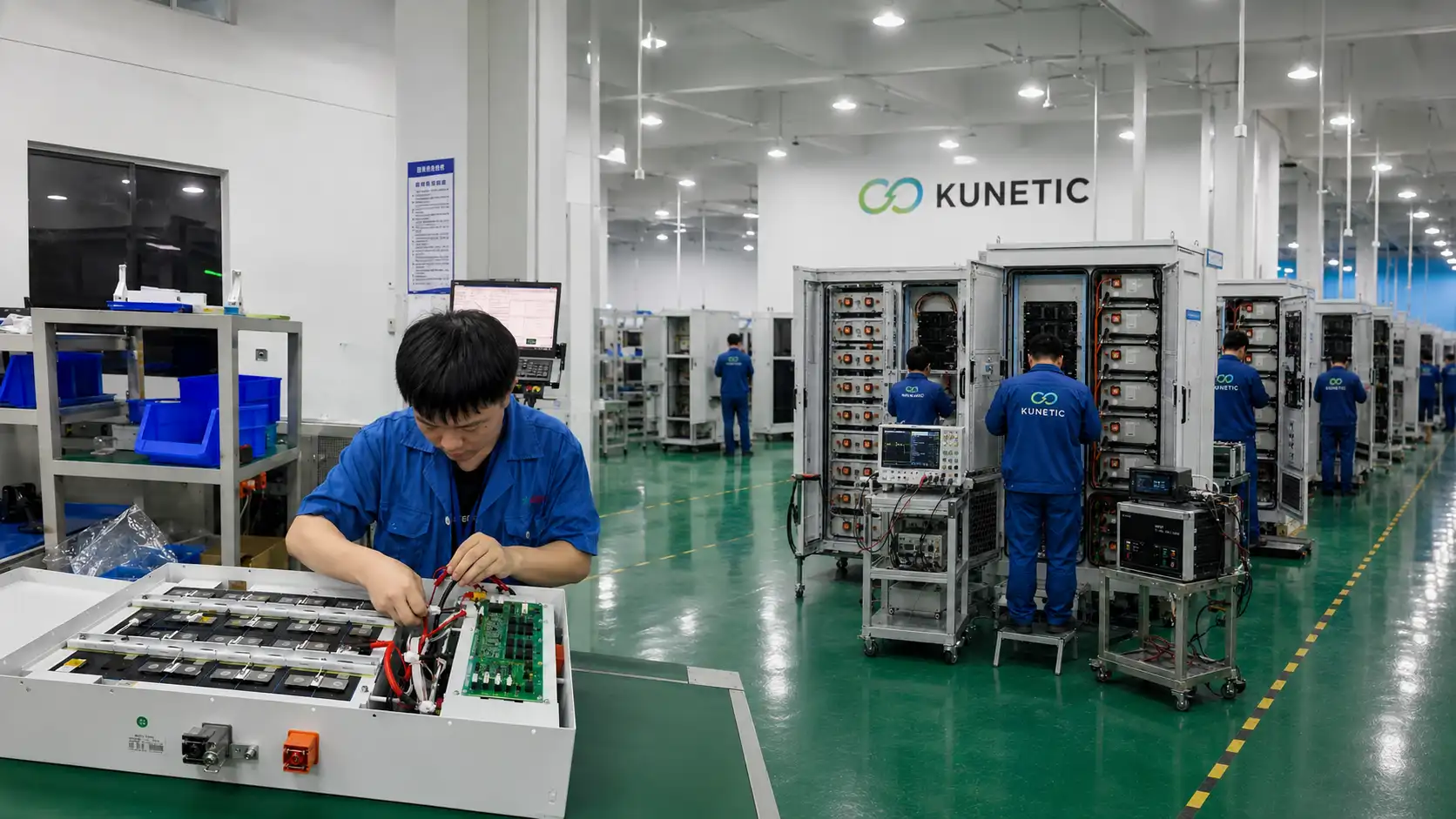
Tell us your installation country, load profile, solar capacity and target operating period. If you already have a PCS in mind, include its model and DC voltage range.
KUNETIC can help compare the battery configuration, external conversion equipment and site layout for your commercial storage project.
eBlock 418kWh Liquid-Cooled Outdoor Battery Storage Cabinet
Datasheet request
Request received. We will send the datasheet shortly.
eBlock 418kWh Liquid-Cooled Outdoor Battery Storage Cabinet
Product inquiry
Tell us about your site load, PV capacity, backup requirements, or target project size. Our engineers will help configure the right system for your needs.
Inquiry received. Our team will respond shortly.