
 English
 Deutsch
 Español
 Français
 Italiano
 Polski
 Română
 العربية
Protect essential operations
Create a dedicated supply plan for the equipment that matters during an outage. Check running power and motor starting demand when selecting critical loads.
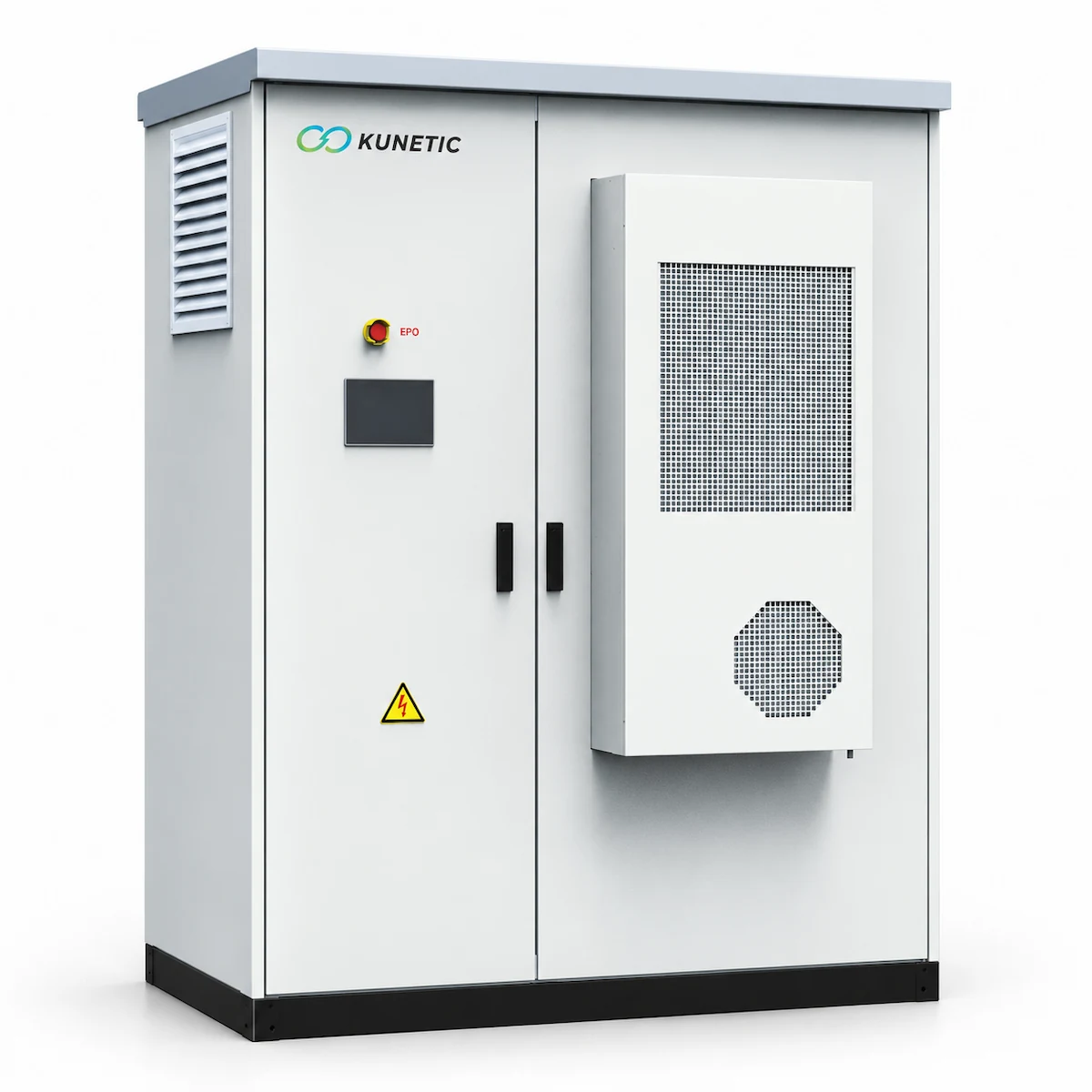
COMMERCIAL BACKUP + MICROGRID
Keep essential operations supplied and put stored energy to work every day. This 100 kW / 215 kWh LFP system integrates the battery, PCS, controls and thermal management in one outdoor cabinet for commercial battery backup, solar storage and peak-demand management. View operating status locally or remotely, and configure PV charging and grid/off-grid switching around your site's equipment and loads.
 100 kW Rated AC Power
 215 kWh Nominal LFP Energy
 Integrated PCS Storage + AC Conversion
 IP54 Outdoor Cabinet
A production site may need to protect its controls and essential services before considering every machine on the main supply. A warehouse may prioritise selected cold-storage equipment, security and lighting. Start with the operations you want to maintain, then select the backup circuits and energy reserve around them.
Create a dedicated supply plan for the equipment that matters during an outage. Check running power and motor starting demand when selecting critical loads.
Store available solar energy and use it later in the working day. Match PV integration and battery dispatch to your generation and consumption patterns.
Where demand tariffs apply, discharge stored energy during selected load peaks. Set the operating schedule around the site's tariff and required backup reserve.
Your battery can serve a daily purpose while holding an energy reserve for interruptions. The cabinet's PCS connects the battery to the AC system, and the controls manage charging and discharging around the chosen operating strategy.

For an existing solar installation, include the inverter model and electrical drawing in the review. Keeping solar generation available during an outage requires compatible island operation and controls. KUNETIC can help develop the arrangement around your existing equipment and the loads you want to support.
The cabinet brings the battery and power-conversion equipment together in a defined layout. Door-mounted air conditioning, ventilation paths and accessible electrical sections support routine inspection and maintenance.
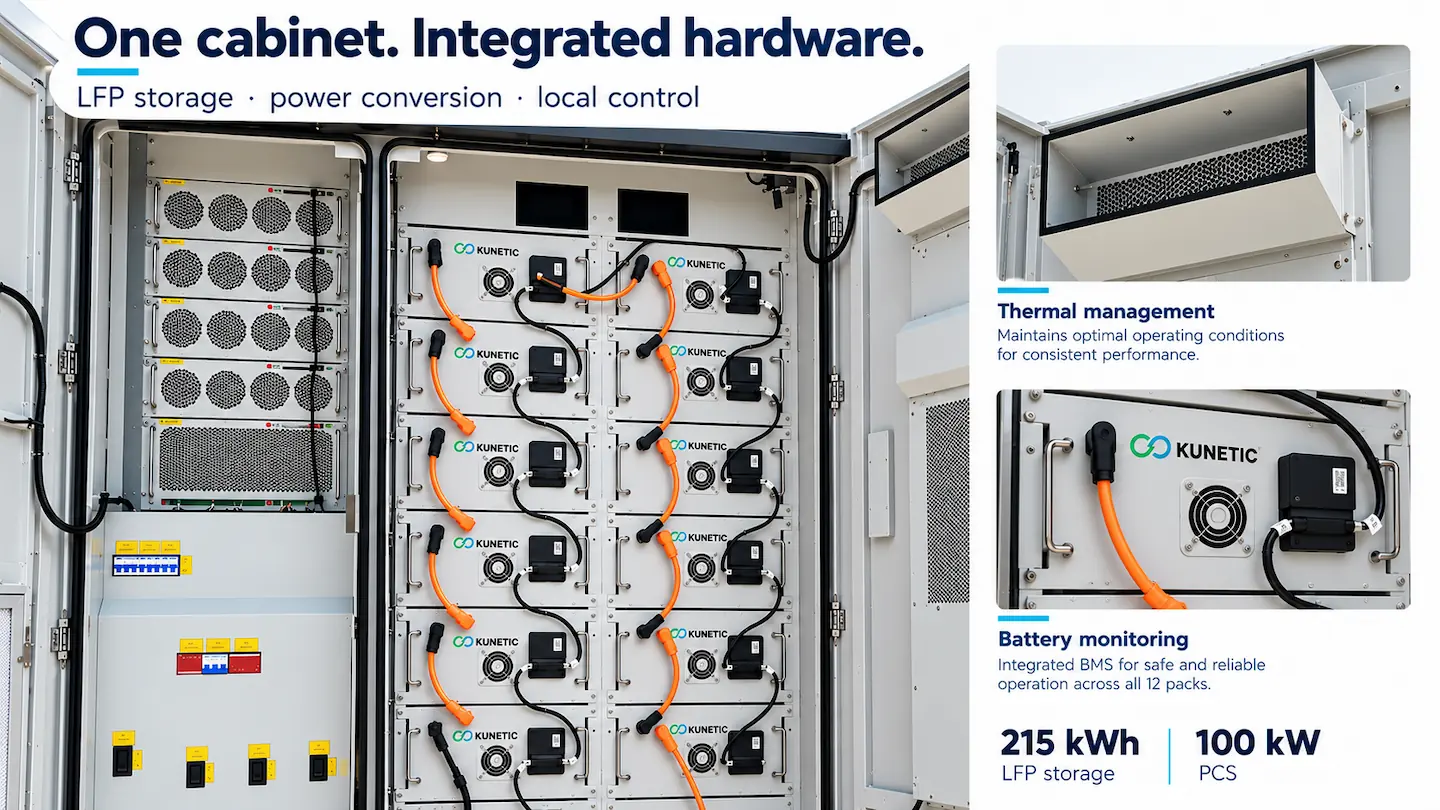 Battery and PCS in one cabinetLocal and remote management
 Thermal managementSystem monitoring and protection
Position the cabinet close to the site's electrical infrastructure, with a suitable base and access for installation and service. Factory service yards, warehouse utility areas and commercial plant spaces are useful locations to assess.
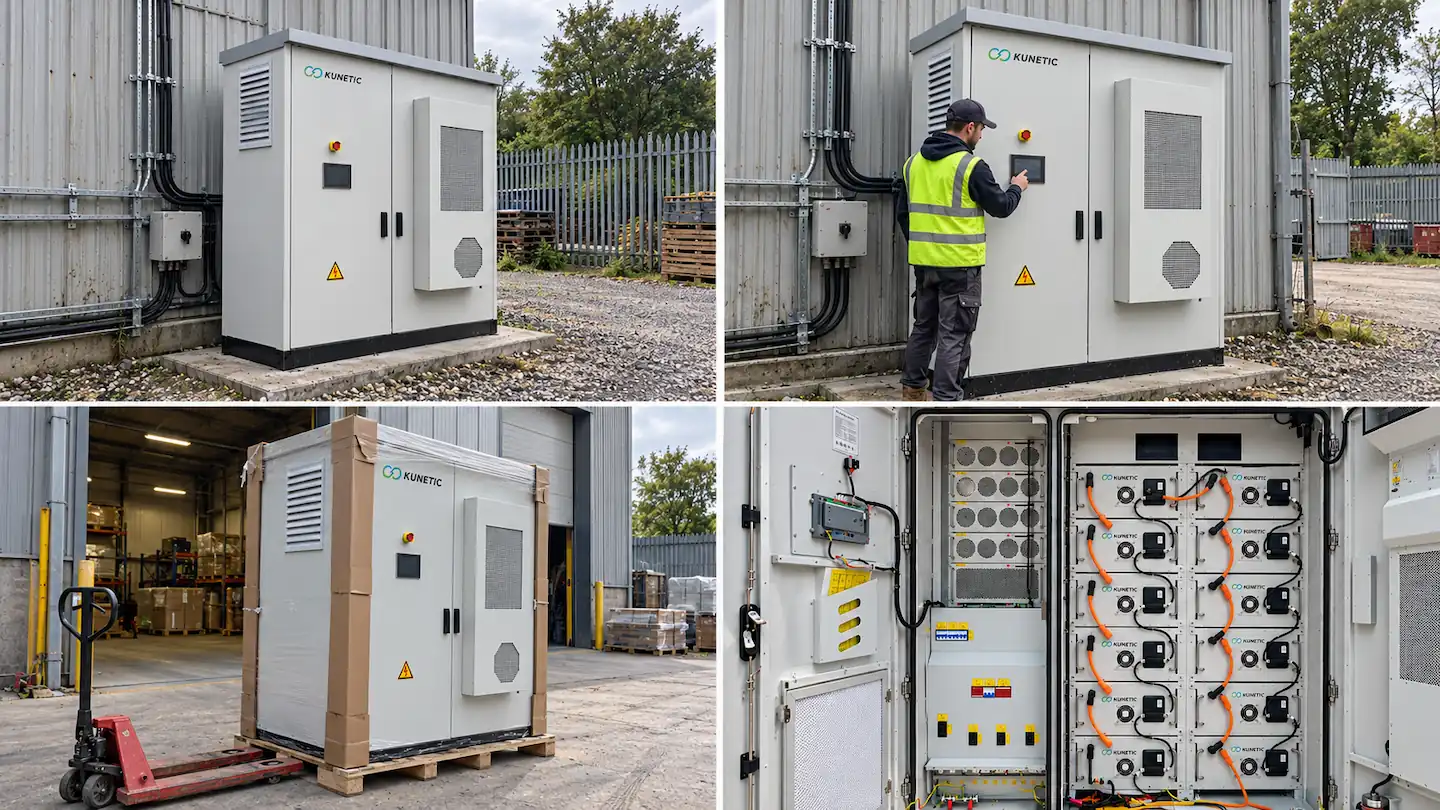
Keep cooling openings clear and allow room to open the doors. Check the delivery route and lifting arrangements before finalising the location. Share photographs or a simple site plan so cabinet placement and cable routes can be considered together.
The 100 kW AC rating describes output power. The 215 kWh battery rating describes nominal stored energy. Planning both helps you choose an industrial battery backup system that suits the load and the hours it needs to run.
List the loads that must remain available and the hours you need to cover. Allow for the battery's operating window, conversion losses, auxiliary consumption and the reserve you want to retain.
Check starting demand as well as average consumption. Pumps, compressors and other motor loads may require more power when starting. The system's 100 kW rating and the site's load behaviour should be reviewed together when planning backup circuits.
Send a load list or meter data with your target backup period. KUNETIC can help compare the energy requirement, power requirement and daily operating strategy for your project.
Discuss your site and backup requirements →Technical data
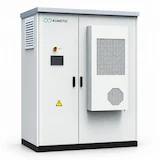
Core electrical and installation data for the 215 kWh configuration. PV charging and backup switching are selected to suit the application.
| Battery storage | |
|---|---|
| Battery chemistry | Lithium iron phosphate (LFP) |
| Nominal battery energy | 215 kWh |
| Cell capacity | 280 Ah |
| Nominal battery voltage | 768 V DC |
| Battery operating voltage | 636–864 V DC |
| Pack configuration | 1P20S; 12 packs |
| Rated charge/discharge rate | 0.5C |
| Recommended depth of discharge | 95% |
| AC power and system integration | |
| Rated AC power | 100 kW |
| Peak AC power | 110 kW |
| Rated AC voltage | 400 V AC |
| Grid arrangement | Three-phase, 3P+N+PE |
| Rated frequency | 50/60 Hz |
| Power conversion | Integrated PCS |
| PV integration | Optional configuration |
| Grid/off-grid switching | Matched transfer and isolation configuration |
| Energy management | Local operating panel and remote management |
| Communication interfaces | RS485 / RJ45 / 4G / Wi-Fi / DI/DO, by configuration |
| Communication protocols | Modbus RTU / Modbus TCP / IEC104 / MQTT, by configuration |
| Outdoor installation | |
| Enclosure protection | IP54 |
| Cooling | Industrial air conditioning and air cooling |
| Operating temperature | −25 to 65°C; power derating above 45°C |
| Cabinet dimensions (W×D×H) | Approximately 1800×1250×2000 mm |
| Cabinet weight | Approximately 2600 kg |
 Technical Data
Downloads
Get the technical data for your commercial battery backup project. Include the installation country, grid voltage and any PV or generator equipment so we can help select the relevant configuration.
FAQ
That depends on the site's running load, starting demand and required backup time. The system provides 100 kW rated AC power with 215 kWh of nominal storage. Begin with an essential-load list, then decide whether selected circuits or a wider part of the facility should receive backup power.
The load determines how quickly stored energy is used. Multiply the load in kW by the hours you need, then account for usable battery energy, conversion losses and reserve settings. For example, 40 kW over four hours requires 160 kWh at the loads. KUNETIC can review the requirement using your actual load data.
PV integration is available through a selected charging arrangement or compatible system equipment. Send the existing inverter model and system drawing. Solar operation during an outage also needs compatible islanding controls, grid isolation and an appropriate backup connection.
A generator can be considered within a coordinated microgrid design. Its controls, rating, transfer arrangement and intended operating schedule need to work with the battery system. Include the generator information when discussing the project so the equipment can be reviewed together.
Share the project country, grid voltage and frequency, essential-load list and desired backup period. Meter data, an electrical drawing and information on existing solar or generator equipment help us plan the configuration and cabinet placement.
OEM / ODM support
Coordinate the battery cabinet with the site's grid connection, PV equipment, essential-load distribution and operating objectives.
Discuss KUNETIC or private-label branding, cabinet identification and the technical information needed for your target market.
Request the configuration datasheet and relevant system information for your installer. Include existing electrical drawings where available.
Plan transport, unloading and site access around the selected equipment arrangement and delivery location.
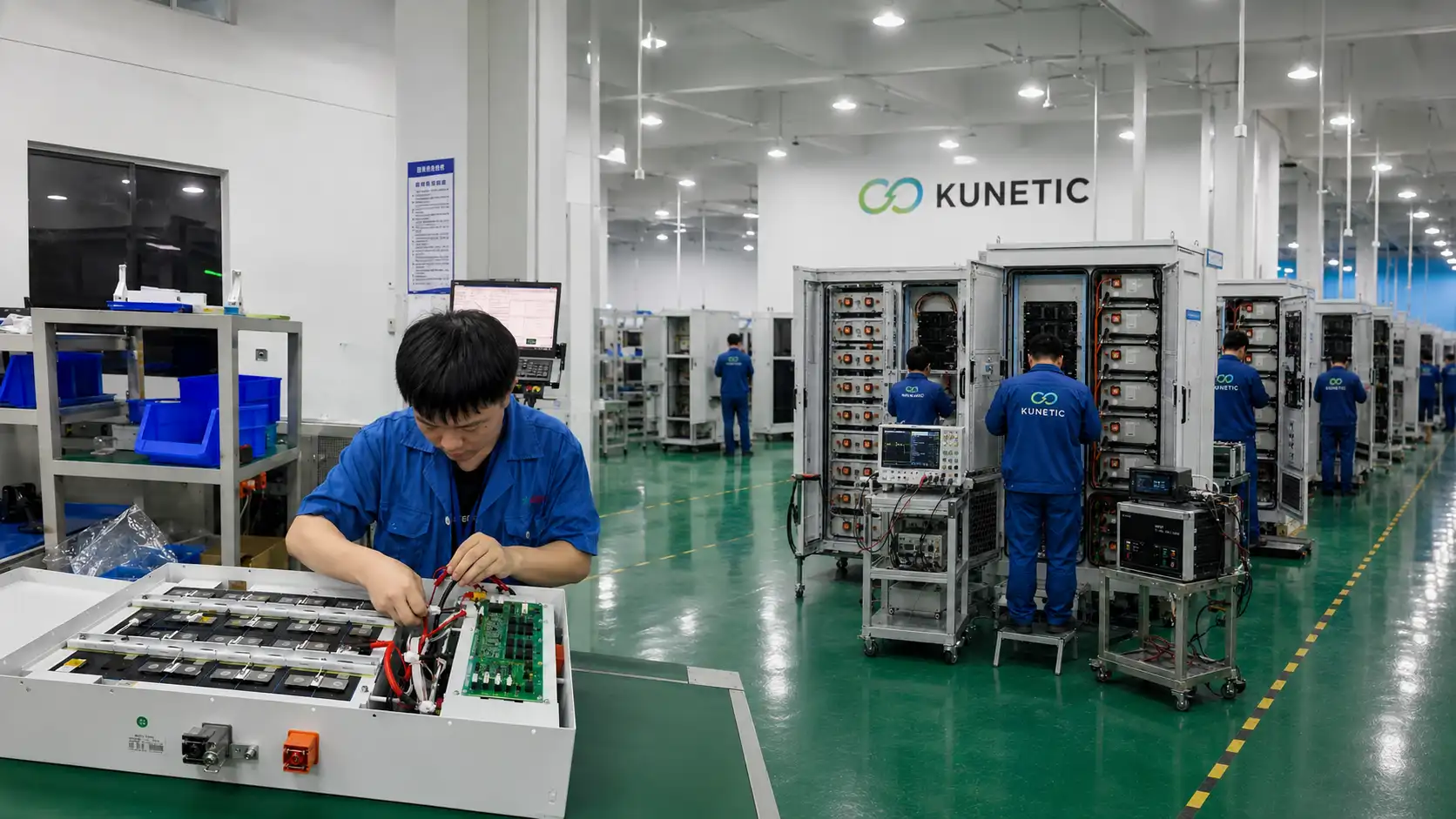
Tell us which operations you want to protect, your target backup period and the equipment already installed. KUNETIC will help develop a 100 kW / 215 kWh storage configuration around your site's power and energy needs.
KUNETIC 100 kW / 215 kWh Commercial Battery Backup & Microgrid Energy Storage System
Datasheet request
Request received. We will send the datasheet shortly.
KUNETIC 100 kW / 215 kWh Commercial Battery Backup & Microgrid Energy Storage System
Product inquiry
Tell us about your site load, PV capacity, backup requirements, or target project size. Our engineers will help configure the right system for your needs.
Inquiry received. Our team will respond shortly.